
An ice maker freezes water in a mold, warms the mold slightly, and releases the finished ice into a bin.
If you have ever heard a refrigerator click, hum, and suddenly drop ice into the bin, you have seen a small refrigeration system at work. Understanding how does an ice maker work can help you use it better, spot problems early, and avoid common mistakes that lead to small or cloudy cubes. This guide explains the full cycle in simple terms, from the water inlet valve to the thermostat, ejector arm, and ice storage bin.
What Is an Ice Maker?
An ice maker is a small appliance or built-in machine that turns water into ice automatically. It may be part of a refrigerator, a countertop unit, or a larger commercial system.
Most household ice makers use four basic elements:
• A water supply that fills the ice mold
• A freezing system that removes heat from the water
• A temperature sensor or thermostat
• An ejector system that pushes ice into a storage bin
To understand how does an ice maker work, picture it as a tiny factory. Water enters, the machine freezes it, a release system removes the cubes, and the process starts again.
A refrigerator ice maker does not usually make ice by simply blowing cold air over water. Instead, it uses the refrigerator’s cooling system to absorb heat from the ice mold. Some countertop ice makers use a similar refrigeration process but may make hollow or bullet-shaped ice rather than traditional cubes.

How Does an Ice Maker Work Step by Step?
The ice-making cycle is simple once you break it into stages. Although designs vary by brand, most automatic ice makers follow this order.
1. The water valve opens
When the ice maker is ready for a new batch, an electrical signal opens the water inlet valve. Water flows through a small fill tube and enters the ice mold.
The fill time is short. Many household models fill for only a few seconds. The exact amount depends on the design, water pressure, and control board.
If water pressure is too low, the mold may not fill fully. If the valve stays open too long, water can overflow and freeze inside the freezer.
2. The water freezes
After the mold fills, the water begins to freeze. The cooling system pulls heat away from the mold and sends that heat outside the refrigerator through the condenser coils.
The water usually freezes in layers. The outer edges may harden first, while the center freezes later. This is one reason some ice cubes look cloudy. Tiny air bubbles and minerals can become trapped as the ice forms.
A typical refrigerator ice-making cycle may take about 60 to 120 minutes, depending on the freezer temperature, room temperature, water temperature, and ice maker design.
3. The thermostat checks the temperature
A built-in thermostat or electronic sensor monitors the mold. When the ice reaches the correct temperature, the sensor tells the ice maker that the batch is ready.
Many traditional ice makers use a thermostat that closes an electrical circuit when the mold becomes cold enough. Newer models may use electronic sensors and a control board for more precise timing.
This temperature check is important. If the machine ejected ice too early, the cubes would be soft or partly liquid. If it waited too long, the ice could stick tightly to the mold.
4. A small heater loosens the ice
This part often surprises people. The ice maker may briefly warm the mold to release the cubes.
A small electric heater sits beneath or around the ice mold. It does not melt the entire batch. It warms the mold surface just enough to loosen the bond between the ice and the plastic or metal tray.
Think of it like warming a frozen popsicle mold. A little heat helps the ice slide out without turning it into a puddle.
5. The ejector arm pushes out the cubes
A motor turns a set of plastic fingers or an ejector arm. These fingers move across the mold and push the cubes into the storage bin.
The mold may twist slightly during this step. That movement helps break the ice free.
You may hear a click, buzz, or brief motor sound during ejection. These sounds are usually normal, especially if the ice maker has not been used for a while.
6. The machine refills the mold
After the cubes fall into the bin, the ejector returns to its starting position. The water valve opens again, and the mold receives a fresh supply of water.
The cycle continues until the bin is full, the ice maker is switched off, or the refrigerator detects another issue.
This step-by-step process explains how does an ice maker work in most modern refrigerators. The parts may look different, but the basic pattern remains the same: fill, freeze, loosen, eject, and refill.
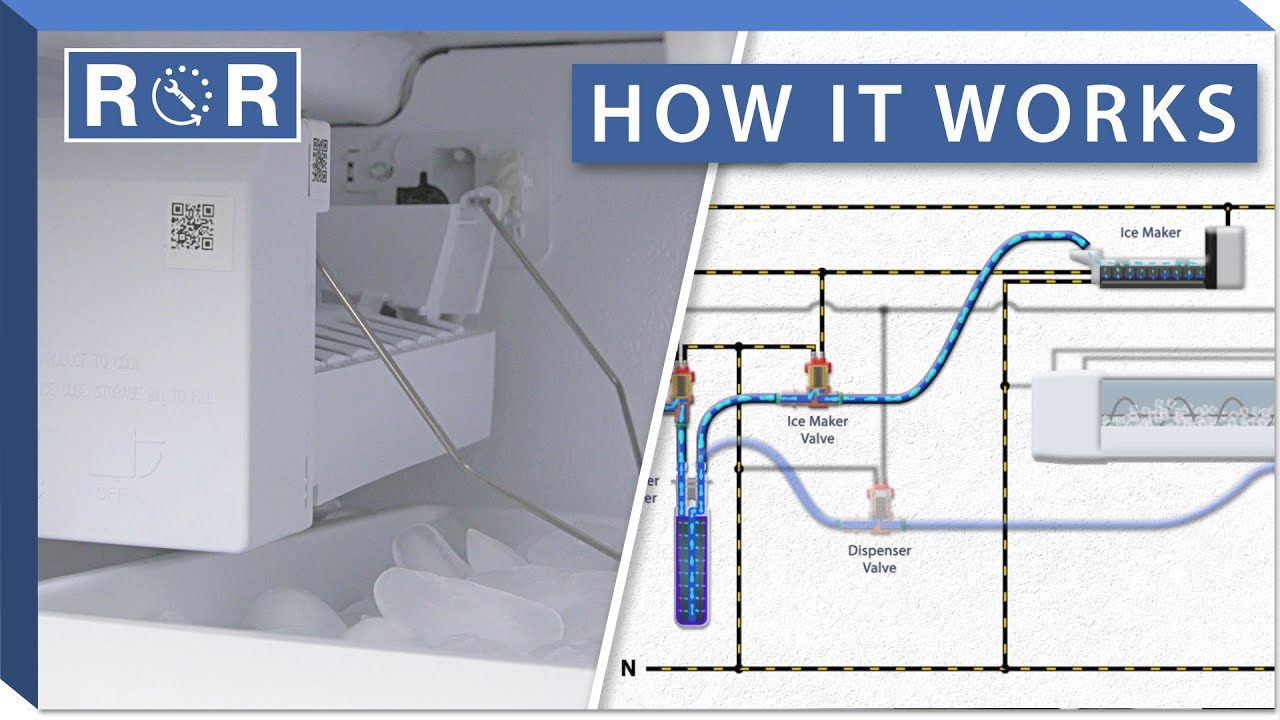
Main Parts of a Refrigerator Ice Maker
Knowing the main parts makes troubleshooting much easier. You do not need to be an appliance technician to understand their basic jobs.
Water inlet valve
The water inlet valve controls the flow of water into the ice maker. It opens when the ice maker sends it an electrical signal.
A faulty valve may cause:
• No water in the mold
• Very small ice cubes
• Slow filling
• Water dripping into the freezer
A clogged filter or weak household water pressure can create similar symptoms, so the valve is not always the only cause.
Fill tube
The fill tube carries water from the inlet valve to the ice mold. It is often a narrow plastic tube located near the back wall of the freezer.
If the freezer is too cold or the valve drips, the fill tube may freeze shut. When that happens, the ice maker may complete its cycle but produce no new ice.
Ice mold
The ice mold is the tray that holds the water while it freezes. It may produce crescent, square, or rectangular cubes, depending on the model.
Some molds are made from plastic. Others use coated metal for faster heat transfer and easier release.
Thermostat or temperature sensor
This part tells the machine when the water has frozen. A damaged sensor can cause the ice maker to stop too soon, run continuously, or fail to start.
Heater
The heater loosens the frozen cubes from the mold. It operates for a short time during the harvest stage.
A failed heater can leave cubes stuck in place. The motor may try to eject them, creating a clicking or grinding sound.
Motor and ejector fingers
The motor drives the ejector mechanism. The fingers sweep across the mold and push ice into the bin.
If the motor fails, the mold may fill and freeze, but the cubes will remain trapped.
Shutoff arm or sensor
Many ice makers use a metal shutoff arm. When the ice reaches the arm, it rises and stops production.
Newer refrigerators may use an infrared beam or electronic sensor instead. If the bin is full, the beam is blocked, and the ice maker pauses.
Ice bin
The bin stores finished ice. It also helps control production in some models.
Ice can clump together when the bin sits unused for a long time. Emptying and cleaning the bin from time to time helps keep ice fresh and prevents the cubes from sticking.

How Does an Ice Maker Know When to Stop?
An ice maker stops when it detects that the storage bin is full or when the user turns it off. Older models often use a mechanical shutoff arm, while newer models may use an optical sensor.
With a shutoff arm, rising ice pushes the arm upward. Once the arm reaches a certain position, it opens a switch and stops the cycle.
With an optical system, one side sends an infrared beam across the bin. When ice blocks the beam, the control system pauses production.
The ice maker may also stop for safety reasons. It can pause if the freezer temperature is too high, the door has been left open, or the control board detects an error.
A common mistake is pushing the shutoff arm down by hand and forgetting to return it. If the arm stays raised, the ice maker will not make ice even when every other part works correctly.
How Long Does an Ice Maker Take to Make Ice?
Most refrigerator ice makers take roughly one to two hours to complete a cycle. The first batch often takes longer because the freezer and mold may need time to reach the correct temperature.
Several conditions affect production speed:
• Freezer temperature
• Room temperature
• Water temperature
• Water pressure
• Door opening frequency
• Ice maker design
• Condition of the condenser coils
A freezer set near 0°F is generally cold enough for normal ice production. If the freezer is warmer than about 10°F, ice production may slow or stop.
Countertop ice makers often produce their first small batch in 6 to 15 minutes. However, this ice may be softer because many portable models make ice that is not fully frozen through. It can melt faster than traditional freezer ice.
A refrigerator ice maker is usually better for long-term storage. A countertop machine is useful when you need ice quickly for a party, office, camper, or small kitchen.

Why Is Ice Cloudy or Clear?
Cloudy ice is usually safe to use. Its appearance comes from how water freezes.
When water freezes slowly, dissolved air and minerals move toward the center. They become trapped in the ice and create a white or cloudy look.
Clear ice forms when water freezes slowly in one direction, allowing air and impurities to escape. Some specialty ice makers use directional freezing to make clear cubes, but standard refrigerator ice makers usually do not.
Cloudy ice does not automatically mean the water is dirty. Still, unpleasant taste or odor may point to an old water filter, dirty ice bin, or contaminated water line.
Replace the refrigerator filter according to the manufacturer’s instructions. Also wash the ice bin with mild soap, rinse it well, and let it dry fully before returning it.

How Does a Countertop Ice Maker Work?
A countertop ice maker uses a compact refrigeration system, a water reservoir, and a metal set of cooling prongs or a small mold.
The process usually works like this:
- You add water to the reservoir.
- A pump moves the water toward the freezing surface.
- Refrigerant cools metal prongs or a mold.
- Ice forms around the cold surface.
- The machine warms the surface slightly.
- The ice drops into an internal basket.
- The machine repeats the process until the water runs low or the basket is full.
Many portable units make hollow, bullet-shaped ice. This shape freezes quickly and is easy to release from the cooling fingers.
Countertop models are convenient, but they have limits. They often do not keep ice frozen for many hours because the storage basket is insulated rather than actively cooled. Meltwater normally returns to the reservoir and may be used for another cycle.
Keep the unit on a level surface with open space around its vents. A blocked vent makes the compressor work harder and may reduce ice production.
How Does a Commercial Ice Maker Work?
Commercial ice makers use the same basic idea as household units, but they are built for speed, volume, and repeated use.
A restaurant machine may use a vertical evaporator plate. Water flows over the cold surface and freezes in layers. Once the ice reaches the correct thickness, a warm gas or water release cycle separates it from the plate.
Commercial machines can produce several types of ice:
• Cube ice for drinks
• Nugget ice for chewing and fountain beverages
• Flake ice for food displays
• Gourmet ice for cocktails and premium drinks
These machines need regular cleaning and sanitizing. Scale, slime, and mineral buildup can reduce output and affect taste.
Commercial equipment should be cleaned according to the manufacturer’s schedule. In busy food-service settings, staff should also follow local health rules for water, storage, and sanitation.
Common Reasons an Ice Maker Stops Working
When an ice maker fails, the problem is often simple. Check the easy causes before replacing expensive parts.
The ice maker is turned off
Check the shutoff arm, power switch, and refrigerator control panel. Some models have a small switch that is easy to bump while moving food.
The freezer is too warm
Ice makers generally need a freezer temperature near 0°F. A freezer that is too warm may keep food frozen but still fail to make ice.
Check whether the door seals tightly and whether food blocks the vents.
The water filter is clogged
A clogged filter reduces water flow. The ice maker may produce thin cubes or stop filling.
Use the correct replacement filter and follow the installation instructions. After changing it, flush the water system as directed.
The fill tube is frozen
A frozen fill tube prevents water from reaching the mold. Do not use a sharp tool to remove the ice, because it can puncture the tube.
Turn off the ice maker and allow the tube to thaw naturally. If it freezes again, the water valve may be leaking or the freezer may be too cold.
The water supply is blocked
Check the household shutoff valve and the water line behind the refrigerator. A pinched line can reduce water flow.
The condenser coils are dirty
Dust on the condenser coils can make heat removal less efficient. Carefully clean accessible coils with a soft brush or vacuum, but unplug the appliance first and follow the manual.
The ice bin is packed with clumps
Large clumps may block the shutoff arm or prevent the ejector from moving. Empty the bin and break up the ice before testing the machine again.
A component has failed
If the valve, motor, heater, thermostat, or control board fails, professional service may be needed. Unplug the refrigerator before inspecting any electrical part, and do not bypass safety switches.
Practical Tips for Better Ice Production
A few simple habits can improve ice quality and reduce wear on the machine.
• Keep the freezer near 0°F, but check your owner’s manual for the exact recommendation.
• Leave air space around food so cold air can circulate.
• Replace the water filter on schedule.
• Clean the ice bin every few months.
• Use fresh ice instead of storing it for many weeks.
• Keep the freezer door closed as much as possible.
• Make sure the refrigerator is level.
• Do not force stuck cubes with a knife or screwdriver.
• Keep countertop ice maker vents clear.
• Clean portable units according to their care instructions.
One lesson I often emphasize during appliance checks is to avoid changing several things at once. First check the temperature, then the water supply, then the filter and shutoff arm. A simple order helps you find the real cause instead of guessing.
Another practical lesson is to listen to the machine. A humming sound without water may suggest a supply problem. A motor that clicks but cannot move the cubes may point to stuck ice or a harvest problem. Sounds are clues, not final diagnoses, but they can save time.
Is Ice Maker Ice Safe to Eat?
Ice made from safe drinking water is generally safe to consume. However, the ice maker itself must stay clean.
The ice bin can collect dust, food odors, and residue from hands or scoops. A dirty water filter can also affect taste and water quality.
Follow these safety habits:
- Wash your hands before handling ice.
- Clean the storage bin regularly.
- Use a clean scoop instead of a drinking glass.
- Replace the filter as recommended.
- Discard ice after a long power outage if it has partially melted and refrozen.
- Contact a qualified professional if the water line may be contaminated.
Ice can absorb odors from the freezer. If the cubes taste like onions, fish, or other strong foods, clean the bin and store pungent foods in sealed containers.
Energy Use and Environmental Considerations
An ice maker uses electricity for the water valve, motor, heater, and refrigeration system. The added energy use is usually modest, but it can increase when the freezer is poorly maintained.
A dirty condenser, damaged door gasket, or warm room can make the compressor run longer. This affects both ice production and energy use.
You can reduce waste by:
• Keeping the freezer full but not overcrowded
• Cleaning dust from accessible coils
• Replacing worn door seals
• Turning off the ice maker during long periods away
• Choosing a properly sized countertop unit
• Avoiding unnecessary opening of the freezer door
Water waste is also worth considering. A leaking valve may drip water into the freezer, while a countertop machine may leave unused water in its reservoir. Empty and clean portable units when they will not be used for several days.
Frequently Asked Questions About How Does an Ice Maker Work
How does an ice maker work in a refrigerator?
A refrigerator ice maker fills a mold with water, freezes it using the cooling system, warms the mold slightly, and pushes the cubes into a bin. A sensor or shutoff arm then controls when the next cycle begins.
Why does my ice maker make ice but not dispense it?
The dispenser chute may be blocked by clumped ice, or the dispenser motor may have a problem. Remove the ice bin, break apart stuck cubes, and check whether the auger can move freely.
How cold does a freezer need to be for an ice maker to work?
A freezer near 0°F is usually suitable for ice production. If the temperature rises much above 10°F, the ice maker may slow down or stop.
Why is my ice maker making small cubes?
Small cubes can result from low water pressure, a clogged filter, a partially blocked fill tube, or a weak water inlet valve. Check the filter and water supply before calling for service.
Can an ice maker run without a water filter?
Some refrigerators can run without a filter if the filter housing has a bypass plug. Others require a filter or bypass cap for water to flow correctly, so check the appliance manual.
How often should an ice maker be cleaned?
Clean the ice bin every few months or whenever the ice smells or tastes unusual. Portable and commercial ice makers may need more frequent cleaning because water sits inside their reservoirs.
Conclusion
Understanding how does an ice maker work becomes easy when you remember the main cycle: water enters, heat leaves, ice loosens, and a motor ejects the cubes. The thermostat, water valve, fill tube, heater, ejector, and shutoff sensor each play a small but important role.
Good maintenance matters. Keep the freezer cold, replace the water filter, clean the bin, and check simple problems before assuming a major failure. With these habits, your ice maker can work more reliably and make better-tasting ice.
Use this guide the next time your machine stops, sounds unusual, or produces small cubes. Then explore your appliance manual for model-specific instructions and share your ice maker questions or experiences in the comments.