
Most beginners can learn Blender basics in two to four weeks with steady daily practice.
You may open Blender, see dozens of panels, and wonder if you picked the wrong tool. I understand that feeling. Blender can model, sculpt, animate, render, and edit video, so the learning path can seem huge. The good news is that you do not need to master every feature at once. A clear plan, short practice sessions, and useful learning material can turn confusion into progress. In this guide, I explain how long it takes to learn Blender at each level and review several books that can support focus, creativity, and steady skill growth.
Moving Forward, Looking Back

Moving Forward, Looking Back is not a Blender course, but it may help learners who struggle with patience and self-doubt. Learning 3D art often means making a rough model, spotting mistakes, and trying again. This book focuses on processing loss and moving ahead, which can offer a useful mental frame for that process. Its value sits more in reflection than in technical instruction.
I would view this title as a companion read rather than a software guide. It may help creative learners build emotional space for practice when a project feels hard. Blender rewards a calm, repeatable approach because small skills build on one another. If you want keyboard shortcuts, modeling lessons, or rendering settings, you will need a dedicated Blender manual as well.
Pros:
- Supports a patient mindset during a difficult learning curve
- May help reduce frustration after failed creative projects
- Encourages reflection and personal progress
- Works well as a short companion read
- Can inspire learners to keep practicing after setbacks
Cons:
- Does not teach Blender tools or workflows
- May feel unrelated to readers seeking a technical course
- Its subject matter may feel heavy for some readers
My Recommendation
I recommend this book for a beginner who feels blocked by fear, grief, or perfectionism. It will not answer how long it takes to learn Blender, but it may help you stay with the process long enough to see results. Pair it with Blender’s official manual and a simple project plan. Its value depends on your need for encouragement, and Amazon availability may change.
Grief Is No Longer the Boss of Me
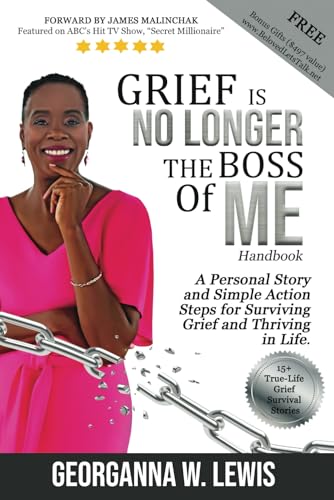
Grief Is No Longer the Boss of Me presents a personal story with simple action steps for moving through grief. It is not designed to teach 3D modeling, animation, or Blender navigation. Still, many new artists carry stress into their creative work, and that stress can make practice feel impossible. A practical mindset book may help some readers create a small, steady routine.
I would not place this title beside a Blender tutorial and expect it to teach technical skills. Instead, I see it as optional support for someone rebuilding a daily rhythm. A ten-minute practice session can matter more than an ambitious plan that never starts. Readers should also remember that a book cannot replace professional mental health care when grief feels overwhelming.
Pros:
- Uses a personal and approachable writing style
- Offers simple action steps for daily progress
- May support routine building during a hard season
- Can encourage small, manageable goals
- Provides emotional support for some creative learners
Cons:
- Contains no Blender lessons or project files
- Grief-focused content may not suit every shopper
- Should not replace qualified counseling or medical care
My Recommendation
This book best suits a learner whose personal life makes it hard to focus. It will not shorten how long it takes to learn Blender, but a stable routine can improve your results over time. I suggest using it only as a personal support read and choosing a real Blender course for software training. Check the current Amazon listing for price and format options.
The Methuselah Factor

The Methuselah Factor focuses on living sharper, leaner, longer, and better. It does not cover Blender, but its interest in habits may connect with the way people build creative skills. Blender learning needs time, focus, and repeated practice. A healthy routine can make those practice hours easier to protect.
I would treat the “thirty days or less” idea with care. No book can promise that every reader will reach a specific health or learning result in thirty days. The useful takeaway is the value of consistent habits. If you buy it, read the health claims thoughtfully and confirm important advice with a qualified professional.
Pros:
- Encourages regular habits and long-term thinking
- May help readers plan focused work periods
- Connects daily choices with personal goals
- Offers a broader lifestyle view of productivity
- Can complement a structured Blender practice plan
Cons:
- Does not explain Blender or digital art
- Health advice may not fit every person
- Time-based claims should not be treated as guarantees
My Recommendation
This title is best for a learner who wants to improve the habits around creative work. It cannot tell you exactly how long it takes to learn Blender, yet better sleep, planning, and focus may help you practice more often. I recommend it only as a lifestyle companion, not as your main learning resource. Review the latest Amazon edition before ordering.
Manifest That Miracle

Manifest That Miracle explores why people may not have what they want and how they can work toward change. This is a personal growth title, not a Blender workbook. It may appeal to beginners who need help turning a vague dream into a clear goal. In 3D work, a goal such as “make a simple room scene” is easier to follow than “become great at Blender.”
I like the idea of pairing motivation with measurable action. However, creative progress comes from practice, feedback, and technical study rather than hope alone. Use this book to shape your goals, then use Blender tutorials and small projects to build the skill. That balance keeps the process inspiring without creating unrealistic promises.
Pros:
- Encourages readers to define clear personal goals
- May help turn a large dream into smaller steps
- Supports a positive and forward-looking mindset
- Can help new artists think about motivation
- Pairs well with a written Blender project plan
Cons:
- Does not teach modeling, sculpting, or animation
- Some readers may prefer evidence-based planning methods
- It cannot replace hands-on practice or expert feedback
My Recommendation
I recommend this book for a motivated beginner who needs help setting a direction. It will not change how long it takes to learn Blender on its own. Still, a clear goal can stop you from jumping between random tutorials. Use it with a real course, a weekly schedule, and a finished project target for the best value.
Aromatherapy: 600 Recipes

Aromatherapy: 600 Aromatherapy Recipes for Beauty, Health & Home is a recipe reference for essential oils. It has no direct connection to Blender, but it may interest artists who enjoy home crafts and sensory creative work. The large recipe count suggests a useful reference format for readers who like browsing ideas. It can sit beside a Blender project as a separate hobby, not as a learning guide.
I would be careful with essential oils. Natural products can still cause skin reactions, poisoning, or problems for pets and children. Follow product labels, use proper dilution, and seek qualified advice for health concerns. For Blender learners, the main benefit is simple inspiration: creative people often enjoy more than one type of making.
Pros:
- Offers a wide range of recipe ideas
- May appeal to readers who enjoy hands-on crafts
- Provides a reference format for home projects
- Can inspire color, texture, and product design ideas
- Works as a separate hobby book for creative households
Cons:
- Does not teach Blender or computer graphics
- Essential oils require careful use and safe storage
- Health claims should be checked with a qualified expert
My Recommendation
This book is best for a creative reader who wants an aromatherapy reference along with digital art hobbies. It has no useful answer to how long it takes to learn Blender, so do not buy it as your main Blender resource. Buy it only if the recipe topic interests you. Its overall value depends on safe use and your interest in essential oils.
Storyteller Tools

Storyteller Tools helps writers move from an idea to a finished novel without losing the magic. Of all the listed books, this one has the clearest creative link to Blender. A Blender artist may create images, short films, game assets, or animated stories. Story structure can help turn a collection of models into a scene with purpose.
This book will not show you how to use modifiers, materials, lights, or the camera tool. Its strength is planning. I find that a simple outline can prevent a beginner from spending weeks on details before deciding what the final scene should say. For animation and visual storytelling, that planning skill can save time.
Pros:
- Helps organize ideas before production starts
- Supports stronger visual storytelling and scene planning
- May reduce wasted work on unclear projects
- Useful for animation, comics, and game concepts
- Encourages completion instead of endless editing
Cons:
- Does not provide Blender software instruction
- Writers may find its approach more useful than modelers
- Some visual artists may prefer a shorter planning guide
My Recommendation
I recommend Storyteller Tools for Blender users who want to make animated scenes or short films. It may not answer how long it takes to learn Blender, but it can improve what you do with the skills you gain. Pair it with the official Blender manual and a beginner modeling course. It offers the strongest creative value in this list for visual storytellers.
Encyclopedia of Essential Oils

Encyclopedia of Essential Oils is a reference work about aromatic oils, aromatherapy, herbalism, health, and well-being. It is not a Blender book, yet the reference style may appeal to detail-focused readers. Artists often enjoy building knowledge across many fields. Those interests can later inform product renders, botanical scenes, labels, and visual concepts.
I would use this title as background reading, not as medical advice. Essential oils can interact with medicines and may be unsafe for certain people or animals. Its detailed format may suit readers who like looking up individual topics. For a Blender beginner, its creative value is indirect and should not replace focused software practice.
Pros:
- Provides broad reference material on essential oils
- May support research for botanical art projects
- Useful for readers who enjoy detailed indexes and entries
- Can inspire natural product packaging concepts
- Offers a long-term reference format for hobby readers
Cons:
- Contains no Blender tutorials or digital art lessons
- Health and safety information needs careful interpretation
- Its reference style may feel dense for casual readers
My Recommendation
This book suits a Blender artist who also studies plants, products, or natural design. It does not affect how long it takes to learn Blender, but it could support research for a themed scene or product render. I recommend it only when the subject matches your interests. Always check current safety guidance before using essential oils.
Closer To Fine

Closer To Fine is a short title with a creative feel, but shoppers should check the current Amazon listing for its exact format and description. It is not a dedicated Blender course. That matters because a title alone does not confirm technical content. I always suggest checking the edition, preview, reviews, and file type before ordering.
As a companion purchase, it may appeal to readers who enjoy reflective or artistic material. Blender learning rewards curiosity, but curiosity works best when you direct it toward a project. Use this book for inspiration only unless the current product details show a clear connection to your needs. A focused tutorial remains the better choice for software skills.
Pros:
- Compact title that may suit casual creative reading
- Can add variety to a personal reading list
- May encourage reflection and artistic curiosity
- Easy to pair with a structured practice routine
- Amazon reviews can help confirm its current format
Cons:
- Does not clearly function as a Blender learning guide
- Product details should be checked before purchase
- May offer limited value for a technical learner
My Recommendation
I recommend this title only for readers who enjoy its subject and format after checking the listing. It will not give a reliable answer to how long it takes to learn Blender. For Blender progress, spend your main budget on a current course, project pack, or trusted manual. Its value is personal and depends on the product information available at purchase.
How Long Does It Take to Learn Blender?
The answer depends on what “learn” means to you. Blender includes many fields, such as modeling, sculpting, rigging, animation, compositing, simulation, and rendering. A person who wants to make a simple object needs far less time than a person who wants to create a polished animated film.
Based on common beginner workflows, I would use these time ranges as practical targets:
- One to two weeks: Learn the interface, navigation, basic transforms, object selection, and simple materials.
- Two to four weeks: Build basic models, add lights, set a camera, and render simple scenes.
- One to three months: Create clean hard-surface models, use modifiers, unwrap basic objects, and improve lighting.
- Three to six months: Develop a useful specialty, such as product visualization, character modeling, or motion graphics.
- Six months to two years: Build a strong portfolio and work with greater speed, design skill, and technical control.
These ranges assume regular practice. Someone who studies for 30 to 60 minutes most days may progress faster than someone who watches videos once a week. The clock matters, but the quality of practice matters more. Passive watching feels smooth, while active problem solving builds real skill.
What Changes the Learning Time?
Your goal
Your goal sets the size of the mountain. If you want to model a coffee mug, you can reach that target in a few focused sessions. If you want to build a game character with hair, clothing, facial controls, and animation, the path is much longer.
Write one clear goal before you start. “I want to make a low-poly room” gives you a useful path. “I want to learn everything in Blender” creates noise. A narrow goal helps you choose tutorials and ignore tools you do not need yet.
Your previous experience
People with experience in Maya, 3ds Max, Cinema 4D, CAD, Photoshop, or video editing may understand some ideas faster. They still need to learn Blender’s interface and shortcuts. A complete beginner may need more time with 3D space, object scale, and camera views.
Art skills also help, but they do not replace software practice. A trained artist may understand shape, color, and light yet still struggle with topology or node systems. A technical user may know the interface but need more time to develop taste and visual judgment.
Your practice schedule
Short, regular sessions work well. Try five days of practice each week. In each session, spend a few minutes reviewing, most of the time building, and the last few minutes writing down what confused you.
Avoid ten-hour sessions followed by two weeks away. That pattern feels exciting but often leads to fatigue. Think of Blender like a path through a forest. Small steps each day help you remember where you are.
Your learning method
A good method includes a lesson, a copy, and a variation. First, follow a short tutorial. Next, rebuild the result without looking at every step. Then change the object, material, light, or camera.
This third step matters. If you only copy, you may remember the shape of the lesson but not the reason behind each action. Variation turns borrowed knowledge into your own skill.
A Simple Blender Learning Roadmap
Days 1–3: Learn the space
Start with navigation. Learn how to orbit, pan, zoom, select, move, rotate, and scale. Practice using the keyboard and mouse together. Learn how to undo, save, and name objects.
Make a small scene from cubes, spheres, and cylinders. Do not worry about beauty. Your goal is control. If you can move around the scene without fighting the interface, you have made a strong start.
Days 4–7: Model simple objects
Study edit mode, vertices, edges, faces, extrude, inset, loop cut, and bevel. These tools form the base of many beginner models. Make a mug, stool, crate, lamp, or simple table.
Keep the shape simple. A clean low-detail model teaches more than a complex model you cannot edit. Save versions as you work so you can compare your first attempt with your later one.
Week 2: Add materials and light
Learn the difference between an object and its material. Add a basic color, roughness, and metallic value. Then place a light and a camera.
Render small images often. A render shows problems that are hard to see in the viewport. Look for flat light, harsh shadows, poor framing, and surfaces that look too smooth or too shiny.
Weeks 3–4: Finish small projects
Choose one project with a clear finish line. You might create a desk scene, a product mockup, a low-poly house, or a simple still life. Model only what the camera can see.
At this stage, learn basic modifiers such as Bevel, Mirror, Solidify, and Subdivision Surface. Use them to solve real problems. Do not collect modifiers like trading cards. Learn why each one helps.
Months 2–3: Pick a path
After the first month, choose a specialty. Product visualization focuses on clean models, materials, lights, and cameras. Character work focuses on anatomy, sculpting, retopology, rigging, and posing. Animation focuses on timing, keyframes, graph editing, and motion.
Do not rush into every path. Specialization gives your practice a shape. You can explore other fields later after you build a firm base.
How Long Does It Take to Learn Blender for Different Goals?
Simple 3D objects
You can learn enough to make basic objects in one to two weeks. This includes primitive shapes, transforms, edit mode, simple materials, and basic lighting. The result may look rough, but it can still teach useful skills.
To make clean, attractive objects, expect one to three months of regular practice. You will need better proportions, edge control, lighting, and composition. A polished image depends on more than the model alone.
Blender for 3D printing
Basic 3D-printing models may take a few weeks to learn. You need to understand scale, wall thickness, manifold geometry, normals, and export settings. Always check your model with a suitable print preparation tool before sending it to a printer.
Mechanical parts may require CAD software instead. Blender can work well for organic shapes and visual models, but it may not be the best tool for precise engineering design.
Character modeling
Character modeling usually takes longer. A beginner may need three to six months to create simple stylized characters. Realistic characters can take a year or more because they involve anatomy, facial forms, hair, clothing, topology, and texture.
Start with a simple design. A low-poly character with clear shapes can teach the full workflow without burying you under detail. Finish one small character before attempting a film-quality human.
Animation
Basic keyframe animation can take two to six weeks to understand. You can learn to move objects, set keyframes, adjust timing, and render a short clip. Good animation takes much longer because motion needs weight, rhythm, spacing, and clear intent.
For character animation, plan on many months of study. Learn the principles of animation along with Blender’s tools. Software can place a keyframe, but it cannot decide whether a movement feels alive.
Professional Blender work
Professional readiness often takes one to three years. The time varies by field, project quality, feedback, and work history. A junior artist may become employable in one narrow area before mastering the full program.
Employers and clients often care more about a strong portfolio than a claim that you studied for a certain number of months. Finish work, show process when useful, and explain your choices. A small polished portfolio can speak louder than a long list of tutorials.
Common Mistakes That Slow Beginners Down
Trying to learn every feature
Blender has many tools because it serves many types of artists. You do not need all of them now. Learn the tools that support your current project.
Watching without building
Tutorials can create a false sense of progress. The instructor makes a clean result, so the lesson feels easy. Pause the video and rebuild the steps from memory. That extra effort reveals what you truly know.
Starting projects that are too large
A full fantasy city sounds exciting. It can also become a pile of unfinished files. Start with one building, one street corner, or one prop. Finished small work teaches planning and gives you something to review.
Ignoring file management
Save often and use clear names. Keep textures, references, and project files in an organized folder. A missing image can waste more time than a difficult modeling task.
Comparing your first week with an expert
Online portfolios show finished work. They rarely show the failed models, slow drafts, and years of practice behind them. Compare your current work with your own older work. That is a fairer test.
Best Ways to Learn Blender Faster
Use current learning material. Blender changes over time, and menus or shortcuts may differ between versions. The official Blender Manual explains tools and settings, while Blender Studio training and trusted educators can show complete workflows.
Build a project after every major lesson. For example, after learning bevels, make three objects that use bevels in different ways. After learning materials, create a small scene with metal, glass, wood, and fabric. Projects make facts useful.
Ask focused questions when you get stuck. “Why does my model look bad?” is hard to solve. “Why does my bevel disappear after I apply the scale?” gives you a clear problem to investigate.
Use reference images. Artists do not create from an empty mind. A reference gives you shape, scale, color, and light clues. It also helps you see what needs improvement.
Get feedback from a safe, helpful community. Choose feedback that explains the problem and offers a path forward. You do not need to accept every opinion, but you should listen for patterns.
Best for Quick Comparison
| Best for | Why |
|---|---|
| Visual storytellers | Storyteller Tools helps plan scenes, characters, and finished creative projects. |
| Beginners building better habits | The Methuselah Factor and Manifest That Miracle may support routine and goal setting. |
| Readers seeking emotional support | Moving Forward, Looking Back and Grief Is No Longer the Boss of Me focus on reflection and resilience. |
FAQs Of how long does it take to learn blender
Can I learn Blender in 30 days?
Yes, you can learn the basics in 30 days with regular practice. You may model simple objects, add materials, light a scene, and make basic renders. You will not master every Blender field in one month.
How long does it take to learn Blender for a job?
Many learners need six months to two years, depending on the job and practice time. A focused portfolio can help you become ready sooner for entry-level work in one narrow area.
Is Blender hard for complete beginners?
Blender can feel hard at first because it combines many tools in one program. Start with navigation and simple modeling. Short projects make the interface easier to understand.
Can I learn Blender without an art background?
Yes. You can learn the software without formal art training. Art fundamentals such as shape, light, color, and composition will improve your results as you practice.
What is the fastest way to learn Blender?
Choose one goal, follow a current course, practice most days, and finish small projects. Rebuild lessons from memory and change the results. This works better than watching many unrelated videos.
Final Verdict: Which Should You Buy?
Storyteller Tools is the best match for Blender users because it can improve project planning and visual storytelling. The other books may support habits or personal interests, but none replaces a real Blender course.
How long does it take to learn Blender depends on your goal and practice. Start small, work often, and use trusted Blender resources to build lasting skill.