
Clean your ice maker every six months, or more often when you use it daily or notice dirt, odor, or slow ice.
Knowing how often should you clean an ice maker helps protect ice quality, reduce mineral buildup, and keep the machine working well. The best schedule depends on the type of ice maker, your water quality, how often you use it, and the instructions in the owner’s manual. This guide explains the ideal cleaning routine, safe steps, common mistakes, and signs that your ice maker needs attention now.
How Often Should You Clean an Ice Maker?
For most homes, you should clean an ice maker every six months. This schedule works well for refrigerator ice makers, countertop ice makers, and under-counter units used at a normal rate.
You may need to clean it more often if you use the machine every day, have hard water, or notice a strange smell. Busy households may need a cleaning every three months.
A good cleaning schedule is:
• Every three months for heavy use or hard water
• Every six months for normal household use
• Once a year for light use, if the ice maker stays clean
• Immediately when ice tastes bad, smells odd, looks cloudy, or contains visible debris
The answer to how often should you clean an ice maker is not the same for every home. Always check the manufacturer’s instructions first, because some models have special cleaning cycles or approved cleaning products.
Why Cleaning Your Ice Maker Matters
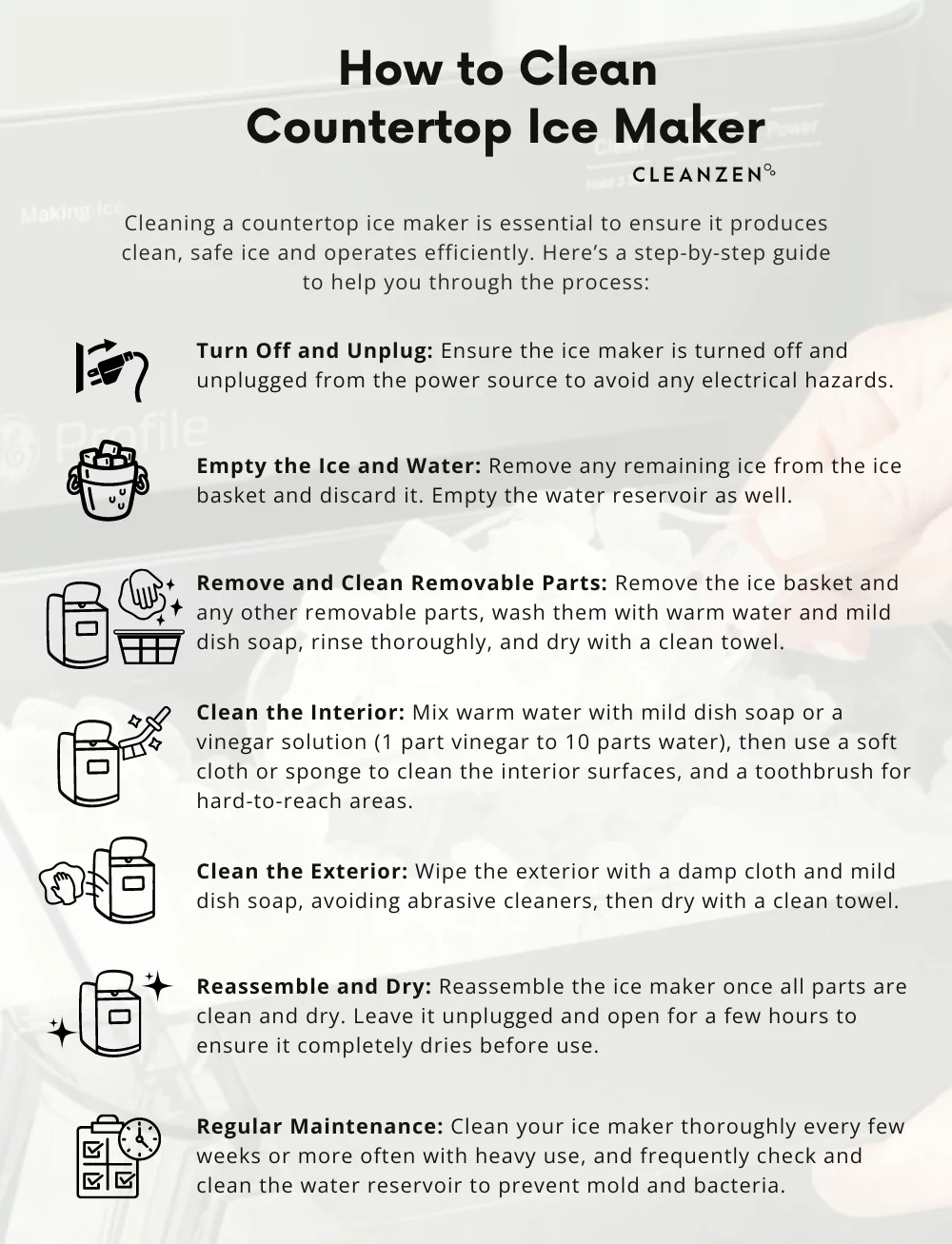
An ice maker may look clean from the outside, but its internal parts can collect residue. Water leaves behind minerals, while dust, food odors, and germs can affect the ice bin and scoop.
Regular cleaning helps in several ways:
• It improves the taste and smell of ice.
• It reduces mineral scale on water lines and trays.
• It helps prevent mold and slime in damp areas.
• It supports steady ice production.
• It can reduce strain on the pump, fan, and water inlet system.
• It keeps the ice bin safer for regular use.
Ice is food. The Food and Drug Administration treats ice as a food product when it is used in drinks or served to people. That means the ice maker and its storage bin deserve the same care you would give a clean water container.
A dirty ice maker will not always make you sick, but poor cleaning can create a place for bacteria, mold, and buildup to grow. Cleaning is a simple way to lower that risk.

Signs Your Ice Maker Needs Cleaning
You do not need to wait for your regular schedule if your ice maker shows clear warning signs. In many cases, these signs appear before the machine stops making ice.
Watch for:
• Ice with a musty, sour, or “freezer” smell
• Ice that tastes stale or unusual
• Cloudy ice caused by mineral deposits
• Slimy residue in the ice bin
• Black, green, pink, or orange spots
• Small flakes or particles in the ice
• Ice clumping together
• Slower ice production
• A water dispenser with a strange taste
• Frost or scale around the ice tray
A bad smell may come from old ice rather than a dirty ice maker. Ice can absorb odors from onions, leftovers, meat, or uncovered food in the freezer. Emptying the bin and washing it may solve the problem, but a full cleaning is better if the smell returns.
The most important rule is simple: if the ice looks or smells wrong, stop using it until you clean the machine and make a fresh batch.

What Changes the Cleaning Schedule?
The right answer to how often should you clean an ice maker depends on several conditions. Your home may need a shorter or longer interval than your neighbor’s home.
Water quality
Hard water contains minerals such as calcium and magnesium. These minerals can form white scale on the ice mold, water inlet, and internal tubing.
If you see white crust around faucets or showerheads, your ice maker may also have mineral buildup. Homes with hard water often benefit from cleaning every three months.
Frequency of use
A machine that makes ice all day gets more water, more air exposure, and more handling. Daily use creates more chances for residue and germs to enter the bin.
If you use your ice maker only during parties or summer weekends, a six-month or annual cleaning may be enough. Empty and clean it before storing it for a long period.
Type of ice maker
Countertop ice makers often need frequent cleaning because they reuse water from an internal reservoir. Many models recommend cleaning at least once every three months.
Refrigerator ice makers may need cleaning every six months. Commercial ice machines can require much more frequent service because of their heavy workload.
Household habits
If people touch the ice with their hands, the bin can become dirty faster. Pets, children, open food, and a nearby trash can also increase the chance of contamination.
Using the scoop correctly and keeping the freezer free of uncovered food can help extend the cleaning interval.

How to Clean a Refrigerator Ice Maker
Before cleaning, read the manual for your refrigerator. Some ice makers have removable parts, while others require a built-in cleaning cycle.
Follow these general steps:
-
Turn off the ice maker.
-
Unplug the refrigerator if the manual permits and if you need to reach moving parts.
-
Remove all ice from the bin. Do not keep old ice after cleaning.
-
Take out the ice bin, scoop, and removable tray.
-
Wash removable parts with warm water and mild dish soap.
-
Use a soft cloth or soft brush to clean the ice maker’s interior.
-
Wipe around the ice chute, door seal, and nearby freezer surfaces.
-
Rinse all soap from removable parts.
-
Dry every part fully before putting it back.
-
Turn the ice maker on and discard the first one or two batches of ice.
Do not pour water into electrical parts. Never use a sharp tool to break off mineral scale. A soft toothbrush can help reach small corners without scratching plastic surfaces.
If the ice maker has a water filter, replace it according to the filter maker’s schedule. A dirty filter can affect taste and may cause the machine to work harder.
How to Clean a Countertop Ice Maker
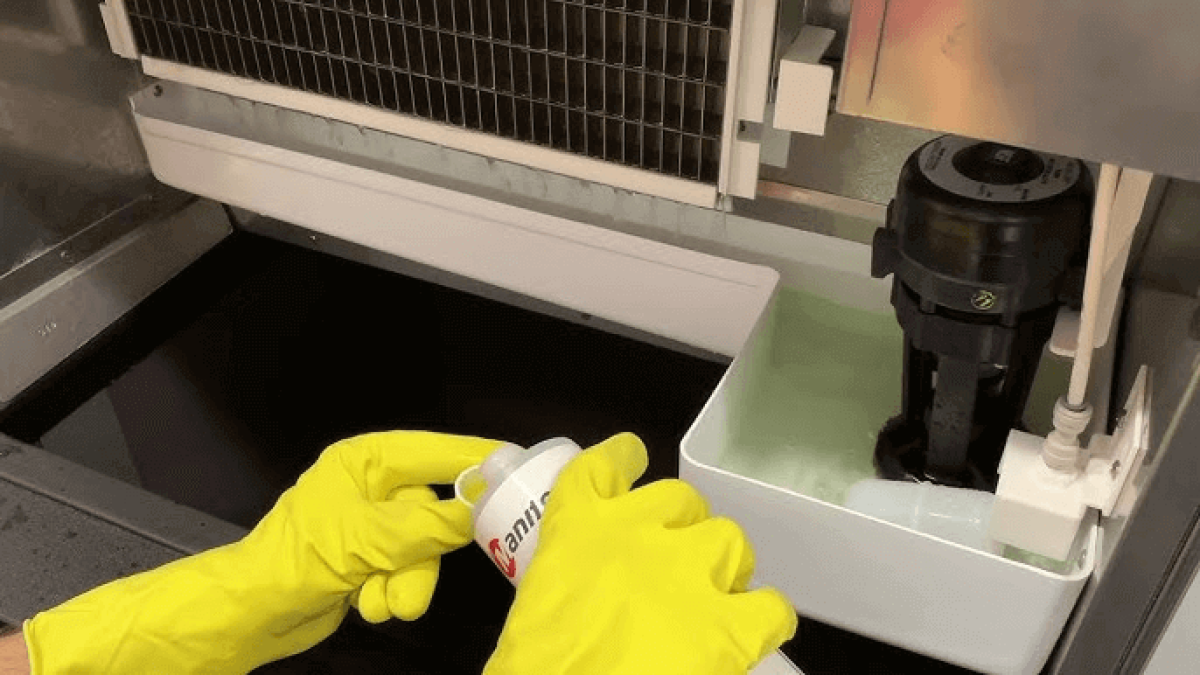
Countertop ice makers need careful cleaning because they often hold standing water. Standing water can develop an odor or support biofilm, which is a thin layer of residue that can cling to wet surfaces.
Use this process:
-
Turn off and unplug the ice maker.
-
Remove all ice from the basket.
-
Drain the water reservoir.
-
Remove the ice basket, scoop, and other washable parts.
-
Wash the parts with warm water and mild dish soap.
-
Wipe the reservoir with a clean cloth.
-
Follow the manual’s instructions for a cleaning solution.
-
Rinse the reservoir well with clean water.
-
Run one or two fresh water cycles.
-
Drain the machine and let it dry before storage.
Many manufacturers sell approved ice maker cleaning solutions. Use only a product that the manual allows. Some machines can be damaged by strong acids, bleach, or cleaners that leave a residue.
Never mix bleach with vinegar, ammonia, or another cleaner. The mixture can release dangerous gases. If you use a chemical product, follow its label and rinse the machine as directed.

What Cleaner Should You Use?
For routine cleaning, warm water, mild dish soap, and a soft cloth are often enough for the ice bin and removable parts. For mineral scale, use a cleaner approved for your specific ice maker.
Some manuals allow a diluted vinegar solution. Others warn against vinegar because acid may damage seals, coatings, or metal parts. This is why the manual matters more than a general online tip.
Avoid:
• Abrasive powders
• Steel wool
• Strong drain cleaners
• Unapproved descaling products
• Undiluted bleach
• Ammonia
• Scented household cleaners
The safest answer to how often should you clean an ice maker also includes how you clean it. Cleaning too aggressively can damage parts, while using the wrong chemical can leave an unsafe taste or harm the machine.
When in doubt, choose the manufacturer’s cleaner and follow the listed dilution ratio. Never guess with concentrated chemicals.

A Simple Ice Maker Cleaning Routine
A regular routine makes the job easy. You do not need to wait until the ice maker looks dirty.
After each use
If you use a countertop ice maker only sometimes, drain leftover water after use. Wipe the basket and leave the lid open so the inside can dry.
Each week
For a frequently used machine, wipe the scoop and check the ice bin. Remove old ice and look for spills, residue, or food odors.
Every three to six months
Complete a full cleaning. Wash removable parts, clean the reservoir or ice bin, inspect the water filter, and discard the first fresh batches.
Once a year
Inspect the water line, ice chute, seals, and ventilation area. If you see leaks, heavy scale, or repeated odors, arrange professional service.
One practical lesson is worth remembering: do not top up old ice with new ice. Empty the bin first. Fresh ice can quickly take on the smell and residue of older ice.
Common Ice Maker Cleaning Mistakes
Many cleaning problems come from small mistakes rather than a lack of effort.
Leaving old ice in the bin
Old ice can absorb odors and develop a stale taste. Always discard it before cleaning.
Forgetting the scoop
The scoop touches hands and ice. Wash it often and store it in a clean, dry place.
Cleaning only the outside
Wiping the front of the machine does not clean the ice bin, chute, tray, or water reservoir. Focus on every surface that touches water or ice.
Using too much cleaner
More cleaner does not mean better cleaning. Excess product can damage parts or leave a chemical taste.
Failing to rinse
Even an approved cleaning solution must be rinsed when the manual says so. Run fresh water cycles before collecting ice for drinks.
Ignoring the water filter
A clogged filter can cause poor taste and slow water flow. Replace it on schedule, often every six months, but follow the filter maker’s instructions.
Using a sharp tool
Knives and screwdrivers can crack plastic parts, puncture tubing, or damage sensors. Use a soft brush instead.
When to Call a Professional
You can handle routine cleaning in most homes. However, some problems need a trained appliance technician.
Call for service if:
• The machine leaks water.
• The ice maker makes loud grinding sounds.
• Ice production stays low after cleaning.
• The water line freezes repeatedly.
• The ice has a chemical taste after proper rinsing.
• The machine shows an error code.
• Mold returns soon after cleaning.
• Electrical parts appear wet or damaged.
A dirty ice maker may be the cause, but a clogged water line, failed inlet valve, blocked air path, or faulty thermostat can create similar symptoms. Cleaning cannot repair a mechanical or electrical failure.
Do not remove sealed panels or work on live electrical parts. Unplug the appliance and use the manual to identify safe, user-serviceable areas.
How to Keep Your Ice Maker Cleaner for Longer
Good habits can reduce how often should you clean an ice maker, although they cannot replace regular cleaning.
Try these simple steps:
• Keep food covered in the freezer.
• Use the ice scoop instead of your hands.
• Store the scoop outside the ice pile if the manual recommends it.
• Keep the ice bin dry.
• Replace the water filter on time.
• Drain countertop units after use.
• Do not store ice for weeks.
• Wipe spills as soon as you see them.
• Keep refrigerator door seals clean.
• Do not place the ice scoop on dirty counters.
It also helps to mark your calendar. Set a reminder every three or six months based on your use and water quality. A small reminder can prevent a large cleaning job later.
Is Cleaning Enough to Make Ice Safe?
Cleaning lowers the amount of dirt, residue, and microbial growth in the machine, but it cannot fix unsafe water. Your ice maker should use clean, drinkable water from a trusted supply.
If your tap water has a boil-water advisory, do not make ice with it unless local health officials say it is safe. Ice made during an advisory can remain unsafe even when it looks clear.
A filter may improve taste and reduce some particles, but it does not remove every possible contaminant. Replace filters on time and maintain the entire water system.
Cleaning also does not guarantee that ice will stay fresh forever. Store ice in a clean bin, avoid touching it, and discard it if it develops an unusual taste, smell, or appearance.
Frequently Asked Questions About How Often Should You Clean an Ice Maker
How often should you clean an ice maker used every day?
Clean a daily-use ice maker every three months if possible. Clean it sooner when you have hard water, heavy mineral buildup, or unusual ice taste or odor.
Can I clean my ice maker with vinegar?
Some models allow diluted vinegar, but others do not. Check the owner’s manual first, and never mix vinegar with bleach or other cleaning products.
Should I throw away the ice after cleaning?
Yes. Discard the first one or two batches after cleaning. This removes leftover water, cleaner, residue, or loosened mineral particles.
How often should you clean an ice maker with a water filter?
A filtered ice maker still needs cleaning about every six months under normal use. A filter improves water quality, but it does not clean the ice bin, scoop, tray, or reservoir.
Why does my ice smell bad after cleaning?
The odor may come from old ice, food in the freezer, a dirty water filter, or residue in the water line. Clean the bin, replace the filter if needed, and contact a technician if the smell continues.
Can a dirty ice maker stop making ice?
Yes. Mineral scale, blocked water paths, and dirty sensors can reduce ice production. If cleaning does not restore normal operation, the machine may have a mechanical problem.
How long can ice stay in an ice maker?
For the best taste, use ice within one to two weeks. Ice can absorb freezer odors over time, so emptying and cleaning the bin regularly keeps it fresher.
Conclusion
For most homes, clean an ice maker every six months. Use a three-month schedule for daily use, hard water, or frequent odor and scale problems. Always discard old ice, wash the bin and scoop, follow the manual, and rinse the machine well before making fresh ice.
The best answer to how often should you clean an ice maker is the schedule that matches your water, use, and appliance type. Set a calendar reminder today, and share your ice maker cleaning routine or questions in the comments.