
Introduction
Cooking dried chickpeas in a slow cooker is an easy way to make tender beans for hummus, salads, soups, stews, and meal prep. In a U.S. kitchen, one pound of dried chickpeas usually yields about 6 to 7 cups of cooked beans, often for less than the cost of the same amount of canned chickpeas. The slow cooker does most of the work while you handle other tasks. For the best results, sort and rinse the beans, soak them when possible, cover them with fresh water, and cook until creamy inside.

Quick Answer: Slow Cooker Chickpeas
To cook soaked chickpeas in a slow cooker:
- Sort and rinse 1 pound of dried chickpeas.
- Soak them in plenty of water for 8 to 12 hours.
- Drain and rinse the beans.
- Add them to a slow cooker with 6 to 8 cups of fresh water.
- Cook on LOW for 6 to 8 hours or HIGH for 3 to 4 hours.
- Add salt during cooking or near the end.
- Drain when the chickpeas are tender.
For unsoaked chickpeas, cook them on LOW for about 8 to 10 hours or until soft. Cooking time varies with the age of the beans, water hardness, slow cooker size, and desired texture.
What You Need
Basic ingredients
For about 6 to 7 cups of cooked chickpeas, use:
- 1 pound dried chickpeas, also called garbanzo beans
- 6 to 8 cups water or unsalted broth
- 1 to 2 teaspoons kosher salt, or salt to taste
- Optional aromatics:
- 1 bay leaf
- 2 garlic cloves
- Half an onion
- A few parsley stems
- A small carrot
You do not need oil to cook chickpeas. Avoid adding acidic ingredients, such as tomatoes, lemon juice, vinegar, or wine, until the beans are tender. Acid can slow softening.
Equipment
You will need:
- A 4- to 6-quart slow cooker
- A colander
- A large bowl for soaking
- A spoon for skimming foam, if needed
- Airtight containers for storage
Do not fill the slow cooker to the top. Beans expand as they cook, and enough room is needed for water movement and bubbling.
How to Prepare Dried Chickpeas
1. Sort the chickpeas
Spread the dried chickpeas on a tray or clean counter. Remove:
- Small stones
- Broken pieces
- Dark or shriveled beans
- Plant debris
Packaged beans are usually cleaned, but sorting is still a useful safety step.
2. Rinse them well
Place the chickpeas in a colander and rinse them under cool running water. Rinsing removes dust and loose skins.
3. Choose a soaking method
A long soak gives the most even texture and often shortens cooking time.
Overnight soak
Place the chickpeas in a large bowl. Cover them with at least 3 inches of water because they will expand. Leave them at room temperature for 8 to 12 hours.
Drain and rinse the beans before slow cooking.
Quick soak
If you are short on time:
- Put the chickpeas in a pot.
- Cover them with several inches of water.
- Bring the water to a boil.
- Boil for 2 minutes.
- Turn off the heat and cover the pot.
- Let the beans stand for 1 hour.
- Drain and rinse them.
Transfer the beans to the slow cooker with fresh water.
No-soak method
you can cook chickpeas without soaking. Sort and rinse the beans, then place them directly in the slow cooker with fresh water. This method takes longer and may produce slightly less even results, but it can work well for soups and stews.
Do not soak chickpeas in the slow cooker overnight unless the appliance is actively cooking. Soaking is best done in a separate bowl in the refrigerator or at room temperature for the normal soaking period.

How to Cook Chickpeas in the Slow Cooker
Method for soaked chickpeas
-
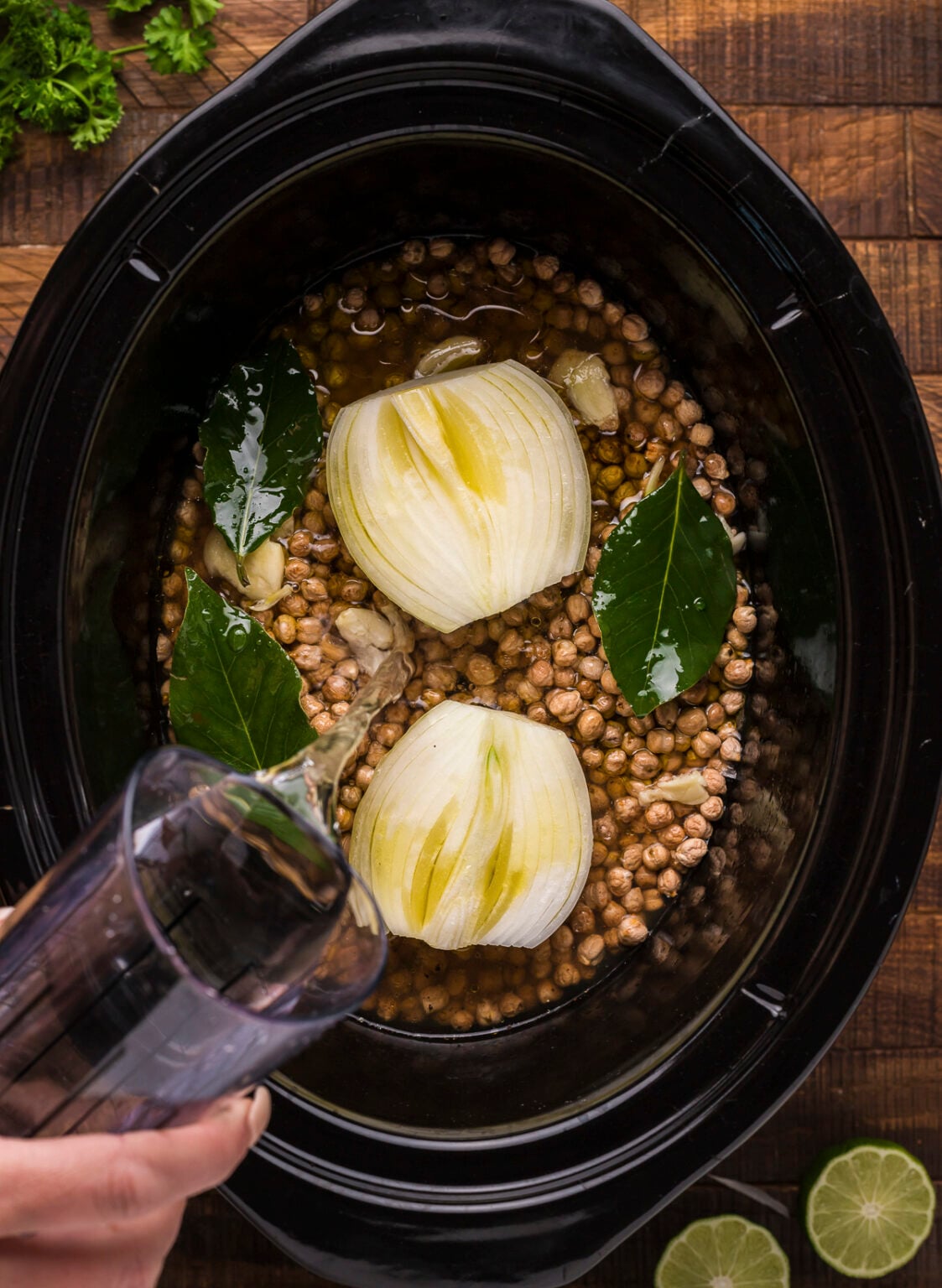
Add the soaked chickpeas.
Drain and rinse the beans, then place them in the slow cooker. -
Add fresh liquid.
Pour in 6 to 8 cups of water or unsalted broth. The liquid should cover the chickpeas by at least 1 to 2 inches. -
Add salt and aromatics.
Add salt, bay leaf, garlic, onion, or other mild seasonings. Salt does not need to be withheld; it can help season the beans as they cook. -
Cover and cook.
Cook on LOW for 6 to 8 hours or HIGH for 3 to 4 hours. -
Check the liquid.
Keep the lid closed as much as possible. If the beans are not covered and still need more time, add hot water. -
Test for doneness.
Remove one chickpea and press it between your fingers or bite into it after it has cooled. It should be soft all the way through, with no hard or chalky center. -
Drain and use.
Drain the chickpeas when they reach the texture you want. Remove the bay leaf and large aromatics.
Method for unsoaked chickpeas
Add the rinsed, dry chickpeas to the slow cooker with 7 to 8 cups of water. Cook on LOW for about 8 to 10 hours. Begin checking them after 8 hours, but allow extra time if the beans are old or your slow cooker runs cool.
For unsoaked beans, avoid adding acidic ingredients before the chickpeas soften. Add tomatoes, lemon juice, vinegar, or other acidic foods after cooking or during the final stage.
When to add salt
You can add salt at the start, during cooking, or near the end. Adding it early helps the chickpeas absorb flavor throughout the bean.
If you use broth, check its sodium level before adding more salt. Unsalted broth gives you more control.
When to add baking soda
A small amount of baking soda can help soften old chickpeas, but it is optional. Too much may create a soapy taste and make the beans break down.
If needed, use about 1/4 teaspoon of baking soda per pound of dried chickpeas. Add it to the cooking liquid, not the soaking water. Use less if you are sensitive to sodium or want the chickpeas to keep their shape.
When to add acidic ingredients
Add these after the chickpeas are tender:
- Tomatoes
- Tomato sauce
- Lemon juice
- Lime juice
- Vinegar
- Wine
- Pickling brine
Acidic ingredients can keep the outer layer firm and extend the cooking time.

Slow Cooker Chickpea Cooking Times
The table below gives practical starting points. It is a guide, not a guarantee, because bean age and appliance temperature affect the result.
| Preparation | Slow cooker setting | Starting time | Best use |
|---|---|---|---|
| Soaked chickpeas | LOW | 6–8 hours | Hummus, salads, meal prep |
| Soaked chickpeas | HIGH | 3–4 hours | Faster cooking |
| Unsoaked chickpeas | LOW | 8–10 hours | Soups, stews, batch cooking |
| Unsoaked chickpeas | HIGH | 4–6 hours | When soaking is not possible |
Start checking early if your slow cooker is large, new, or known to cook hot. Check later if the chickpeas are old, the water is hard, or the cooker is very full.
How to tell when chickpeas are done
Fully cooked chickpeas should:
- Crush easily between your fingers
- Have no firm center
- Feel creamy rather than chalky
- Have tender skins
- Blend smoothly for hummus
For salads, stop cooking when the beans are tender but still hold their shape. For hummus, cook them longer until they are very soft.
If the beans taste cooked on the outside but remain hard inside, they need more time. Add hot water if necessary, replace the lid, and continue cooking.
How to Get Creamy, Tender Chickpeas
Use fresh dried beans
Dried chickpeas can become harder to cook as they age. Older beans may remain firm even after many hours. Buy from a store with good turnover and store them in a cool, dry cabinet.
Use enough water
The beans must stay covered during cooking. Slow cookers lose less water than uncovered pots, but evaporation still occurs. If the water level drops below the chickpeas, add hot water.
Avoid hard water when possible
Very mineral-rich water can make beans take longer to soften. If your tap water is hard, filtered water may help. This is not always necessary, but it can make a difference when beans remain firm for an unusually long time.
Do not add acid too soon
Tomatoes and lemon juice are common reasons chickpeas stay firm. Add them only after the beans are tender.
Do not rely on the clock alone
The cooking time is only a starting point. The final test is texture. A chickpea is ready when the inside is soft, not when a set number of hours has passed.

Can You Cook Chickpeas With Other Ingredients?
You can cook chickpeas with mild aromatics and sturdy vegetables. Good choices include:
- Onion
- Garlic
- Bay leaf
- Carrot
- Celery
- Parsley stems
- Dried herbs
For a soup or stew, add tender vegetables, tomatoes, and leafy greens after the chickpeas have begun to soften. This helps prevent the acidic ingredients from slowing the cooking process.
If you want chickpeas for hummus, cook them in plain water with salt. Strong flavors from broth, garlic, or herbs may not suit every recipe.
How to Cook Chickpeas for Hummus
For smooth hummus, cook the chickpeas until they are softer than you would cook them for a salad.
Use this approach:
- Soak 1 pound of chickpeas overnight.
- Drain and rinse them.
- Cook them in the slow cooker with fresh water and salt.
- Continue cooking until the chickpeas crush with almost no pressure.
- Drain, reserving some cooking liquid.
- Blend the warm chickpeas with tahini, lemon juice, garlic, salt, and olive oil.
- Add the reserved liquid a tablespoon at a time until smooth.
Very soft chickpeas make a smoother dip. If the hummus is thick, add cooking liquid rather than plain water. The liquid adds flavor and helps the ingredients blend.
How to Store Cooked Chickpeas
Cool cooked chickpeas promptly and store them in a shallow container. Keep them in the refrigerator in a covered container for 3 to 4 days.
For longer storage, freeze them:
- Drain the chickpeas well.
- Pat them dry if you plan to roast them later.
- Pack them in freezer containers or bags.
- Label each package with the date and amount.
- Freeze in recipe-size portions.
Frozen chickpeas keep their best quality for about 2 to 3 months, although they may remain safe longer when continuously frozen. Thaw them in the refrigerator or add them directly to soups and stews.
Do not leave cooked chickpeas at room temperature for more than 2 hours. If the surrounding temperature is above 90°F, refrigerate them within 1 hour.
Helpful portion guide
One pound of dried chickpeas usually makes about 6 to 7 cups cooked. This is roughly equal to four 15-ounce cans after draining, although the exact yield varies.
For recipes that call for canned chickpeas:
- 1 can drained chickpeas equals about 1 1/2 cups cooked chickpeas.
- 2 cans equal about 3 cups.
- 4 cans equal about 6 cups.
Rinse home-cooked chickpeas only if the recipe calls for it. Their cooking liquid can be useful in soups, sauces, and hummus.

Common Problems and Fixes
The chickpeas are still hard
Possible causes:
- The beans are old.
- The water is very hard.
- Acid was added too early.
- The slow cooker is running cool.
- The beans were not fully covered.
Fix: Continue cooking with enough hot water. If they are still hard after a long cooking period, add a very small amount of baking soda and keep cooking. If the beans remain hard and dry inside, the batch may contain unusually old beans.
The chickpeas are splitting
Splitting is not a safety problem. It usually means the beans are very tender or were cooked at a higher setting. Split chickpeas are ideal for hummus, soups, and curries.
For salads, cook them on LOW and begin checking earlier.
The chickpeas are mushy
They cooked past the texture you wanted. Use them for hummus, soup thickener, mashed chickpea sandwiches, or a spread.
Next time, check the beans earlier and switch off the slow cooker as soon as they reach the desired texture.
The cooking liquid is foamy
Foam can form as legumes cook. It is normal. You can skim it from the surface, but it does not usually affect the finished beans.
The chickpeas have an unpleasant smell
Discard chickpeas that smell sour, rotten, or strongly fermented before cooking. Also discard cooked chickpeas that develop an off smell, slimy texture, mold, or unusual color.
Do not taste food to decide whether it is safe if it shows clear signs of spoilage.
The slow cooker becomes too full
Turn off the appliance if liquid bubbles toward the lid or the cooker is filled beyond its recommended capacity. Beans expand, and an overfilled slow cooker may cook unevenly or spill.

Slow Cooker Chickpeas vs. Canned Chickpeas
Dried chickpeas take more time but offer control over texture, salt, and flavor. Canned chickpeas are faster and convenient for small meals.
| Feature | Slow cooker chickpeas | Canned chickpeas |
|---|---|---|
| Preparation time | Several hours | Ready after draining |
| Cost per serving | Often lower | Often higher |
| Sodium control | Full control | Varies by product |
| Texture | Can be very soft and creamy | Usually firm to tender |
| Best for | Meal prep and large batches | Quick meals |
| Storage | Refrigerate or freeze | Pantry until opened |
Choose dried chickpeas when you need a large batch or want very soft beans. Choose canned chickpeas when speed matters more than cost or texture.
Food Safety Notes
Dried chickpeas are different from dried red kidney beans, which have a specific toxin concern and should not be cooked from dry in a slow cooker. Chickpeas do not have the same well-known lectin hazard, but they still require thorough cooking.
Use these basic practices:
- Start with clean equipment.
- Do not use chickpeas with insects, mold, or a foul smell.
- Keep the beans covered with liquid while cooking.
- Do not eat them while they are still hard.
- Refrigerate cooked beans promptly.
- Reheat leftovers until hot throughout.
- Follow the manufacturer’s instructions for your slow cooker.
If you are cooking for someone with a food allergy or digestive condition, check the full recipe and ingredient list. Chickpeas are legumes and may not suit everyone.

Key Takeaways
- Soak chickpeas for 8 to 12 hours when possible.
- Cook soaked chickpeas on LOW for 6 to 8 hours or HIGH for 3 to 4 hours.
- Cook unsoaked chickpeas on LOW for about 8 to 10 hours.
- Keep the beans covered with fresh water.
- Add acidic ingredients after the chickpeas soften.
- Use texture, not time alone, to decide when they are done.
- Refrigerate cooked chickpeas for 3 to 4 days or freeze them in portions.
Frequently Asked Questions
Do chickpeas need to be soaked before slow cooking?
No. You can cook chickpeas without soaking, but they usually take longer and may cook less evenly. An overnight soak is the most reliable choice when you have time.
Can I put raw dried chickpeas directly in a slow cooker?
Yes. Sort and rinse them first, then add fresh water and cook until completely tender. Do not add acidic ingredients at the start, and do not eat the chickpeas while they are hard.
Can I cook chickpeas overnight in a slow cooker?
Yes, if the slow cooker is operating normally and has enough liquid. Use the LOW setting, avoid overfilling the cooker, and refrigerate the cooked beans when you wake up.
Should I add salt when cooking chickpeas?
Yes. Salt can be added at the beginning or near the end. Adding it early helps the chickpeas absorb flavor. Reduce the amount if you use salted broth.
Why are my slow cooker chickpeas not getting soft?
Old beans, hard water, early-added acid, low heat, or too little liquid can all delay softening. Keep cooking with enough hot water and wait to add tomatoes, lemon juice, or vinegar until the beans are tender.
Can I freeze slow cooker chickpeas?
Yes. Drain and cool them, then freeze them in airtight portions. Use frozen chickpeas in soups, stews, curries, salads, or hummus after thawing.
Conclusion
The most dependable way to cook chickpeas in a slow cooker is to soak them, rinse them, cover them with fresh water, and cook them until soft. Use LOW heat for a longer, gentler cook or HIGH heat when you need them sooner. Salt can go in early, while tomatoes, citrus, and vinegar should wait until the beans are tender. Once cooked, portion the chickpeas for hummus, salads, soups, and easy weeknight meals.