
To descale a GE Opal ice maker, run its cleaning cycle with approved descaler, rinse well, and dry every part.
Mineral scale can make Opal nugget ice taste odd, slow production, and leave white flakes in the bin. Learning how to descale a GE Opal ice maker helps protect the water system and keeps each chewable nugget fresh. This guide explains the safest process, common mistakes, cleaning frequency, and model differences in simple steps.
Why your GE Opal ice maker needs descaling
Hard water contains minerals such as calcium and magnesium. Over time, these minerals can form a chalky layer inside the reservoir, water lines, pump area, and ice-making parts.
This buildup is called scale. It may cause several problems:
- Smaller or misshapen ice nuggets
- Slow ice production
- A noisy water pump
- Cloudy water or white flakes
- A sour, metallic, or stale taste
- A cleaning light that stays on
- Water that does not drain fully
Descaling removes mineral deposits. It is not the same as sanitizing. Descaling targets hard-water buildup, while sanitizing helps reduce germs and organic residue. A complete care routine may need both steps, but never mix bleach with vinegar or another acid.
The best way to understand how to descale a GE Opal ice maker is to treat the machine like a small coffee maker. The water path needs regular care, but harsh chemicals and rough tools can damage it.

What you need before you start
Gather your supplies before beginning. This makes the process easier and prevents the ice maker from sitting wet for too long.
You will need:
- A GE-approved Opal cleaning solution or a nickel-safe ice machine descaler
- Clean, cool water
- A soft cloth
- A soft bottle brush or soft toothbrush
- A large bowl or container for draining water
- A clean towel
- Mild dish soap for removable parts
Use a product that clearly states it is safe for ice machines or food-contact equipment. Read the label and follow its mixing directions. Some GE Opal models have different instructions, so check the owner’s manual for your exact model before adding a cleaner.
Avoid these products:
- Drain cleaner
- Oven cleaner
- Abrasive powder
- Steel wool
- Undiluted vinegar left in the machine for long periods
- Strong acids
- Scented household cleaners
- Bleach mixed with any descaler
If you use a commercial descaler, the label is the final authority for dilution. More cleaner does not mean better cleaning. A strong mix can harm seals, metal parts, or the taste of future ice.
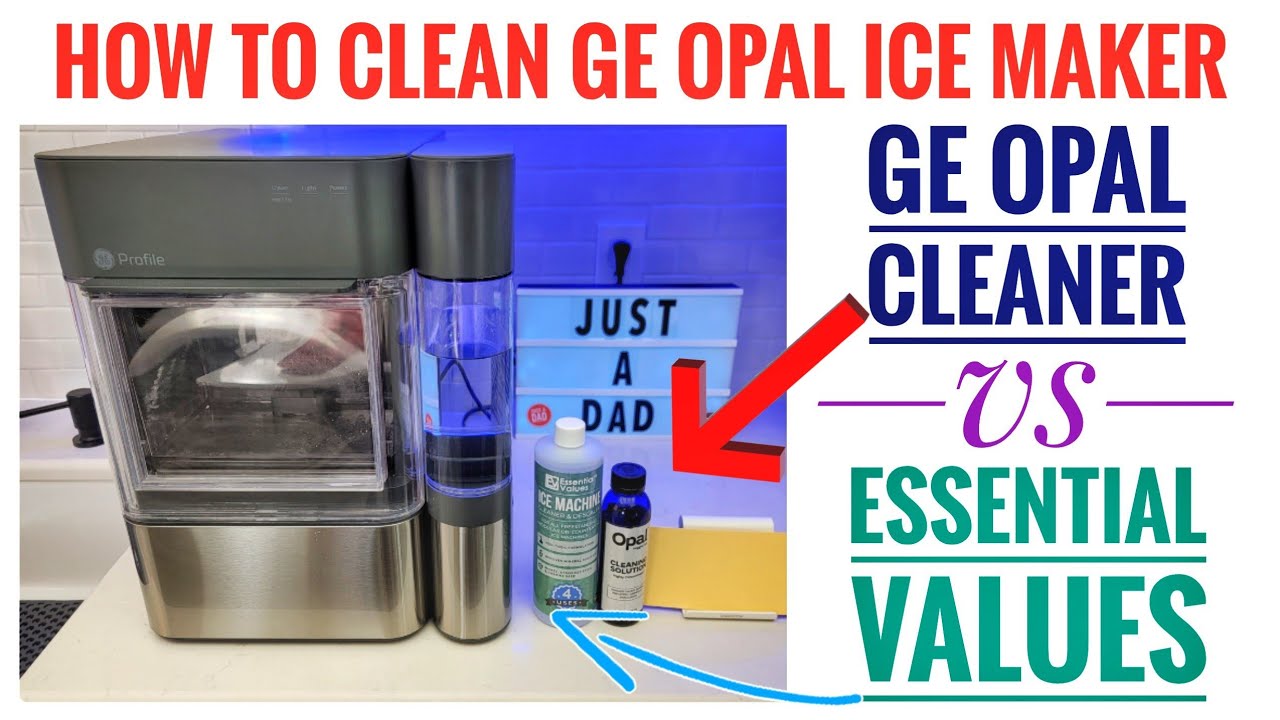
How to descale a GE Opal ice maker step by step
The basic process below explains how to descale a GE Opal ice maker safely. The control button and drain design may vary between Opal, Opal 2.0, and newer models.
1. Turn off and unplug the ice maker
Stop the ice maker and unplug it from the wall. Remove the ice bin and throw away any remaining ice.
Do not try to descale the machine while it is making ice. Unplugging it reduces the risk of electrical shock and gives the internal water system time to stop.
2. Drain the old water
Open the drain cap or drain tube, depending on your model. Place a bowl under the outlet and let the reservoir empty fully.
Some Opal machines have more than one drain point. Check the manual and drain each area listed by GE. A small amount of water may remain inside the pump or tubing, so do not worry if the machine does not become completely dry at once.
3. Remove and wash loose parts
Take out the ice bin, drip tray, water filter, and scoop if your model has them. Wash removable parts with warm water and a small amount of mild dish soap.
Rinse each part well. Soap left behind can create foam during the cleaning cycle and may affect the taste of the ice.
Never immerse the main electrical unit in water. Wipe its outside with a damp cloth instead.
4. Add the descaling solution
Prepare the cleaner according to its label or your GE owner’s manual. Pour the correct amount into the water reservoir.
If your model’s instructions allow a vinegar-based cleaning method, use the stated ratio and contact time. Do not assume that every Opal model uses the same amount. The wrong mixture can damage the unit or leave an unpleasant smell.
5. Start the cleaning cycle
Close the lid and start the Opal cleaning cycle. On many models, this means holding the clean button for several seconds, but the exact control can differ.
Let the full cycle finish. The solution needs time to move through the water path and loosen scale. Do not interrupt the cycle unless the machine makes an unusual grinding sound, leaks, or shows an error.
6. Let the solution work
If the manual or cleaner label calls for a waiting period, follow it. This dwell time helps dissolve mineral deposits.
Do not leave acidic cleaner in the machine overnight unless the product specifically permits it. A longer soak is not always safer. It may wear seals or affect metal surfaces.
7. Drain the machine again
When the cleaning cycle ends, unplug the ice maker and drain the solution completely. Look at the drained liquid. Cloudiness or small white particles can be normal during the first cleaning.
If you see large chunks of scale, repeat the cleaning process only if the product instructions and GE manual allow it. Do not scrape inside the water path with a knife or metal tool.
8. Rinse the reservoir and water path
Fill the reservoir with clean water, run the rinse or cleaning cycle, and drain it. Repeat this step at least two or three times, or until there is no cleaner smell.
Taste and odor are useful checks, but they are not the only test. Rinse until the water looks clean and the manufacturer’s directions are satisfied.
9. Clean the ice bin and drip tray
Wash the bin and tray again with mild dish soap. Rinse them well and dry them with a clean towel.
If the bin has a cloudy film, let it soak briefly in warm soapy water. Use a soft cloth rather than a rough scrub pad, which can scratch the plastic and create places for residue to collect.
10. Reassemble and make a discard batch
Replace the dry parts and reconnect the machine. Make one small batch of ice and discard it.
This final batch helps remove any remaining taste from the water path. Your next batch should be clear, fresh, and free from cleaner odor.
These steps cover how to descale a GE Opal ice maker without forcing mineral deposits deeper into the machine. If water still will not circulate after cleaning, the pump, filter, or internal tubing may need service.
How to sanitize a GE Opal after descaling
Descaling alone does not remove every type of residue. After mineral buildup is gone, you may need to sanitize the machine according to GE’s instructions.
A common manufacturer-style sanitation process uses a very small amount of unscented household bleach diluted in water. However, the exact amount and procedure can vary by model. Follow your owner’s manual or the instructions supplied with the GE Opal cleaning kit.
Keep these safety rules in mind:
- Never mix bleach with vinegar, descaler, or any other cleaner.
- Use only unscented bleach if the manual permits it.
- Rinse the machine thoroughly after sanitation.
- Do not make ice for serving until all chemical odor is gone.
- Keep bleach away from children, pets, clothing, and skin.
Descaling and sanitation are separate jobs. Think of descaling as removing limescale from a kettle, while sanitation is more like washing the inside after the scale is gone.
How often should you descale a GE Opal ice maker?
The right schedule depends on your water hardness and how often you use the machine. A home with very hard water may need more frequent cleaning than a home with filtered or softened water.
A practical schedule is:
- Light use with soft water: descale about every three months
- Regular use with average water: descale every one to two months
- Daily use with hard water: inspect monthly and clean when scale appears
- Any use with odor, flakes, or slow production: clean promptly
A water filter can reduce some impurities, but it may not remove all minerals. Filter replacement is also important. An old filter can restrict flow and make the machine work harder.
Watch for early warning signs instead of waiting for a serious problem. White spots around the reservoir, a rough water surface, or a change in ice texture often means it is time to clean.

Mistakes to avoid when descaling a GE Opal ice maker
Many cleaning problems come from using too much force or too much product. The safest approach is gentle, steady, and based on the manual.
Avoid these common mistakes:
- Running the machine with an empty reservoir
- Using an unapproved strong acid
- Mixing cleaning chemicals
- Skipping the rinse cycles
- Scraping scale with a knife
- Pouring water over the control panel
- Submerging the base
- Leaving wet parts closed inside the machine
- Returning old ice after cleaning
- Ignoring a clogged or expired water filter
One mistake I often see in real-world cleaning is stopping after the first rinse because the water looks clear. Odor can remain in tubing even when the reservoir looks clean. Multiple rinse cycles are a small effort that prevents a disappointing first glass of ice.
Another useful lesson is to clean the removable parts separately. Running a machine-cleaning cycle will not remove every film from the ice bin, lid, or drip tray.

How to improve the cleaning results
Small habits can make learning how to descale a GE Opal ice maker much easier.
Use these practical tips:
- Use filtered water if your local water is hard.
- Replace the Opal water filter on the recommended schedule.
- Empty old water before storing the machine.
- Leave the lid open after cleaning so the inside can air-dry.
- Wipe the ice bin regularly.
- Keep the unit level on a stable counter.
- Clean the machine before a long period of storage.
- Keep the drain area free of crumbs and debris.
Do not use a water softener salt solution in the Opal reservoir. Softened water can still contain chemicals or minerals that are not ideal for ice production.
If the machine has a persistent error, leaking water, a stalled auger, or a pump that runs without moving water, stop cleaning attempts and contact GE support or a qualified appliance technician. Descaling cannot repair a failed pump or damaged sensor.

When professional service may be needed
A successful cleaning should improve water flow, smell, and ice quality. If it does not, the cause may be mechanical rather than mineral buildup.
Seek help when:
- The unit leaks after cleaning
- The pump stays noisy or runs dry
- The cleaning cycle will not start
- The machine repeatedly stops with an error
- The auger does not turn
- Ice production remains very low
- The water path appears blocked
- A cracked reservoir or seal is visible
Do not take apart sealed sections unless GE specifically instructs you to do so. Opening the machine can create an electrical hazard and may affect warranty coverage.
When contacting support, have the model number, serial number, error code, and a short description of the cleaning steps ready. A photo of scale or leaking water can also help explain the problem.
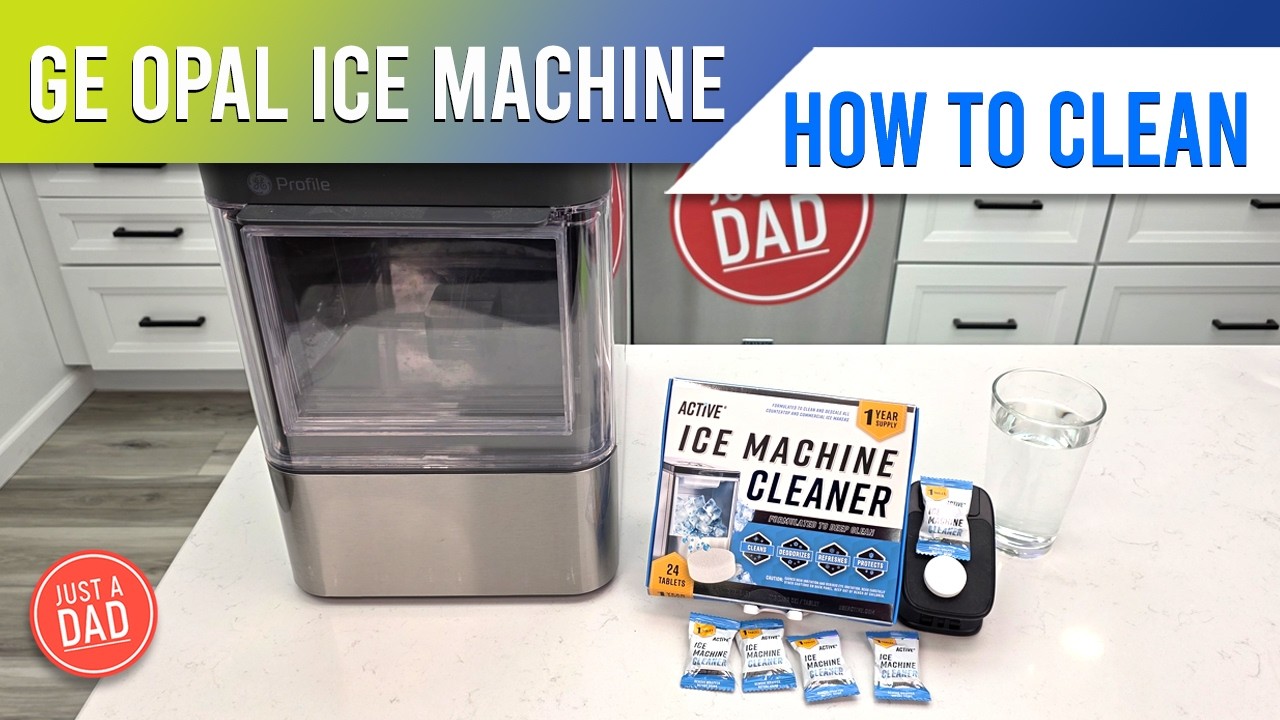
Frequently Asked Questions about how to descale a GE Opal ice maker
Can I use vinegar to descale a GE Opal ice maker?
Some Opal cleaning instructions may allow a diluted vinegar method, while other models recommend a specific cleaning solution. Check the manual for your model, never mix vinegar with bleach, and rinse the machine several times after use.
How long does it take to descale a GE Opal ice maker?
The full process often takes about 30 to 60 minutes, plus extra time for rinsing and drying. Heavy scale may require a second approved cleaning cycle, but do not extend the chemical soak beyond the product instructions.
How do I know when my GE Opal ice maker is clean?
The reservoir should be free of visible scale, the water should have no cleaner smell, and the machine should produce normal ice. Always discard the first batch after cleaning.
Can I make ice during the descaling process?
No. Do not consume ice made with a descaling solution or cleaning mixture. Drain the solution, rinse the water path fully, and make a discard batch before using the ice.
Why does my GE Opal still smell after cleaning?
A lingering smell usually means cleaner remains in the reservoir, tubing, bin, or drain area. Run additional clean-water rinse cycles, wash the removable parts, and let the machine air-dry with the lid open.
Can I use bleach and descaler together?
Never combine bleach with a descaler, vinegar, or any other chemical. Use one product at a time, drain it fully, and rinse the machine before starting a different cleaning step.
Does a water filter prevent the need to descale?
No. A filter can reduce some particles and may improve water quality, but it does not always remove the minerals that create scale. Regular inspection and descaling are still needed, especially with hard water.
Conclusion
Knowing how to descale a GE Opal ice maker helps keep the water path clear, the ice tasting fresh, and the machine working smoothly. Turn the unit off, drain it, use an approved cleaner, run the full cycle, rinse well, and discard the first batch.
Clean removable parts separately and never mix chemicals. Start a regular cleaning routine based on your water hardness and ice use, then check the owner’s manual for model-specific details. If this guide helped, explore your GE Opal manual for deeper care instructions and share your cleaning experience in the comments.