
Filter cooled cooking oil through a fine strainer, then a coffee filter, and store it in a clean, sealed jar.
Knowing how to filter cooking oil to reuse can save money and reduce kitchen waste. The process is simple, but safe reuse depends on more than removing crumbs. Oil type, cooking heat, food bits, storage, and signs of spoilage all matter. This guide explains the best method, common mistakes, and when used oil belongs in the trash.
:max_bytes(150000):strip_icc()/Is-It-Safe-to-Reuse-Cooking-Oil-8255d5e32c4d4915abd33ff7c2354118.jpg)
Why Filter Cooking Oil for Reuse?
Deep-frying oil often has plenty of life left after one use. Filtering removes loose crumbs, batter, herbs, and other food particles that can burn during the next cooking session.
Learning how to filter cooking oil to reuse also helps protect its flavor. Small food bits can make fresh food taste bitter, smoky, or stale. They can also speed up oil breakdown when you heat the oil again.
Still, filtering cannot restore old oil. It removes solid debris, but it does not remove all odors, moisture, or chemical changes caused by high heat. Think of filtering as cleaning the oil, not making it brand new.
You can often reuse oil from:
• Fried potatoes
• Doughnuts and other plain pastries
• Breaded vegetables
• Fried chicken
• Fish, if you plan to use the oil for seafood again
Oil used for strongly flavored foods may carry that flavor into the next dish. For example, oil used for fish may not suit cookies or French fries.

What You Need to Filter Used Oil
You do not need special equipment to learn how to filter cooking oil to reuse. A few common kitchen tools work well.
Gather:
• A heat-safe bowl, pot, or large measuring cup
• A fine-mesh metal strainer
• Cheesecloth, a clean muslin cloth, or an unbleached coffee filter
• A clean, dry glass jar with a tight lid
• A funnel
• Oven mitts or heat-resistant gloves
• A label and marker
A metal strainer catches larger crumbs. A coffee filter catches smaller particles. For very dirty oil, use both tools in stages.
Avoid thin plastic containers for warm oil. Heat can soften plastic or cause unwanted chemicals to move into the oil. A clean glass jar is the safest choice for storage.
Make sure every tool is dry. Water and hot oil do not mix. Even a small amount of water can cause hot oil to spit and burn you.
How to Filter Cooking Oil to Reuse Safely
Follow these steps for a clean and safe result.
1. Let the oil cool
Turn off the heat and let the oil cool after frying. Do not handle it while it is bubbling or smoking.
Warm oil flows better than cold oil, but it should not be dangerously hot. A practical range is about 100°F to 150°F. If you do not have a thermometer, wait until the oil is warm and fluid but no longer giving off heat waves or smoke.
Never pour boiling-hot oil into a paper filter. The filter may tear, and the oil can cause a serious burn.
2. Remove large food pieces
Use a slotted metal spoon to lift out large crumbs, breading, or herbs. This makes the final filtering step faster and helps prevent a coffee filter from clogging.
Do not press the food bits into the oil. Pressing can release moisture and strong flavors back into the oil.
3. Strain through a fine-mesh sieve
Place a fine-mesh metal strainer over a heat-safe bowl or pot. Pour the oil through it slowly.
This first pass removes large pieces. If the oil came from fried chicken or heavily breaded food, you may need to repeat this step.
4. Filter the oil a second time
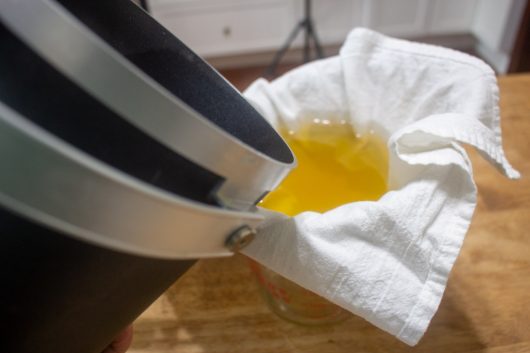
For cleaner oil, line the strainer with cheesecloth or place a coffee filter inside it. Pour the oil slowly through the filter.
Coffee filters work well, but they can be slow. If the oil stops flowing, replace the filter instead of pushing the residue through. Forcing it defeats the purpose.
5. Check the filtered oil
Freshly filtered oil should look fairly clear for its type. Some oils naturally have a darker color, so color alone does not prove that the oil is bad.
Look for:
• A strong burnt or sour smell
• Thick, sticky, or gummy texture
• Heavy darkening
• Foam that appears during normal heating
• Excessive smoke at a lower heat than usual
• A stale or unpleasant taste
If you notice these signs, discard the oil. Filtering cannot correct them.
6. Transfer and label the oil
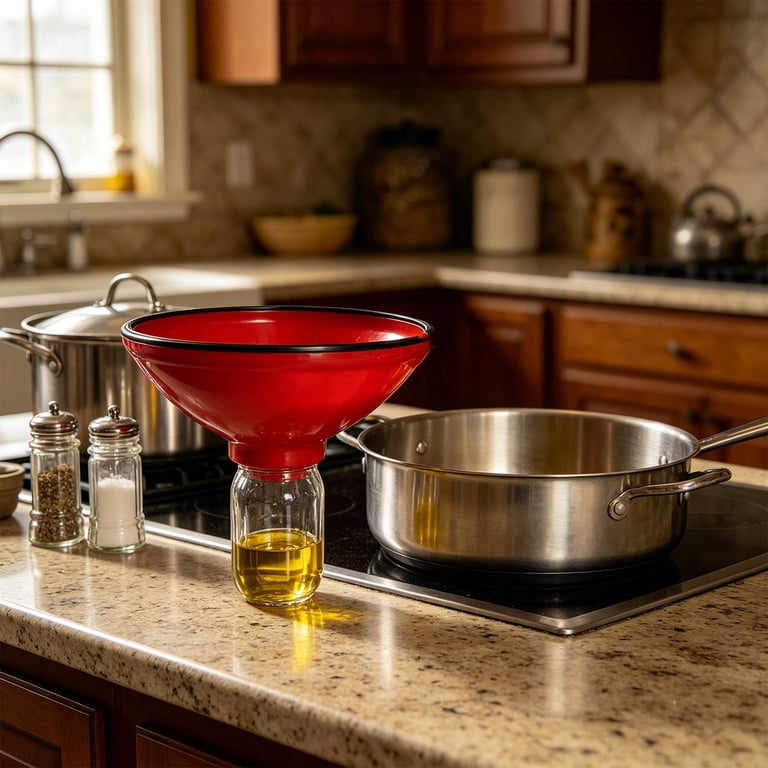
Use a dry funnel to pour the filtered oil into a clean glass jar. Leave a little space at the top, then close the lid firmly.
Label the jar with the oil type and date. If the oil touched fish, spicy food, or strongly seasoned meat, write that down too. This small habit prevents flavor surprises later.

The Best Filters for Used Cooking Oil
Different filters suit different levels of debris. Choosing the right one makes learning how to filter cooking oil to reuse easier.
Fine-mesh strainer
A fine-mesh strainer is the best first step. It is reusable, quick, and strong enough for warm oil.
It will not catch very fine flour or small seasoning particles. Use it with a second filter when the oil looks cloudy or has many tiny crumbs.
Cheesecloth
Cheesecloth gives a good balance between speed and cleanliness. Fold it into two or three layers for better filtration.
Use a clean piece each time. A cloth that still holds soap, moisture, or old food odors can affect the oil.
Coffee filter
A coffee filter catches very fine particles. It is useful when you want the cleanest possible oil for another frying session.
The downside is speed. Coffee filters clog easily, especially with breading or flour. Pour slowly, and change the filter when the flow becomes very slow.
Paper towel
A paper towel can work in an emergency, but it is not ideal. It may tear, shed fibers, or absorb a large amount of oil.
A proper coffee filter or cheesecloth is usually a better choice.
Oil filter paper
Some cooking supply stores sell filter cones made for frying oil. These filters can be useful if you fry often, but they are not essential for normal home use.

How to Store Filtered Cooking Oil
Good storage is a major part of how to filter cooking oil to reuse. Clean oil can still spoil if it is stored badly.
Use these storage rules:
• Store the oil in a clean, dry, airtight glass container.
• Keep it in a cool, dark cabinet away from the stove.
• Protect it from sunlight, heat, air, and moisture.
• Keep used oil separate from fresh oil when possible.
• Label the container with the date and type of food cooked in it.
• Refrigerate oil if you want longer storage, but expect it to become cloudy or thick.
Cloudiness in the refrigerator does not always mean the oil is spoiled. Many oils become cloudy when chilled and return to a normal liquid state at room temperature.
Do not store oil while it is still warm in a sealed jar. Let it cool first, but do not leave it uncovered for hours. Once it is cool and filtered, close the container.
For best quality, use filtered oil within a few weeks. If it develops an off smell, strange taste, sticky texture, or other changes, throw it away.
How Many Times Can You Reuse Cooking Oil?
There is no single number that applies to every batch. Oil quality depends on the oil type, cooking temperature, frying time, food moisture, and how well you filter and store it.
Many home cooks reuse frying oil one to three times. Oil used for low-moisture foods, such as potatoes, may last longer than oil used for wet batter or meat.
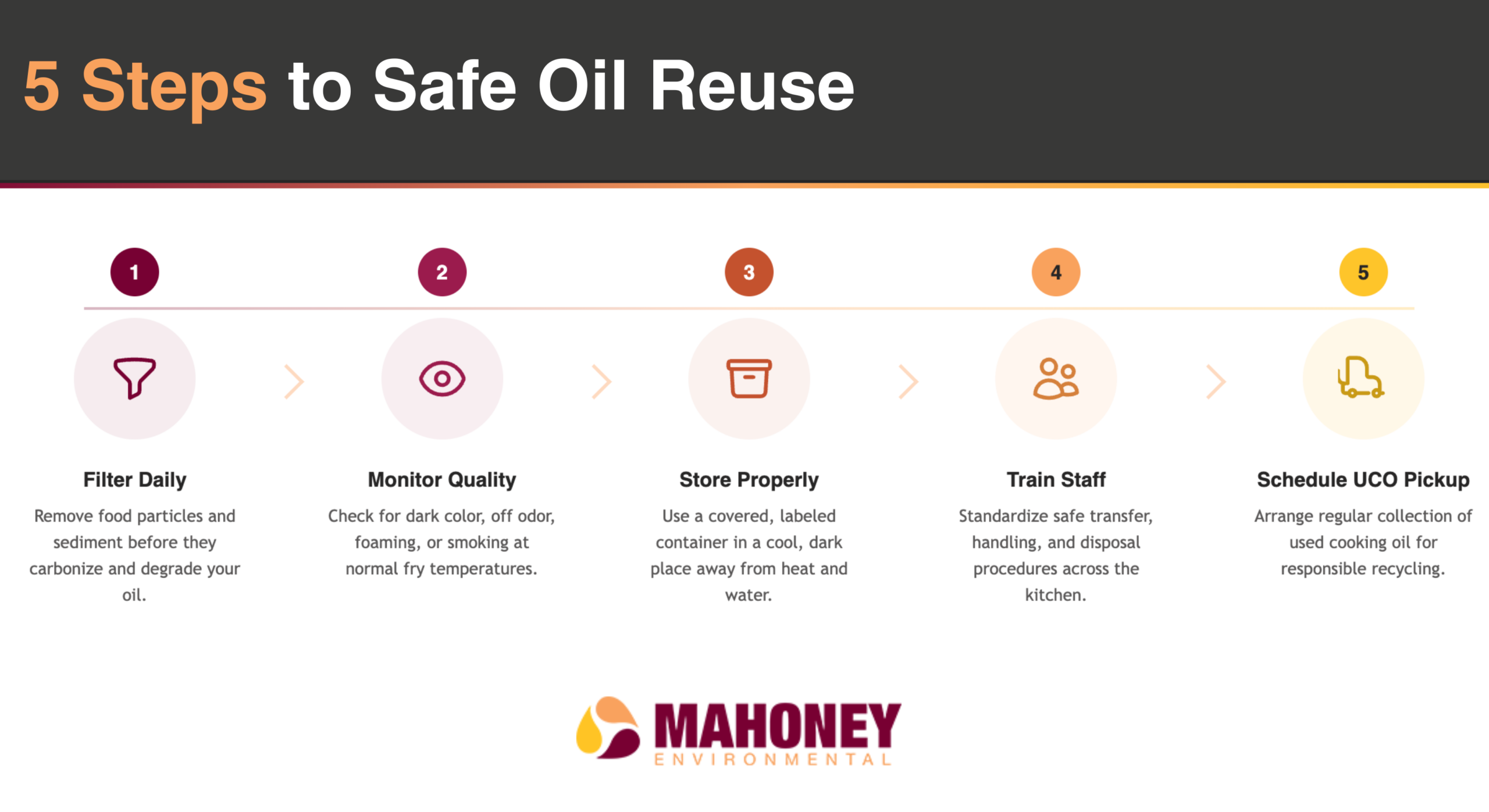
Use a practical check before every reuse:
• Does the oil smell clean or neutral?
• Is it free from large crumbs and fine sediment?
• Does it remain fluid rather than sticky?
• Does it heat without smoking too soon?
• Did it develop foam during the last use?
• Does it have an unpleasant taste?
If the answer looks good, you may reuse it. If the oil smells burnt or smokes quickly, do not try to save it with another filter.
Repeated heating breaks down oil over time. Heat, oxygen, water, and food particles all contribute to this process. A filter removes particles, but it does not stop oxidation.

Which Cooking Oils Are Best for Reuse?
Refined oils with a neutral flavor often work well for frying and reuse. Examples include:
• Peanut oil
• Canola oil
• Vegetable oil
• Corn oil
• Sunflower oil
• Safflower oil
These oils usually have a mild taste and a relatively high smoke point. Their performance still depends on the brand, refining process, and cooking temperature.
Extra-virgin olive oil can be reused in some cooking situations, especially for gentle frying. However, its stronger flavor may carry into later dishes. Unrefined oils also tend to have more flavor compounds that can change during repeated heating.
Avoid mixing used oil with fresh oil unless you know the old oil is still in good condition. Adding fresh oil does not repair degraded oil. It only dilutes it.
It is also wise to keep flavored oils separate. Oil used for fish, curry, garlic, or hot peppers may be safe but unsuitable for delicate foods.
Common Mistakes When Reusing Frying Oil
Even when people know how to filter cooking oil to reuse, a few mistakes can reduce quality or create safety risks.
Pouring oil down the drain
Never pour cooking oil into a sink, toilet, or storm drain. It can harden inside pipes and contribute to clogs.
Let unwanted oil cool, then pour it into a sealed container. Place the container in the trash according to local waste rules. Some communities collect used cooking oil for recycling into fuel or other products.
Filtering oil while it is dangerously hot
Hot oil can burn skin, melt plastic, and ignite near an open flame. Give it time to cool before moving or filtering it.
Saving oil with water in it
Water may come from wet food, steam, condensation, or a damp container. It can cause popping during the next use and may shorten the oil’s usable life.
Always use dry tools and a dry storage jar.
Leaving crumbs in the oil
Small crumbs continue to burn during the next frying session. This can make the oil dark, bitter, and smoky.
Use a fine filter, not just a large slotted spoon, when you plan to reuse the oil.
Relying only on color
Dark oil is not always unsafe, and light oil is not always fresh. Smell, texture, smoke behavior, and cooking history provide better clues.
Heating oil past its smoke point
Smoke signals that the oil is becoming too hot. Repeated overheating speeds up oil breakdown and creates unpleasant flavors.
Use a thermometer when possible. Frying temperatures often fall between 325°F and 375°F, depending on the food.
A Simple Example: Filtering Oil After Frying Chicken
Suppose you fry chicken in canola oil. The oil may contain flour, spices, small crumbs, and water from the chicken.
First, turn off the burner and let the oil cool until it is warm but safe to handle. Remove large pieces with a slotted spoon, then pour the oil through a fine-mesh strainer into a heat-safe bowl.
Next, line the strainer with cheesecloth or a coffee filter. Pour the oil through this second layer into a clean glass jar. Label it “chicken oil” and store it in a cool, dark place.
Use it for another savory meal, such as fried chicken, potatoes, or vegetables. Do not use it for pancakes or pastries unless you are comfortable with a mild savory flavor.
In my own kitchen tests, the biggest improvement comes from filtering twice and storing the oil away from the stove. A single quick strain often leaves fine crumbs behind, and those crumbs burn during the next use.
When You Should Throw Cooking Oil Away
Filtering is not a way to rescue oil that has clearly deteriorated. Discard it when you notice:
• A rancid, sour, metallic, or burnt smell
• A sticky or unusually thick texture
• Heavy foam during heating
• Smoke at a much lower temperature than expected
• A dark, murky appearance with many particles
• An unpleasant taste in food
• Mold or visible contamination
• Oil that has been stored in poor conditions for too long
When in doubt, throw it out. The cost of replacing a small amount of oil is much lower than the cost of ruining food or risking illness.
Never taste oil that smells spoiled. Your nose can warn you, but tasting is not necessary.
Food safety agencies advise storing food properly and avoiding practices that allow contamination. Used frying oil is not a preserved food, so keep it clean, dry, sealed, and cool.
Benefits and Limits of Reusing Filtered Oil
Reusing oil has clear benefits:
• It reduces food waste.
• It saves money.
• It limits the amount of oil sent to drains or landfills.
• It can improve cooking efficiency.
• It lets you retain a familiar flavor for certain dishes.
There are also limits:
• Oil quality declines with repeated heating.
• Strong food flavors can carry over.
• Filtering does not remove every degraded compound.
• Poor storage can cause off flavors.
• Oil can become unsafe to handle if moved while hot.
The best approach is careful reuse, not endless reuse. Filter the oil well, store it correctly, inspect it before cooking, and replace it when its quality drops.
Frequently Asked Questions About How to Filter Cooking Oil to Reuse
Can I filter cooking oil with a coffee filter?
Yes. A coffee filter can remove very small crumbs and fine sediment from used oil. Let the oil cool first, and pour slowly because the filter may clog.
How long should cooking oil cool before filtering?
Wait until the oil is no longer smoking or bubbling and is warm enough to flow safely. For many kitchens, this means cooling it below about 150°F before handling it carefully.
Can I reuse oil after frying fish?
Yes, if the oil still smells fresh and shows no signs of burning or spoilage. Store it separately and reuse it for seafood or other savory foods because the fish flavor may remain.
How many times can I reuse filtered cooking oil?
Many home cooks reuse oil one to three times, but there is no fixed limit. Stop using it when it smells bad, smokes too soon, foams heavily, becomes sticky, or gives food an unpleasant taste.
Should I refrigerate filtered cooking oil?
Refrigeration is optional and may extend storage quality, but it can make oil cloudy or thick. Store it in an airtight container and allow it to return to room temperature before using it.
Can I mix used oil with fresh oil?
It is better to keep them separate. Fresh oil cannot repair old or degraded oil, and mixing makes it harder to track the age and quality of the used oil.
What is the safest way to dispose of old cooking oil?
Cool the oil and place it in a sealed container before putting it in the trash, unless your local recycling program accepts used cooking oil. Never pour it down a drain.
Conclusion
Learning how to filter cooking oil to reuse is easy when you follow a careful routine. Cool the oil safely, remove large crumbs, strain it through a fine mesh, and use a coffee filter or cheesecloth for a second pass.
Store the clean oil in a dry, airtight glass jar away from heat and light. Check its smell, texture, color, and smoking behavior before every use. When the oil seems stale, sticky, smoky, or unpleasant, discard it without hesitation.
Try this two-stage filtering method after your next frying session, and share your best kitchen-saving tips in the comments.