
You can slow cook without a slow cooker by using a covered Dutch oven in a low oven or a heavy pot on the stove. For most American home kitchens, the oven method is the most steady and forgiving. Set the oven to about 200°F to 300°F, keep the pot covered, and cook until the food is tender and safe to eat.
Slow cooking needs three things: low heat, steady heat, and enough moisture. A slow cooker provides these in one appliance, but a Dutch oven or heavy saucepan can do the same job with closer attention.

The Best Ways to Slow Cook Without a Slow Cooker
The oven, stovetop, and some countertop appliances can all cook food slowly. Each method gives a different level of heat control.
| Method | Best for | Typical heat setting | Main benefit | Main limit |
|---|---|---|---|---|
| Covered Dutch oven | Pot roast, chili, stew, pulled pork | 200°F–300°F oven | Steady, even heat | Takes several hours |
| Heavy pot on the stove | Soups, beans, stews, braises | Low simmer | Easy to adjust | Needs more watching |
| Roasting pan with a tight cover | Large roasts and family meals | 225°F–300°F oven | Fits larger cuts | May lose moisture |
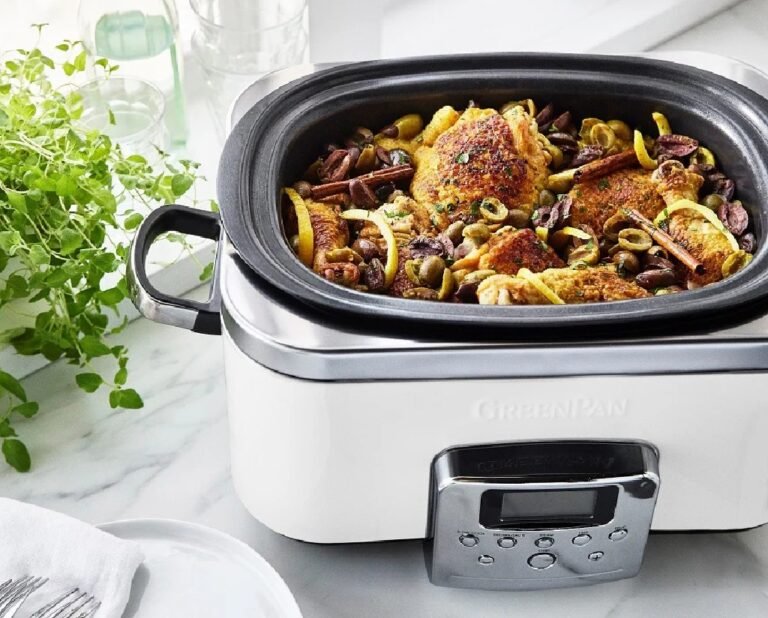
| Rice cooker or multicooker | Simple stews and grains | Appliance-specific | Useful if already available | Settings vary |
| Pressure cooker | Fast braises and tough cuts | High pressure | Much faster | Not technically slow cooking |
A Dutch oven works especially well because its heavy walls hold heat. A tight lid also traps steam, which helps keep meat and vegetables moist.
A regular pot can work too. Choose one with a thick base and a lid that fits well. Thin pots may create hot spots and scorch food on the bottom.
The oven is usually better than the stovetop for long cooking. Oven heat surrounds the pot, while a burner heats mainly from below. This makes stovetop cooking more likely to stick or boil too hard.

How to Slow Cook in the Oven
To slow cook in the oven, brown the food first, add liquid, cover the pot, and cook at a low temperature until tender.
What you need
- A heavy, oven-safe pot with a lid
- A burner for browning
- An oven
- A meat thermometer
- A trivet or heat-safe surface
- Enough time for slow cooking
If your pot has a plastic handle, knob, or lid insert, check that it is oven-safe before using it. Use a roasting pan and foil if you do not have a lidded pot, but seal the foil tightly.
Step-by-step oven method
1. Thaw the food safely
Thaw meat in the refrigerator before slow cooking. The USDA Food Safety and Inspection Service advises against putting frozen meat into a slow cooker because it can spend too long at unsafe temperatures. The same concern applies to other low-heat cooking methods.
2. Cut large foods into even pieces
Cut meat and vegetables into similar-size pieces when making stew. Even pieces cook at a more similar rate.
Keep very small pieces from sitting in liquid for many hours. They may become soft or break apart before the larger ingredients finish.
3. Brown the meat
Heat a small amount of oil in the pot. Brown the meat in batches until the outside develops a deep color.
Browning is not required for food safety, but it adds flavor. Avoid crowding the pot. Crowded meat releases steam instead of browning.
4. Add vegetables and liquid
Add onions, garlic, carrots, celery, herbs, spices, and other ingredients. Pour in enough liquid to cover about one-third to one-half of the food.
Good choices include:
- Low-sodium broth
- Water
- Crushed tomatoes
- Wine used with broth or water
- Beer or cider in suitable recipes
- A mixture of stock and tomato paste
Do not fully submerge every ingredient unless the recipe calls for a soup. Food releases moisture as it cooks, and a covered pot loses little liquid.
5. Bring the liquid to a gentle simmer
Place the covered pot on the stove and bring the liquid to a gentle simmer. This shortens the time the food takes to heat in the oven.
A simmer has small bubbles around the edge. A rolling boil has large, active bubbles. A hard boil can make meat dry and cause vegetables to fall apart.
6. Cover the pot and move it to the oven
Place the lid on the pot. Put it in an oven set between 200°F and 300°F.
A useful starting point is:
- 200°F–225°F: very gentle cooking for long braises
- 250°F–275°F: balanced heat for most stews and pot roasts
- 300°F: faster cooking, with a greater risk of drying or boiling
Ovens vary. The dial may not match the actual temperature, especially in older ovens. An inexpensive oven thermometer can help you check the real heat.
7. Check the food near the expected finish time
Start checking about 30 to 60 minutes before the recipe’s expected finish. Test meat with a fork or thermometer and check vegetables for tenderness.
If the liquid is boiling hard, lower the oven temperature. If the liquid is barely warm after a long period, increase the heat slightly.
8. Rest and adjust the dish
Let meat rest for about 10 to 20 minutes before slicing. Taste the sauce and adjust salt, pepper, acid, or herbs.
If the sauce is too thin, remove the lid and simmer it on the stovetop. If it is too thick, add a small amount of hot broth or water.
How to Slow Cook on the Stovetop
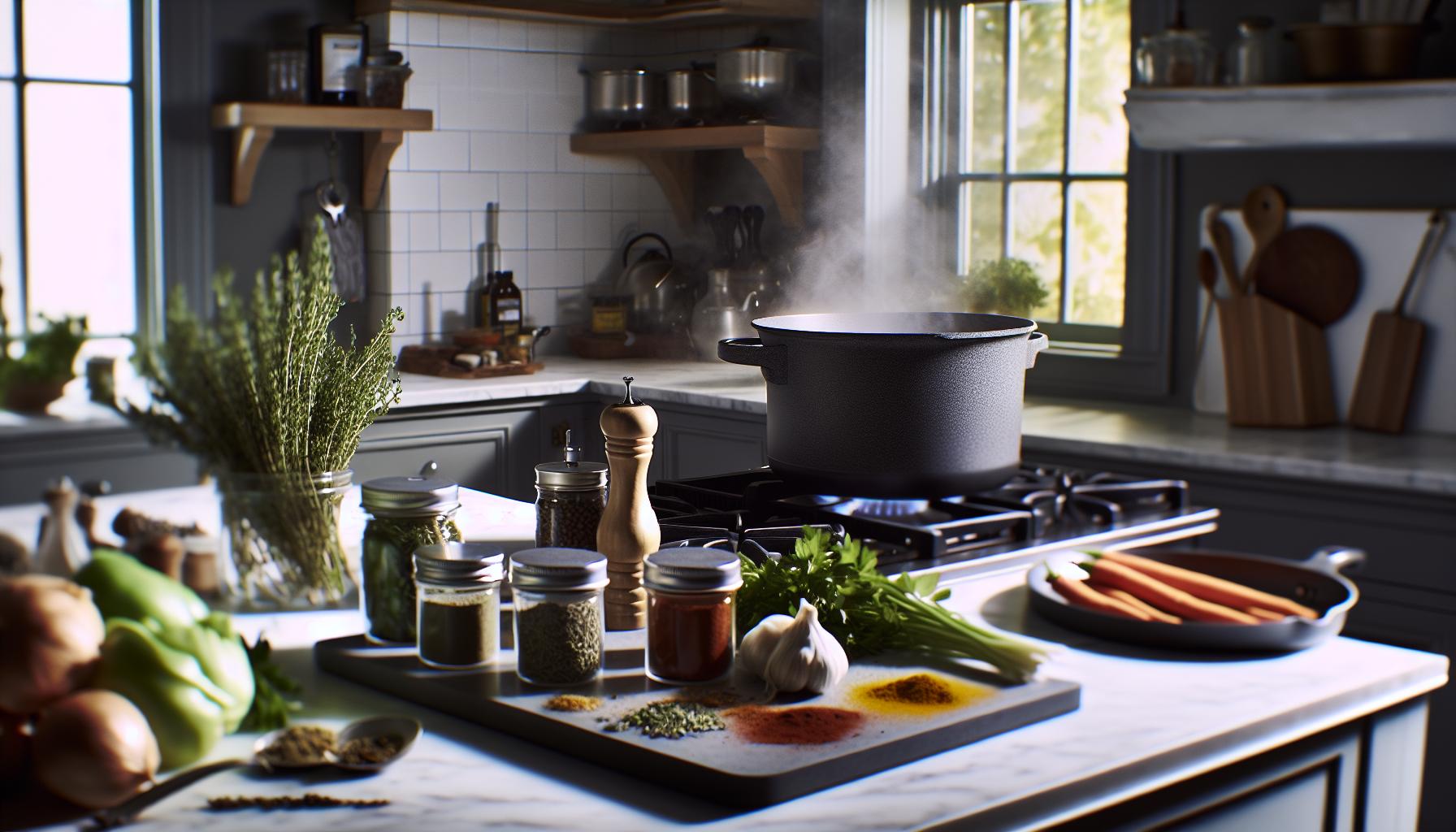
Stovetop slow cooking works best when the pot holds a gentle simmer, not a full boil. Use the lowest burner setting that keeps the liquid warm and lightly bubbling.
Stovetop steps
- Brown the meat in a heavy pot.
- Add the vegetables and cooking liquid.
- Bring the liquid to a gentle simmer.
- Cover the pot.
- Turn the burner to low.
- Check the pot every 20 to 30 minutes at first.
- Stir the bottom gently if the food may stick.
- Add hot water or broth if the liquid level drops too far.
A heat diffuser can reduce hot spots under a thin pot. If you do not have one, use the heaviest pot available and move it to a smaller burner.
Keep the lid on as much as possible. Every time you remove it, heat and steam escape. A loose lid can also allow too much liquid to evaporate.
How to tell if the heat is right
The liquid should show small bubbles from time to time. It should not shake the pot, foam heavily, or boil across the whole surface.
If the food sticks, the heat is too high, the pot is too thin, the liquid is too low, or the mixture needs stirring. Do not scrape burnt food from the bottom into the sauce. Move the unburned food to a clean pot.
Stovetop cooking needs more attention than oven cooking. It is a good choice when you can stay nearby and adjust the burner.

How Long Does Slow Cooking Take Without a Slow Cooker?
Cooking time depends on the food’s size, starting temperature, cut, liquid level, and heat setting. Use tenderness and internal temperature rather than time alone.
| Food | Approximate oven temperature | Typical time |
|---|---|---|
| Beef chuck roast, 3–4 pounds | 275°F | 3–4 hours |
| Pork shoulder, 3–5 pounds | 275°F–300°F | 4–6 hours |
| Chicken thighs in sauce | 275°F–300°F | 1½–3 hours |
| Beef or vegetable stew | 250°F–275°F | 2½–4 hours |
| Dried beans, soaked | 250°F–300°F | 1½–3 hours |
These are general planning ranges, not guarantees. A tough roast is done when a fork slides in with little resistance. A stew is done when the meat is tender and the vegetables are cooked through.
For temperature-based checks, use a food thermometer:
- Poultry: 165°F
- Ground beef, pork, lamb, or veal: 160°F
- Whole cuts of beef, pork, lamb, and veal: 145°F, followed by a three-minute rest
These minimum temperatures come from the USDA and apply to food safety. Tough cuts may need to reach a higher temperature range for collagen to soften, but tenderness alone does not replace checking poultry or ground meat for safe doneness.

How to Convert a Slow-Cooker Recipe
A slow-cooker recipe can often be adapted to an oven, but the timing will change. Do not treat “low” and “high” as exact oven temperatures. Slow-cooker settings differ by appliance and recipe.
Use this approach:
- Brown meat if the recipe allows.
- Reduce the liquid slightly if the pot will have a very tight lid.
- Transfer everything to a covered Dutch oven.
- Cook at about 250°F to 300°F.
- Begin checking when the food has cooked for roughly half to two-thirds of the listed slow-cooker time.
- Continue until the food reaches a safe temperature and the meat is tender.
For example, a recipe that lists 8 hours on low may finish in about 3 to 5 hours in a covered oven, depending on the cut and oven temperature. This is only a planning estimate. A large roast may need more time, while small pieces may finish much sooner.
Do not add delicate ingredients at the start unless the recipe expects them to cook for hours. Fresh herbs, dairy, seafood, pasta, and quick-cooking vegetables often work better near the end.

How Much Liquid Should You Use?
Use enough liquid to create steam and prevent scorching, but do not flood the dish. A covered pot usually needs less liquid than an uncovered pot because evaporation is slow.
For a braise, the liquid should usually reach about one-third to one-half of the meat’s height. For stew, use enough liquid to nearly cover the ingredients. For chili, begin with less liquid because tomatoes, onions, and meat release moisture.
Add hot liquid during cooking if needed. Cold liquid can lower the temperature and extend cooking time.
Too much liquid can weaken flavor and make the dish watery. If that happens, remove the lid and reduce the sauce after the meat and vegetables are tender.

Food Safety Rules for Slow Cooking Without a Slow Cooker
Low-temperature cooking requires careful handling because food may spend time between 40°F and 140°F, the range in which bacteria can grow quickly. The USDA calls this the “danger zone.”
Follow these rules:
- Thaw meat in the refrigerator, cold water, or microwave—not on the counter.
- Start with a hot pan or a preheated oven when the recipe permits.
- Do not cook a large frozen roast slowly from frozen.
- Use a thermometer to check poultry and ground meat.
- Keep raw meat separate from ready-to-eat foods.
- Refrigerate leftovers within two hours. If the room is above 90°F, refrigerate them within one hour.
- Store leftovers in shallow containers so they cool faster.
- Reheat leftovers to 165°F.
- Do not leave cooked food sitting in a turned-off oven for hours.
The USDA’s slow-cooker guidance explains that food should move through unsafe temperatures promptly. A covered pot is not automatically safe just because it is cooking slowly.
Common Problems and How to Fix Them
The meat is still tough
The meat may simply need more time. Tough cuts become tender when connective tissue breaks down, and that process cannot be rushed by checking every few minutes.
Keep the pot covered and continue cooking at a gentle simmer. If the liquid is boiling hard, lower the heat because aggressive boiling can make some meat dry and stringy.
The meat is dry
Dry meat usually means too much heat, too little liquid, too much cooking time, or a naturally lean cut.
Lower the oven temperature, make sure the lid seals well, and keep the meat partly covered with liquid. For future meals, choose cuts with more connective tissue, such as beef chuck, pork shoulder, or chicken thighs.
The vegetables are mushy
Add firm vegetables early and tender vegetables later. Carrots, potatoes, and parsnips can handle long cooking. Peas, green beans, zucchini, and fresh herbs often need less time.
Cut vegetables into larger pieces if they will cook for several hours.
The sauce is watery
Remove the lid and simmer the sauce on the stovetop after the food is tender. You can also thicken it with a small amount of cornstarch slurry.
To make a slurry, mix cornstarch with cold water until smooth. Stir it into the hot sauce a little at a time, then simmer until thickened.
The bottom is burned
The heat may be too high, the pot may be too thin, or the liquid may have evaporated. Transfer the unburned food to another pot without scraping the bottom.
Add hot broth if the dish needs more moisture. For the next batch, use lower heat, a heavier pot, and more frequent checks.
The food tastes bland
Slow cooking can soften flavors. Add salt in stages, then finish with an acid such as lemon juice or vinegar if suitable for the recipe.
Fresh herbs, grated cheese, chopped green onions, or a small amount of hot sauce can also brighten the finished dish.
What Foods Work Best With This Method?
Slow cooking without a slow cooker works best for foods that benefit from moist heat and time.
Good choices include:
- Beef chuck roast
- Pork shoulder
- Lamb shoulder
- Chicken thighs
- Short ribs
- Beans
- Lentils
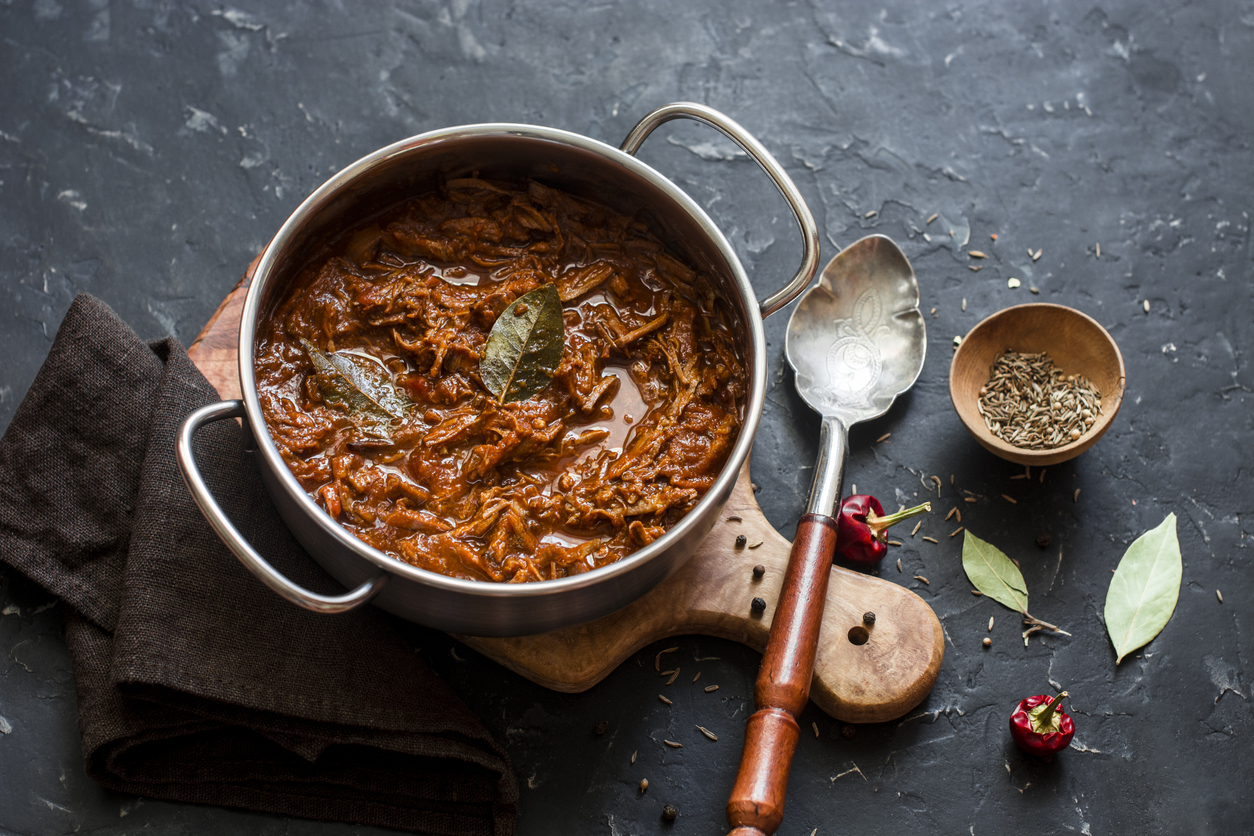
- Chili
- Beef stew
- Vegetable stew
- Tomato-based sauces
- Braised cabbage
Foods that need more care include fish, shrimp, pasta, rice, cream, and tender vegetables. These ingredients can overcook during a long braise.
A slow oven can also cook dried beans, but soak and sort them according to the recipe. Do not use a slow-cooking method for kidney beans unless they are properly boiled first; raw or undercooked kidney beans can contain a toxin that boiling destroys.
Key Takeaways
- Use a covered Dutch oven at about 200°F to 300°F.
- Keep the liquid at a gentle simmer, not a hard boil.
- Brown meat first for deeper flavor.
- Use a heavy pot with a tight lid.
- Check doneness with both tenderness and a food thermometer.
- Thaw meat before using a low-temperature cooking method.
- Add delicate ingredients near the end.
- Reduce watery sauce after the food is tender.
FAQs
Can I slow cook in a regular pot?
Yes. Use a heavy pot with a tight lid and cook it in a low oven. A regular pot may work on the stovetop, but it needs closer attention because the burner heats from below.
What oven temperature is equal to slow-cooker low?
There is no exact conversion because slow cookers vary by brand, size, load, and setting. As a practical starting point, use a covered pot at 250°F to 275°F, then adjust based on whether the liquid is gently simmering.
Can I slow cook meat without liquid?
Most tough cuts need some liquid or moisture for a successful braise. A dry, covered roast can work in some recipes, but it may not produce the tender texture associated with slow cooking.
Can I leave the pot unattended in the oven?
Only if the cookware is oven-safe, the lid fits securely, and the recipe does not require frequent checks. Avoid leaving a stovetop pot unattended because the heat may rise or the liquid may evaporate.
Is a Dutch oven required?
No. A deep oven-safe casserole, covered roasting pan, or heavy saucepan can work. The key features are a tight cover, enough depth, and even heat.
Can I use aluminum foil instead of a lid?
Yes, if the foil forms a tight seal and the cookware is oven-safe. Use two layers if needed. Do not let acidic food sit against bare aluminum for long periods, as it may affect flavor or the cookware surface.
Conclusion
The simplest way to slow cook without a slow cooker is to use a covered, heavy pot in a low oven. Brown the food, add a measured amount of liquid, keep the heat gentle, and cook until the food is both tender and safe.
If you use the stovetop, watch the simmer and check the liquid often. With the right pot and steady heat, a conventional oven or burner can produce the same kind of rich stews, braises, beans, and tender roasts without a dedicated slow cooker.