
Chef’s knife, cutting board, measuring set, skillet, saucepan, sheet pan, spatula, tongs, peeler, thermometer.
If you want quick wins in the kitchen, start with the right gear. I’ve taught dozens of new cooks, and I’ve seen confidence explode with a smart, simple kit. In this guide, I break down kitchen tools every beginner needs, why they matter, and how to use them well. You’ll get clear picks, real-world tips, and mistakes to avoid so you can cook better, faster, and with less stress.
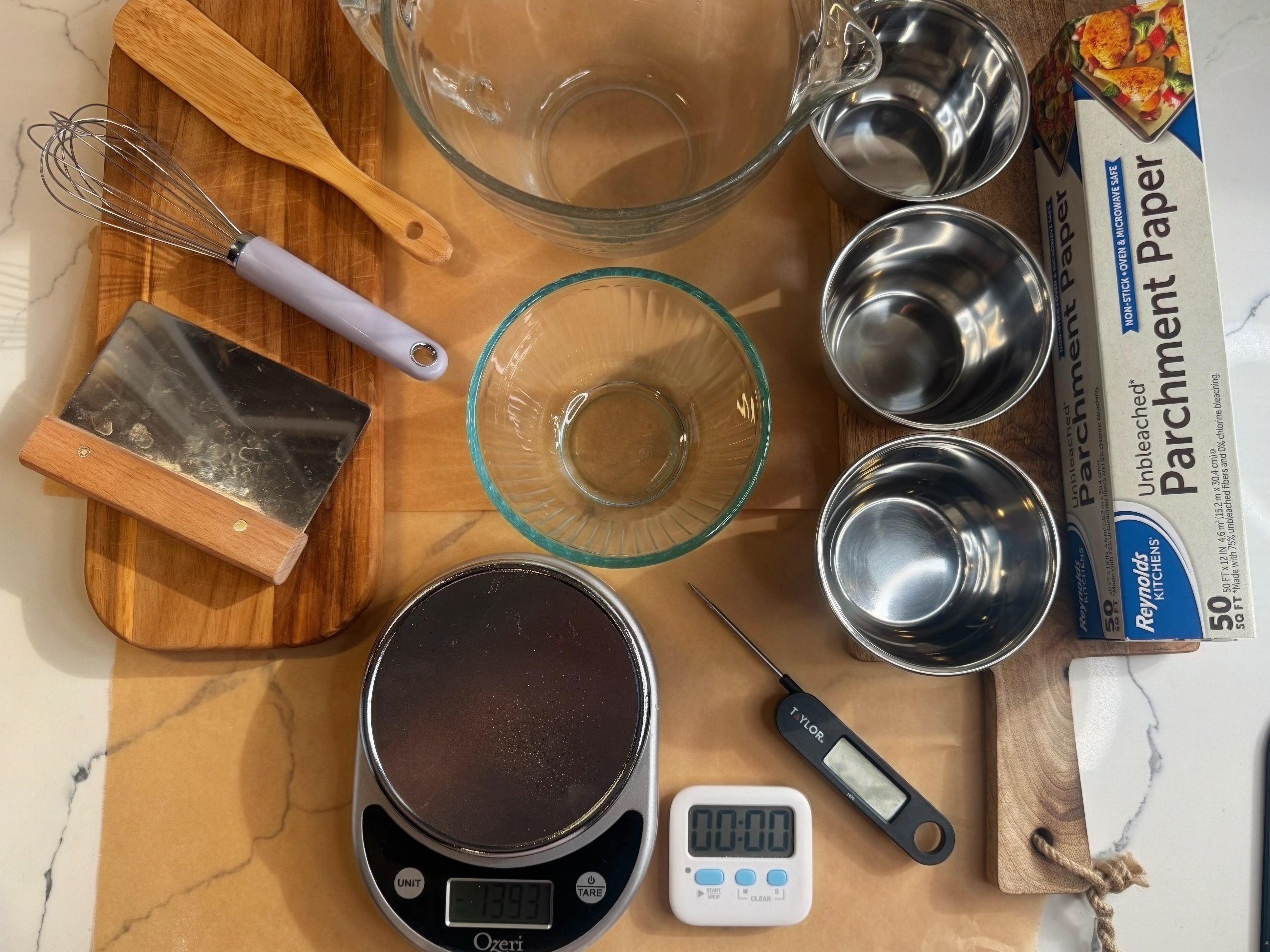
The essential shortlist: kitchen tools every beginner needs
Start simple. Buy tools that do more than one job, last for years, and are easy to clean. This list of kitchen tools every beginner needs keeps you on budget while covering 95% of daily cooking.
- Chef’s knife 8 inches For most slicing, dicing, and chopping.
- Paring knife For small cuts, peeling, and detail work.
- Cutting board Large, stable, and easy on knife edges.
- Measuring cups and spoons For accurate baking and sauces.
- Digital scale Optional but great for accuracy and less cleanup.
- Mixing bowls Nesting set with non-slip bases if possible.
- 10–12 inch skillet Stainless or nonstick for eggs, stir-fries, and searing.
- 2–3 quart saucepan For grains, sauces, and reheating.
- 5–6 quart pot or Dutch oven For soups, pasta, and braises.
- Sheet pan Rimmed, half-size, for roasting and baking.
- Tongs With scalloped ends for grip without tearing food.
- Spatula One flexible silicone for scraping and one fish spatula for turning.
- Wooden spoon Stir sauces without scratching pans.
- Whisk Balloon whisk for dressings and batters.
- Peeler Y-peeler for speed and safety.
- Box grater or microplane For cheese, zest, and aromatics.
- Can opener Reliable and easy to clean.
- Colander or fine-mesh strainer For pasta and rinsing grains.
- Instant-read thermometer For safe, juicy meat and perfect bread.
Buy these, and you’ve covered the kitchen tools every beginner needs to cook almost any weeknight meal.

Cutting and prep basics that build skills fast
A good knife teaches better than any recipe. When you use a sharp chef’s knife on a stable board, prep gets safer and quicker. That alone can save 15 minutes a night.
Knives that make cooking easier
- Choose a chef’s knife that feels balanced in your hand. If it tugs your wrist, skip it.
- Look for a comfortable handle, a blade that holds an edge, and easy maintenance.
- Keep it sharp. Hone weekly, sharpen every few months or when tomatoes fight back.
Personal tip from class: I watched a student switch from a dull bargain knife to a mid-range chef’s knife. Her onion dice went from tears and slips to clean, even cubes in two minutes. Confidence soared.
The right cutting board
- Get one large board so ingredients stay on the surface, not the counter.
- Plastic boards are dishwasher-safe. Wood is gentle on edges and looks great.
- Use a damp towel under the board to stop sliding.
Measuring, mixing, and scaling
- Dry and liquid measures are not the same. Use cups with spouts for liquids.
- A digital scale reduces dishes and boosts accuracy for bread and sauces.
- Nesting bowls keep your space tidy and speed up batch prep.
If you remember one phrase, make it this: kitchen tools every beginner needs start with a sharp knife and a steady board.
:max_bytes(150000):strip_icc()/sea-tramontina-seattle-tri-ply-clad-12-frying-pan-rkilgore-0595-0f9735e90b8b48ab8f79e34d5b59e23f.jpeg)
Heat and cookware essentials you’ll use every day
You do not need a full set. Three pans handle almost anything.
Skillet
- Stainless steel sears like a pro and builds fond for pan sauces.
- Nonstick is great for eggs and delicate fish. Use low to medium heat and silicone tools.
Saucepan
- A 2–3 quart pan covers grains, sauces, and oatmeal.
- Look for a snug lid and a solid handle.
Pot or Dutch oven
- Soups, stews, and pasta live here.
- Enameled cast iron holds heat. Stainless heats faster and is lighter.
Sheet pan
- Roast veggies, bake chicken thighs, toast nuts, and reheat pizza.
- Add a wire rack for extra-crisp wings.
From my system testing, the pan preheat rule is simple: hot pan, cold oil, then food. It reduces sticking and builds better browning. When people ask about kitchen tools every beginner needs for weeknight cooking, these pans top the list.
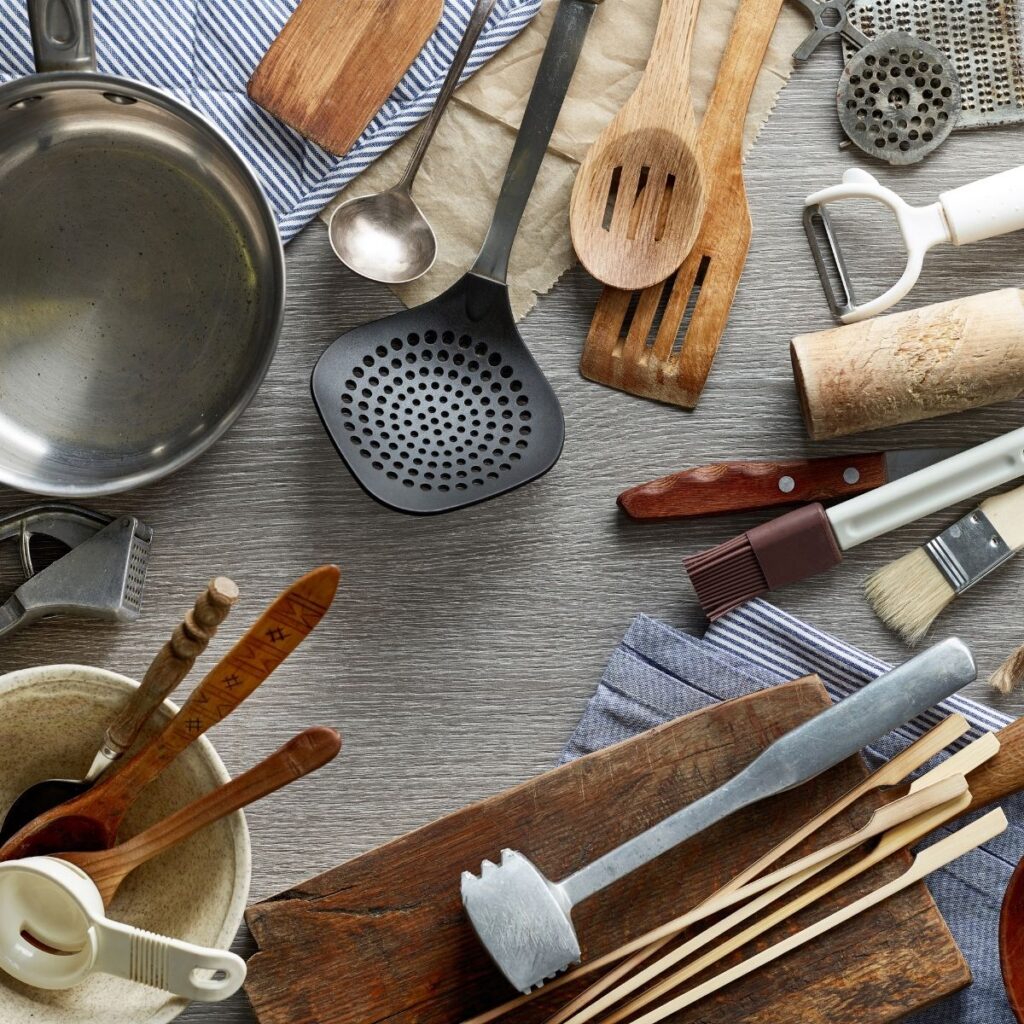
Tools for flavor and technique
Flavor is about control. These small tools help you stir, flip, season, and test like a pro.
Turners, spoons, tongs, and whisks
- Fish spatula Thin, flexible, and strong. Great for pancakes and cutlets.
- Wooden spoon Safe on nonstick and good for scraping the bottom of a pan.
- Tongs Your heat-proof hands. Buy locking ones you can use with one hand.
- Whisk Emulsify dressings and smooth out lumps in a flash.
Graters, peelers, and more
- Microplane Brighten dishes with lemon zest and fresh garlic.
- Box grater Shred cheese and veg fast.
- Y-peeler Safer and faster than the swivel kind, in my experience.
- Kitchen shears Cut herbs, snip bacon, and spatchcock chicken.
- Can opener Choose one that is easy to clean to avoid rust.
Thermometer and strainer
- Instant-read thermometer Prevents dry chicken and undercooked pork. Pull poultry at 165°F.
- Fine-mesh strainer Rinse quinoa, strain sauces, dust powdered sugar.
These tools round out the kitchen tools every beginner needs by giving control over texture and doneness. They also save time, which is the secret sauce for weeknight wins.
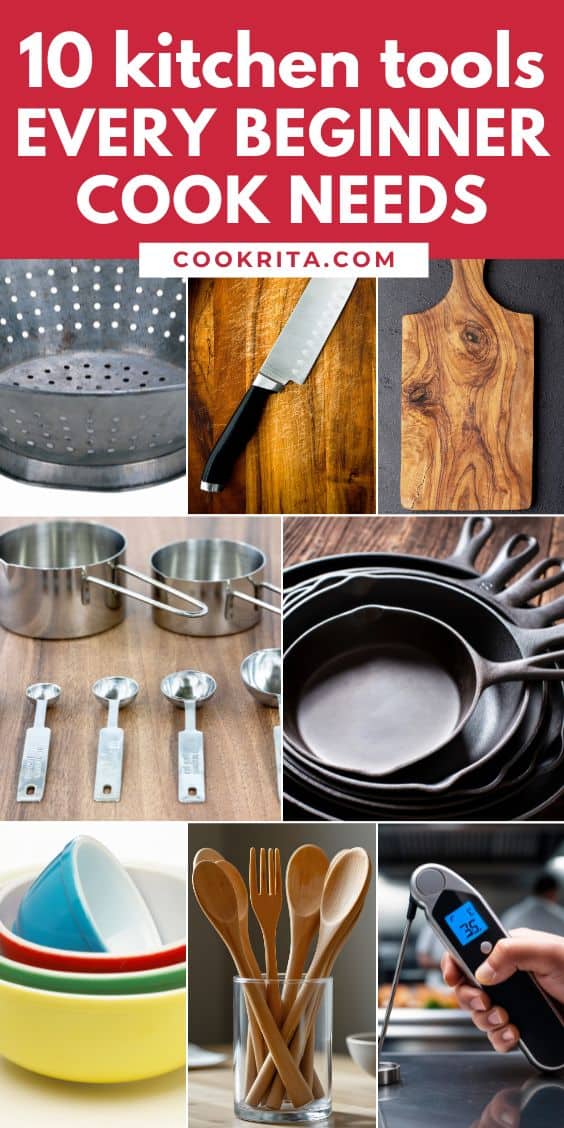
Budget, quality, and smart starter kits
Spend where it counts, save where it does not. You can build a solid kit without breaking the bank.
Where to invest
- Chef’s knife Buy the best you can afford. It touches every meal.
- Skillet or Dutch oven Good heat control means better results.
- Thermometer Prevents waste and keeps food safe.
Where to save
- Mixing bowls, sheet pan, peeler, colander Basic versions work well.
- Silicone spatula and wooden spoon Durable budget picks are fine.
Sample starter kit under $150
- Chef’s knife 30–60
- Cutting board 15–25
- Measuring cups and spoons 10–15
- Mixing bowls 20–30
- 10-inch nonstick skillet 25–40
- Sheet pan 10–15
- Tongs and silicone spatula 10–20
- Instant-read thermometer 10–20
I use this build often when setting up first apartments. It hits the kitchen tools every beginner needs without wasted gadgets.
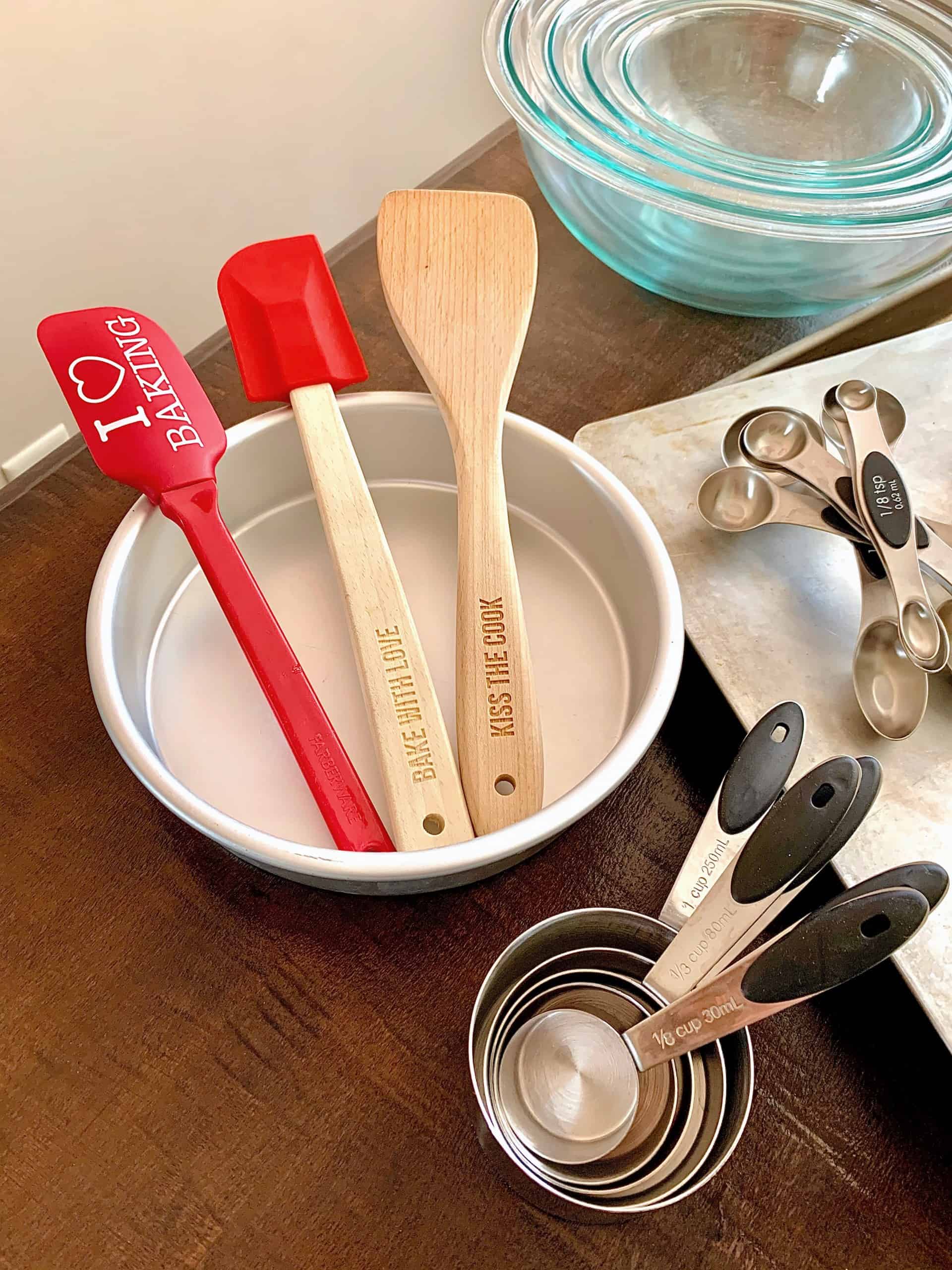
Setup, storage, and care for long-lasting tools
Take care of tools and they will take care of you.
Knives and boards
- Store knives on a magnetic strip or in a block. Never loose in drawers.
- Wash by hand and dry right away. No dishwashers for knives or wood.
- Oil wooden boards with food-safe oil monthly to prevent warping and cracks.
Pans and utensils
- Nonstick pans like medium heat and silicone tools. Avoid aerosol sprays.
- Stainless cleans up with a soak and a gentle scrub. Boil water with baking soda for stuck bits.
- Cast iron needs a thin oil coat after drying. Heat it to seal.
Food safety basics
- Use separate boards or wash well between raw meat and ready-to-eat foods.
- Chill leftovers within two hours. Reheat to steaming hot.
- A thermometer beats guesswork every time.
This is the care plan that keeps the kitchen tools every beginner needs working hard for years.

A 10-minute starter kit menu to practice skills
Use your new gear right away. These quick ideas sharpen your chops with low stress.
- Crispy sheet pan chickpeas and broccoli Toss with oil, salt, and spices. Roast at 425°F for 12–15 minutes on a sheet pan. Use tongs to flip once.
- Skillet lemon chicken Cutlets cook in 4–6 minutes. Deglaze with lemon juice and butter. Check 165°F with the thermometer.
- One-pot tomato pasta Simmer pasta in a saucepan with canned tomatoes, water, garlic, and salt. Stir with a wooden spoon until tender.
- Veggie omelet in a nonstick pan Whisk two eggs. Cook on low. Use a spatula to fold. Finish with microplaned cheese.
These recipes prove that the kitchen tools every beginner needs can deliver fast, tasty meals tonight.
Mistakes beginners make and how to avoid them
I have seen these errors in every beginner class. Here is how to skip them.
- Buying sets you do not need Start with singles you will use daily.
- Cooking with dull knives Dull is dangerous. Hone weekly and sharpen on schedule.
- Overcrowding pans Steam replaces sear. Cook in batches for color and flavor.
- Guessing doneness Use the thermometer. It is faster than recooking dry meat.
- Skipping mise en place Read the recipe, measure first, and set out tools. Stress drops fast.
Remember, kitchen tools every beginner needs are only helpful when used with good habits.

Frequently Asked Questions of kitchen tools every beginner needs
What size chef’s knife should a beginner buy?
An 8-inch knife fits most hands and tasks. It gives reach for big items but stays easy to control.
Do I need both stainless steel and nonstick pans?
No. Start with one good nonstick for eggs and a stainless or cast-iron skillet for searing. Add more only if your cooking style needs it.
How much should I spend on the kitchen tools every beginner needs?
Plan 120–200 for a solid starter kit. Invest most in the knife, a skillet, and a thermometer.
Is a digital scale worth it for beginners?
Yes, if you bake or want less cleanup. You can measure in the bowl and get consistent results.
What is the first upgrade after the basics?
A Dutch oven or a second skillet expands what you can cook. It helps with bread, stews, and one-pan meals.
How often should I sharpen a knife?
Sharpen every 3–6 months for home use, depending on frequency. Hone weekly to keep the edge aligned.
Which cutting board material is best?
Wood is gentle on knife edges and looks great. Plastic is dishwasher-safe and good for raw meat tasks.
Conclusion
Set yourself up with a small, smart kit and you will cook more, waste less, and enjoy it. Start with the kitchen tools every beginner needs, learn a few simple habits, and let practice do the rest. Try one recipe tonight, sharpen one skill next week, and keep building.
Ready for more? Subscribe for gear checklists, tested recipes, and bite-size lessons. Leave a comment with your current setup, and I will help you upgrade your list.