
Drinking olive oil may support heart health, digestion, and healthy fat intake when used in moderation.
Olive oil drinking benefits are often discussed as if one daily “shot” can transform your health. The truth is more balanced: extra-virgin olive oil can be a nutritious source of monounsaturated fat and plant compounds, but research supports it mainly as part of a healthy eating pattern. This guide explains what olive oil may do, what it cannot do, and how to use it safely.
What Are the Olive Oil Drinking Benefits?
Olive oil is the juice of olives. Extra-virgin olive oil is the least processed type and usually contains more natural antioxidants than refined olive oil. It provides monounsaturated fat, vitamin E, vitamin K, and plant compounds called polyphenols.
The main olive oil drinking benefits come from its fat profile and antioxidant content. Still, drinking olive oil is not clearly better than adding it to vegetables, beans, fish, or whole grains.
Potential benefits include:
• Supporting heart-friendly cholesterol levels
• Helping the body absorb fat-soluble vitamins
• Adding useful calories for people who need more energy
• Supporting a Mediterranean-style eating pattern
• Providing antioxidant and anti-inflammatory compounds
• Helping some people have softer, more regular stools
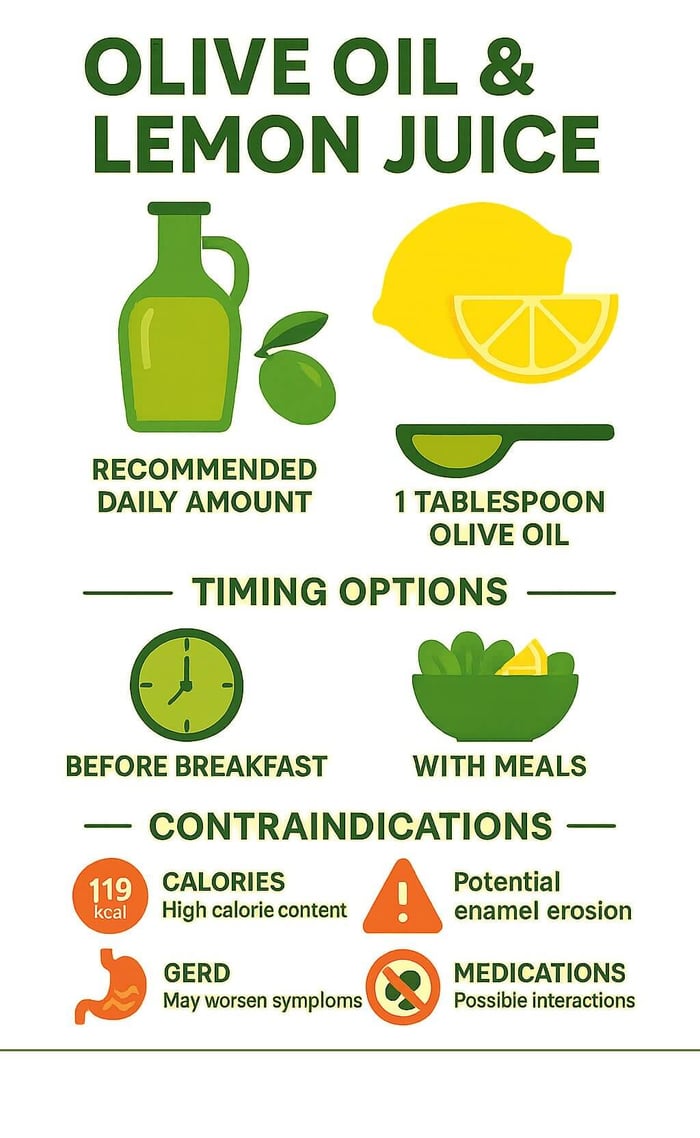
One tablespoon contains about 119 calories and 14 grams of fat. Most of that fat is monounsaturated fat, which is linked with better heart health when it replaces saturated fat from foods such as butter and fatty meats.
The key lesson is simple: olive oil is best viewed as part of a balanced diet, not as a medicine in a bottle.
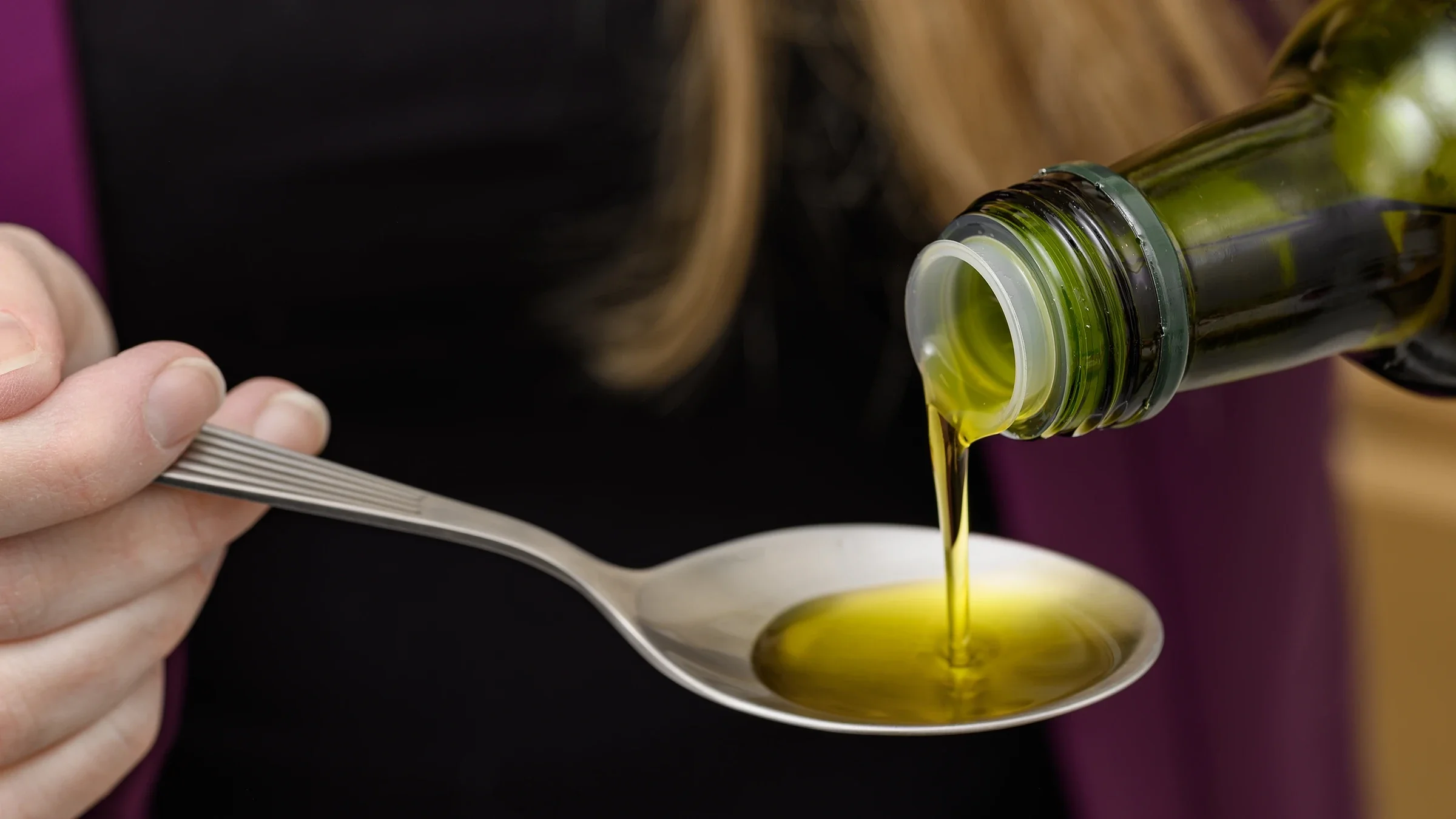
Olive Oil and Heart Health
Heart health is one of the best-studied olive oil drinking benefits. Replacing butter, shortening, or some other sources of saturated fat with extra-virgin olive oil may help improve the overall quality of your diet.
Monounsaturated fat can help lower LDL cholesterol when it replaces saturated fat. LDL is often called “bad” cholesterol because high levels can contribute to plaque buildup in the arteries. Olive oil also contains polyphenols, which may help protect cells from oxidative stress.
Large studies of Mediterranean-style diets have linked regular olive oil use with a lower risk of cardiovascular disease. However, these diets also include vegetables, fruit, legumes, whole grains, nuts, and fish. It is difficult to credit olive oil alone for every benefit.
A daily spoonful will not cancel out smoking, high blood pressure, inactivity, or a diet rich in processed food. Think of olive oil as one strong player on a team, not the whole team.
For heart health, try using olive oil in place of:
• Butter on cooked vegetables
• Creamy dressings
• Some shortening in cooking
• Fatty sauces
• Large amounts of mayonnaise
This swap matters more than simply adding olive oil to your current diet. Adding a “shot” on top of your usual meals increases calories without necessarily improving nutrition.
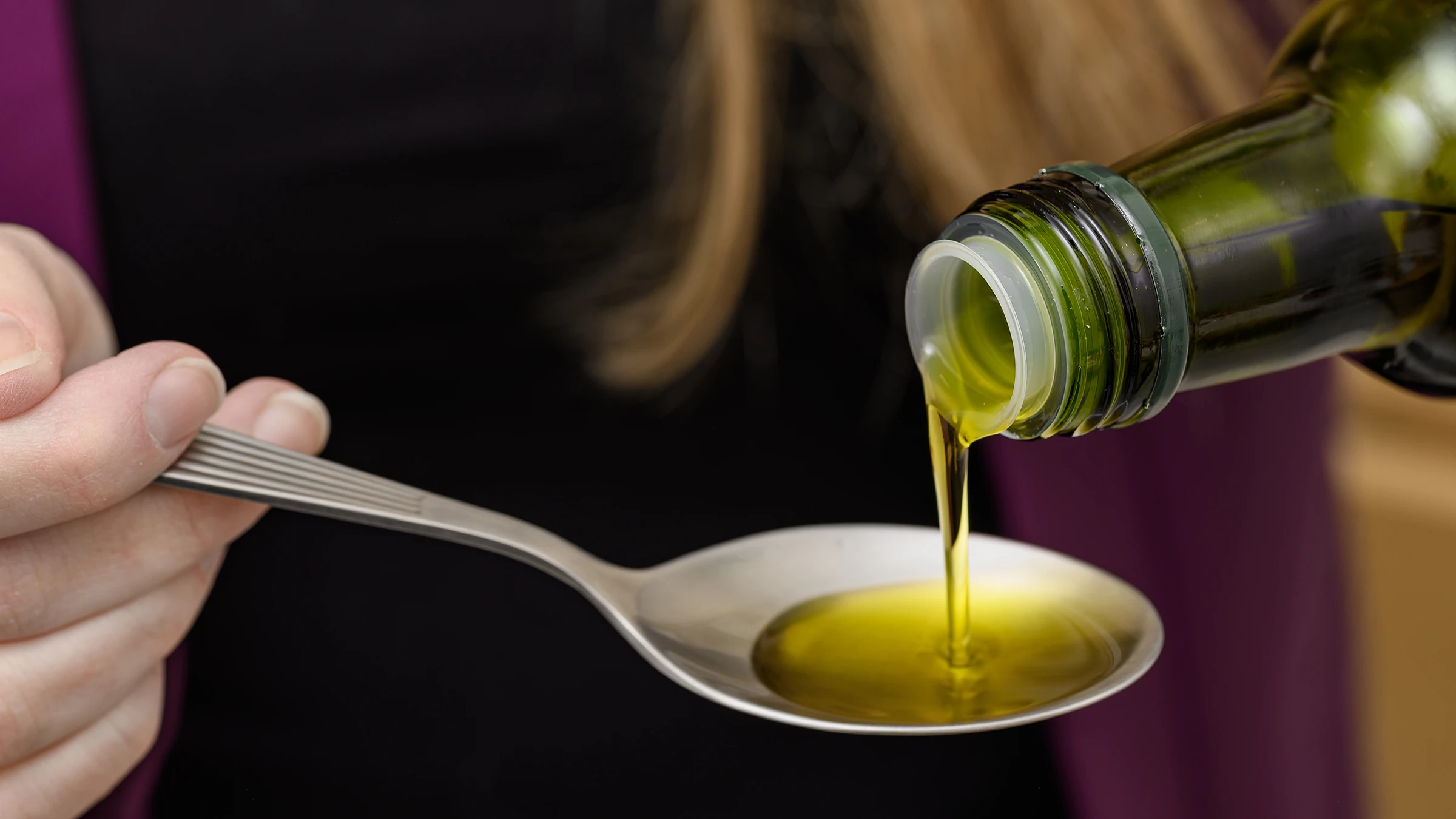
Does Drinking Olive Oil Help Digestion?
Some people say that drinking olive oil helps digestion. There is a practical reason this may feel true: fat can stimulate movement in the digestive tract, and olive oil may help soften stool in some people.
However, the evidence for olive oil as a constipation treatment is limited. It is not a proven cure for chronic constipation, irritable bowel syndrome, ulcers, or acid reflux.
If you want to try olive oil for bowel regularity, start with a small amount, such as one teaspoon with food. Drink water and eat fiber-rich foods, including:
• Oats
• Beans
• Pears
• Prunes
• Vegetables
• Chia seeds
• Ground flaxseed
A spoonful of oil without enough fiber and fluid is unlikely to solve the root problem. Constipation that lasts more than a few weeks, causes bleeding, or comes with severe pain needs medical attention.
Some people may also experience loose stools, cramps, nausea, or bloating after drinking olive oil. Your digestive system may react poorly to a large amount of fat at once, especially if you are not used to it.
Olive Oil Drinking Benefits for Inflammation
Extra-virgin olive oil contains polyphenols such as oleuropein and hydroxytyrosol. These compounds have antioxidant activity and may help regulate inflammation in the body.
One compound in extra-virgin olive oil, oleocanthal, has been studied for an effect that resembles part of the action of some anti-inflammatory medicines in laboratory settings. This does not mean drinking olive oil works like a pain reliever or treats arthritis.
Research suggests that olive oil may support lower inflammation when it replaces less healthy fats within a Mediterranean-style diet. The effect is likely gradual and modest. It is not an instant response after taking a spoonful.
Inflammation is also affected by sleep, stress, body weight, exercise, smoking, and overall food choices. For that reason, olive oil works best as one part of a broader lifestyle plan.
Choose fresh extra-virgin olive oil with a pleasant smell and taste. A bitter or peppery flavor can be normal and may reflect natural polyphenols. A smell like crayons, old nuts, or paint may suggest that the oil has gone rancid.

Can Drinking Olive Oil Help With Weight Loss?
Olive oil may fit into a weight-conscious diet, but it does not directly melt body fat. One tablespoon has about 119 calories, so several daily spoonfuls can add up quickly.
Some people feel more satisfied after eating meals that contain healthy fats. This may help them avoid highly processed snacks later. Yet olive oil still contains calories, and excess calories can lead to weight gain.
For weight management, use olive oil to replace less nutritious fats rather than adding it freely. Measure it with a teaspoon or tablespoon instead of pouring it straight from the bottle.
Helpful examples include:
• Use one teaspoon in a salad dressing
• Roast vegetables with a measured tablespoon for a family-size tray
• Dip whole-grain bread in a small portion of oil
• Add olive oil to beans, lentils, or fish
• Use it instead of butter when the flavor works
A common mistake is treating olive oil like a calorie-free health tonic. It is nutritious, but portion size still matters.

Olive Oil for Skin and Hair: What to Expect
Some people drink olive oil because they believe it will improve dry skin, hair growth, or a youthful appearance. Healthy fats are important for overall nutrition, but there is not strong evidence that drinking a daily shot of olive oil improves skin or hair in a noticeable way.
Skin health depends on many factors. These include sun protection, hydration, protein intake, sleep, genetics, and medical conditions. Olive oil can be part of a nutritious diet, but it cannot replace sunscreen or treatment for eczema, hair loss, or other problems.
Olive oil may work as a topical moisturizer for some people, but it can irritate sensitive skin or clog pores in acne-prone individuals. Test a small area first, and avoid putting kitchen oil on broken skin.
If hair loss appears suddenly or comes with fatigue, weight changes, or scalp symptoms, speak with a health professional. A nutrient deficiency or medical condition may be involved.

Is It Better to Drink Olive Oil or Eat It With Food?
For most people, eating olive oil with food is more comfortable and just as sensible as drinking it alone. There is no strong evidence that an olive oil shot on an empty stomach provides special benefits.
Using olive oil in meals also makes it easier to replace less healthy fats. It pairs well with foods that offer fiber, protein, and vitamins.
Good combinations include:
• Olive oil, tomatoes, and whole-grain toast
• Olive oil, beans, greens, and lemon
• Olive oil, roasted vegetables, and fish
• Olive oil, lentils, herbs, and brown rice
• Olive oil, fruit, nuts, and plain yogurt in a balanced meal
Fat also helps the body absorb vitamins A, D, E, and K. Adding a small amount of olive oil to vegetables can therefore improve both flavor and nutrient absorption.
If you enjoy the taste of olive oil by itself, a small serving is usually fine. Just do not assume that taking more will create greater benefits.
:max_bytes(150000):strip_icc()/VWH_Illustration_How-to-Use-Olive-Oil-for-Moisturizing_Illustrator_Jessica-Olah_Final-72d4c83116a04197ba8706887ef572d5.jpg)
How Much Olive Oil Should You Drink?
There is no official rule that says everyone should drink a specific amount of olive oil each day. Your needs depend on your total calorie intake, health goals, age, activity level, and usual diet.
A practical starting point is one teaspoon to one tablespoon per day. Use it as part of your total fat intake, not as an extra supplement.
The Mediterranean diet often includes olive oil regularly, but amounts vary by person and meal. A registered dietitian can help you plan portions if you have diabetes, high cholesterol, heart disease, or a weight-loss goal.
Use these simple guidelines:
-
Start with one teaspoon if you are not used to oily foods.
-
Take it with a meal if an empty stomach causes nausea or reflux.
-
Increase only if it fits your calorie needs and feels comfortable.
-
Measure servings rather than drinking directly from the bottle.
-
Stop if you develop repeated cramps, diarrhea, or vomiting.
In my experience reviewing nutrition habits, the most useful change is usually not adding a daily oil shot. It is replacing butter or highly processed sauces with a measured amount of extra-virgin olive oil. That small swap is easier to maintain and more likely to improve the whole meal.

Extra-Virgin Olive Oil vs. Regular Olive Oil
Extra-virgin olive oil is made through mechanical methods and must meet standards for flavor, acidity, and defects. It generally contains more natural plant compounds than refined olive oil.
Regular or “pure” olive oil often contains refined olive oil blended with some virgin olive oil. It has a milder flavor and may have fewer polyphenols, though it can still be a source of monounsaturated fat.
When choosing olive oil, look for:
• Extra-virgin labeling
• A dark glass bottle or metal container
• A harvest date when available
• A trusted producer
• A fresh, pleasant aroma
• A reasonable amount that you can use before it becomes stale
Store the bottle in a cool, dark place away from the stove. Heat, light, and air reduce quality over time. Close the cap tightly after each use.
Fresh olive oil may taste grassy, fruity, bitter, or peppery. These flavors are not signs that the oil is unsafe. They can be normal features of high-quality extra-virgin olive oil.

Possible Side Effects and Safety Concerns
Olive oil is safe for most adults when used in normal food amounts. Drinking a large quantity can cause nausea, stomach pain, diarrhea, or unwanted calorie intake.
People with certain health conditions should ask a clinician before making olive oil a daily supplement. This is especially important if you have digestive disease, problems with fat absorption, or a medically prescribed low-fat diet.
Use caution if you:
• Have a known olive allergy
• Develop pain after fatty meals
• Have frequent diarrhea
• Have severe acid reflux
• Need to limit calories closely
• Have trouble swallowing or a risk of aspiration
• Take medicines affected by major diet changes
Olive oil should not replace prescribed medicine. It also should not be used as a “detox,” cleanse, or home treatment for gallstones. Drinking oil with lemon or other liquids does not dissolve gallstones, and it may trigger painful symptoms in someone with gallbladder disease.
Pregnant and breastfeeding people can generally use olive oil as food, but large supplemental amounts should be discussed with a health professional. Children should not be encouraged to drink oil as a health remedy.
Common Mistakes to Avoid
Many claims about olive oil drinking benefits are based on small studies, personal stories, or marketing. A personal story can be meaningful, but it does not prove that a remedy works for everyone.
Avoid these common mistakes:
• Drinking several tablespoons because one spoonful seemed helpful
• Adding oil without reducing another source of fat
• Expecting fast weight loss
• Using olive oil to treat chronic constipation
• Believing it cleanses the liver or blood
• Ignoring pain after fatty meals
• Keeping the bottle beside a hot stove
• Choosing old oil because it is cheaper
A better approach is to use olive oil as a food. Add it to meals that already contain vegetables, legumes, whole grains, nuts, or fish. This creates a stronger nutrition pattern than taking oil alone.
The strongest evidence supports dietary patterns, not dramatic “shots.” That distinction protects you from exaggerated claims and helps you make practical choices.
A Simple Daily Plan
You do not need a complicated routine to enjoy the olive oil drinking benefits. Try this simple plan instead:
-
Choose extra-virgin olive oil from a reliable seller.
-
Begin with one teaspoon in a meal.
-
Use it on vegetables, beans, grains, or fish.
-
Replace butter or creamy sauces rather than adding extra calories.
-
Keep the bottle sealed in a cool, dark cupboard.
-
Watch for digestive symptoms.
-
Review your total fat and calorie intake.
For example, add one teaspoon to a bowl of lentil soup, or mix one tablespoon with lemon juice and herbs for a family salad. These choices provide flavor and make the oil part of a meal with fiber and other nutrients.
If you prefer drinking it, keep the portion small and take it with food. There is no need to force yourself to drink olive oil if you dislike the taste or feel unwell afterward.
Frequently Asked Questions About Olive Oil Drinking Benefits
Is drinking olive oil every day healthy?
A small amount may fit into a healthy diet, especially when it replaces butter or other saturated fats. Drinking it is not proven to be better than using it in meals.
What is the best time to drink olive oil?
There is no scientifically established best time. Taking it with a meal may reduce nausea and makes it easier to control the portion.
Can drinking olive oil help constipation?
Olive oil may help some people pass softer stools, but evidence is limited. Fiber, fluids, movement, and medical advice are more reliable for ongoing constipation.
Can olive oil reduce belly fat?
No. Olive oil does not target belly fat, and large servings add calories. It may support a healthy eating pattern when used in place of less nutritious fats.
Is extra-virgin olive oil better for drinking?
Extra-virgin olive oil usually has more natural polyphenols and a stronger flavor than refined olive oil. It is a good choice if it is fresh, stored well, and used in a reasonable amount.
Can drinking olive oil detox the body?
No. There is no good evidence that olive oil detoxes the liver, blood, or digestive tract. Your liver and kidneys already manage the body’s normal detoxification processes.
Who should avoid drinking olive oil?
People with an olive allergy or symptoms after fatty foods should avoid it until they receive medical advice. Anyone with a prescribed low-fat diet, serious digestive symptoms, or gallbladder problems should ask a clinician first.
Conclusion
Olive oil drinking benefits are real in a limited and practical sense. Extra-virgin olive oil can provide heart-friendly monounsaturated fat and antioxidant compounds, but its main value comes from using it within a balanced diet.
A small serving may be fine, yet there is no strong proof that drinking an oil shot on an empty stomach is better than adding olive oil to a healthy meal. Choose fresh oil, measure your portion, replace less healthy fats, and avoid exaggerated detox or weight-loss promises.
Try adding a teaspoon to vegetables, beans, or whole grains this week. Then share your favorite olive oil recipe or explore more evidence-based nutrition guides for simple ways to eat well.