
Olive oil side effects are usually mild, but too much may cause digestive upset, allergies, or unwanted calories.
Olive oil is a heart-friendly fat, yet it is not risk-free for everyone. This guide explains olive oil side effects, who may be more sensitive, how much to use, and when to seek medical advice.
:max_bytes(150000):strip_icc()/VWH_Illustration_How-to-Use-Olive-Oil-for-Moisturizing_Illustrator_Jessica-Olah_Final-72d4c83116a04197ba8706887ef572d5.jpg)
What Are Olive Oil Side Effects?
Olive oil side effects are unwanted reactions that may happen after eating or applying olive oil. They can depend on the amount used, the person’s health, and the type of olive oil.
For most healthy adults, moderate amounts are well tolerated. Extra virgin olive oil contains monounsaturated fat and plant compounds called polyphenols. Still, even healthy foods can cause problems when used in excess.
Common olive oil side effects include:
• Loose stools or diarrhea
• Stomach cramps
• Nausea
• Heartburn or reflux
• Allergic skin or food reactions
• Extra calorie intake and weight gain
• Possible medicine interactions in sensitive people
The risk is often linked to portion size. One tablespoon of olive oil has about 120 calories. Pouring it freely over every meal can add hundreds of calories without making you feel much fuller.
Common Digestive Olive Oil Side Effects
Digestive symptoms are among the most common olive oil side effects. They often appear when someone suddenly adds a large amount of oil to their diet.
Olive oil can stimulate the digestive system and help move fat through the gut. This effect is usually harmless, but it may be uncomfortable for people with sensitive digestion.
Diarrhea and Loose Stools
Large amounts of olive oil may soften stools or cause diarrhea. This can happen because fat may speed movement through the digestive tract, especially in people who are not used to eating much fat.
A teaspoon or two with food is often easier to tolerate than several tablespoons at once. If diarrhea continues, stop using extra olive oil and speak with a health professional.
Stomach Pain and Cramps
Some people notice bloating, cramps, or a heavy feeling after eating oily foods. This may be more likely after a large meal or when olive oil is taken alone.
Try using a smaller amount with vegetables, grains, or lean protein. Food can help slow digestion and make the oil easier to tolerate.
Nausea
Nausea is another possible reaction, especially after drinking olive oil or taking it by the spoonful. Olive oil is meant to be part of a meal, not a forced “shot” or cleanse.
There is no strong evidence that drinking large amounts of olive oil detoxes the body. The liver and kidneys already handle normal waste removal.

Olive Oil and Acid Reflux
Olive oil may cause or worsen heartburn in some people. Fat can relax the lower esophageal sphincter, the muscle that helps keep stomach contents from moving upward.
This does not mean everyone with reflux must avoid olive oil. Many people tolerate small amounts well, while others notice symptoms after fried foods, rich sauces, or high-fat meals.
If olive oil triggers reflux, consider these steps:
• Use one teaspoon instead of one or two tablespoons.
• Avoid lying down soon after eating.
• Choose lighter meals in the evening.
• Track whether extra virgin olive oil or other fatty foods cause symptoms.
• Ask a clinician about ongoing heartburn or trouble swallowing.
Frequent heartburn should not be blamed only on olive oil side effects. It may be a sign of gastroesophageal reflux disease or another condition that needs proper care.

Olive Oil Allergies and Skin Reactions
A true olive oil allergy is uncommon, but it can occur. Some reactions may involve olive pollen, olives, or proteins that remain in less-refined oil.
Possible allergy symptoms include:
• Itchy mouth or throat
• Hives
• Swelling of the lips, tongue, or face
• Vomiting
• Wheezing or trouble breathing
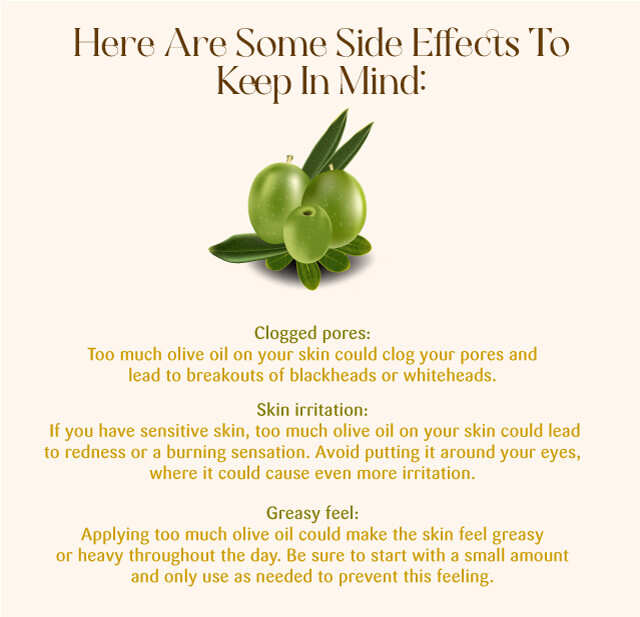
A skin reaction may also happen after applying olive oil. Pure olive oil can irritate some skin types, especially skin affected by eczema, a damaged skin barrier, or contact dermatitis.
Do not apply olive oil to a baby’s skin or eczema-prone skin without professional advice. Research suggests that olive oil may weaken the skin barrier in some infants and people with atopic dermatitis.
Seek emergency help for breathing trouble, faintness, or swelling of the throat. These symptoms may signal anaphylaxis, a serious allergic reaction.

Olive Oil Side Effects for the Gallbladder
Olive oil makes the gallbladder release bile. Bile helps the body digest fat. For many people, this is a normal part of digestion.
However, a large fatty meal may trigger pain in people with gallstones or gallbladder disease. The pain may occur in the upper right abdomen and may spread to the back or right shoulder.
Possible warning signs include:
• Severe or steady upper abdominal pain
• Pain after a fatty meal
• Fever or chills
• Yellow skin or eyes
• Repeated vomiting
• Dark urine or pale stools
These symptoms need medical attention. Olive oil is not a proven treatment for gallstones, and “gallbladder flushes” made with oil can cause pain, vomiting, or other problems.
Olive Oil and Weight Gain
Olive oil is nutritious, but it is still calorie-dense. One tablespoon provides roughly 120 calories, while one teaspoon provides about 40 calories.
Weight gain is one of the most overlooked olive oil side effects. It usually happens when oil is added on top of a normal diet rather than used to replace butter, shortening, or another fat.
A simple portion guide can help:
• Use one teaspoon for a small serving of vegetables.
• Use one tablespoon for a family-size salad or pan of food.
• Measure oil with a spoon instead of pouring from the bottle.
• Reduce another source of fat when adding olive oil.
The best diet is not one that bans all fat. It is one that uses sensible portions and keeps total calorie intake in balance.

Olive Oil Side Effects and Blood Sugar
Extra virgin olive oil contains very little carbohydrate, so it does not usually raise blood glucose in the same way as sugar or refined starch.
Still, olive oil can affect a meal’s total calorie content. People with diabetes should also consider what they eat with the oil, such as white bread, pasta, or sweet sauces.
Some studies link Mediterranean-style diets that include extra virgin olive oil with better heart and metabolic health. These findings do not mean that drinking oil or taking very large amounts is helpful.
If you use insulin or other diabetes medicine, do not change your treatment based on olive oil claims. Monitor your blood glucose as advised by your care team.
Olive Oil and Medication Interactions
Olive oil is a food, not a medicine. In normal cooking amounts, it is unlikely to cause major drug interactions for most people.
However, very large amounts may affect digestion and calorie intake. People taking medicines that influence blood pressure, blood sugar, or blood clotting should avoid treating olive oil as a supplement without medical guidance.
Ask a pharmacist or clinician if you:
• Take blood thinners.
• Use medicine for diabetes or high blood pressure.
• Have surgery planned.
• Have chronic liver, gallbladder, or digestive disease.
• Take herbal products along with prescription medicine.
The concern is often not olive oil alone. It may involve the full diet, other supplements, and the person’s medical condition.
Is Extra Virgin Olive Oil Safer?
Extra virgin olive oil is made from olives using mechanical methods and has not undergone the same level of refining as regular olive oil. It often contains more natural flavor compounds and polyphenols.
That does not make it free from olive oil side effects. Extra virgin olive oil can still cause diarrhea, reflux, allergy symptoms, or excess calorie intake.
Choose oil based on quality, freshness, taste, and intended use. Store it in a cool, dark place with the cap closed. Heat, air, and light can reduce quality over time.
Signs of poor or spoiled oil may include:
• A stale or waxy smell
• A crayon-like taste
• A flat flavor
• A rancid aftertaste
A peppery or slightly bitter taste is not always a sign of spoilage. It can come from natural plant compounds in fresh extra virgin olive oil.
How Much Olive Oil Is Safe?
There is no single amount that suits everyone. A practical serving is often one teaspoon to one tablespoon with a meal, depending on total fat and calorie needs.
Mediterranean eating patterns commonly use olive oil as the main added fat. The key is substitution. Replacing butter or processed fats with olive oil may be more useful than simply adding more oil.
Use this gradual approach:
- Start with one teaspoon per meal.
- Watch for reflux, cramps, or loose stools.
- Increase slowly only if you feel well.
- Count the calories as part of your daily intake.
- Stop and seek advice if symptoms are severe or persistent.
People with digestive disease, gallstones, food allergies, or a history of reflux may need a more personal plan.
Practical Ways to Avoid Olive Oil Side Effects
Most olive oil side effects can be reduced by using small portions and paying attention to your body.
Try these simple habits:
• Add olive oil to food instead of drinking it.
• Measure portions with a teaspoon or tablespoon.
• Avoid very large servings late at night if you have reflux.
• Introduce it slowly if your diet has been very low in fat.
• Choose fresh oil from a trusted seller.
• Keep the bottle away from heat and sunlight.
• Stop using it if you develop allergy symptoms.
• Replace another fat instead of adding extra calories.
A mistake I often see in nutrition discussions is treating a healthy food like a cure-all. Olive oil can support a balanced eating pattern, but more is not always better. A small amount on beans, greens, fish, or whole grains is usually more sensible than taking large spoonfuls.
When to Stop Olive Oil and Call a Doctor
Mild bloating or loose stools may improve after reducing the amount. Severe or repeated symptoms deserve more attention.
Contact a health professional if you have:
• Persistent diarrhea
• Severe stomach pain
• Repeated vomiting
• Blood in the stool
• Yellow skin or eyes
• Unexplained weight loss
• Trouble swallowing
• Hives, facial swelling, or breathing problems
Do not assume every symptom is caused by olive oil side effects. Digestive pain can come from gallstones, ulcers, reflux, infection, food intolerance, or other conditions.
A clinician can review your symptoms, diet, medicines, and health history. This is especially important if symptoms begin suddenly or become worse.
Frequently Asked Questions About Olive Oil Side Effects
Can olive oil cause diarrhea?
Yes, large amounts of olive oil may cause loose stools or diarrhea, especially in people with sensitive digestion. Reducing the portion and eating it with food may help.
Is olive oil bad for acid reflux?
Olive oil may worsen reflux in some people because high-fat foods can promote stomach contents moving upward. Small portions may be tolerated better than large, late-night meals.
Can you be allergic to olive oil?
A true olive oil allergy is rare but possible. Stop using it and seek urgent help for swelling, wheezing, faintness, or trouble breathing.
Can olive oil cause weight gain?
Yes. Olive oil is calorie-dense, with about 120 calories per tablespoon. Weight gain is more likely when it is added to meals without replacing another source of fat.
Is drinking olive oil safe?
Drinking a small amount may not harm most healthy adults, but it can cause nausea, diarrhea, or cramps. There is no strong evidence that drinking large amounts detoxes the body or improves health.
Can olive oil trigger gallbladder pain?
A high-fat meal, including one with a lot of olive oil, may trigger pain in people with gallstones. Severe upper abdominal pain, fever, vomiting, or jaundice requires medical care.
Are olive oil side effects common?
Olive oil side effects are not common when the oil is used in moderate cooking portions. Digestive upset, reflux, allergy symptoms, and excess calorie intake are the main concerns.
Conclusion
Olive oil can fit well into a balanced diet, but it is not suitable in unlimited amounts. The main olive oil side effects include diarrhea, cramps, reflux, allergic reactions, gallbladder discomfort, and unwanted calories.
Use a measured portion, add it to food, and choose fresh oil stored away from heat and light. If you have severe symptoms, gallbladder disease, reflux, allergies, or take several medicines, ask a qualified health professional for personal advice.
Start with a small amount and listen to your body. For more practical nutrition guidance, explore trusted health resources or share your questions in the comments.