
In the United States, most slow cookers cook food at roughly 170°F to 212°F (77°C to 100°C) once the food is hot. The Low setting often holds food near a gentle simmer, while High heats it faster and may bring the contents close to a full simmer. Exact temperatures vary by brand, model, food amount, and lid position.
The setting does not equal one fixed temperature. A slow cooker’s Low and High settings mainly control how fast the cooker heats. Food may reach a similar final temperature on either setting, but High usually gets there sooner.
For food safety, use a food thermometer. The USDA advises keeping hot food at 140°F or above and cooking poultry, leftovers, and many reheated foods to 165°F.

Slow Cooker Temperature Settings Explained
A slow cooker usually has three settings: Low, High, and Warm. Each setting has a different purpose.
| Slow cooker setting | Typical use | Approximate behavior |
|---|---|---|
| Low | Long cooking, often 6 to 10 hours | Heats slowly and may hold food near a gentle simmer |
| High | Shorter cooking, often 3 to 5 hours | Heats faster and may reach a simmer sooner |
| Warm | Holding cooked food | Keeps food hot but is not meant for cooking raw ingredients |
These ranges are general. Your slow cooker may run hotter or cooler than another model.
What temperature is Low on a slow cooker?
The Low setting commonly produces food temperatures near 190°F, though the actual temperature can vary. As the food heats, liquid may show only small bubbles around the edge.
Low is useful for foods that need gentle, steady heat. Common examples include:
- Beef stew
- Chili
- Pulled pork
- Dried beans
- Soups
- Tough cuts of meat
Low does not mean the food stays below a safe cooking temperature. A properly filled slow cooker should heat the food through the USDA’s danger zone and continue cooking.
What temperature is High on a slow cooker?
The High setting often brings food to a simmer faster than Low. The food may reach about 200°F to 212°F, depending on the recipe and the appliance.
High is useful when:
- You have less cooking time.
- The recipe gives a High setting.
- You need the food to reach a simmer sooner.
- You are reheating food that has already been fully cooked.
High does not always mean the food will reach a much higher final temperature than Low. It usually changes the heating rate more than the final cooking temperature.
What temperature is Warm?
Warm is generally designed to hold already-cooked food at a serving temperature. It should not be used to cook raw meat, poultry, or beans.
The USDA recommends keeping hot food at 140°F or above. Check the food with a thermometer if it will remain in the slow cooker for a long time. Some Warm settings may not hold every food at a safe temperature, especially when the cooker is only partly full.

Does a Slow Cooker Reach 212°F?
A slow cooker can reach about 212°F at sea level, which is the boiling point of water. However, the food does not need to boil hard to cook safely.
A slow cooker usually cooks with moist heat. The liquid inside the pot may simmer gently. The lid traps steam, which helps keep the food moist and supports even heating.
Altitude changes the boiling point of water. In higher areas of the United States, water boils below 212°F. This can affect cooking time, especially for beans and other foods that need long exposure to heat.
The temperature can also change based on:
- The size of the slow cooker
- The amount of food inside
- The recipe’s liquid content
- Whether the ingredients are frozen or thawed
- How often the lid is removed
- The shape and material of the cooking insert
- The age and design of the appliance
A slow cooker with a full pot may heat differently from one with only a small amount of food. For this reason, a single temperature number cannot describe every slow cooker.
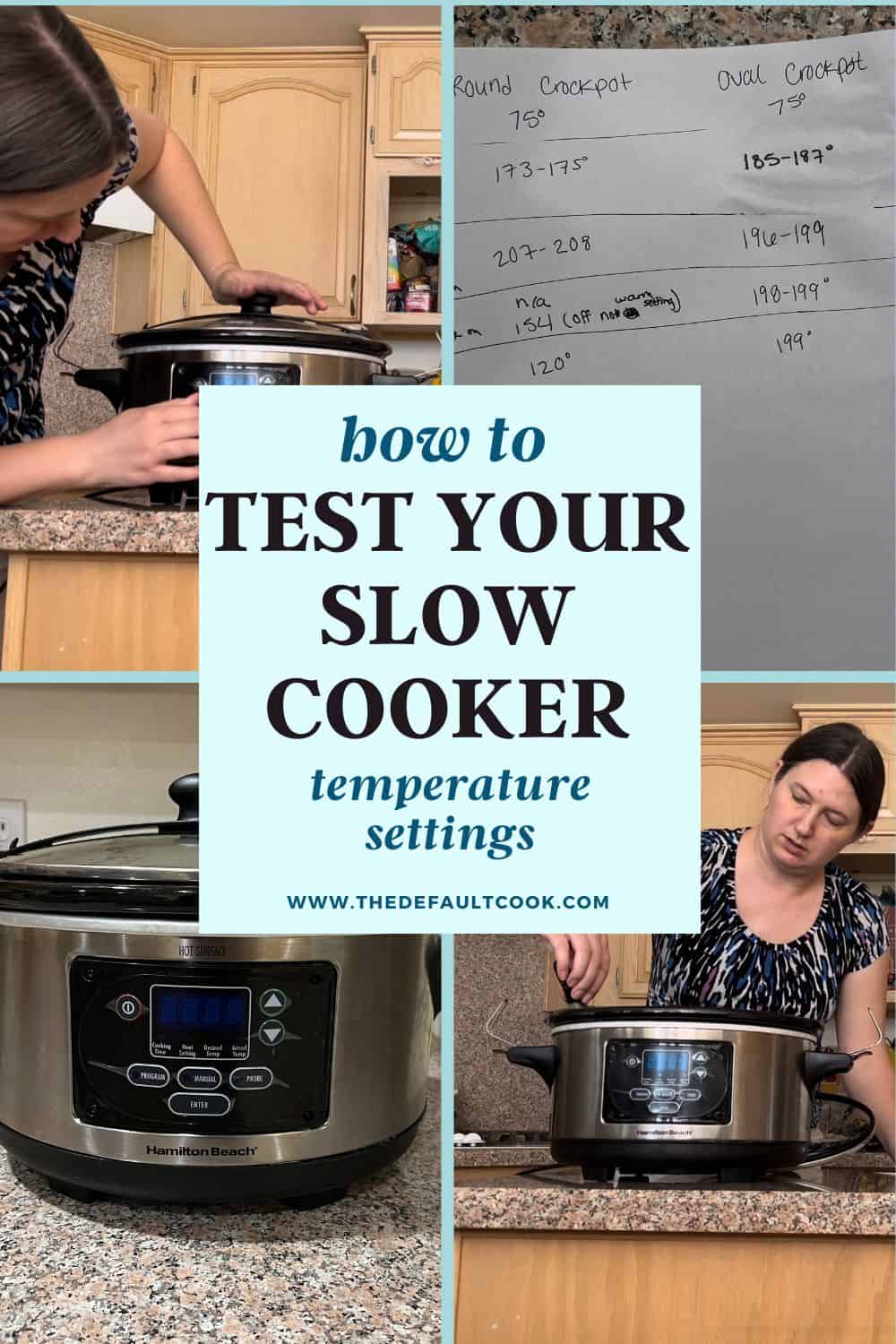
How Hot Does Food Get in a Slow Cooker?
Food in a slow cooker commonly reaches 170°F to 212°F during cooking. The exact temperature depends on the food and the location of the thermometer.
Liquid foods, such as soup, may approach the boiling point. Thick foods, such as chili or mashed ingredients, may show different temperatures in different parts of the pot.
Meat may not reach the same temperature as the surrounding liquid at the same time. The center of a large roast can remain cooler while the outer surface becomes very hot.
To check the temperature:
- Insert a clean food thermometer into the thickest part of the food.
- Avoid touching the bone, pot, or large pockets of liquid.
- Check more than one area if the food is thick or crowded.
- Wait for the thermometer reading to stop changing.
- Clean the thermometer after use.
A thermometer tells you more than the slow cooker setting does. The setting shows how the appliance operates. The thermometer shows how hot the food is.

Slow Cooker Food Safety Temperatures
Slow cooking is safe when the cooker heats food fully and the food stays hot after cooking. The USDA lists 40°F to 140°F as the danger zone, where bacteria can grow quickly.
Follow these key temperature rules:
- Cook poultry to at least 165°F.
- Reheat leftovers to at least 165°F.
- Keep cooked food at 140°F or above when holding it.
- Use a food thermometer rather than judging doneness by color.
- Refrigerate leftovers within 2 hours, or within 1 hour when the surrounding temperature is above 90°F.
- Store leftovers in shallow containers so they cool quickly.
The safe temperature can depend on the food. Whole cuts of beef, pork, veal, and lamb may have different USDA minimum temperatures than ground meat or poultry. Use the current USDA safe minimum internal temperature chart for the food you are cooking.
Can a slow cooker cook frozen meat safely?
Do not place frozen meat or poultry directly into a slow cooker. Frozen food may remain in the danger zone for too long while the cooker heats.
Thaw meat safely in one of these ways:
- In the refrigerator
- In cold water
- In a microwave, followed by immediate cooking
The USDA recommends thawing meat before placing it in a slow cooker. This helps the food heat more quickly and evenly.
Is it safe to leave food in a slow cooker overnight?
A slow cooker can cook food overnight when the recipe, appliance, and food amount are suitable. Use Low when the recipe calls for a long cooking period.
Before starting, make sure:
- The cooker sits on a stable, heat-safe surface.
- The lid fits tightly.
- The pot is filled according to the manufacturer’s instructions.
- The ingredients are thawed when required.
- The food will finish within the recipe’s recommended time.
Do not leave cooked food on Warm for an unlimited period. Quality declines over time, and the food may not remain at a safe temperature in every appliance.

Low Versus High: Which Slow Cooker Setting Should You Use?
Use Low for longer cooking and High for faster cooking. Do not assume that switching from Low to High cuts the cooking time exactly in half.
A recipe written for Low may need a different time on High. The result can also change because meat may become dry or vegetables may soften too much.
| Cooking need | Better choice |
|---|---|
| Cooking while away for much of the day | Low |
| A recipe designed for a shorter cook | High |
| Tough meat that needs gentle cooking | Low |
| Food that needs to reach a simmer sooner | High |
| Holding fully cooked food | Warm |
| Cooking frozen meat | Neither; thaw it first |
Avoid switching settings often. Each time you lift the lid, heat escapes. The USDA and many appliance makers advise keeping the lid closed unless the recipe requires stirring or checking.
A useful rule is to follow the recipe first. If the recipe gives both Low and High times, use the option that fits your schedule. If it gives only one setting, do not guess based only on the temperature name.

How Full Should a Slow Cooker Be?
Most slow cookers work best when filled between one-half and two-thirds full. A pot that is too full may heat slowly. A pot that is too empty may cook unevenly and may dry out food.
The exact fill range depends on the manufacturer. Check the manual for your model.
Keep these points in mind:
- Do not fill the pot to the rim.
- Leave enough space for bubbling and steam.
- Spread large pieces in an even layer.
- Cut vegetables and meat into similar sizes.
- Place dense vegetables near the bottom.
- Keep the lid closed during cooking.
Dense foods near the bottom receive more direct heat. Large pieces near the top may take longer to reach a safe internal temperature.
If the cooker is very full, use a thermometer to check the center of the food. If the food is only a small amount, monitor the temperature before serving and avoid long holding times.

Why Is My Slow Cooker Not Getting Hot?
A slow cooker that seems cool may have a normal heating pattern, a poor seal, or a mechanical problem. Check the simple causes first.
The food stays cold
Possible causes include:
- The cooker is unplugged.
- The outlet or power cord has a problem.
- The pot is overfilled.
- Frozen ingredients were added.
- The lid was removed often.
- The cooker is set to Warm.
- The appliance has failed.
Confirm the setting and power connection. If the food remains below 140°F after several hours, do not assume it will become safe later. Follow the food safety guidance for food that has spent too long in the danger zone.
The food is boiling too hard
A hard boil may mean:
- The cooker runs hot.
- The pot is small for the recipe.
- The recipe has too little liquid.
- The lid is trapping more heat than expected.
- The food has cooked past the recommended time.
Move the setting to Low if the recipe allows it. Check the food’s texture and internal temperature. A boil does not always mean the meat is done, and it can make some foods dry or tough.
The food is not done when the timer ends
Cooking time can increase when:
- The meat pieces are very large.
- The pot is more than two-thirds full.
- Ingredients started very cold.
- The lid does not seal well.
- The recipe contains dense beans or root vegetables.
- The slow cooker runs cooler than expected.
Continue cooking until the food reaches a safe internal temperature and the texture is suitable. If the cooker repeatedly fails to heat food, replace it or contact the manufacturer.

Slow Cooker Temperature Conversion Guide
You cannot convert Low to High with perfect precision, but common recipe guidance uses these rough comparisons:
| Low setting | Approximate High setting |
|---|---|
| 6 to 8 hours | 3 to 4 hours |
| 8 to 10 hours | 4 to 6 hours |
| 10 to 12 hours | 5 to 7 hours |
These are estimates, not guarantees. Meat thickness, liquid level, ingredient temperature, and cooker design all affect the result.
Do not use a simple formula for delicate foods. Seafood, dairy, pasta, and leafy greens may need to be added near the end of cooking. Beans may require special preparation, since some raw beans contain toxins that are not reliably removed by gentle slow cooking.
For recipe changes, preserve the original food-safety steps. Changing the cooking setting is not the same as changing the safe internal temperature.
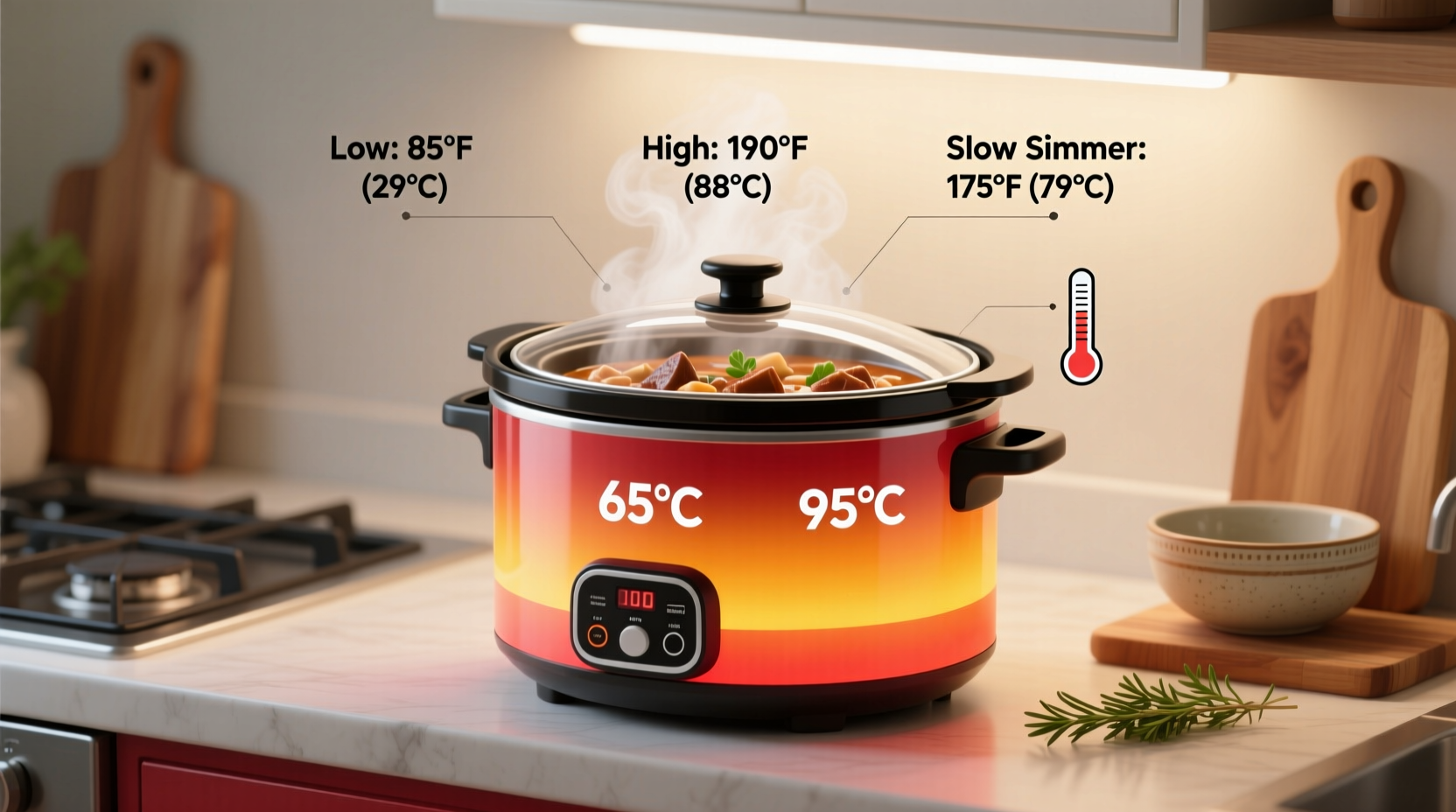
Slow Cooker Temperature Versus Oven Temperature
A slow cooker does not work like an oven set to the same number. A recipe calling for a 300°F oven cannot always be replaced with a slow cooker set to High.
An oven heats with hot air and direct radiant heat. A slow cooker uses a heated insert, liquid, steam, and a covered environment. The two methods can produce different cooking times and textures.
Slow cookers are well suited to:
- Braises
- Stews
- Soups
- Chilis
- Pulled meat
- Beans prepared correctly
- Some casseroles
They are less suited to:
- Crisp skin
- Browning
- Roasting without liquid
- Foods that need fast evaporation
- Recipes that depend on a dry, hot surface
Brown meat in a skillet before slow cooking if you want a deeper browned flavor. Browning is optional for safety, but it can improve taste and color.

Common Slow Cooker Temperature Mistakes
Avoid these mistakes when using a slow cooker:
Treating Low as a specific temperature
Low is a setting, not a guaranteed food temperature. Use a thermometer when safety matters.
Using Warm to cook raw food
Warm is for holding cooked food. It is not a substitute for Low or High.
Adding frozen meat
Frozen meat may heat too slowly. Thaw it before slow cooking.
Overfilling the pot
An overfilled cooker may not heat the center quickly enough.
Removing the lid too often
Each lid lift releases heat and steam. This can extend cooking time.
Using too little liquid
Slow cookers lose less moisture than open pots. Still, some recipes need enough liquid to prevent scorching and support even cooking.
Trusting time alone
A recipe time is an estimate. Food size, starting temperature, and appliance design can change the result.
Cooling a large batch in the slow cooker
A deep, hot pot cools slowly. Move leftovers to shallow containers and refrigerate them promptly.

Frequently Asked Questions
What temperature does a slow cooker cook at on Low?
A slow cooker on Low often keeps food near 190°F, but the actual food temperature varies by model and recipe. Many foods eventually reach a gentle simmer. Check the thickest part with a thermometer when needed.
What temperature does a slow cooker cook at on High?
High commonly heats food to about 200°F to 212°F once the contents are hot. The main difference is that High reaches the cooking temperature faster than Low.
Does a slow cooker get hot enough to kill bacteria?
It can, when used correctly. Food must heat through the danger zone and reach the safe internal temperature required for that food. Poultry and leftovers should reach 165°F. Use a thermometer rather than relying on the setting.
Can I leave my slow cooker on Warm all day?
Warm is meant to hold cooked food, but it should not be used indefinitely. Check that the food stays at 140°F or above, and refrigerate leftovers within the recommended time.
How long does a slow cooker take to heat up?
Many slow cookers take several hours to bring a full pot to a simmer. The time depends on the setting, food amount, liquid, starting temperature, and appliance. A slow cooker is designed for gradual heating, not rapid boiling.
Should a slow cooker simmer on Low?
A gentle simmer can occur on Low, but it may take several hours. Small bubbles around the edge are normal. A hard, constant boil may mean the cooker runs hot or the food has cooked too long.
Can I use a slow cooker without liquid?
Some foods can cook with very little liquid, especially fatty meats and foods that release moisture. However, liquid helps transfer heat and prevent scorching. Follow the recipe and the appliance manual.
Key Takeaways
- Most slow cookers cook food at roughly 170°F to 212°F.
- Low often produces a gentle simmer near 190°F.
- High usually heats food faster and may approach 212°F.
- Warm is for holding cooked food, not cooking raw ingredients.
- Settings vary by model, so use a food thermometer for safety.
- Thaw frozen meat before placing it in a slow cooker.
- Keep hot food at 140°F or above.
- Cook poultry and leftovers to 165°F.
- Fill the cooker according to the manufacturer’s instructions, usually about one-half to two-thirds full.
Conclusion
A slow cooker does not cook at one fixed temperature. In most U.S. models, food eventually reaches a range near 170°F to 212°F, with Low heating more slowly and High heating more quickly. The best way to confirm safe cooking is to measure the food itself, not just read the setting.
For your next meal, follow the recipe, keep the lid closed, thaw meat first, and check the thickest part with a food thermometer before serving.