
Pour water into the reservoir marked “Fill,” not the ice basket or dispensing chute.
Knowing where to put water in an ice maker helps the machine freeze water safely and make clean, solid ice. Most countertop models have a removable water reservoir beneath the lid, while refrigerator ice makers often connect to a water line and need no manual filling. This guide explains how to find the right spot, avoid common mistakes, and get better ice from your machine.
Where to Put Water in an Ice Maker
For most portable or countertop ice makers, pour water into the built-in reservoir. The reservoir is usually inside the machine, under the top lid, and near the bottom of the ice-making compartment.
Look for a clear water tank or a molded line labeled:
• “MAX”
• “WATER”
• “FILL”
• “ADD WATER”
The ice basket is not the water reservoir. It holds finished ice and should stay dry before the machine starts a cycle. The metal cooling fingers or ice molds are also not filling points.
When learning where to put water in an ice maker, think of the machine as having two separate areas:
• The water reservoir stores liquid water.
• The ice basket collects frozen cubes.
Pouring water into the basket usually causes spills. It may also send water into the fan, control panel, or other parts that are not designed to handle liquid.

How to Find the Water Reservoir
The exact location depends on the type of ice maker you own. Reading the user manual is the most reliable first step, but the design often gives you useful clues.
Countertop ice makers
A countertop ice maker normally has a lid on top. Lift the lid and look below the ice basket. In many models, you must remove the basket to see the reservoir clearly.
Some machines have a small drain plug near the bottom or back. This plug empties old water. It is not where you add fresh water.
Portable ice makers
Portable units often place the reservoir below the ice-making tray. The water level may be visible through a clear window on the front or side.
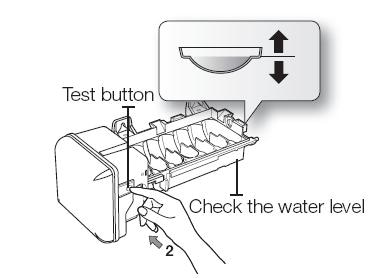
If the machine has a “Add Water” light, the sensor may be inside the reservoir. Keep the water below the maximum fill line so the sensor can work correctly.
Refrigerator ice makers
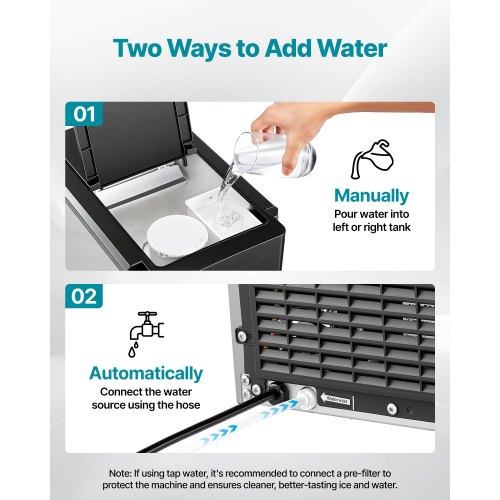
A built-in refrigerator ice maker may not have a hand-filled reservoir. Many refrigerator models receive water through a supply line connected to the plumbing system.
Some compact refrigerators and freezer ice makers do use a small manual tank. If you do not see a fill opening, check whether the unit requires a water connection instead.
Ice and water dispensers
A dispenser opening is usually for collecting ice or drinking water. It is not usually where you put water into the ice-making system.
This is one of the most common points of confusion. If water comes out of the front dispenser, that does not mean the ice maker reservoir is located there.
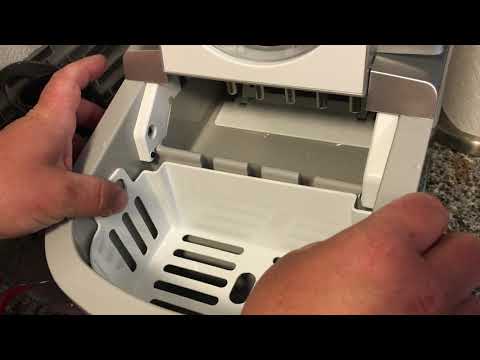
How to Add Water to a Countertop Ice Maker
Once you know where to put water in an ice maker, filling it is simple. Use this safe process:
- Turn off the ice maker or pause its cycle.
- Open the lid.
- Remove the ice basket if it blocks the reservoir.
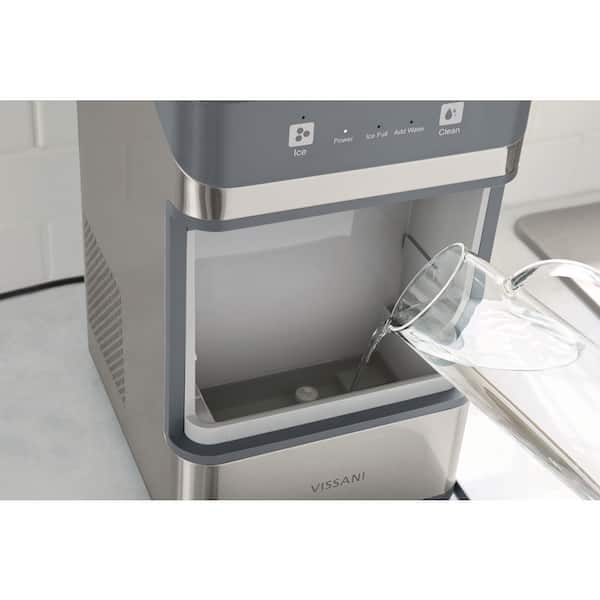
- Find the tank marked “Fill” or “MAX.”
- Pour in clean, cool drinking water.
- Stop at the maximum fill line.
- Replace the ice basket.
- Close the lid.
- Press the power, start, or ice-making button.
Do not fill the machine while the water pump is running. A few models allow water to be added during operation, but pausing the unit reduces the risk of splashing and overflow.
Use a pitcher with a narrow spout. It gives you better control than a large bottle or measuring cup. This small habit can prevent water from reaching the controls.
In my experience helping people troubleshoot countertop ice makers, overfilling is more common than underfilling. Users often assume more water means more ice, but the machine only needs the amount shown by the fill line. Extra water can leak into the basket area or trigger a warning light.
What Type of Water Should You Use?
Most ice makers work best with clean, cold drinking water. Tap water is usually fine if your local water supply is safe and tastes good.
Filtered water may improve the taste and reduce mineral buildup. This matters more in areas with hard water, which contains higher levels of calcium and magnesium.
Consider these options:
• Filtered tap water for a clean taste and fewer minerals
• Bottled drinking water when tap water quality is a concern
• Distilled water only when the manual allows it
• Cold or room-temperature water, depending on the manufacturer’s instructions
Very hot water can make the machine work harder and may damage plastic parts or sensors. Avoid using water that is boiling or close to boiling.
Distilled water can also be a poor choice for some ice makers. Certain water-level sensors rely on minerals or electrical conductivity to detect water. If the unit repeatedly says “Add Water” after you fill it, the water type may be part of the problem.
Do not add juice, soda, milk, flavored water, or cleaning chemicals to the reservoir. These liquids can leave sticky residue, block the pump, and promote bacterial growth.
How Much Water Should You Add?
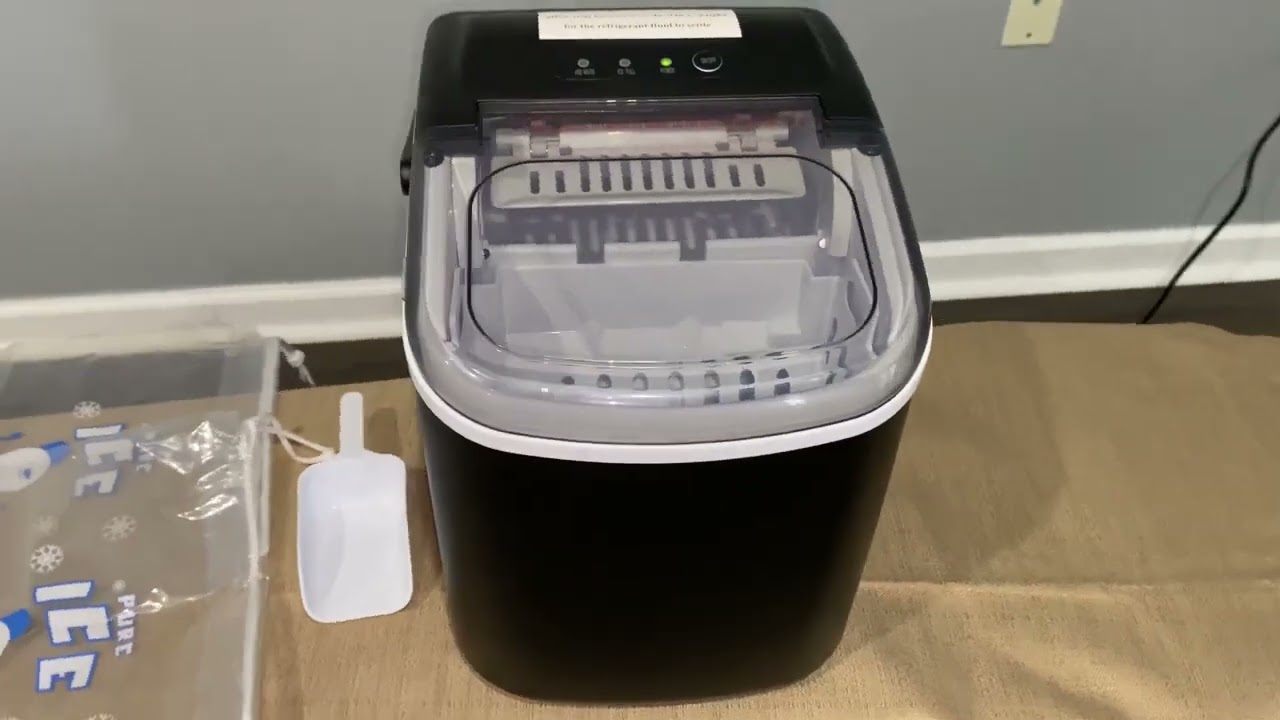
Add enough water to reach the marked fill line, but never go above it. The correct amount varies by model, so the “MAX” line is more useful than a general measurement.
A small countertop ice maker may need a few cups of water. Larger units may hold several quarts. The water tank size does not always equal the amount of ice the machine can produce in one day.
The machine uses part of the water to form ice. Melted ice may also return to the reservoir in some designs. This means the water level can change during normal use.
Follow these practical rules:
• Check the fill line before every refill.
• Do not guess the amount if the tank is not clear.
• Leave space for water movement and circulation.
• Empty old water before adding fresh water if the machine has been unused.
• Never fill the ice basket to make the machine produce ice.
If the unit stops and shows an “Add Water” warning even though the tank looks full, unplug it and inspect the water sensor. A stuck float, scale buildup, or an incorrectly seated reservoir may cause the warning.

Common Mistakes When Filling an Ice Maker
Understanding where to put water in an ice maker prevents many avoidable problems. Here are the mistakes that cause the most trouble.
Pouring water into the ice basket
The ice basket is designed to hold frozen ice, not liquid water. Water may spill into the internal electronics or freeze around the basket.
Filling above the maximum line
Too much water can overflow when the pump moves water into the freezing tray. It may also make the ice basket float or become difficult to remove.
Using dirty or old water
Water that sits for several days can develop an unpleasant taste and may collect dust or microbes. Empty the reservoir if the machine has not been used for a while.
Leaving melted ice inside
Many countertop machines are not freezers. Ice slowly melts and returns to the tank or collects around the basket. Remove old ice and refresh the water regularly.
Blocking the ventilation area
Ice makers need airflow to release heat. Keep the sides and back clear, and do not place the machine directly against a wall.
Moving the machine while full
Tilting a full ice maker can send water into areas that should remain dry. Empty the reservoir before carrying or relocating the unit.
A mistake I often see is cleaning the basket but ignoring the water tank. The basket may look spotless while mineral scale builds up inside the pump and water lines. Cleaning both areas gives much better results.

Cleaning the Water Reservoir
Knowing where to put water in an ice maker is only half the job. The reservoir also needs regular cleaning because it stays damp and may collect mineral deposits.
Before cleaning, unplug the machine and remove all ice and water. Wipe the tank with a soft cloth and follow the cleaning method in the manual.
A basic cleaning routine may include:
- Drain the old water through the drain plug.
- Rinse the reservoir with clean water.
- Wash removable parts with mild dish soap.
- Use a soft brush on corners and around the water inlet.
- Rinse all soap away.
- Wipe the inside with a clean towel.
- Let the parts air-dry before reassembly.
Do not use abrasive pads. They can scratch plastic and create small grooves where residue collects.
For mineral scale, some manufacturers allow a diluted vinegar solution or a purpose-made appliance cleaner. However, not every model permits vinegar. Check the manual first, and always rinse the machine several times after cleaning.
Never mix vinegar with bleach or other cleaning products. Chemical mixtures can create dangerous fumes.
Food safety guidance supports keeping food-contact surfaces clean and dry. Although an ice maker is an appliance rather than a traditional food container, the ice it produces goes directly into drinks and should be treated as food.
Why an Ice Maker May Not Make Ice After Filling
If you put water in the correct reservoir but the machine does not make ice, several causes may be responsible.
The ice basket is full
Many units stop automatically when the basket reaches the ice-full sensor. Remove some ice and close the lid firmly.
The water sensor is blocked
Mineral scale or a piece of debris may prevent the sensor from reading the water level. Clean the reservoir and inspect the sensor area gently.
The machine is too warm
Countertop ice makers need room to release heat. If the room is hot or the vents are blocked, the unit may take longer to freeze water.
The lid is open
Some models pause when the lid is not fully closed. Check that the basket is seated correctly and that nothing prevents the lid from shutting.
The unit needs a reset
Turn the machine off, unplug it for several minutes, and reconnect it. Use this only as a simple reset, not as a substitute for repair.
The pump is clogged
Hard-water deposits can restrict the pump. If cleaning does not help, the pump may need service or replacement.
If you notice burning smells, damaged wires, repeated leaks, or a tripped circuit breaker, stop using the ice maker. Water and electricity require caution, and internal repairs are best handled by a qualified technician.
Tips for Better Ice and Longer Machine Life
Correct filling helps, but a few daily habits can improve ice quality and appliance performance.
• Place the ice maker on a level, stable surface.
• Keep it away from ovens, sunny windows, and hot appliances.
• Leave space around the vents.
• Use fresh drinking water.
• Wipe spills as soon as they happen.
• Empty the machine before moving it.
• Clean the reservoir on the schedule in the manual.
• Store the unit dry if you will not use it for several days.
• Do not force the ice basket into place.
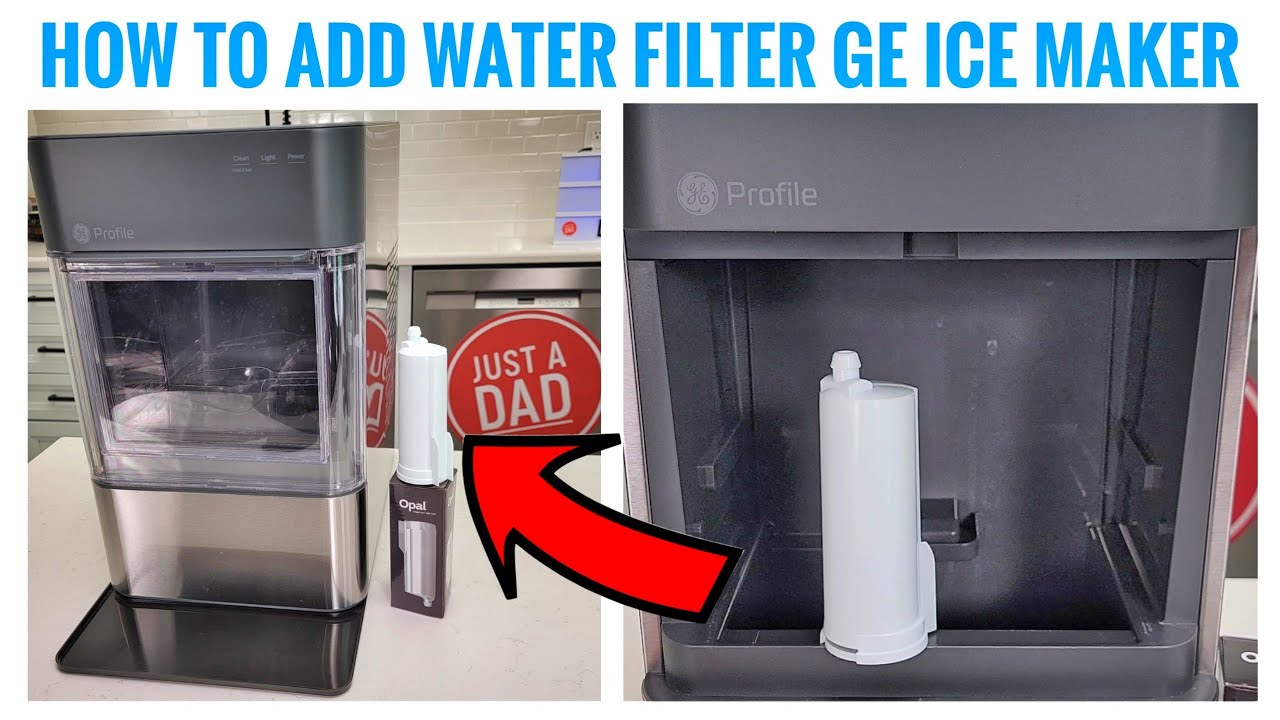
• Replace filters when the manufacturer recommends it.
Small, hollow, or cloudy ice does not always mean the water was added incorrectly. It can result from warm water, high room temperature, hard water, or the normal design of the ice maker.
For example, many portable ice makers produce bullet-shaped ice with a hollow center. That shape is normal and differs from the solid cubes made by a freezer ice maker.
Where to Put Water in an Ice Maker: Frequently Asked Questions
Do you put water in the ice basket of an ice maker?
No. Put water in the machine’s reservoir, which is normally below or behind the removable ice basket. The basket is only for collecting finished ice.
How do I know where to put water in an ice maker?
Look for a tank or opening labeled “Fill,” “Water,” or “MAX.” If there is no visible tank, check the manual because the model may require a water line.
Can I use tap water in an ice maker?
Yes, tap water is usually suitable when it is safe to drink. Filtered water may reduce mineral buildup and improve the taste of the ice.
How full should an ice maker reservoir be?
Fill the reservoir up to, but not above, the marked maximum line. Overfilling can cause leaks, sensor errors, and water entering areas that should remain dry.
Why does my ice maker say “Add Water” when it is full?
The water sensor may be blocked by scale, the reservoir may not be seated correctly, or the water may not conduct electricity well enough for the sensor. Clean the tank, reseat it, and check the manual for compatible water types.
Should I unplug an ice maker before adding water?
It is safer to pause or turn off the machine before filling it. This reduces splashing and helps prevent water from reaching electrical controls.
How often should I clean an ice maker water reservoir?
Clean it based on the manufacturer’s instructions and more often if you notice odor, slime, cloudiness, or mineral deposits. Always empty and clean it before storing the machine.
Conclusion
The right place for water is the labeled reservoir, not the ice basket, dispenser opening, or freezing tray. Fill only to the maximum line, use clean drinking water, keep the vents open, and clean the tank often.
Once you know where to put water in an ice maker, daily use becomes simple and safer. Check your model’s manual for special instructions, follow the fill line, and share your own ice maker tips or questions in the comments.