
Most ice makers stop dumping ice when the harvest motor, temperature sensor, water supply, or ice bin gets stuck.
If you are wondering why is my ice maker not dumping ice, the answer is often simple to find. A frozen rake, a full bin sensor, or a failed ejector can stop the harvest cycle. This guide explains each cause, shows safe checks you can do at home, and helps you know when professional repair is the better choice.
How an Ice Maker Normally Dumps Ice
An automatic ice maker follows a simple cycle. First, it fills the mold with water. The water freezes, and a thermostat or electronic sensor detects when the cubes are ready. Then, a small motor turns an ejector arm that pushes the ice into the bin.
The unit may also use a heater beneath the ice mold. This heater loosens the frozen cubes so the ejector can move them without breaking the mold.
The main parts involved are:
• Water inlet valve: Sends water into the ice mold.
• Thermostat or temperature sensor: Tells the control system that the ice is frozen.
• Ejector motor: Turns the arm that moves ice into the bin.
• Ice rake or ejector fingers: Push the cubes out of the mold.
• Mold heater: Helps release the cubes.
• Shutoff arm or bin sensor: Stops production when the bin is full.
When one part fails, the ice maker may freeze cubes but never dump them. That is why the ice maker not dumping ice can seem confusing at first: freezing and harvesting are two separate steps.

Why Is My Ice Maker Not Dumping Ice?
The most common causes include a jammed ice cube, a full-bin sensor problem, a faulty motor, or a mold heater that does not work. The exact cause depends on whether the ice maker is completely silent, humming, stuck with frozen cubes, or making small amounts of ice.
Here are the likely causes to check first:
The ice maker is stuck with frozen cubes
A cube can freeze across the mold or wedge under the ejector arm. Even one misplaced cube may stop the whole harvest cycle.
This often happens after a power outage, a warm refrigerator period, or a slow water fill. Remove loose ice from the mold and bin. Never use a knife or another sharp tool, since it can damage the mold or cause injury.
The ice bin is full or poorly positioned
Many refrigerators use a shutoff arm or an infrared sensor. If the bin is full, tilted, or not seated correctly, the ice maker may stop dumping ice and stop making new cubes.
Take out the bin and check for ice packed around the rear. Then reinstall it firmly. A blocked sensor window can also make the refrigerator think the bin is full.
The ejector arm cannot turn
The ejector arm must rotate through the ice mold. A frozen cube, a piece of broken ice, or a damaged plastic arm can prevent movement.
Unplug the refrigerator before touching the ice maker. If the arm looks cracked or sits out of position, the ice maker assembly may need replacement.
The mold heater has failed
Some ice makers briefly warm the mold before ejecting the cubes. If the heater fails, the cubes may remain firmly attached even though the motor is healthy.
This is one reason why is my ice maker not dumping ice can be harder to answer by sight alone. The heater is usually tested with a multimeter, and that test is best done by someone who understands appliance electrical parts.
The ice maker thermostat or sensor is faulty
The thermostat must detect a cold enough mold before starting the harvest cycle. If it gives the wrong reading, the ice maker may freeze cubes but never start the dump process.
A faulty sensor can also cause the unit to harvest too early, too late, or not at all. Sensor problems are more common in older ice makers and models with electronic controls.
The ice maker motor has failed
You may hear a faint hum, click, or repeated stall when the motor tries to turn. In other cases, the ice maker remains completely silent.
A failed motor cannot move the ejector arm. On many models, replacing the full ice maker module is more practical than repairing one internal motor.
The refrigerator is not cold enough
The freezer usually needs to stay near 0°F for reliable ice production. If the temperature rises too much, the ice may be soft, slow to freeze, or unable to trigger the harvest cycle.
Check for blocked air vents, a dirty condenser area, a door that does not seal, or frequent door opening. A freezer that seems cold but has soft food may have a temperature control or airflow issue.
Quick Checks Before You Buy Parts
Before replacing an ice maker, take a few minutes to inspect the simple things. Many service calls end with a bin that was not seated correctly or ice that had frozen into a solid block.
Use this safe checklist:
-
Check the ice shutoff arm. Make sure it is down if your model uses a mechanical arm.
-
Remove the ice bin. Look for ice packed around the auger, rear wall, or sensor area.
-
Inspect the mold. Look for cubes stuck in place or a thick sheet of ice.
-
Check the ejector fingers. They should not be cracked or bent.
-
Confirm the freezer temperature. Use a separate appliance thermometer if possible.
-
Look for frost buildup. Heavy frost may point to a door seal, defrost, or airflow problem.
-
Reset the refrigerator. Unplug it for about five minutes, then restore power.
-
Read the model manual. Some units have a test button or diagnostic mode.
If you find a jam, let the ice soften naturally or use a small amount of warm water. Dry the area well afterward. Do not pour boiling water into the ice maker, because sudden heat can crack plastic parts.
How to Fix an Ice Maker That Will Not Dump Ice
The right fix depends on the symptom. Start with the least invasive option and stop if you reach live electrical testing or sealed refrigerator components.
Remove an ice jam
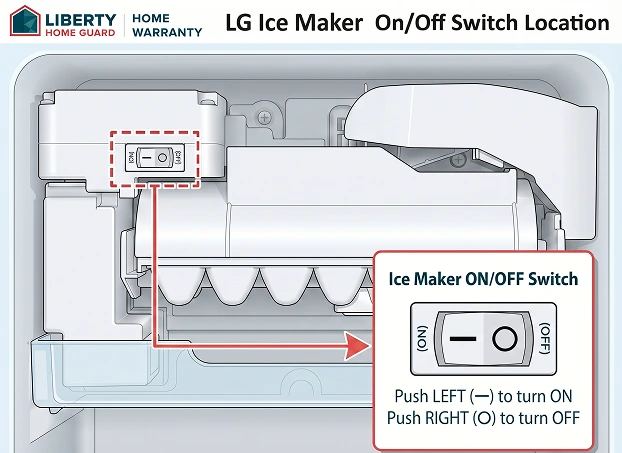
Turn off the ice maker or lift the shutoff arm. Remove the bin and clear loose ice by hand. For cubes stuck in the mold, place a warm, damp cloth over the area for several minutes.
Wipe away water before turning the ice maker back on. The unit may need one full cycle before it begins producing ice again.
Reposition the ice bin
Clean the bin and its contact points. Slide it back into place until it sits flat and the rear connection engages.
Some models use optical sensors. Clean the sensor windows with a soft, dry cloth. Avoid blocking them with bags, containers, or large pieces of ice.
Improve freezer airflow
Keep food away from vents. Leave space around the ice maker so cold air can circulate. Check that the freezer door closes fully and that the gasket touches the cabinet all around.
If frost covers the back wall, do not chip it away with a sharp object. A full defrost may help temporarily, but repeated frost usually needs a proper diagnosis.
Run the built-in test cycle
Many modern ice makers have a small test button. Its location varies by model, so use the appliance manual to find it.
A successful test may fill the mold, rotate the ejector, or show an error code. If the test stops halfway, note the exact sound and position. That detail can help identify a motor, sensor, or control problem.
Replace the ice maker assembly
If the motor, thermostat, or heater has failed, replacing the complete assembly is often the simplest repair. Match the exact model number, not just the refrigerator brand.
Turn off power before removing the assembly. If wires, water lines, or control boards are involved, consider hiring a qualified appliance technician.

What Different Sounds Can Tell You
Sound provides useful clues when the ice maker not dumping ice problem is difficult to see. It is not a perfect test, but it can narrow the search.
• No sound at all: The unit may not be receiving power, or its sensor may not be calling for a harvest cycle.
• A click with no movement: The motor may be weak, jammed, or unable to receive the correct signal.
• A steady hum: The motor may be trying to move against stuck ice.
• A grinding sound: The ejector gears may be damaged, or ice may be caught in the mechanism.
• Water running but no ice dump: The fill valve may work while the harvest system does not.
• Repeated clicking: A control, motor, or position switch may be failing.
Listen for only a few seconds. Do not place fingers near moving parts, and do not remove protective covers while the appliance has power.
When Water Supply Problems Look Like a Dumping Problem
A refrigerator may appear to have a dumping failure when it is actually not making enough ice. Without a proper fill, there may be no cubes for the ejector to release.
Check these areas:
• The refrigerator water line may be kinked.
• The household water valve may be partly closed.
• The water filter may be clogged or overdue for replacement.
• The inlet valve screen may contain sediment.
• Water pressure may be too low for the model.
A clogged filter usually affects the water dispenser too, but not always. If the dispenser is also weak, start with the filter and supply line before replacing the ice maker.

Common Mistakes to Avoid
Trying to fix why is my ice maker not dumping ice can create more damage if you rush. Ice makers contain small plastic parts that can break easily.
Avoid these mistakes:
• Do not use a knife, screwdriver, or metal pick to pry out ice.
• Do not force the ejector arm by hand.
• Do not pour boiling water into the mold.
• Do not test exposed wires unless you know how to use a multimeter safely.
• Do not replace the water valve when the real problem is a frozen ejector.
• Do not ignore a leaking water line.
• Do not keep resetting the refrigerator if it trips a breaker or smells hot.
One lesson that comes up often in appliance troubleshooting is to inspect before replacing. A full ice maker assembly can cost much more than a careful cleaning or a correctly positioned bin.
When to Call an Appliance Technician
A professional repair is wise when the ice maker still will not dump ice after basic checks. It is also the safer choice if you find damaged wiring, a leaking valve, heavy frost, or a failed control board.
Call for service if:
• The refrigerator trips the circuit breaker.
• You smell burning plastic or overheated wiring.
• Water leaks into the freezer or onto the floor.
• The freezer cannot hold a safe temperature.
• The ice maker needs electrical testing.
• The unit is covered by a warranty.
Before scheduling service, record the refrigerator model number and describe what happens. Tell the technician whether the ice maker is silent, humming, clicking, or holding frozen cubes. Clear details can reduce diagnostic time.
How Long Should You Wait After a Repair?
An ice maker does not always produce ice at once. After a reset, temperature adjustment, or repair, allow several hours for the freezer to stabilize and the first batch to freeze.
Many units take about 6 to 24 hours to make a normal amount of ice, depending on the model and freezer temperature. A single empty cycle does not always mean the repair failed.
Keep the freezer closed as much as possible during this period. If the ice maker still has not dumped ice after a full day at the correct temperature, inspect the harvest system again or arrange service.
Frequently Asked Questions About Why Is My Ice Maker Not Dumping Ice
Why is my ice maker not dumping ice even though it is full of cubes?
Frozen cubes may be stuck to the mold, or the ejector motor may not be turning. Remove the ice bin, clear the jam safely, and run the model’s test cycle if it has one.
Why does my ice maker make ice but not release it?
The mold heater, ejector arm, thermostat, or motor may be faulty. Freezing ice and releasing ice are separate stages, so a working water supply does not prove that the harvest system works.
Can a full ice bin stop the ice maker from dumping ice?
Yes. A full or badly positioned bin can activate the shutoff arm or block an optical sensor. Reposition the bin and clear ice from the sensor area.
How do I reset an ice maker that is not dumping ice?
Turn off the ice maker, unplug the refrigerator for about five minutes, and restore power. Some models also have a test or reset button, so check the manual before pressing controls.
Is a clogged water filter responsible for an ice maker not dumping ice?
A clogged filter usually causes slow filling or small ice batches rather than a true dumping failure. However, low water flow can make the ice maker appear inactive, especially if the mold does not fill correctly.
Should I replace the whole ice maker assembly?
Replacement may be practical when the motor, heater, or thermostat has failed. Confirm the exact model and compare the part cost with professional labor before ordering.
Conclusion
When you ask why is my ice maker not dumping ice, begin with the simple causes: a jammed cube, a full bin, poor freezer temperature, or a blocked sensor. Then check the ejector arm, test cycle, water supply, motor, heater, and thermostat in that order.
Work slowly, avoid sharp tools, and disconnect power before handling internal parts. If the unit leaks, overheats, or needs electrical testing, professional service is the safest path. Use this guide to narrow down the fault, then explore your appliance manual or share your model and symptoms in the comments for more targeted help.