
The best stand mixer for professional use is the NSF-listed 8.4-quart commercial mixer with strong power and a large bowl.
A busy bakery can turn a simple dough recipe into an all-day job. A weak mixer may walk across the counter, overheat, or leave dry flour at the bowl edge. I looked at bowl size, motor power, controls, attachments, build, and daily comfort to find the best stand mixer for professional use. The models below fit different needs, from small catering work to home baking and meat prep. I also included clear limits, because the biggest mixer is not always the best choice.
8.4QT Commercial Stand Mixer
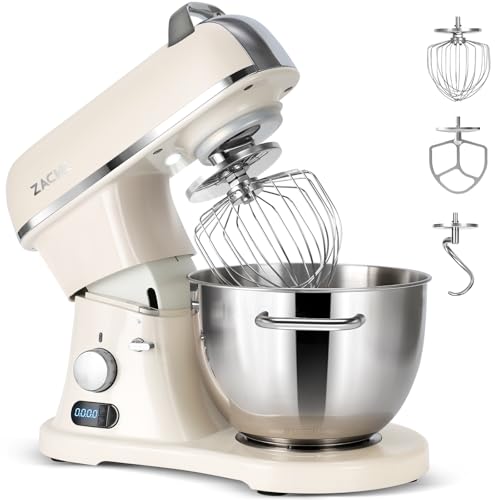
The 8.4QT Commercial Stand Mixer is the strongest match for a small bakery, café, church kitchen, or catering team. Its 800-watt motor and large stainless steel bowl give you room for bigger batches than most home mixers. The aluminum die-cast body also gives it a more commercial feel than a light plastic mixer. The listing states that it meets NSF/ANSI 8-2023 standards, which is an important detail for food-service buyers who need equipment made with sanitation in mind.
This mixer includes a dough hook, wire whisk, and flat beater. That set covers bread dough, whipped cream, cake batter, cookie dough, mashed potatoes, and many other daily tasks. The larger bowl can save time when you make several loaves or cakes in one shift. Still, I would follow the manual’s limits and avoid treating any countertop mixer like an industrial spiral mixer.
Pros:
- Large 8.4-quart capacity suits bigger batches
- 800-watt motor offers useful power for frequent mixing
- Stainless steel bowl resists stains and common kitchen odors
- Includes dough hook, whisk, and flat beater
- Aluminum die-cast construction feels sturdy
- NSF/ANSI 8-2023 compliance claim supports food-service use
- Good fit for bakeries, cafés, and busy family kitchens
Cons:
- Large size needs a strong, permanent counter space
- May be more mixer than a casual baker needs
- Commercial-style machines can be less convenient to move
My Recommendation
I recommend this model to cooks who need a large bowl and plan to mix often. It is especially useful for small businesses that make bread, cookies, cupcakes, or pizza dough in steady batches. The roomy bowl can reduce the number of mixing cycles, while the included tools cover the basic jobs most professional kitchens face. If you want the best stand mixer for professional use from this group, this is my first pick.
It offers strong value when capacity and regular output matter more than a compact footprint. Before ordering, measure your counter and check the machine’s height, weight, and electrical needs. Availability and price can change, so review the current Amazon listing and seller details before purchase.
Kitchen in the Box 3.2-Quart Mixer
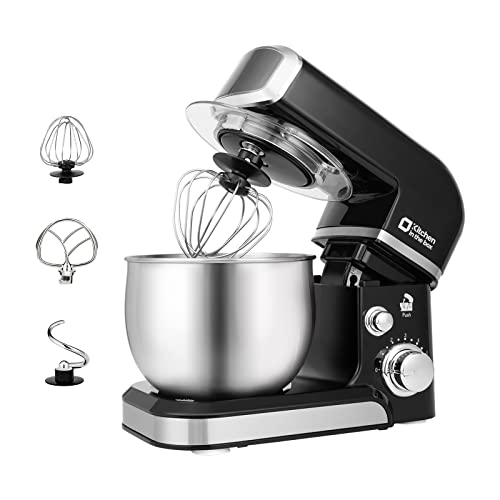
The Kitchen in the Box 3.2-Quart Stand Mixer takes a different path. It focuses on small size, simple controls, and easy storage instead of heavy commercial work. Its six speeds and three basic tools can handle eggs, cream, cake mix, cookie dough, and small bread recipes. The light body may appeal to apartment cooks, students, and home bakers who do not want a large machine taking over the counter.
A 3.2-quart bowl works best when your recipes stay modest. It lets you mix a small cake or a batch of frosting without bringing out a full-size appliance. The tilt-head design also makes it easier to add ingredients and remove the bowl. I would not choose it for repeated stiff dough batches, but it can be a smart low-cost helper for light daily work.
Pros:
- Compact design fits small kitchens and apartments
- Light weight makes storage and setup easier
- Six speed settings support basic mixing tasks
- Includes a whisk, dough hook, and flat beater
- Small bowl suits single and small-family recipes
- Tilt-head access makes ingredient checks simple
- Black finish gives it a clean, easy-to-match look
Cons:
- 3.2-quart capacity limits large recipes
- Not the best choice for nonstop commercial mixing
- Light machines may move during stiff dough work
My Recommendation
This mixer suits a home baker who values space and price. It can also help a small catering business with light prep, such as frosting, whipped toppings, and small cake batches. I would call it a practical starter rather than the best stand mixer for professional use. Its main strength is convenience, not high-volume power.
Choose it when you need a mixer that can live in a cabinet and come out quickly. Avoid it if your work involves large bread batches or many hours of daily use. For the right buyer, its small footprint and useful tool set offer good value.
Aucma 6.5-Quart 660W Stand Mixer

The Aucma 6.5-Quart Stand Mixer sits between a small home unit and a larger commercial model. Its 660-watt motor, six speeds, and generous bowl give it a useful mix of capacity and cost. The tilt-head design lets you see the bowl and add ingredients without fighting the machine. It includes the familiar dough hook, wire whip, and beater, so you can move from bread to cake without buying extra tools.
The 6.5-quart bowl gives family bakers more working room than a compact mixer. It can also help a small side business prepare larger batches with fewer pauses. I like this size for people who bake every week but do not need a machine built for a full production line. As with any mixer, you should use the correct speed and respect the maker’s instructions for thick dough.
Pros:
- 6.5-quart bowl handles family-size recipes well
- 660-watt motor provides useful everyday mixing power
- Six speeds give better control over different mixtures
- Tilt-head design offers easy bowl access
- Includes dough hook, wire whip, and flat beater
- Good middle ground between compact and commercial sizes
- Often costs less than premium professional mixers
Cons:
- May not match the durability of a true commercial mixer
- Large bowl can be excessive for one or two servings
- Thick dough may require slower speeds and smaller batches
My Recommendation
I recommend the Aucma to home bakers, cottage-food sellers, and small prep teams that need more room without paying for a heavy commercial unit. It is a strong choice for cupcakes, cookies, frosting, pizza dough, and many family recipes. It may be the best stand mixer for professional use for a buyer who works at a modest scale and wants a balanced price.
It gives you more capacity than a compact machine while staying easier to manage than an extra-large mixer. Check the current listing for warranty terms, included parts, and seller support. Good care, correct speeds, and reasonable batch sizes will help it serve you well.
KitchenAid Classic 4.5-Quart Stand Mixer
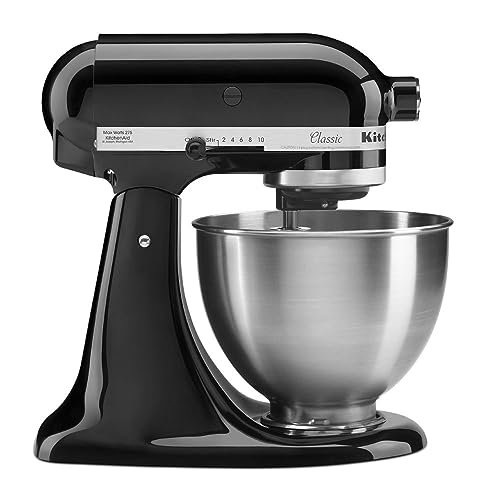
The KitchenAid Classic Series 4.5-Quart Stand Mixer is a familiar choice for home bakers who want a proven design. Its tilt-head layout makes it easy to add flour, scrape the bowl, and change tools. The 4.5-quart bowl works well for cakes, cookies, frosting, whipped cream, and many standard family recipes. Its broad accessory ecosystem is also a major reason people stay with the KitchenAid platform.
This model is not a large commercial mixer, and I would not present it as one. Still, it can support a home baking business with sensible batch sizes and rest periods. The direct-drive style and stable base give it a solid feel during common tasks. I also like the simple control system because new users can learn it fast.
Pros:
- Well-known tilt-head design is easy to use
- 4.5-quart bowl fits many standard recipes
- Strong accessory platform expands kitchen tasks
- Simple speed control helps new bakers work with confidence
- Stable base handles cakes, cookies, and light dough
- Classic shape has long-term appeal and easy recognition
- Replacement tools and bowls are widely available
Cons:
- Smaller capacity than the leading commercial option
- Not ideal for repeated large bread batches
- Classic models may lack some newer convenience features
My Recommendation
This KitchenAid is best for home bakers, cooking students, and small sellers who need a trusted all-purpose machine. It is also a good pick for someone who wants to add pasta, grinding, slicing, or other tasks through compatible attachments. For light professional work, it can be a dependable tool. For high-volume production, I would choose the 8.4-quart commercial mixer instead.
The biggest value comes from its familiar controls and large accessory family. You can start with basic baking and expand later as your skills grow. Review the current model details before buying, since bowl and attachment compatibility can vary by design.
KitchenAid KSMMGA Metal Food Grinder

The KitchenAid KSMMGA is a metal food grinder attachment, not a stand mixer by itself. I included it because many professional cooks use their mixer as the power base for more than baking. This attachment can help grind meat and prepare ingredients when paired with a compatible KitchenAid stand mixer. Its metal construction gives it a more robust feel than a small plastic grinder attachment.
This tool can save counter space because one motor supports several kitchen jobs. It may suit cooks who make burgers, sausage, meatloaf, or fresh pet-food recipes under safe food-handling rules. I would keep meat very cold, clean every part after use, and follow food-safety guidance closely. It cannot replace a mixer, so buy it only if you already own or plan to buy a compatible KitchenAid model.
Pros:
- Expands a compatible KitchenAid mixer into a food grinder
- Metal body offers a sturdy feel during use
- Helps prepare burgers, sausage, and ground meat at home
- Saves storage space compared with another motorized appliance
- Useful for cooks who want one kitchen power base
- Supports more control over ingredients and texture
- Good companion for a KitchenAid baking setup
Cons:
- Requires a compatible KitchenAid stand mixer
- Does not perform stand-mixer jobs on its own
- Needs careful cleaning and safe handling after meat prep
My Recommendation
I recommend the KSMMGA for KitchenAid owners who want to grind meat without adding a separate appliance. It is best for home chefs, meal-prep users, and small food businesses that already have a suitable mixer. It does not qualify as the best stand mixer for professional use, but it can make that mixer more useful. Think of it as an extra tool, not the heart of the setup.
The attachment offers good value when you use it often and already own the right KitchenAid base. Check compatibility before ordering, then read the care instructions closely. Keep raw meat cold, prevent cross-contamination, and sanitize food-contact parts after every use.
How to Choose the Best Stand Mixer for Professional Use
Buying a professional stand mixer starts with your real workload. A large bowl looks impressive, but size alone does not prove that a mixer can handle thick dough every day. I first ask how many batches the kitchen makes, what type of food it mixes, and how much counter space it has. A home baker and a café may both need a stand mixer, but they do not need the same machine.
Match the Bowl to Your Batch Size
Bowl size affects both output and control. A 3.2-quart bowl works well for small cakes, frosting, and light mixing. A 4.5-quart bowl handles many standard family recipes. A 6.5-quart bowl gives more room for large home batches, while an 8.4-quart bowl better suits steady commercial prep.
Do not fill the bowl to the rim. Flour can spill, and thick dough can place extra stress on the motor. Check the manual for maximum flour and dough limits. The best stand mixer for professional use is the one that handles your normal batch without strain, not simply the one with the biggest number.
Consider Motor Power With Care
Wattage can help you compare machines, but it does not tell the full story. Gear design, motor cooling, bowl shape, tool design, and speed control also matter. A mixer with a high listed wattage may still struggle if the bowl is poorly matched to the beater. Look for a stable body, a strong attachment point, and clear instructions for dough limits.
For thick bread dough, use low speeds and avoid long, nonstop runs unless the manual allows them. Let the motor rest when needed. I prefer a mixer that works smoothly and stays stable over one that simply advertises a large power number.
Look for Commercial Sanitation Features
Food-service kitchens need more than raw power. Smooth surfaces, removable tools, and a bowl that cleans easily can save time every shift. NSF/ANSI standards are useful because they address sanitation and equipment design for commercial food use. However, a certification claim should still be checked on the product page, label, or documentation.
Never assume that every part is dishwasher safe. Some aluminum tools can darken in a dishwasher, and some finishes need hand washing. Follow the care guide. Clean flour dust, egg residue, and dough from seams before they harden.
Think About Stability and Noise
A stand mixer should stay planted while it works. A heavy base helps, especially with bread dough. Suction feet or a broad base can also reduce movement. If the mixer rocks, stop it and check the surface, bowl lock, and tool position.
Noise matters in a small bakery or open kitchen. No countertop mixer is silent, but harsh grinding or sudden changes in sound can signal a problem. I listen for smooth operation and watch for unusual heat, odor, or speed loss. These checks can protect both the mixer and the batch.
Choose the Right Mixer Style
Tilt-head mixers make it easy to add ingredients and change tools. They suit most home users and light commercial work. Bowl-lift mixers often provide better support for large bowls and heavy mixtures. They can feel more stable, but they may take more space and offer less open access.
Commercial planetary mixers often use a fixed bowl and a stronger frame. They make sense for bakeries that mix many batches each day. A small business should compare the purchase price with service support, warranty coverage, replacement parts, and expected daily output.
Check the Included Tools
A dough hook is vital for yeast dough. A flat beater handles cookie dough, cakes, mashed foods, and some frostings. A wire whip works best for cream, egg whites, and airy mixtures. Make sure the tools fit the bowl and reach the mixture properly.
A tool that sits too high may leave ingredients unmixed. One that sits too low may scrape the bowl. Some mixers allow height adjustment. That small detail can improve results and reduce the need to stop and scrape by hand.
Review Electrical and Workspace Needs
Measure more than the counter width. Check the mixer’s height under cabinets, the space needed to tilt the head, and the room required to remove the bowl. Leave air space around motor vents. Keep the cord away from hot surfaces and wet sinks.
Professional kitchens should also confirm voltage, plug type, circuit needs, and local inspection rules. A countertop mixer must fit the kitchen’s electrical plan. When in doubt, ask a qualified electrician or the manufacturer before using the machine.
Maintenance Tips for Longer Life
Wipe the body after each use. Remove the bowl and tools so you can clean hidden flour and dough. Dry metal parts well before storage. Do not force the speed lever or overload the bowl.
Watch the beater clearance. If the beater hits the bowl, stop the mixer and adjust it according to the manual. Inspect the cord and plug from time to time. A professional mixer is a workhorse, but even a workhorse needs care.
What I Would Buy for Different Kitchens
| Best for | Why |
|---|---|
| Small bakery or café | The 8.4-quart commercial model offers the largest bowl and strong listed power. |
| Home baker or small side business | The Aucma 6.5-quart mixer balances capacity, controls, and price. |
| Compact kitchen | The Kitchen in the Box 3.2-quart model is light and easy to store. |
Why Bowl Capacity Is Important in Professional Baking
Professional baking depends on repeatable results. If you use a bowl that is too small, you may need several cycles for one order. That wastes time and can create uneven results. A larger bowl lets you mix more product at once, but it also needs enough motor strength to move the ingredients well.
Capacity also affects cleanup. One large batch may create less mess than three small batches. Yet a large bowl can be harder to lift, wash, and store. I always balance output against worker comfort. The best stand mixer for professional use should improve the whole workflow, not only increase batch size.
Stand Mixer Safety Tips
Keep hands, spoons, and scrapers away from moving tools. Turn off and unplug the mixer before removing a stuck dough hook or changing an attachment. Use a spatula only after the motor stops. Tie back long hair and keep loose sleeves away from the bowl.
Raw eggs and meat need extra care. Wash hands and clean food-contact surfaces after use. For meat grinding, keep the meat cold and follow local food-safety rules. If the motor smells hot or the mixer changes speed, stop and let it cool before checking the manual.
FAQs Of best stand mixer for professional use
What size stand mixer is best for professional use?
An 8-quart mixer suits many small bakeries and cafés. A 6-quart model can work well for lighter commercial output. Choose based on your normal batch size, not the largest recipe you make once a month.
Is a 660-watt stand mixer strong enough for bread dough?
It can handle reasonable bread batches when you use the correct speed and follow the manual. Do not overload the bowl or run thick dough for too long. A true bakery may need a stronger commercial mixer.
Can I use a home mixer for a small baking business?
Yes, if your batch size and daily volume stay within its limits. A home mixer can support cakes, cookies, and frosting. Replace it with commercial equipment when frequent heavy use causes heat, noise, or slow production.
What attachments should a professional baker have?
A dough hook, flat beater, and wire whip cover most baking jobs. A spare bowl can speed up production. Extra tools, such as a grinder, help only when they match your menu and mixer model.
How do I keep a stand mixer from overheating?
Use the recommended speed, avoid overloading, and give the motor rest periods. Keep vents clear and place the mixer on a firm surface. Stop at once if you notice a burning smell or unusual noise.
Final Verdict: Which Should You Buy?
The 8.4QT Commercial Stand Mixer is my top pick for the best stand mixer for professional use. It offers the largest bowl, strong listed power, and a commercial-focused design.
For home baking, the Aucma gives the best balance. Choose Kitchen in the Box for small spaces, KitchenAid for an accessory-rich platform, and KSMMGA for grinding.