
The best meat thermometer for chicken gives fast, accurate readings and helps every meal stay juicy and safe.
Have you ever sliced into a roast chicken and found pink meat near the bone, or cooked it so long that the breast turned dry? I have, and guessing with a timer rarely solves the problem. A reliable instant-read thermometer removes that stress in seconds. It tells you what is happening inside the chicken, not just how brown the skin looks. In this guide, I compare five popular digital models for speed, accuracy, ease of use, and daily cooking value.
Alpha Grillers Instant Read Thermometer

The Alpha Grillers instant-read thermometer is a simple, useful tool for cooks who want a quick answer without a long setup. Its large digital display is easy to read while I stand over a hot pan or grill. The probe reaches deep into chicken breasts, thighs, and whole birds. It also works well for beef, pork, fish, bread, candy, and frying oil.
This model feels suited to home cooks who prefer a clear tool over a feature-heavy gadget. I like the broad cooking range and the way an instant reading helps prevent dry chicken. The waterproof design also makes cleanup less stressful, although I still avoid placing the full unit under running water. For many kitchens, it offers the practical balance expected from the best meat thermometer for chicken.
Pros:
- Large display is simple to read
- Fast readings reduce heat loss from the oven
- Long probe reaches the center of thick chicken
- Useful for grilling, roasting, frying, and baking
- Water-resistant design supports easy cleanup
- Foldable probe helps with storage
- Suitable for beginners and regular home cooks
Cons:
- It does not offer wireless remote monitoring
- The display may feel basic for advanced cooks
- Users must clean the probe carefully after each use
TempPro TP19H Digital Meat Thermometer

The TempPro TP19H focuses on speed, which matters when I check chicken several times during a cook. Its one-second reading claim helps me work quickly without leaving the oven door open for long. The digital screen gives a clear view of the temperature, and the probe folds for safer storage. This design is especially handy for grilling, pan cooking, and weeknight roasting.
I see the TP19H as a strong fit for cooks who want an instant-read thermometer with a modern feel. A fast check can help me find the thickest part of a chicken breast without overcooking the thinner edge. The tool is also useful for checking multiple pieces in a batch. If speed is your top concern, this model deserves serious attention when choosing the best meat thermometer for chicken.
Pros:
- Very quick temperature readings
- Clear digital screen supports easy checking
- Folding probe improves storage and portability
- Works for chicken, steak, fish, and baked foods
- Helpful for grilling and outdoor cooking
- Simple controls are easy for new users
- Quick readings can reduce oven heat loss
Cons:
- It lacks a remote probe for long cooks
- Small hands may find the body slightly broad
- It needs careful drying after washing
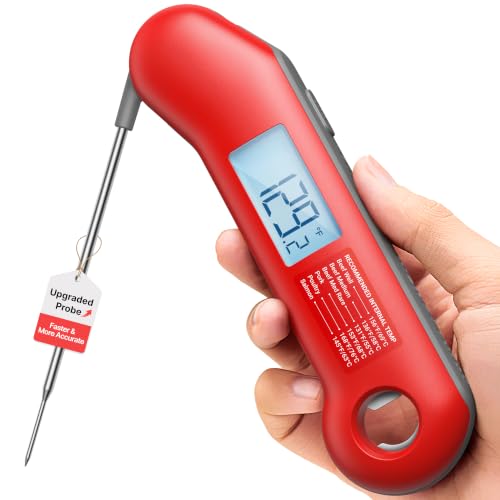
0.5-Second Red Digital Meat Thermometer

This red digital thermometer is made for cooks who value a very fast reading and a bold, easy-to-spot body. The half-second response can make a real difference when I check several chicken pieces in a hot skillet. Its digital format removes the guesswork that comes with color, texture, or cooking time. The compact design also fits well in a kitchen drawer, picnic box, or grill kit.
The bright red finish is more than a style choice because it can be easier to find among utensils and tools. I would consider this model for a busy family kitchen where several foods may cook at once. It can help me test the thickest area of poultry with less waiting. As a fast and approachable option, it may be the best meat thermometer for chicken for shoppers who want speed at a reasonable level of complexity.
Pros:
- Very fast claimed response time
- Bright red body is easy to locate
- Digital display gives a direct temperature reading
- Useful for checking several chicken pieces
- Compact shape stores easily
- Helpful for grills, ovens, pans, and air fryers
- Simple operation suits everyday cooking
Cons:
- It may offer fewer advanced settings than premium models
- The red housing may show cooking marks over time
- It does not replace a leave-in thermometer for long roasting
ThermoMaven Professional Meat Thermometer
The ThermoMaven is aimed at cooks who place a high value on speed and stated accuracy. Its claimed 0.5-degree Fahrenheit accuracy gives it a more professional feel than a basic dial thermometer. The half-second reading is useful when I want to check chicken without holding the probe in the food for long. A clear digital screen helps me read the result at a glance.
This model makes sense for serious home cooks, grill fans, and anyone who wants more confidence when cooking poultry. Accuracy matters because a small mistake can leave chicken underdone or make it dry. I still recommend checking the probe position and avoiding bone, since even a highly accurate device cannot fix a poor reading spot. For precision-focused shoppers, this is a leading candidate for the best meat thermometer for chicken.
Pros:
- Claims fast readings in about half a second
- Claims accuracy within plus or minus 0.5°F
- Good choice for careful poultry temperature checks
- Large digital display is easy to scan
- Useful for grilling, roasting, and frying
- Fast response limits heat loss during cooking
- Professional-style performance for home kitchens
Cons:
- Precision features may cost more than basic models
- It still needs regular accuracy checks over time
- It is not a wireless leave-in cooking system
1-2 Second Digital Meat Thermometer

This digital meat thermometer offers a one- to two-second reading range for cooks who want useful speed without a complicated setup. It fits the basic job well: insert the probe, wait briefly, and read the number. That simple process works for chicken breasts, thighs, wings, whole birds, and grilled food. The broad use also makes it useful for roast beef, pork, fish, bread, and hot oil.
I would recommend this model to a first-time buyer who wants a practical thermometer for daily meals. It can help a cook move beyond unreliable timers and visual guesses. The short wait makes it easier to check food at several points during a cook. It is a sensible choice for anyone seeking the best meat thermometer for chicken without paying for features they may not use.
Pros:
- Fast one- to two-second readings
- Simple design is easy for beginners
- Useful across ovens, grills, pans, and fryers
- Helps prevent dry chicken from overcooking
- Compact size works well in small kitchens
- Good for checking several pieces in one batch
- Versatile enough for many foods
Cons:
- It may have fewer premium controls
- Reading speed can vary with placement and food
- It is not designed for unattended oven monitoring
My Recommendation
After comparing these models, I would start with the ThermoMaven if accuracy is your main goal. Its stated ±0.5°F accuracy and fast response suit cooks who often prepare chicken, grill thick cuts, or want more control over doneness. The TempPro TP19H is a close alternative for shoppers who want a quick, easy tool with a folding probe. The Alpha Grillers model remains a practical pick for simple home use.
The red 0.5-second model stands out for speed and visibility, while the 1-2 second thermometer offers a straightforward entry point. I would not choose based on speed alone. Probe placement, clean handling, battery life, display clarity, and a comfortable grip all matter in real cooking. Availability and prices can change, so check the current Amazon listing before ordering.
| Best for | Why |
|---|---|
| Precision-focused cooks | ThermoMaven offers a fast reading and a stated ±0.5°F accuracy. |
| Fast everyday checks | TempPro TP19H and the red model help test chicken with little delay. |
| Simple home cooking | Alpha Grillers and the 1-2 second model are easy to use and versatile. |
How to Choose the Best Meat Thermometer for Chicken
Chicken is not difficult to cook, but it does punish guesswork. A thick breast may look ready on the outside while the center remains too cool. A whole chicken may also have different temperatures in the breast and thigh. The right thermometer acts like a small traffic light: it tells you when to stop before the meal goes too far.
When I test a thermometer, I look at more than the number on the package. I want a tool that reads quickly, feels steady in my hand, and gives a clear display near heat and steam. I also check how easy it is to clean. The best meat thermometer for chicken should support safe cooking without making dinner feel like a science project.
Accuracy
Accuracy is the first feature to consider. A thermometer that reads several degrees high or low can lead to poor results. Look for a model with a clear accuracy claim and follow the care instructions. Even a good thermometer can give a bad result if the tip touches bone, the pan, or an empty cavity.
For a simple home check, I place the probe into the thickest part of the chicken. With a breast, I insert it from the side so the tip reaches the center. With a thigh, I avoid the bone and check the thick muscle. For a whole bird, I check more than one area because the breast and thigh may cook at different rates.
Reading Speed
A fast thermometer helps in two ways. First, it lets me check food quickly without leaving the oven door open. Second, it reduces the chance that I will hold the hot pan or grill lid open while waiting. A one- or two-second reading is useful for busy cooks.
Speed should not replace care. The probe still needs time to settle on a stable number. I wait until the digits stop moving, especially when testing a large roast or a cold spot. The best meat thermometer for chicken combines quick response with a steady and readable result.
Probe Length and Shape
A short probe may work for a thin cutlet but struggle with a thick breast or whole chicken. A longer probe gives more room to reach the center while keeping my hand farther from the heat. A sharp tip also makes a clean entry point and reduces damage to the meat.
I prefer a probe that folds or has a protective cover. These details help with storage and reduce the chance of poking a hand while searching through a drawer. A narrow probe can also leave a smaller hole, which helps retain juices in delicate chicken breast.
Display and Controls
The display should be easy to read from a standing position. Large digits help when the kitchen has steam, low light, or bright sun. Some models include a backlight, which can help during evening grilling or oven checks.
Simple controls are often best. I want to switch between Fahrenheit and Celsius, turn the unit on, and read the temperature without studying a manual. Hold functions can help when the display is hard to see near a hot grill. Auto-off features may also save battery power.
Water Resistance and Cleaning
Chicken can carry harmful bacteria before cooking, so cleaning matters. I wash and sanitize the probe after checking raw poultry. I also avoid placing the thermometer on a clean counter after it has touched raw chicken.
Water resistance makes this task easier, but it does not always mean the thermometer is dishwasher safe. I follow the product directions and clean the probe with hot, soapy water or an approved sanitizer. I keep the electronic body as dry as possible. A thermometer is only helpful when it stays clean and works correctly.
Battery Life and Storage
A dead battery can ruin a planned meal. I look for an easy-to-replace battery and a clear low-battery warning. Auto shutoff can help, but I still turn the thermometer off after use.
Storage also affects daily use. A folding probe, magnet, hanging hole, or protective sleeve keeps the tool close to the cooking area. If I have to search for it every time, I am more likely to guess instead. The best meat thermometer for chicken should be ready when the pan is hot.
How to Use a Meat Thermometer for Chicken Correctly
Start by placing the thermometer in the right location. Insert the tip into the thickest part of the meat. Do not push it through the chicken or let it touch a bone. Bone can conduct heat and create a reading that does not represent the surrounding meat.
For boneless chicken breasts, insert the probe from the side. This method makes it easier to reach the center. For bone-in thighs, place the tip into the thickest section while staying away from the bone. For wings, check the thickest meaty area rather than the thin tip.
When checking a whole chicken, test the inner thigh and the thickest part of the breast. The temperature may not match in both places. I also check near, but not inside, the cavity. This gives a better idea of whether the bird is cooked through.
The USDA recommends cooking poultry to a minimum internal temperature of 165°F, measured with a food thermometer. That target applies to whole birds, pieces, and ground poultry. I remove the chicken only after the proper area reaches the safe temperature. Resting may improve texture, but it should not replace reaching the safe cooking temperature.
Do not rely on clear juices, white meat, or a cooking timer alone. Those signs can help, but they do not measure internal heat. A thermometer gives a more direct answer. This is why I consider a good digital model one of the most useful tools in a chicken cook’s kitchen.
Instant-Read Versus Leave-In Thermometers
An instant-read thermometer is best for quick checks. I insert it near the end of cooking, read the temperature, and remove it. The five products in this guide are designed around that style of use. They work well for chicken breasts, thighs, wings, grills, and air fryers.
A leave-in thermometer stays in the meat while it cooks. It may connect to a display or wireless app. This type can help with a large turkey, smoked chicken, or long roast. It is not always needed for a fast weeknight meal.
If you cook chicken often, an instant-read model usually gives the best value. It can check several pieces and does not require a cable or receiver. If you smoke large cuts for hours, a separate leave-in tool may be worth adding later.
Common Mistakes to Avoid
Checking the Wrong Spot
One of the most common errors is checking near the surface. The outside of a chicken breast can be hot while the center remains cool. I insert the probe deep enough to reach the middle of the thickest section.
Touching the Bone
Bone can distort the reading. If the probe touches bone, I pull it back slightly or move it to another spot. I check more than one piece when cooking a large batch.
Using the Thermometer as a Timer
A thermometer tells you the current temperature. It does not tell you how much time remains. Cooking time changes with the size of the chicken, starting temperature, pan, oven, grill, and airflow. I use time as a guide and temperature as the final check.
Leaving a Dirty Probe on the Counter
Raw chicken can spread bacteria to hands, tools, and surfaces. I clean the probe right after checking raw meat. I also wash my hands and use a clean plate for cooked chicken.
Cutting the Chicken Too Often
Repeated cutting releases juices and makes it harder to judge doneness. A fast digital thermometer creates a small opening and gives a better answer. One careful check is often better than several deep cuts.
Accuracy Checks for Digital Meat Thermometers
Even a trusted thermometer can benefit from an occasional check. The ice-water method is a simple home test. Fill a glass with crushed ice, add a little cold water, stir it, and place the probe in the center without touching the glass. The reading should be close to 32°F at sea level.
The boiling-water method can also help, but the result changes with altitude. Water boils below 212°F in many high locations. For that reason, I prefer the ice test for a basic check. If the reading seems far off, I replace the battery, review the instructions, and contact the maker if needed.
Do not test the thermometer by placing it in a hot pan or flame. Direct heat can damage the probe or body. Use water for testing and keep the electronic housing away from moisture. These small habits can extend the life of the best meat thermometer for chicken.
Which Thermometer Is Best for Different Chicken Meals?
Best for Chicken Breast
Chicken breast has little fat and can dry out quickly. A fast instant-read model helps me stop cooking as soon as the center reaches a safe temperature. The ThermoMaven and TempPro are strong options because their quick readings limit time over the heat.
Best for Chicken Thighs
Thighs are more forgiving, but the bone makes placement important. A narrow, sharp probe helps me reach the thick meat without touching bone. Alpha Grillers is a practical choice for cooks who want a simple tool for regular roasting and grilling.
Best for Whole Chicken
A whole bird needs more than one temperature check. I test the breast and inner thigh, then check again if the numbers differ. The longer probe on a standard instant-read thermometer can be helpful here.
Best for Air-Fryer Chicken
Air fryers cook quickly and can brown the outside before the center is ready. A fast digital thermometer works well because I can open the basket, check the thickest piece, and close it again. The red 0.5-second model is convenient for this task.
Best for Grilled Chicken
Grill heat can vary across the grate. I check more than one piece and avoid touching the metal grate with the probe tip. The TempPro TP19H and Alpha Grillers models both suit cooks who want quick checks near outdoor heat.
FAQs Of best meat thermometer for chicken
What temperature should chicken reach?
Chicken should reach a minimum internal temperature of 165°F, according to USDA guidance. Check the thickest part and avoid touching bone. For a whole chicken, check both the breast and the inner thigh.
Where should I place a thermometer in chicken breast?
Insert the probe from the side into the thickest part of the breast. Aim for the center and avoid the pan, surface, and bone. This gives a more reliable internal reading.
Is an instant-read thermometer better than a dial thermometer?
For most home cooks, a digital instant-read model is easier to read and faster. A dial thermometer can work, but it may take longer to settle. Digital models are especially useful when cooking thin chicken pieces.
Can I leave an instant-read thermometer in the oven?
Usually, no. Instant-read models are made for short checks, not continuous oven use. Use a leave-in thermometer if you want to monitor chicken during a long cook.
How do I clean a chicken thermometer?
Wash the probe with hot, soapy water after it touches raw chicken. Sanitize it as directed by the manufacturer, then dry it well. Do not immerse the electronic body unless the product instructions specifically allow it.
Final Verdict: Which Should You Buy?
I recommend the ThermoMaven for cooks who want the best meat thermometer for chicken with fast readings and a strong accuracy claim. The TempPro is a great second choice for simple daily use and grilling.
Any of these digital thermometers can replace guesswork with a clear number. Check the current Amazon price, clean the probe after use, and cook chicken to a safe internal temperature.