
Most slow cooker recipes need about 1 to 2 cups of liquid, but the right amount depends on the food, the cooker size, and the recipe. As a simple rule, add enough liquid to cover about one-third to one-half of the ingredients—not the entire dish.
Slow cookers lose far less water than a pot on the stove. Meat and vegetables also release moisture as they cook. Adding too much broth, water, or sauce can leave you with thin gravy, weak flavor, or watery food.
For cooks in the United States, use standard measuring cups and check the slow cooker’s manual for its fill line. Most models work best when filled between one-half and two-thirds full.
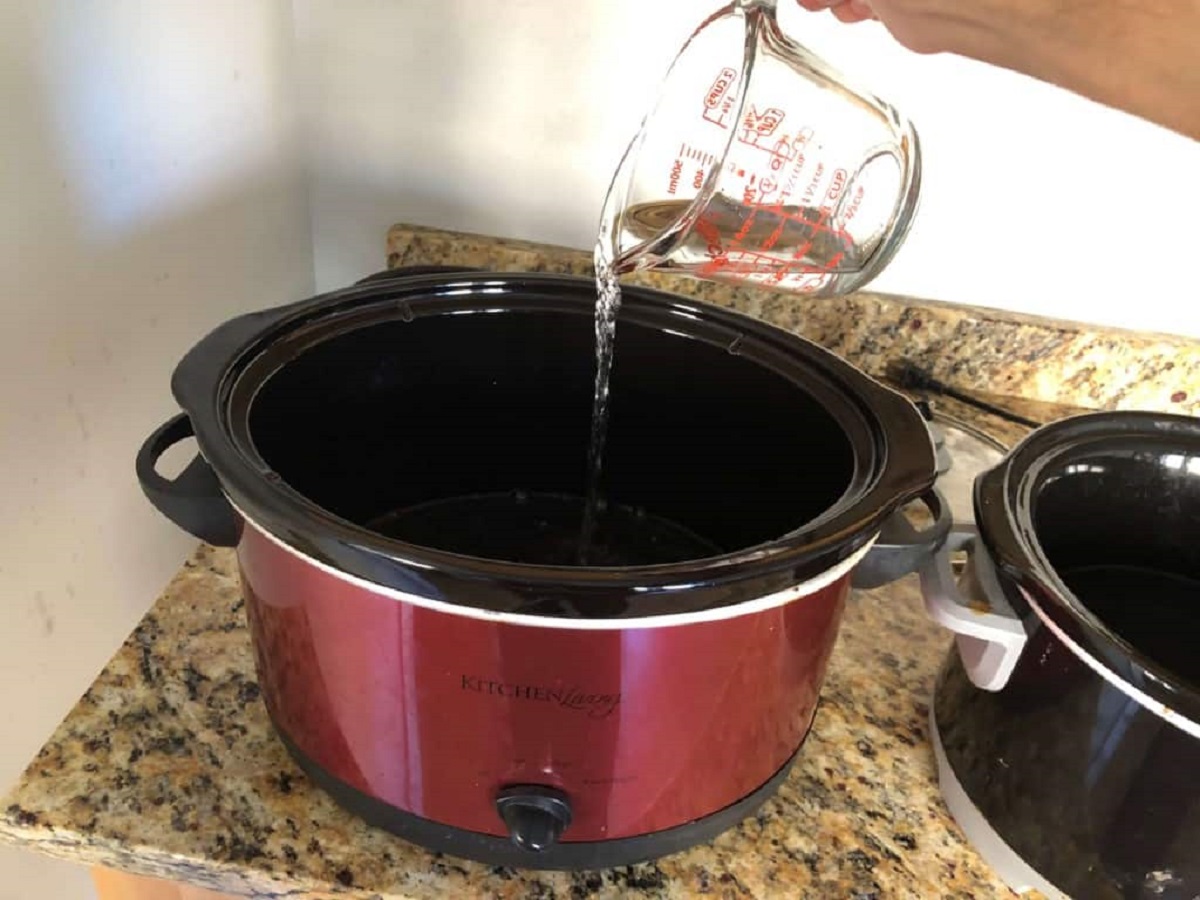
The Basic Rule for Slow Cooker Liquid
Use less liquid than you would in a stovetop recipe. A slow cooker traps steam under its lid, so very little water escapes during cooking.
A practical starting point is:
- 1 cup of liquid for a small meal or a 2- to 3-quart cooker
- 1½ to 2 cups for many 4- to 6-quart meals
- 2 to 3 cups for a large roast, stew, or a full 6- to 8-quart cooker
- Enough liquid to reach one-third to one-half of the food’s height
- More liquid only when the recipe contains dry grains, beans, pasta, or another ingredient that absorbs water
This is a starting guide, not a strict formula. A chicken breast recipe may need only a small amount of broth. A bean chili may need more because beans absorb liquid as they cook.
Does liquid need to cover the food?
No. Liquid does not usually need to cover meat or vegetables in a slow cooker.
Food above the liquid line still cooks because heat surrounds the covered crock. The liquid creates steam and helps transfer heat, while the lid keeps that moisture inside.
There are exceptions. Dried beans, lentils, grains, and other absorbent foods may need enough liquid to remain covered during cooking. Follow a tested recipe for these foods because the wrong liquid level can affect both texture and safety.
Why slow cookers need less liquid
A slow cooker has three useful features:
- A heated crock warms the food slowly.
- The lid holds in steam.
- The food cooks for several hours, giving meat and vegetables time to release water.
On a stovetop, an uncovered pot can lose a large amount of water through evaporation. A slow cooker usually does not. This is why converting a soup or stew recipe directly from the stove can produce an overly thin meal.
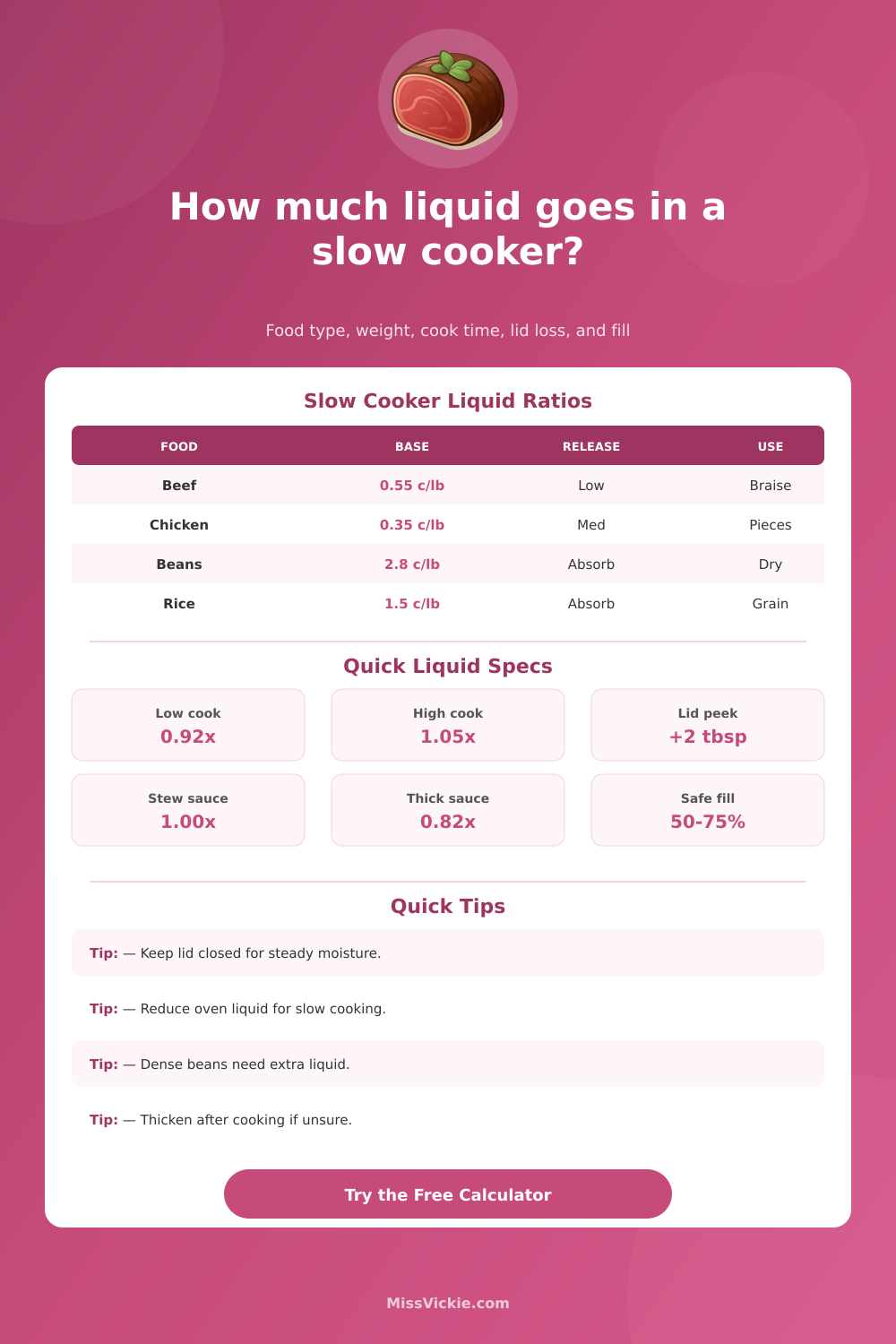
How Much Liquid to Add by Food Type
The best amount depends on what you are cooking. Meat, vegetables, beans, grains, and sauces behave differently.
Meat and poultry
For meat or poultry, start with ½ to 1½ cups of liquid for many recipes. Use broth, water, salsa, canned tomatoes, wine, barbecue sauce, or another recipe-approved liquid.
You may need more when:
- The meat is lean and the recipe contains few vegetables.
- The slow cooker is large and the food covers only a small area.
- The recipe includes dry beans or grains.
- You want a large amount of sauce or gravy.
- The cut is not expected to release much moisture.
You may need less when:
- The meat is fatty.
- The recipe includes tomatoes, mushrooms, onions, or frozen vegetables.
- The sauce already contains a lot of water.
- You plan to thicken the liquid after cooking.
A roast does not need to swim in broth. A shallow pool around the bottom of the roast is often enough for braising.
Stews and soups
Stews usually need enough liquid to partially surround the ingredients. Start with 1½ to 3 cups, depending on the cooker size and the amount of meat and vegetables.
For soup, add more liquid because soup is meant to be served with broth. Still, leave room for ingredients and avoid filling the slow cooker above its recommended maximum line.
A stew should look thick before cooking. A soup should look more fluid, but it may still thicken as vegetables, beans, pasta, or barley absorb liquid.
Dried beans and lentils
Dried beans require special care. They absorb water and expand. Add enough liquid to keep the beans submerged as they cook, and leave room for expansion.
Do not place dry kidney beans straight into a slow cooker without first following safe preparation guidance. The U.S. Food and Drug Administration warns that raw kidney beans contain a toxin called phytohaemagglutinin. Boiling the beans properly before slow cooking reduces this risk. The FDA provides guidance on safe preparation of kidney beans.
Canned beans need much less liquid because they are already cooked. Drain them if you want a thicker dish, then add only enough sauce or broth to reach the desired texture.
Rice, pasta, and grains
Rice, pasta, barley, and similar foods absorb liquid. They can turn a slow cooker meal from soupy to thick.
The amount varies by ingredient:
- Rice often needs a measured liquid ratio and may become soft if cooked too long.
- Pasta can become mushy during long cooking.
- Barley absorbs a large amount of broth and may need extra liquid.
- Quinoa needs a controlled amount of liquid and may not suit every long slow-cooking recipe.
Add these foods near the end when the recipe allows it. If you add them at the start, use a recipe written for a slow cooker rather than guessing from a stovetop ratio.

A Simple Way to Calculate the Liquid
Use the food’s moisture, the cooker’s size, and the cooking time to estimate the starting amount.
Step 1: Check the recipe ingredients
Count liquid already present in the recipe. This includes:
- Broth or stock
- Water
- Canned tomatoes
- Tomato sauce
- Salsa
- Coconut milk
- Wine
- Barbecue sauce
- Marinades
- Frozen vegetables that may release water
Do not count thick ingredients as full liquid unless the recipe treats them as liquid. For example, tomato paste adds moisture but also thickens the dish.
Step 2: Consider moisture released by the food
Some ingredients release more water than others.
| Ingredient | Usual effect |
|---|---|
| Chicken thighs | Release some fat and moisture |
| Beef chuck | Releases moisture and fat during braising |
| Mushrooms | Release a noticeable amount of water |
| Onions | Soften and release moisture |
| Canned tomatoes | Add substantial liquid |
| Frozen vegetables | May add extra water |
| Dried beans | Absorb liquid |
| Rice and barley | Absorb liquid |
| Pasta | Absorbs liquid quickly |
This table is a guide, not a substitute for a tested recipe. The exact result depends on the ingredient amount, cut, brand, and cooking time.
Step 3: Match the liquid to the cooking method
For a roast, liquid should usually sit around the bottom and lower sides of the meat.
For a stew, liquid should reach roughly one-third to one-half of the ingredients.
For soup, add enough liquid to create the intended broth while staying below the cooker’s maximum fill line.
For beans or grains, use the recipe’s stated ratio. These ingredients can absorb much more liquid than meat and vegetables.
Example calculation
Suppose a 6-quart slow cooker contains:
- 2 pounds of beef
- 3 cups of vegetables
- 1 can of diced tomatoes
- 1 cup of beef broth
The tomatoes may provide much of the moisture. The added broth may be enough for a thick stew, especially because the beef and vegetables will release more liquid. Adding another 3 or 4 cups of water could make the finished sauce thin.
This is a hypothetical example. The recipe’s ingredients and the manufacturer’s instructions should control the final decision.

What Happens If You Add Too Much Liquid?
Too much liquid usually causes a thin sauce and diluted flavor. It can also make vegetables soft before the meat is tender.
If the dish is too watery, try one of these methods:
- Remove the lid near the end, if the recipe and food safety conditions allow it. This lets some water escape, although slow cookers evaporate slowly.
- Transfer the liquid to a saucepan and reduce it on the stove. Do not place the removable crock on a stovetop unless the manufacturer says it is designed for that use.
- Thicken with a slurry. Mix cornstarch with cold water, then stir it into hot cooking liquid. A common starting point is 1 tablespoon of cornstarch mixed with 1 tablespoon of cold water, but the amount depends on the volume of sauce.
- Add a thick ingredient, such as mashed beans, tomato paste, or instant potato flakes, when it suits the recipe.
- Serve the solids separately if the meat and vegetables are done but the sauce needs more work.
Do not add dry flour directly to a hot slow cooker. It can clump and leave a raw taste. Mix flour with fat or cold liquid first, or use a tested thickening method.

What Happens If You Do Not Add Enough Liquid?
Too little liquid can cause scorching, dry edges, tough meat, or uneven cooking. The risk is higher when the cooker contains a small amount of food or when the recipe includes ingredients that absorb water.
Add more liquid when:
- The bottom looks dry early in cooking.
- Beans or grains remain hard and have absorbed the available broth.
- The food is sticking or browning too much around the edges.
- The recipe calls for a braising liquid and the meat is not partly surrounded by it.
- The cooker is running on high and the food is losing moisture faster than expected.
Add warm broth or hot water when possible. A large amount of cold liquid can reduce the crock’s temperature and lengthen cooking.
Do not keep opening the lid to check the liquid. Each opening releases heat and steam. Check only when needed, then replace the lid quickly.

Slow Cooker Liquid by Cooker Size
Cooker size helps, but it does not set a fixed liquid amount. A large cooker holding a small meal may need a different amount than a full cooker holding the same ingredients.
| Slow cooker size | Common liquid starting point | Best use |
|---|---|---|
| 1½ to 2 quarts | ½ to 1 cup | Dips, small meals, sauces |
| 3 to 4 quarts | 1 to 1½ cups | Small roasts, chili, and stews |
| 5 to 6 quarts | 1½ to 2½ cups | Family-size meals and roasts |
| 7 to 8 quarts | 2 to 3 cups or recipe amount | Large meals and batch cooking |
These ranges are general starting points. A 6-quart soup may need far more than 2 cups because broth is the main part of the dish. A 6-quart pot roast may need only 1 cup because the meat and vegetables also provide moisture.
Keep the slow cooker between one-half and two-thirds full unless the manual states otherwise. A cooker that is too empty may heat food unevenly. An overfilled cooker may cook slowly and spill during bubbling.
Should You Add Liquid at the Start or Later?
Add most of the liquid at the beginning. Slow cooker recipes depend on stable heat and moisture over many hours.
Add liquid later only when the recipe specifically calls for it or when an ingredient needs to be added near the end. Good examples include:
- Adding cream near the end to prevent curdling
- Adding pasta late so it does not turn mushy
- Adding a cornstarch slurry after the meat is tender
- Adding fresh herbs near the end for a brighter flavor
- Adjusting a sauce after removing meat and vegetables
If you add a small amount of broth late in cooking, heat it first when practical. This helps limit the drop in temperature.
Avoid adding dairy at the start of a long cooking time unless the recipe is designed for it. Milk, cream, and some soft cheeses can separate during extended heat.

Slow Cooker Liquid and Food Safety
Liquid level affects texture, but it does not make an unsafe cooking process safe. Use a food thermometer to check the thickest part of meat and poultry.
The U.S. Department of Agriculture states that poultry should reach 165°F. Ground meats should reach 160°F, while whole cuts of beef, pork, veal, and lamb should reach 145°F, followed by a three-minute rest. Check the current guidance at FoodSafety.gov.
Follow these safety rules:
- Thaw meat in the refrigerator before slow cooking unless the appliance instructions and recipe specifically support another method.
- Do not use a slow cooker to reheat leftovers. Reheat food to 165°F on the stove, in an oven, or in a microwave, then transfer it to a slow cooker for holding.
- Keep hot food at 140°F or above when holding it for service.
- Refrigerate leftovers within two hours, or within one hour when the surrounding temperature is above 90°F.
- Divide large amounts of food into shallow containers so they cool faster.
- Do not taste food to decide whether it is safe.
A cooker’s liquid level cannot compensate for an overloaded crock, a broken appliance, or food held at an unsafe temperature.

Common Mistakes to Avoid
Covering all the food with liquid
This is not usually needed. It can make a roast or stew watery and may weaken the flavor.
Pouring in the same liquid used on the stovetop
Stovetop recipes often lose water through evaporation. A slow cooker does not lose the same amount, so use less liquid unless you want a soup-like result.
Filling above the maximum line
Overfilling can lead to spills and may prevent even cooking. Leave room for bubbling and expansion.
Adding frozen meat
Frozen meat may remain in an unsafe temperature range too long. Thaw it in the refrigerator before cooking, and follow USDA guidance.
Adding pasta at the beginning
Many types of pasta become soft after several hours. Add pasta late or cook it separately.
Opening the lid often
Each lid opening releases heat and steam. It can add cooking time and change the final liquid level.
Adding salt before reducing the sauce
If you plan to reduce liquid later, wait before adding a lot of salt. Reduction concentrates flavor and can make the dish too salty.
Key Takeaways
- Most slow cooker meals need about 1 to 2 cups of liquid.
- A roast often needs only enough liquid to cover the bottom and lower sides.
- Stews usually need liquid to reach about one-third to one-half of the ingredients.
- Soups need more liquid because broth is part of the finished dish.
- Beans, rice, barley, and pasta need special liquid ratios.
- Slow cookers retain moisture, so do not copy stovetop liquid amounts without adjustment.
- Keep the cooker about one-half to two-thirds full.
- Use a food thermometer; liquid amount does not prove that meat is safely cooked.
Frequently Asked Questions
Can I use water instead of broth in a slow cooker?
Yes. Water works, but broth usually gives more flavor. You can also use unsalted broth if you want better control over the salt level.
Can I add too much liquid to a slow cooker?
Yes. Too much liquid can dilute flavor and create a thin sauce. Since slow cookers retain steam, the excess may not evaporate quickly.
Do vegetables need to be covered with liquid?
No. Vegetables can cook above the liquid line. Dense vegetables, such as potatoes and carrots, often cook more evenly when placed near the bottom.
Can I add more liquid during cooking?
Yes, if the food looks dry or an absorbent ingredient has taken up the broth. Add warm liquid when possible and replace the lid quickly.
How do I know if a slow cooker meal has enough liquid?
The bottom should not be dry or scorching. For a roast, liquid should surround the lower part of the meat. For a stew, the ingredients should have some liquid around them but should not be submerged unless the recipe requires it.
Does a slow cooker need liquid to work?
Not always. Some recipes, such as certain meats with sauces or vegetables with high water content, need little added liquid. However, a completely dry recipe can scorch, especially in a cooker that is not full. Use the recipe and appliance manual as your guide.
Conclusion
For most slow cooker meals, begin with 1 to 2 cups of liquid, then adjust for the food. Use less for a roast, more for soup, and a tested ratio for beans, grains, and pasta.
The best result comes from balancing three things: liquid already in the ingredients, moisture released during cooking, and water absorbed by the food. When in doubt, add a modest amount first. You can thicken a finished sauce, but rescuing a watery meal takes more time and may weaken its flavor.