
No, meat does not need to be fully submerged in a slow cooker. Most meat cooks well when it sits in a small amount of liquid, such as broth, water, sauce, or tomatoes. The best liquid level depends on the cut, the recipe, and whether you want a roast, stew, or pulled meat.
A slow cooker traps steam and moisture under its lid. Meat also releases water and fat as it cooks. Adding too much liquid can dilute flavor and leave the meat soft instead of tender on the outside.
For safe results in a U.S. kitchen, thaw meat before slow cooking, keep the lid on, and check the thickest part with a food thermometer. The USDA recommends cooking whole cuts of beef, pork, lamb, and veal to at least 145°F with a three-minute rest, ground meat to 160°F, and poultry to 165°F.
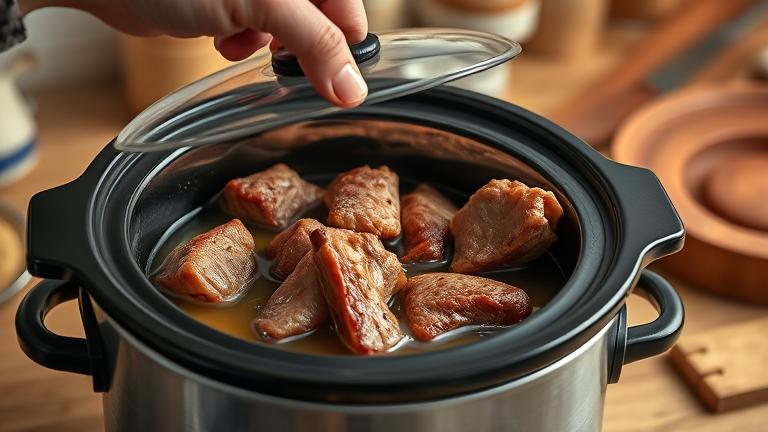
How Much Liquid Should You Add to a Slow Cooker?
You usually need enough liquid to cover the bottom portion of the meat, not the entire piece. In many recipes, liquid should reach about one-third to one-half of the way up the meat.
Use these general amounts as a starting point:
| Food | Typical liquid approach | Why |
|---|---|---|
| Beef or pork roast | About ½ to 1 cup for a standard roast | Adds moisture without diluting the sauce |
| Chicken breasts or thighs | Enough sauce or liquid to coat the bottom of the cooker | Chicken releases moisture as it cooks |
| Pulled pork or shredded beef | About ½ to 1 cup of broth, sauce, or other liquid | Helps create a moist cooking environment |
| Stew meat | Liquid should nearly cover the meat and vegetables | Stew requires enough liquid for even simmering |
| underline; font-weight: 600;”>meatballs | Sauce should surround most of the meatballs | Helps them cook evenly and stay moist |
These amounts are practical starting points, not strict rules. A large slow cooker may need more liquid than a small one, while watery ingredients such as canned tomatoes can provide much of the needed moisture.
Do not fill the slow cooker to the top. Most manufacturers recommend filling it about one-half to two-thirds full. A cooker that is too full may cook slowly and unevenly. A cooker that is too empty may heat differently than intended.
What happens if you add too much liquid?
Too much liquid can:
- Make the finished dish bland
- Thin a sauce
- Prevent browning or concentrated flavor
- Make vegetables and meat overly soft
- Increase the time needed to reduce the sauce
If your recipe has plenty of broth, wine, canned tomatoes, salsa, or barbecue sauce, you may need little or no extra water.

When Should Meat Be Fully Covered?
Meat should be fully or almost fully covered when you are making a stew, soup, or braised dish. These recipes depend on liquid surrounding the food so the ingredients cook evenly and form a broth or sauce.
Fully cover meat in recipes such as:
- Beef stew
- Chicken soup
- Pork chile verde
- Pot roast with a large amount of gravy
- Braised short ribs
- Meatballs cooked in tomato sauce
A stew has many small pieces of meat and vegetables. More liquid helps distribute heat throughout the dish. A large roast does not have the same need because it can cook gently in trapped steam while sitting above the liquid.
When should meat remain partly above the liquid?
Keep part of the meat above the liquid when you want a roast-style texture. This works well for:
- Chuck roast
- Pork shoulder
- Pork loin
- Whole chicken
- Turkey breast
- Corned beef
- Beef brisket
The exposed portion will still cook because the covered slow cooker holds heat and steam. The part in the liquid may become softer and more braised, while the part above it may retain a firmer surface.
If you want pulled meat, the liquid does not need to cover the roast. A small amount of broth, stock, sauce, or cooking juices is often enough. After cooking, you can shred the meat and mix it with the liquid left in the cooker.

Can You Cook Meat in a Slow Cooker Without Liquid?
Yes, some meat can cook in a slow cooker without added liquid. This is most suitable for fatty cuts or foods that release moisture during cooking.
Examples include:
- Pork shoulder
- Beef chuck roast
- Chicken thighs
- Meatloaf
- Sausages
- Meatballs in their own sauce
- Fatty lamb shoulder
A pork shoulder, for example, contains enough fat and water to create cooking juices. You may still add a small amount of liquid for flavor, but the meat does not need to sit in broth.
Dry cooking works less well with lean meat. Chicken breast, pork loin, and very lean beef can become dry if cooked too long. Adding a sauce or a modest amount of broth can help, but it cannot fully prevent overcooking.
Does a slow cooker need water to work?
No. A slow cooker needs heat, time, and a covered cooking chamber. It does not require water in the same way that a steam cooker does.
However, a recipe may still need liquid to:
- Prevent a lean cut from drying out
- Create a sauce
- Carry flavor
- Protect delicate food from sticking
- Cook grains, beans, or vegetables
- Make a braise or stew
Never add liquid simply to meet a rule. Add it because the food or recipe needs it.

How to Slow Cook Meat Without Submerging It
Use this method when preparing a roast, pulled meat, or another dish where the meat should sit partly above the liquid.
-
Thaw the meat in the refrigerator.
Do not place a frozen roast or large piece of poultry directly into a slow cooker. It may remain too long in the temperature range where bacteria grow quickly. -
Trim only excessive fat.
Some fat helps protect the meat and adds flavor. Remove thick, hard deposits when the recipe calls for it. -
Season the meat.
Salt, pepper, herbs, spices, and a seared crust can add more flavor than extra liquid. -
Add vegetables and aromatics.
Onions, garlic, carrots, celery, peppers, and herbs can form a bed for the meat. -
Pour in a small amount of liquid.
Add broth, stock, sauce, wine, water, or another recipe liquid. Aim for the lower part of the roast to sit in the liquid. -
Place the meat in the cooker.
Keep the thicker part in the center when possible. Do not pack the cooker tightly. -
Keep the lid closed.
Every lid lift releases heat and steam. This can extend cooking time and reduce moisture. -
Cook until tender and safe.
Use the recipe’s time as a guide, but rely on tenderness and a food thermometer. Large cuts may reach a safe temperature before they become tender. -
Rest and serve.
Rest large cuts for several minutes before slicing. Shred meat while warm if the recipe calls for pulled meat.
Should you brown meat first?
Browning meat before slow cooking is optional. It can improve the flavor and color of the finished dish, but it does not seal in juices.
To brown meat, pat it dry, season it, and sear it in a hot skillet with a small amount of oil. Transfer it to the slow cooker, then deglaze the skillet if desired and add those browned bits to the recipe.

Meat Placement and Liquid Levels by Cut
The cut of meat matters more than the idea that all meat must be submerged.
Beef chuck roast
Beef chuck has connective tissue and fat. It usually benefits from slow cooking with liquid reaching one-third to one-half of the way up the roast. Cook until it is tender enough to pull apart with a fork.
Pork shoulder
Pork shoulder can cook with little added liquid because it releases fat and juices. A small amount of broth, apple juice, salsa, or barbecue sauce can add flavor and help create a finishing sauce.
Pork loin
Pork loin is leaner than pork shoulder. Use enough liquid or sauce to prevent the surface from drying, but avoid cooking it far beyond the point of doneness. Check the center with a thermometer.
Chicken breasts
Chicken breasts contain little fat and can dry out during long cooking. Use sauce, broth, or another moist ingredient, and avoid cooking them for much longer than the recipe requires.
Chicken thighs
Chicken thighs are more forgiving because they contain more fat and connective tissue. They can cook in sauce or a small amount of broth. Remove the skin if you want to avoid a soft, rubbery texture.
Whole chicken
A whole chicken does not need to be submerged. Place it breast-side up or according to the recipe, add a small amount of liquid, and check the thickest parts of the breast and thigh. All poultry should reach 165°F.
Meatballs
Meatballs generally need sauce or liquid around most of their surface. This helps them cook evenly and prevents the exposed areas from drying out.

Slow Cooker Safety Rules for Meat
Safe slow cooking depends on more than liquid level. Follow these basic rules:
- Thaw meat in the refrigerator before placing it in the slow cooker.
- Start with a clean cooker, utensils, and hands.
- Keep the lid closed during cooking.
- Do not use the “warm” setting to cook raw meat.
- Use a food thermometer to check doneness.
- Refrigerate leftovers within two hours.
- Divide large amounts of leftovers into shallow containers so they cool faster.
- Reheat leftovers to 165°F before eating.
- Do not rely on color, texture, or cooking time alone to prove safety.
The USDA advises using a food thermometer because meat can look done before it reaches a safe internal temperature. Insert the thermometer into the thickest part, avoiding bones and the side of the cooker.
A safe temperature does not always mean the meat is tender. Tough cuts may reach a safe temperature early but need more time for collagen to break down. Continue cooking until the texture matches the recipe, while avoiding excessive cooking of lean cuts.

Common Mistakes When Adding Liquid
Covering every roast completely
Full submersion is not required for most roasts. It can produce a stew-like result and weaken the flavor of the cooking liquid.
Adding the same amount of liquid as a stovetop recipe
Slow cookers lose little moisture because the lid traps steam. A stovetop recipe may need more liquid because evaporation is greater.
Adding water when the recipe already contains liquid
Canned tomatoes, salsa, gravy, barbecue sauce, wine, and frozen vegetables all add moisture. Extra water may make the dish thin and bland.
Opening the lid often
A slow cooker needs time to recover heat after the lid is lifted. Check the food only when necessary.
Filling the cooker too high
An overfilled cooker may not heat evenly. Leave space according to the appliance manual, and avoid packing large pieces tightly together.
Using a slow cooker for frozen meat
Frozen meat can take too long to pass through safe cooking temperatures. Thaw it first in the refrigerator.
Assuming more liquid means more tender meat
Tenderness comes from the cut, temperature, time, and connective tissue breakdown. More liquid mainly changes the cooking environment and final sauce.

What to Do If the Meat Is Dry, Tough, or Watery
If the meat is dry
Dry meat is often caused by a lean cut, excessive cooking time, or too little protective sauce. Slice or shred it and mix it with the cooking juices, gravy, barbecue sauce, or a small amount of broth.
For future batches, use a shorter cooking time, choose a fattier cut, or add a sauce before cooking.
If the meat is tough
Tough meat may need more time, especially if it is a collagen-rich cut such as chuck or shoulder. Keep cooking until a fork or probe slides into the meat with little resistance.
If the meat is already dry and tough, more cooking may not improve it. Add sauce and slice it thinly against the grain.
If the dish is watery
Remove the meat and vegetables, then reduce the liquid in a saucepan on the stove. You can also thicken it with a slurry made from cornstarch and cold water.
Do not add dry flour directly to a hot slow cooker. It may form lumps.
If the meat is undercooked
Return the meat to the slow cooker and continue cooking until the thickest part reaches the required safe temperature. If the slow cooker does not heat properly, transfer the food to an oven or stovetop method that can bring it to a safe temperature more reliably.
Does the Liquid Need to Cover Meat in a Crock-Pot?
No. “Crock-Pot” is a brand name often used to describe a slow cooker. In most slow-cooker recipes, the liquid does not need to cover the meat.
Use enough liquid to support the recipe:
- Roast: liquid one-third to one-half of the way up the meat
- Stew or soup: liquid nearly covers the ingredients
- Pulled meat: a small amount of broth or sauce is often enough
- Lean meat: enough sauce or liquid to reduce drying
- Meatballs: sauce around most of the meatballs
Always follow the recipe and the instructions for your specific appliance when they differ from these general guidelines.
Frequently Asked Questions
Can meat touch the bottom of a slow cooker?
Yes. Meat can sit directly on the bottom of a slow cooker. You can place onions, carrots, or other vegetables underneath it if you want to lift the meat slightly and add flavor.
Should meat be covered with liquid on low or high?
The liquid level does not need to change based only on the heat setting. Low and high settings change the cooking rate, not the basic rule for liquid. Use the amount the recipe requires.
Can I add liquid halfway through slow cooking?
You can, but opening the lid may extend cooking time. Add liquid during cooking only if the food is drying out, the recipe requires it, or the appliance manual instructs you to do so.
Does meat cook faster when submerged?
Not always. Submersion changes the food from a roast-style preparation to a braise or stew. Small pieces may cook more evenly in liquid, but a large roast still depends on its size, shape, and connective tissue.
Can I put raw meat and vegetables together in a slow cooker?
Yes, provided the ingredients are handled safely and the dish reaches the proper internal temperatures. Keep the meat refrigerated until preparation, use clean utensils, and do not leave raw ingredients sitting at room temperature.
Bottom Line
Meat does not need to be submerged in a slow cooker. For most roasts, add enough liquid to reach about one-third to one-half of the way up the meat. Fully cover meat when making soup, stew, or a liquid-based braise.
Use less liquid than you might expect because the lid traps moisture and many meats release their own juices. Choose the liquid level based on the cut, the recipe, and the texture you want. Then confirm safety with a food thermometer and cook tough cuts until they are tender.
Sources
- USDA: Safe Minimum Internal Temperatures
- USDA: Slow Cookers and Food Safety
- USDA: Kitchen and Food Safety