
For most 3- to 5-pound pork shoulders, cook on LOW for 8 to 10 hours or HIGH for 4 to 6 hours in a slow cooker. The pork is safe when the center reaches at least 145°F, followed by a 3-minute rest, but pork shoulder for pulled pork usually needs more time—often until it reaches about 195°F to 205°F and feels very tender.
In the United States, pork shoulder is often sold as Boston butt, pork butt, or picnic shoulder. All are tough, well-worked cuts with connective tissue that softens during long, moist cooking. The goal is not just to make the pork safe. The goal is to make it tender enough to shred.

Slow Cooker Pork Shoulder Cooking Times
Use the table below as a starting point. The exact time depends on the cut’s weight, thickness, starting temperature, slow cooker model, and whether you want sliced pork or pulled pork.
| Pork shoulder size | LOW setting | HIGH setting | Best use |
|---|---|---|---|
| 2 to 3 pounds | 6 to 8 hours | 4 to 5 hours | Sliced or lightly shredded pork |
| 3 to 4 pounds | 8 to 9 hours | 5 to 6 hours | Pulled pork |
| 4 to 5 pounds | 8 to 10 hours | 6 to 7 hours | Pulled pork |
| 5 to 7 pounds | 9 to 11 hours | 7 to 8 hours | Large batch of pulled pork |
These times assume a thawed pork shoulder cooked in a covered slow cooker. A bone-in roast may take slightly longer than a boneless roast of the same weight because its shape and density can differ.
The best general rule
For tender pulled pork, plan on:
- 8 to 10 hours on LOW
- 4 to 6 hours on HIGH
- Extra time if the roast is very thick or weighs more than 5 pounds
- Less time if you want firm slices instead of shreddable meat
LOW is usually the better setting for pork shoulder. It gives the fat and connective tissue more time to melt and helps reduce the risk of a dry outer layer.
The clock is only a guide. The pork is done when a fork slides into the meat with little resistance and the roast pulls apart easily.
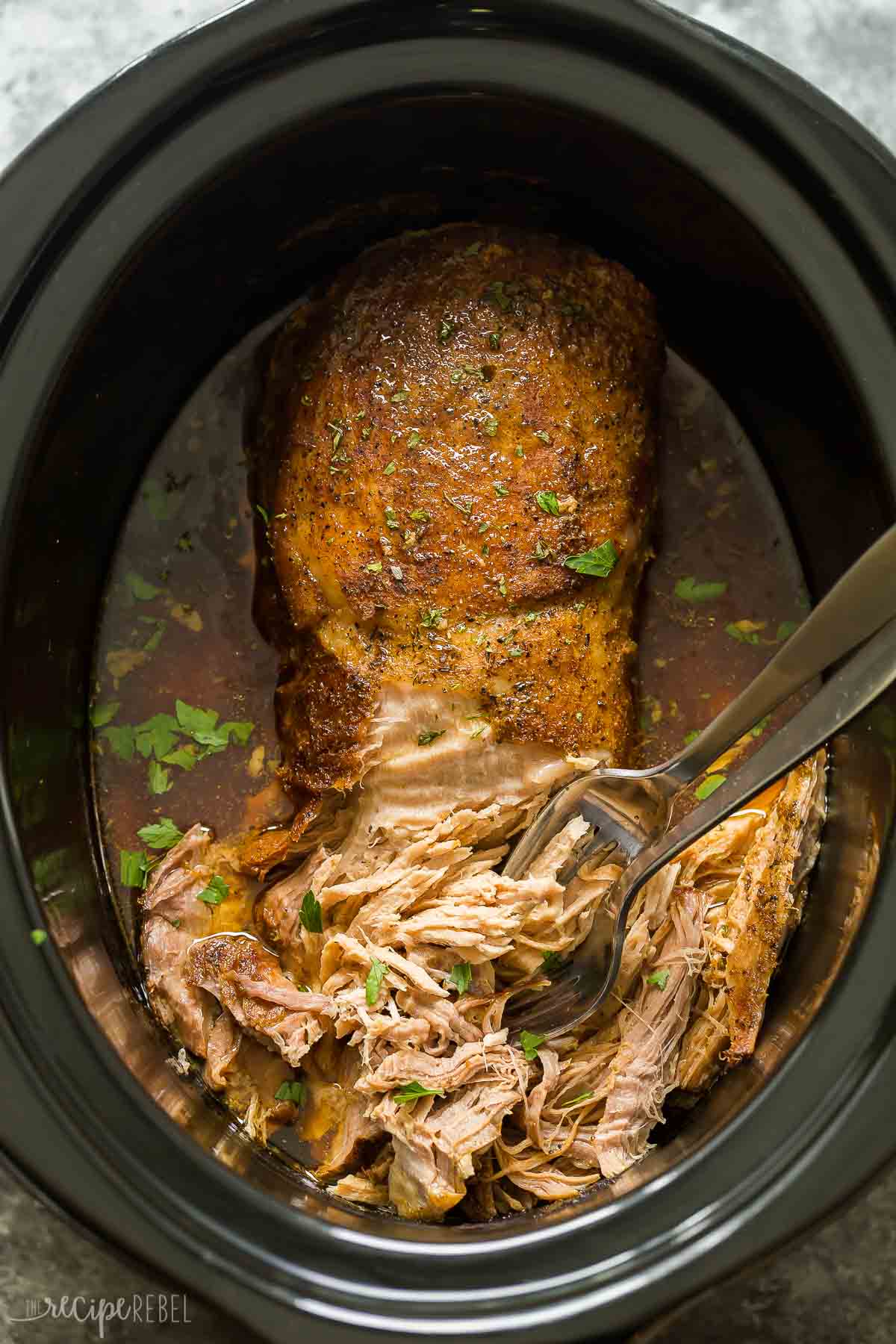
What Temperature Should Pork Shoulder Reach?
Pork shoulder has two useful temperature targets:
- Food safety: at least 145°F, followed by a 3-minute rest for a whole-muscle pork roast.
- Pulled-pork texture: commonly about 195°F to 205°F, with tenderness checked by feel.
The U.S. Department of Agriculture lists 145°F as the safe minimum internal temperature for whole cuts of pork, including roasts. That temperature makes the meat safe, but it does not always make pork shoulder tender enough to shred.
Pork shoulder contains collagen, a connective tissue that starts to soften during extended cooking. As the meat stays hot, collagen changes into gelatin. That process gives pulled pork its soft texture, but it takes longer than reaching the minimum safe temperature.
Why 205°F is not a strict rule
Some pork shoulders become tender below 195°F. Others need to go above 205°F. A temperature reading can help, but it should not be the only test.
Check the roast in several spots with an instant-read thermometer. Then insert a fork or thin knife into the thickest part. If the meat still feels tight, cover the slow cooker and continue cooking for 30 to 60 minutes before checking again.
Do not use color as the safety test. Pork may remain pink after it is fully cooked, especially when it cooks in a moist, slow environment.

How to Cook Pork Shoulder in a Slow Cooker
This simple method works for both pork butt and picnic shoulder.
Ingredients
- 3 to 5 pounds pork shoulder, thawed
- 1 to 2 tablespoons vegetable oil, optional
- 1 to 2 tablespoons kosher salt, adjusted to taste
- 1 tablespoon brown sugar, optional
- 1 to 2 teaspoons smoked paprika
- 1 teaspoon garlic powder
- 1 teaspoon onion powder
- ½ teaspoon black pepper
- ½ to 1 cup low-sodium chicken broth, apple juice, or water
- 1 tablespoon apple cider vinegar, optional
- Barbecue sauce, for serving
Steps
- Trim excess fat. Leave a thin layer for flavor, but remove thick, hard pieces of surface fat.
- Pat the pork dry. This helps the seasoning stick.
- Season all sides. Use salt, paprika, garlic powder, onion powder, and pepper. Add brown sugar if you want a sweeter crust.
- Brown the roast, if desired. Sear it in a hot skillet for a few minutes per side. This can add roasted flavor, but it is not required for tender pork.
- Add liquid to the slow cooker. Pour in ½ to 1 cup of broth, juice, or water.
- Place the pork in the cooker. Put the thickest part toward the center. Keep the lid closed.
- Cook on LOW for 8 to 10 hours or on HIGH for 4 to 6 hours.
- Check for tenderness. The pork should pull apart easily with a fork. Check the internal temperature in the thickest section.
- Rest the pork. Move it to a tray, cover it loosely, and let it rest for 15 to 30 minutes.
- Shred and finish. Remove large pieces of fat and bone. Shred the pork, then mix in some cooking liquid or barbecue sauce.
A slow cooker needs moisture to create steam and heat the food evenly. You do not need to cover the pork with liquid. Too much liquid can dilute the flavor and make the finished pork soupy.

Should You Cook Pork Shoulder on LOW or HIGH?
Cook pork shoulder on LOW when you have the time. Use HIGH when you need the roast done sooner and can monitor it near the end of the cooking time.
| Setting | Typical time | Result |
|---|---|---|
| LOW | 8 to 10 hours | Gentle cooking and strong tenderness |
| HIGH | 4 to 6 hours | Faster cooking with a greater need to check early |
Both settings can produce tender pork. The main difference is speed, not a guarantee of quality. A particular slow cooker may run hotter or cooler than another, so the roast may finish sooner or later than the table suggests.
Do not switch from LOW to HIGH as a way to “catch up” without adjusting your plan. If you start on LOW and need to shorten the cook, use the roast’s temperature and tenderness as your guide. Avoid opening the lid often because heat escapes each time.
If the pork reaches a safe temperature but remains tough, it needs more time. Toughness usually means the connective tissue has not softened yet, not that the pork is ruined.

How Much Liquid Do You Need?
Use about ½ to 1 cup of liquid for a typical 3- to 5-pound pork shoulder. Suitable options include:
- Low-sodium chicken broth
- Water
- Apple juice
- Cider
- A mixture of broth and apple cider vinegar
- A thin barbecue sauce mixture
Pork shoulder releases its own juices and fat as it cooks. The liquid in the cooker helps maintain a moist environment, but the roast should not be submerged.
Too much liquid may wash seasoning from the meat and leave a weak sauce. If the cooking liquid is thin, strain it and simmer it in a saucepan after cooking to concentrate the flavor. Handle it as a meat juice and bring it to a boil before using it as a sauce.
Can you cook pork shoulder without liquid?
Yes. A slow cooker can cook a pork shoulder with little or no added liquid because the meat releases moisture. However, a small amount of liquid can help prevent scorching, especially in some slow cookers.
Follow the instructions for your slow cooker. Keep the lid in place, and do not let the cooker run empty if the manufacturer advises against it.
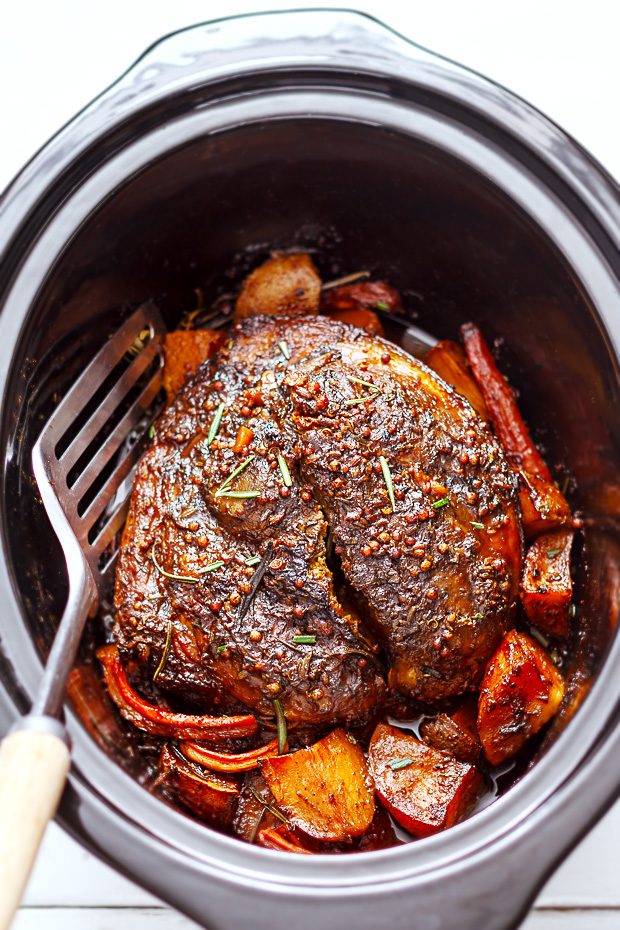
Bone-In vs. Boneless Pork Shoulder
Both bone-in and boneless pork shoulder work well in a slow cooker.
Bone-in pork shoulder
A bone-in roast may offer strong flavor and can stay moist during long cooking. It is often a good choice when you want pulled pork and do not need exact portions.
Boneless pork shoulder
A boneless roast is easier to cut, season, and portion. It may cook a little faster if it is smaller or less thick, but weight alone does not determine the final time.
The most useful test is tenderness. A bone that pulls out cleanly is a helpful sign, but the meat around it should also feel soft. If the bone comes out while the meat remains firm, continue cooking.

How to Tell When Pork Shoulder Is Done
Pork shoulder is ready for pulled pork when it passes all three checks:
- The thickest part has reached a high enough temperature for the texture you want.
- A fork or probe slides into the meat with little resistance.
- The meat separates easily when pulled.
Use a thermometer in the thickest part of the roast. Avoid touching the bone, the slow cooker, or a large pocket of fat because those spots can give an inaccurate reading.
If the pork is safe but tough, keep cooking. If it is dry and stringy, it may have cooked too long, had too little moisture, or been sliced before resting. Shred dry pork and mix it with a small amount of warm cooking liquid, broth, or barbecue sauce.
If the pork is cooked but not flavorful, the usual causes are mild seasoning, excess water, or a sauce added only at the end. Taste the shredded meat before serving and adjust with salt, vinegar, sauce, or reduced cooking juices.

Food Safety for Slow Cooker Pork
Safe handling matters before, during, and after cooking.
- Thaw pork in the refrigerator, in cold water, or in the microwave. Do not thaw it on the counter.
- Do not place a frozen pork shoulder in a slow cooker. It may remain too long in the temperature range where bacteria grow quickly.
- Wash your hands before and after handling raw pork.
- Keep raw pork and ready-to-eat foods separate.
- Use a clean cutting board and utensils.
- Keep the lid on during cooking.
- Refrigerate leftovers within 2 hours. If the room is above 90°F, refrigerate them within 1 hour.
- Store leftovers in shallow containers so they cool faster.
- Reheat leftovers to 165°F.
The USDA recommends refrigerating cooked leftovers for 3 to 4 days. Freeze extra pulled pork in airtight containers or freezer bags if you will not eat it within that period.
Do not rely on the slow cooker to reheat cold leftovers safely. Reheat the pork on the stove, in the oven, or in the microwave until it reaches 165°F, then transfer it to a slow cooker only for serving.

Common Mistakes to Avoid
Cooking a frozen roast in the slow cooker
A frozen roast can take too long to pass through safe temperatures. Thaw the pork first.
Filling the slow cooker too high
A slow cooker generally works best when it is neither nearly empty nor packed to the rim. A very full cooker may heat slowly and cook unevenly. Check the manual for the model’s fill guidance.
Removing the lid too often
Each lid opening releases heat and extends the cooking time. Check the pork only when it is close to the expected finish time.
Adding too much liquid
The pork will release juices. Start with a modest amount of liquid, then add more after shredding if needed.
Stopping when the pork reaches 145°F
That temperature addresses minimum safety for a whole pork roast. It does not guarantee pulled-pork texture. Continue cooking until the meat is tender.
Shredding immediately
A short rest lets the juices settle. It also makes the roast easier to handle and can reduce moisture loss.
Leaving large fat pieces in the finished meat
Fat adds flavor, but large soft pieces may create a greasy texture. Remove them while shredding, then stir the meat with a measured amount of cooking juice or sauce.

Can You Make Pork Shoulder Ahead of Time?
Yes. Cooked pulled pork can be made ahead and stored in the refrigerator for up to 3 to 4 days. Keep some cooking liquid with the meat so it does not dry out during reheating.
To reheat a large batch, place the pork in a covered baking dish with a little broth or cooking juice. Heat it in a 325°F oven until the center reaches 165°F. For a small portion, a covered microwave-safe dish works well; stir the pork between heating intervals.
You can also freeze pulled pork for longer storage. Divide it into meal-size portions, remove excess air, label the container with the date, and thaw it in the refrigerator before reheating.
Frequently Asked Questions
Is 4 hours long enough to cook pork shoulder in a slow cooker?
Four hours may be enough on HIGH for a small roast, but it is often not enough on LOW for a typical 3- to 5-pound pork shoulder. Check both temperature and tenderness. If the meat does not shred easily, keep cooking.
Can I cook a 2-pound pork shoulder in a slow cooker?
Yes. A 2-pound roast often takes about 6 to 8 hours on LOW or 4 to 5 hours on HIGH. Start checking early because a small or thin roast may finish sooner.
Do you put pork shoulder fat side up or down?
Either position can work. Fat side up may allow some fat to baste the surface, while fat side down can protect the meat from direct heat in some slow cookers. The difference is usually smaller than the effects of size, time, and cooker temperature.
Should you sear pork shoulder before slow cooking?
Searing is optional. It can add browned flavor, but it does not seal in juices or replace slow cooking. Skip it when convenience matters more than surface browning.
Why is my slow cooker pork shoulder tough?
It most likely needs more time. Toughness usually means the collagen has not softened. Keep the lid closed and cook until a fork enters easily and the meat pulls apart.
Final Recommendation
For tender slow cooker pulled pork, use a thawed 3- to 5-pound pork shoulder, add ½ to 1 cup of liquid, and cook it on LOW for 8 to 10 hours. Confirm doneness with a thermometer, but rely on fork tenderness for the final decision. Rest the pork, remove excess fat, shred it, and mix it with a small amount of cooking juice or sauce before serving.