
For home cooks in the United States, Crock-Pot is a brand name, while slow cooker is the general name for the appliance. Both use low, steady heat to cook food over several hours. The real differences are usually the brand, shape, controls, size, materials, and extra features—not the basic cooking method.
A Crock-Pot is a slow cooker, but not every slow cooker is a Crock-Pot.
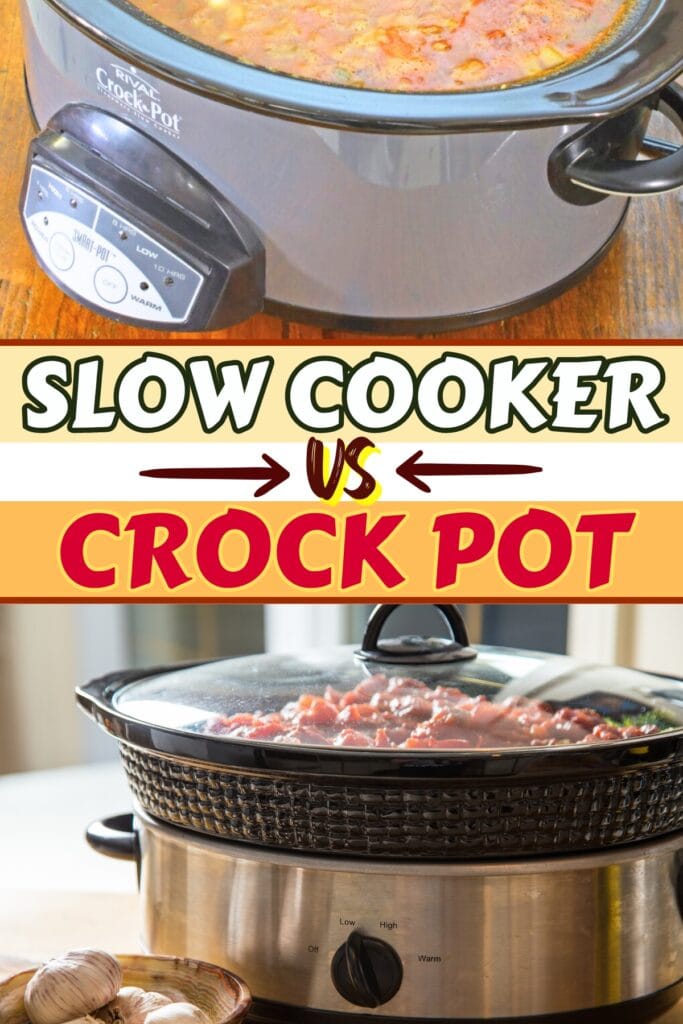
Crock-Pot vs. Slow Cooker: The Basic Difference
The key difference is brand versus product category.
- Slow cooker: The general term for an electric countertop appliance that cooks food at low heat for a long time.
- Crock-Pot: A registered brand name used for slow cookers and related kitchen appliances.
- Other slow cooker brands: Hamilton Beach, KitchenAid, BLACK+DECKER, Cuisinart, Instant, and many others.
People in the United States often use “Crock-Pot” to mean any slow cooker. This is similar to using a brand name as a general product name. In strict terms, though, the words are not exact synonyms.
A slow cooker may have a ceramic crock, a metal cooking pot, a digital timer, or a searing function. A Crock-Pot model may have some of these features too. The name alone does not tell you how advanced the appliance is.
Quick comparison
| Feature | Crock-Pot | Slow cooker |
|---|---|---|
| Meaning | A brand name | A general appliance category |
| Cooking method | Low, steady heat | Low, steady heat |
| Available sizes | Depends on the model | Depends on the brand and model |
| Controls | Manual or programmable | Manual or programmable |
| Inner pot | Ceramic, stoneware, or another material | Ceramic, stoneware, aluminum, or another material |
| Extra features | Vary by model | Vary by model |
| Cooking results | Usually similar when settings and recipes match | Usually similar when settings and recipes match |
The most useful buying rule is simple: compare the exact model, not just the label.

How Do Crock-Pots and Slow Cookers Work?
Both appliances cook food with an electric heating element around or beneath a removable cooking vessel. The vessel transfers heat slowly to the food. A tight lid traps heat and moisture, which helps soften meat, beans, and vegetables.
Most basic models have three settings:
- Low: A slower cooking cycle for long meals.
- High: A faster cooking cycle.
- Warm: A holding setting for cooked food.
The exact temperature is not always the same across brands or models. A setting marked “Low” does not mean every appliance reaches the same heat at the same time.
Slow cookers do not cook like ovens. They create a moist, enclosed environment. This makes them useful for foods such as:
- Stews
- Chili
- Pulled pork
- Pot roast
- Beans
- Soups
- Braised chicken
- Oatmeal and other grain dishes
The lid matters. Removing it lets heat escape and may add cooking time. Many recipes use a rule of thumb in which one hour on High equals about two hours on Low, but this is only an estimate. The food, amount, starting temperature, and appliance design all affect the result.
What Differences Matter When You Compare Models?
The biggest practical differences come from the appliance design. Two slow cookers can use the same recipe but produce slightly different results.
Controls and timers
A manual slow cooker usually has a dial or simple buttons. You select Low, High, or Warm. It will keep heating until you turn it off or unplug it.
A programmable model may let you set a cooking time. After that time, it may switch to Warm or turn off. Read the manual before relying on this feature. Some appliances stay on Warm for a set period. Others may hold food warm until you stop the machine.
A timer does not make raw food safe if you load the appliance hours before cooking begins. The food should begin heating promptly.
Shape and cooking surface
Round slow cookers work well for soups, stews, and smaller roasts. Oval models can fit longer cuts of meat, whole chickens, and larger vegetables.
A wide cooker may spread food into a thinner layer. That can change how quickly it heats. A tall cooker may suit a smaller footprint but leave less room for long ingredients.
Size
Slow cookers often range from small units for dips and side dishes to large units for family meals. Common household sizes include:
- 1 to 2 quarts: Dips, sauces, and small portions
- 3 to 4 quarts: Small households and side dishes
- 5 to 7 quarts: Roasts, chili, soups, and family meals
- 8 quarts or more: Large batches and gatherings
Do not fill the pot by guesswork. Many manufacturers recommend filling the vessel about halfway to two-thirds full. An overfilled cooker may heat too slowly. An underfilled cooker may cook too fast or dry out food.
Always follow the instructions for your model.
Inner-pot material
Ceramic or stoneware pots hold heat well and are common in traditional slow cookers. They can be heavy and may crack if exposed to sudden temperature changes.
Some newer models use aluminum or another metal cooking vessel. These pots may be lighter. Some are designed for browning meat on the stovetop before slow cooking. This feature is model-specific. Never place a removable insert on a burner unless the manufacturer says it is safe.
Browning and searing
Traditional slow cookers usually do not brown meat well. Their moist environment can leave meat gray on the outside.
Some modern slow cookers include a stovetop-safe insert or a separate sear function. Browning can add roasted flavor, but it is not required for food safety or basic slow-cooker cooking.
If the insert is not approved for stovetop use, brown the food in a separate pan.
Removable parts and cleaning
Look for a removable cooking vessel and a lid that can be cleaned as directed. Many inserts are dishwasher-safe, but not all are.
The heating base should not be submerged in water. Unplug the appliance, let it cool, and clean it according to the manual. Check the cord, lid, and insert for damage before use.

Do Crock-Pots and Slow Cookers Cook Food the Same Way?
Yes, in broad terms. Both are designed for long, low-temperature cooking. However, they may not perform exactly the same way.
Differences can come from:
- Heating element location
- Pot shape
- Pot size
- Lid fit
- Amount of food
- Starting food temperature
- Recipe ingredients
- Age and condition of the appliance
For example, a newer cooker may heat more quickly than an older model. A wide oval cooker may cook differently from a narrow round one. A recipe that works well in one appliance may need more or less time in another.
This does not mean one brand is always better. It means the exact design matters more than the word “Crock-Pot” on the box.
Can you use a Crock-Pot recipe in another slow cooker?
Usually, yes. Most recipes written for a Crock-Pot can be used in another slow cooker of a similar size.
Use these checks:
- Match the recipe size to the cooker capacity.
- Keep the lid closed during cooking.
- Start checking food near the early end of the recipe’s time range.
- Use a food thermometer for meat and poultry.
- Adjust liquid only when the recipe or manufacturer supports the change.
Recipes written for a pressure cooker, multicooker, or stovetop pot may not transfer directly. A slow cooker uses a different cooking method and needs different liquid and timing.
Which One Should You Buy?
Choose based on how you cook, not on the name alone.
Choose a basic slow cooker if:
- You want simple controls.
- You plan to be home when cooking ends.
- You do not need a timer.
- You want fewer electronic parts.
- You mainly cook soups, stews, and chili.
A basic model can be a good fit for cooks who want a low-cost and simple appliance. It will not automatically turn off unless the model includes that feature.
Choose a programmable model if:
- You need a set cooking time.
- You may be away when the recipe finishes.
- You want the cooker to switch to Warm or turn off.
- You prefer digital controls.
A programmable timer can help with scheduling. It cannot replace safe food handling. Perishable food should not sit at room temperature while waiting for the cooking cycle to begin.
Choose a sear-capable model if:
- You want to brown meat in the same vessel.
- You want to reduce the number of pans.
- The manufacturer clearly approves the insert for stovetop or searing use.
Check the manual for compatible stovetops. Some inserts work on certain surfaces but not others.
Choose by capacity
Think about the meal you usually make. A large cooker is not automatically better. A cooker that is too large for a small recipe may leave food in a shallow layer and affect cooking.
As a general guide, match the size to the amount of food and follow the manufacturer’s fill limits.

Slow Cooker Food Safety Rules
Slow cookers are safe when used correctly, but they do not remove the need for food safety.
The U.S. Department of Agriculture recommends thawing meat and poultry before placing them in a slow cooker. Frozen food can spend too long in the temperature range where bacteria grow quickly.
Follow these practices:
- Thaw meat in the refrigerator, cold water, or a microwave before cooking.
- Start the slow cooker soon after adding perishable food.
- Keep the lid in place while cooking.
- Do not use a slow cooker to reheat cold leftovers.
- Reheat leftovers on the stove, in an oven, or in a microwave before placing them in the cooker to keep warm.
- Use a food thermometer to confirm the final temperature.
- Refrigerate leftovers within two hours, or within one hour if the room is above 90°F.
- Store leftovers in shallow containers so they cool faster.
The USDA identifies 40°F to 140°F as the “danger zone,” where bacteria can grow quickly. Cooked food should remain at 140°F or above when held hot.
For common minimum internal temperatures, USDA guidance lists:
- Poultry: 165°F
- Ground meat: 160°F
- Whole cuts of beef, pork, lamb, and veal: 145°F, followed by a three-minute rest
These temperatures apply to the food, not merely the air inside the cooker. Measure the thickest part with a reliable food thermometer.
A slow cooker should also sit on a stable, heat-safe surface. Keep the cord away from hot surfaces. Do not use the appliance if the cord, plug, insert, or lid is cracked or damaged.

Common Mistakes With Crock-Pots and Slow Cookers
Opening the lid too often
Each lid opening releases heat. It also lets steam escape. Check the food only when needed.
Adding too much liquid
Slow cookers lose less water than uncovered pots. Ingredients may release additional liquid as they cook. Too much broth can make a stew thin.
Do not remove liquid blindly, though. Some foods need enough liquid to cook safely and soften. Use a tested recipe or the manufacturer’s guidance.
Filling the pot too high
Overfilling can slow heating and cause spills. Keep the food level within the recommended range.
Filling the pot too little
A very small amount of food may cook faster than the recipe expects. Use a smaller cooker when possible.
Adding dairy too early
Milk, cream, sour cream, and some soft cheeses can separate during long cooking. Add them near the end when the recipe calls for it.
Treating “Warm” as a cooking setting
Warm is meant to hold already-cooked food. It is not a substitute for Low or High when starting with raw meat.
Using the wrong insert
Never place a ceramic insert on a burner, under a broiler, or in an oven unless the manual specifically allows it. Sudden heat can crack some vessels.

Crock-Pot vs. Slow Cooker: Frequently Asked Questions
Is a Crock-Pot better than a slow cooker?
Not by definition. Crock-Pot is a brand, while slow cooker is the product type. Compare the exact model’s controls, capacity, insert material, warranty, and cleaning instructions.
Can I use any slow cooker recipe in a Crock-Pot?
Most slow-cooker recipes work in a Crock-Pot of a similar size. Check the recipe’s cooking time, fill level, and ingredient order. Recipes for pressure cookers or stovetops may need major changes.
Does a slow cooker use less electricity than an oven?
Often, a slow cooker uses less power than a full-size oven because it has a smaller heating area and operates at lower power. Actual use varies by model, cooking time, food load, and local electricity rate. Do not treat a general estimate as a guaranteed saving.
Can I leave a slow cooker on while I am away?
Many slow cookers are designed for unattended cooking, but follow the manual and use a stable, clear surface. Do not use one with a damaged cord or cracked insert. Food safety still matters: the cooker should start heating promptly, and cooked food should not remain on Warm indefinitely.
Can I put raw meat directly into a slow cooker?
Yes, raw meat can usually go directly into a slow cooker if it is thawed and the appliance is used according to its instructions. Browning is optional for flavor. Cook the meat to a safe internal temperature and confirm it with a thermometer.
Can I cook frozen meat in a Crock-Pot?
The USDA advises thawing meat and poultry before slow cooking. Frozen food may take too long to pass through unsafe temperatures. Thaw it first.
How long can food stay in a slow cooker on Warm?
The safe holding time depends on the appliance, food, and temperature. Keep food at 140°F or above, and follow the manufacturer’s instructions. For best quality, refrigerate leftovers promptly rather than holding them for many hours.
Key Takeaways
- Crock-Pot is a brand name.
- Slow cooker is the general name for the appliance.
- Both use low, steady heat for long cooking.
- Cooking results depend more on the exact model, size, recipe, and fill level than on the name.
- Compare controls, capacity, pot material, timer functions, and cleaning needs.
- Thaw meat before slow cooking and use a food thermometer.
- Use the manual for fill limits, insert safety, timer behavior, and cleaning instructions.
Conclusion
The difference between a Crock-Pot and a slow cooker is mainly terminology. A Crock-Pot is one brand of slow cooker, while “slow cooker” describes the whole category.
For the best choice, compare the exact features you need. A manual model may suit simple meals. A programmable cooker may help with scheduling. A sear-capable model may reduce the need for a separate pan. Whatever model you use, follow its manual, keep the lid closed, avoid frozen meat, and verify meat temperatures before serving.