
Usually, no. Do not put a slow cooker’s removable ceramic or stoneware crock on a gas, electric, glass, or induction stovetop unless the manufacturer clearly says it is stovetop-safe.
Most slow cooker inserts are made for gentle, indirect heat from the appliance base. A burner gives direct heat to one small area. That sudden, uneven heat can crack the insert, damage the stove, or cause hot food and liquid to spill.
Some appliances use a metal inner pot that is designed for stovetop searing. Those are different from standard ceramic slow cooker crocks. Always check the manual for your exact model before using any removable pot on a burner.

Why most slow cooker pots cannot go on the stove
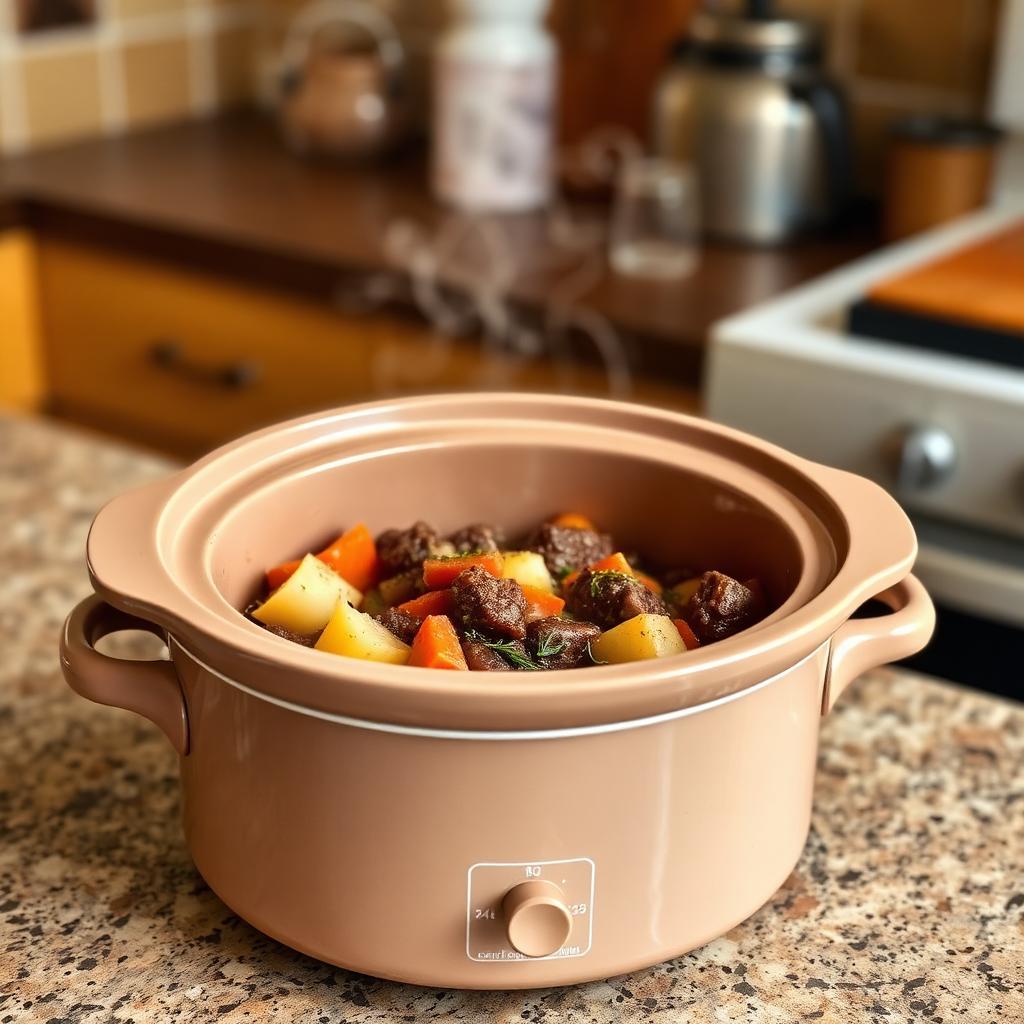
A standard slow cooker crock is usually made from ceramic or stoneware. These materials hold heat well, but they may break when exposed to rapid temperature changes or concentrated heat.
A slow cooker heats the crock from the outside through a heating base. The heat rises slowly and spreads around the vessel. A stovetop burner heats the bottom much faster and may create a large difference between the hot base and cooler sides.
That difference creates thermal shock. The crock may:
- Crack while empty or full
- Break when liquid is added
- Leak hot food onto the burner
- Damage a glass cooktop
- Cause burns from steam or splashing food
- Leave food or ceramic pieces on the stove
The fact that a crock feels heavy does not mean it is safe for direct heat. Thickness, glaze, and heat resistance also matter.
Oven-safe does not mean stovetop-safe
This is one of the most common mistakes.
A manufacturer may label a crock as oven-safe, but that does not automatically make it safe for a burner. An oven surrounds the dish with warm air. A stovetop concentrates heat on one small surface.
For example, a manual may allow an insert to go into a preheated oven but still prohibit use on a stovetop or under a broiler. The exact temperature limit may also vary by model.
Treat these terms as separate:
| Label or feature | What it may mean | Safe on a burner? |
|---|---|---|
| Oven-safe | Designed for use in an oven within stated limits | Not necessarily |
| Microwave-safe | Designed for microwave heating | No |
| Dishwasher-safe | Safe for dishwasher cleaning | No |
| Ceramic or stoneware | Describes the material | No guarantee |
| Stovetop-safe | Tested or approved for direct heat | Only if the manual allows it |
| Induction-compatible | Works with an induction cooking surface | Only if the pot is approved for that use |
If the manual does not mention stovetop use, assume the pot is not approved for it.

Which slow cooker pots may be used on a stovetop?
A removable pot may be used on a stovetop only when the manufacturer designs and labels it for that purpose.
The most likely candidates are:
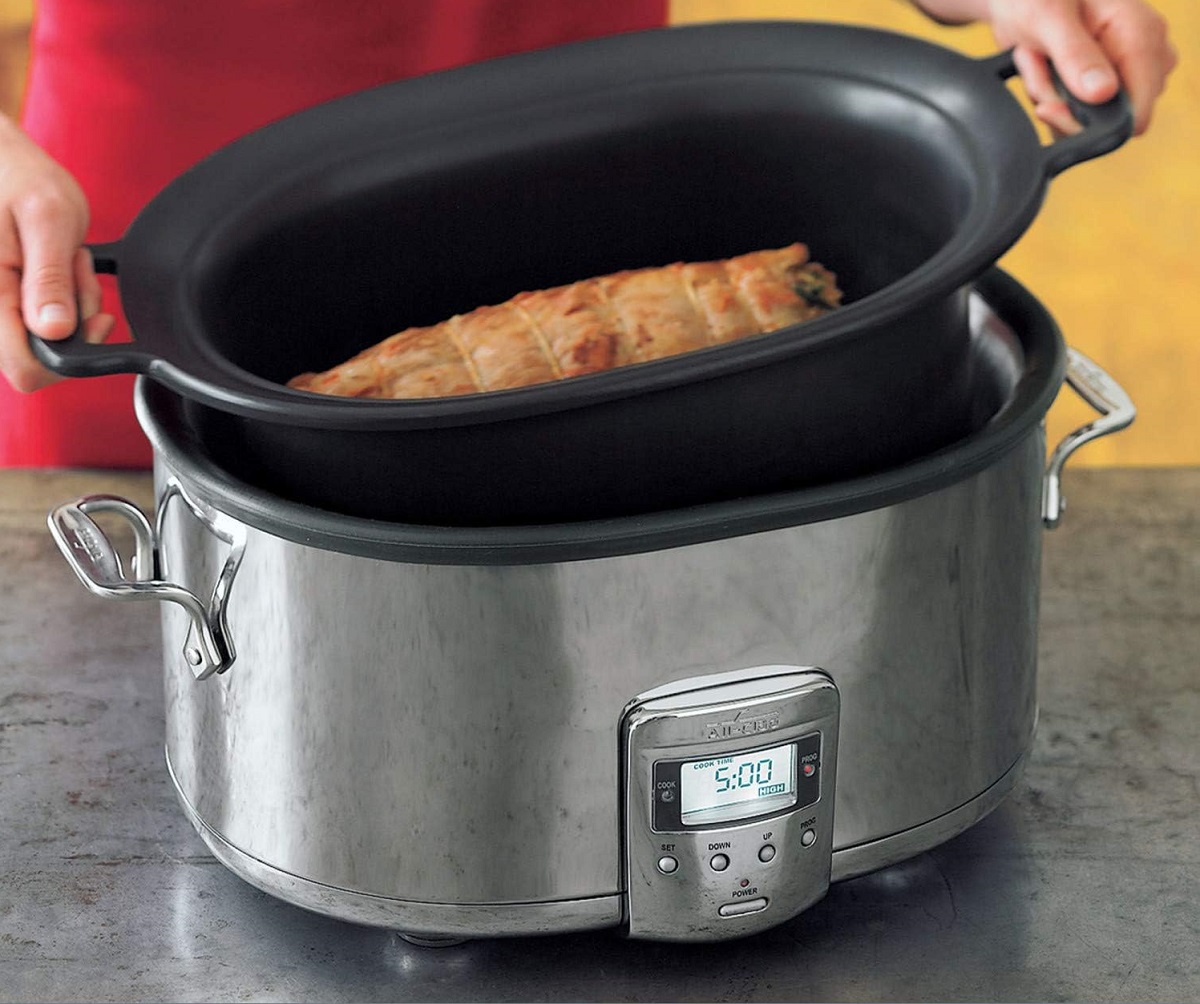
- Metal inner pots made from stainless steel or another approved metal
- Multicooker inserts with a documented sear or sauté function
- specially designed cookware that the manual identifies as stovetop-safe
A metal pot is not automatically safe, either. Its handle, coating, base, or shape may limit how it can be used. Some metal inserts work on gas or electric burners but not induction. Others are intended to remain in the appliance base.
Look for clear wording in the owner’s manual, such as:
- “Safe for use on gas and electric stovetops”
- “Stovetop-safe insert”
- “Use the inner pot on a burner”
- “Compatible with induction,” if you have an induction cooktop
Warnings such as these mean you should not use it on the stove:
- “Do not place the stoneware on a burner”
- “Do not use the insert over direct heat”
- “For use in the heating base only”
- “The crock is not stovetop-safe”
The product listing, box, or a general description may not provide enough detail. The manual for the exact model is the best source because designs can change between product lines.
What about a Crock-Pot or Hamilton Beach insert?
Brand names alone do not answer the question. Crock-Pot, Hamilton Beach, Black+Decker, KitchenAid, and other brands sell several types of slow cookers.
One model may have a ceramic crock intended only for the heating base. Another may have a metal insert with a sear function. Check the model number and manual rather than relying on the brand name or appearance.
How to check whether your slow cooker pot is stove-safe
Use this process before placing the insert near a burner.
1. Find the model number
Look on:
- The bottom of the heating base
- The back or side of the appliance
- The rating label
- The original box
- The owner’s manual
Do not rely on a similar-looking model. The insert material and safety limits may differ.
2. Read the manual’s cookware warnings
Search the manual for terms such as:
- Stovetop
- Burner
- Direct heat
- Open flame
- Induction
- Sauté
- Sear
- Oven-safe
- Stoneware
- Inner pot
The safety section and care instructions often contain the answer.
3. Inspect the pot
Look for:
- Ceramic, stoneware, or clay construction
- A metal base made only for the slow cooker housing
- Cracks, chips, or hairline marks
- A coating that could peel or discolor
- Handles that may not tolerate burner heat
A metal pot still needs written approval. Visual inspection cannot prove heat compatibility.
4. Check the cooktop type
If the manual approves stovetop use, confirm that it covers your cooktop:
- Gas
- Electric coil
- Smooth-top electric
- Induction
Induction cooktops need magnetic cookware. A ceramic crock will not work on induction, and many stainless-steel pots will not work unless they have a magnetic base.
5. Follow the stated limits
If the manual allows stovetop use, follow its directions for:
- Burner size
- Heat level
- Preheating
- Empty-pot use
- Oven temperature
- Cooling before washing
- Induction compatibility
Never exceed the maker’s limits because another pot appears similar.
What should I do if I need to brown food first?
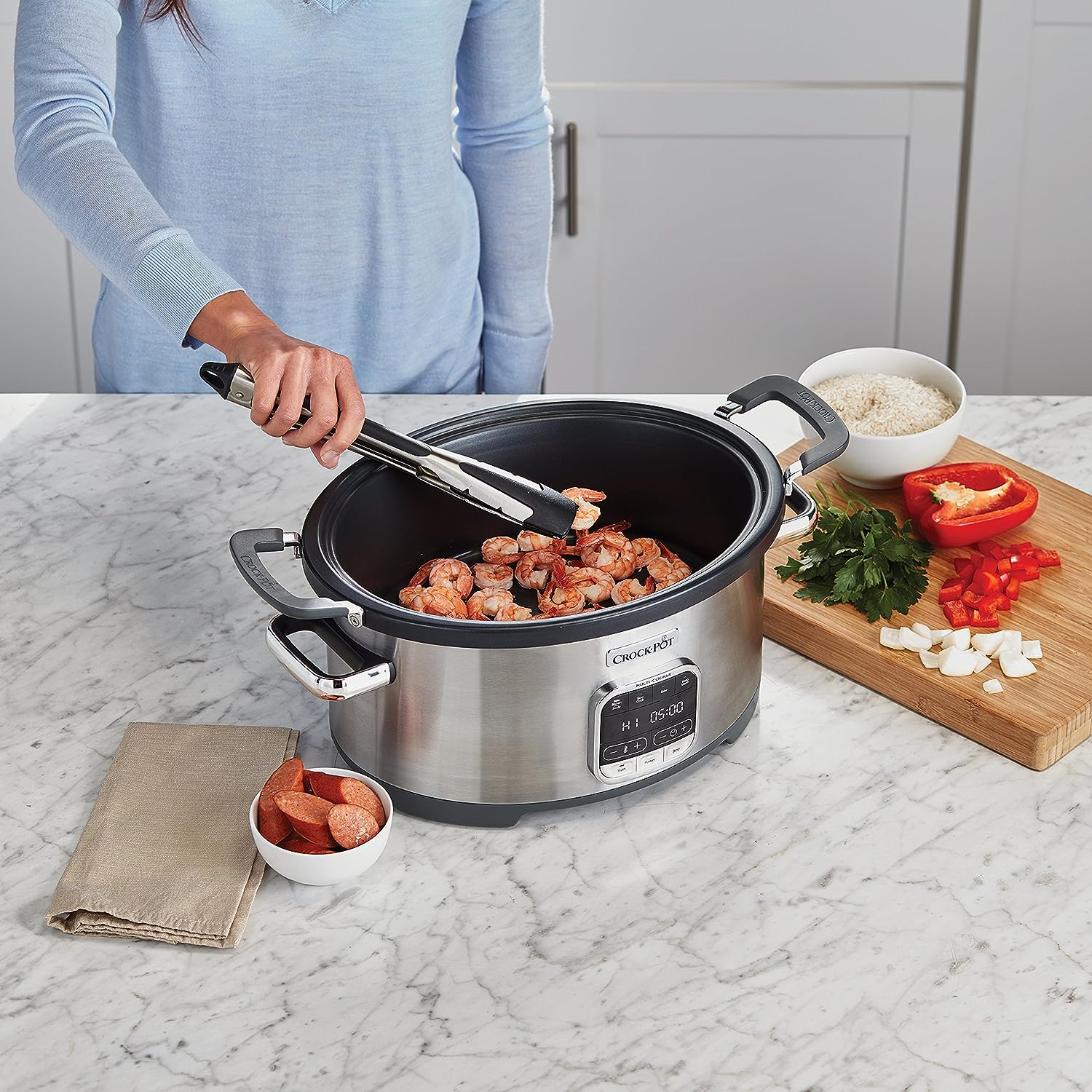
Use a separate skillet or Dutch oven unless your slow cooker manual specifically permits stovetop cooking in its insert.
A practical method is:
- Heat a suitable skillet over medium heat.
- Add a small amount of cooking oil if needed.
- Brown meat in batches so the pan does not become crowded.
- Move the browned food to the slow cooker.
- Add vegetables, liquid, and seasonings.
- Deglaze the skillet if desired, then pour the flavorful liquid into the slow cooker.
- Cook according to the recipe and appliance instructions.
This method takes one extra pan, but it avoids the risk of cracking an unapproved crock.
You can also use a multicooker with a documented sauté setting. In that case, the appliance and inner pot are designed to work together. Follow the manufacturer’s instructions for switching from sauté to slow cooking.
Can I transfer a hot crock from the slow cooker to the stove?
No, unless the manual specifically permits it.
A hot crock may already contain uneven heat. Moving it from the slow cooker base to a burner adds another sudden heat change. Even if the crock has survived past use, that does not prove it can safely handle direct heat.
What should I do if the slow cooker pot is already on the stove?
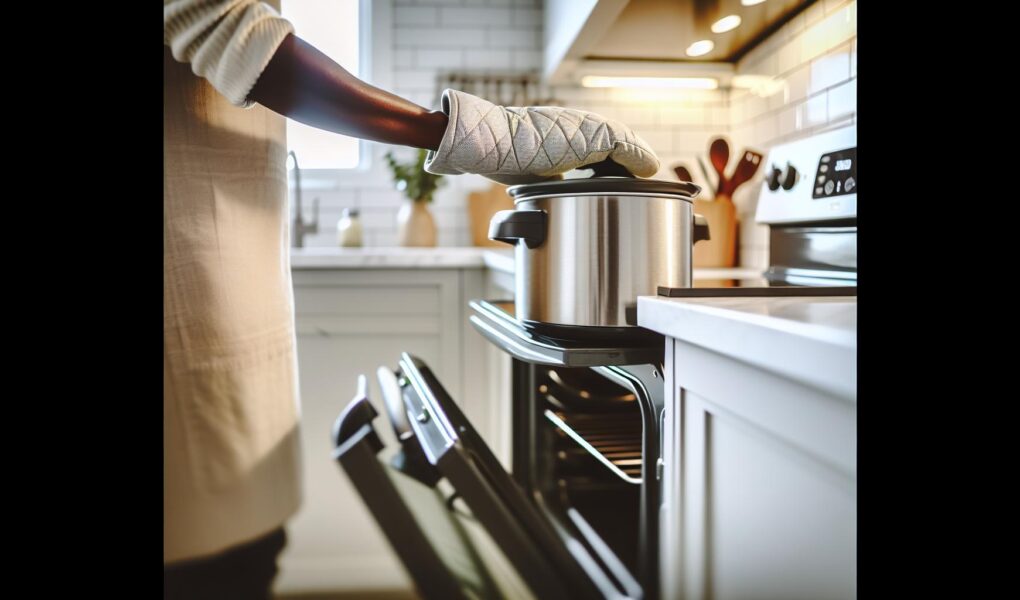
Turn off the burner and let the pot cool in place if it is safe to do so.
Do not move a very hot ceramic crock to a cold counter, sink, or wet towel. A sudden temperature change can cause it to break. Keep children and pets away, and use appropriate heat-resistant protection only when you can safely handle the pot.
After it cools, inspect it closely. Do not use it if you see:
- A crack or split
- A chip on the rim or base
- Liquid leaking from the crock
- A new clicking or popping sound
- A loose handle
- Glaze damage that exposes the material underneath
If hot food has spilled onto a gas burner, turn off the gas and allow the area to cool before cleaning it. If the pot broke, use care because small ceramic fragments may be mixed with the food. Discard food that may contain pieces.
Do not try to repair a cracked crock with glue. Household adhesives are not suitable for cookware and may release harmful substances when heated.

Can a slow cooker pot go in the oven?
Only if the manual says it can. Some removable inserts are oven-safe within a stated temperature range. Others are not.
Before using an insert in an oven, check:
- The maximum temperature
- Whether the lid can go in the oven
- Whether the handles are oven-safe
- Whether the insert must start at room temperature
- Whether preheating is required
- Whether the insert may be used under a broiler
Do not place a cold ceramic insert into a hot oven unless the manufacturer allows that procedure. The temperature change can cause thermal shock.
Also remember that oven-safe cookware may still be unsuitable for a stovetop. The two uses create different heating patterns.
Common mistakes to avoid
Avoid these shortcuts when deciding whether to use a slow cooker pot on the stove.
Assuming ceramic means stovetop-safe
Ceramic cookware varies widely. Some ceramic products are made for direct heat; many slow cooker crocks are not.
Trusting a “heat-resistant” label
Heat-resistant may refer to normal slow cooker temperatures, oven use, or resistance to routine warming. It does not necessarily mean direct burner use.
Using a diffuser under an unapproved crock
A heat diffuser may spread heat, but it does not change the manufacturer’s approval. It cannot guarantee that the crock will withstand direct heat.
Putting an empty insert on a burner
An empty vessel can heat very quickly. If the insert is not approved for stovetop use, keep it off the burner whether it contains food or not.
Using high heat because the pot is full
Food and liquid may slow temperature changes, but they do not make an unapproved pot safe. Direct heat can still create hot spots.
Relying on another person’s experience
A pot may survive one stovetop use and still be unsafe. Past success is not a safety test.

Slow cooker pot safety decision table
Use this quick guide when you are unsure:
| Situation | Use on the stove? | Safer choice |
|---|---|---|
| Ceramic crock with no manual | No | Use a skillet |
| Stoneware crock labeled “slow cooker only” | No | Keep it in the heating base |
| Ceramic crock labeled oven-safe only | No | Follow oven directions only |
| Metal insert with a sear function | Maybe | Confirm the manual |
| Metal insert approved for gas and electric | Yes, within limits | Follow the stated heat limits |
| Induction cooktop and approved metal insert | Maybe | Confirm induction compatibility |
| Cracked or chipped insert | No | Replace the insert or appliance |
| Unknown secondhand insert | No until verified | Find the exact manual |
The deciding factor is not the pot’s weight, color, brand, or shape. It is the documented compatibility of that exact insert with that exact heat source.

Frequently asked questions
Can I put a Crock-Pot ceramic insert on an electric stove?
Usually not. An electric stove still provides direct, concentrated heat. Use the insert on an electric burner only if the manual for that exact Crock-Pot model clearly approves it.
Can I put a slow cooker pot on a gas stove?
Usually not if it is ceramic or stoneware. An open flame can create intense hot spots and may crack the insert. A manufacturer-approved metal insert may be different.
Can I use a slow cooker insert on an induction cooktop?
Only if the insert is made for induction cooking. Most ceramic slow cooker crocks are not induction-compatible. An approved metal insert must also have a magnetic base.
Is it safe to brown meat in a slow cooker crock?
Only when the appliance and insert are designed for browning or sautéing. If the manual does not state that the crock can be used on direct heat, brown the meat in a separate skillet.
Can I put a hot slow cooker crock in the refrigerator?
Check the manual first. Even when refrigeration is allowed, placing a very hot ceramic crock into a cold refrigerator can create thermal shock and raise food-safety concerns. Let food cool in a suitable container according to USDA food-safety guidance.
What is the safest replacement for a cracked slow cooker insert?
Use a replacement insert made for the same model, if the manufacturer offers one. Do not substitute a similar-looking crock unless the maker confirms that it fits and is approved for the appliance.
Final answer
You generally cannot put a standard slow cooker pot on the stove. Ceramic and stoneware crocks are usually designed for slow, indirect heating in the appliance base, not direct burner heat.
Use a separate skillet for browning or cooking on the stove. The only exception is an insert that the manufacturer clearly identifies as stovetop-safe for your type of cooktop. When the manual is missing or unclear, treat the answer as no.
Sources to check
For model-specific guidance, use:
- The owner’s manual for your slow cooker
- The manufacturer’s official support page
- The insert’s care and safety markings
- USDA guidance for cooling and storing cooked food: FoodSafety.gov
The safest next step is simple: find the model number, read the direct-heat warning, and keep an unapproved crock off the burner.