
Shrimp usually take 20 to 30 minutes on LOW in a hot slow-cooker dish. On HIGH, they may cook in 10 to 15 minutes. Add raw shrimp near the end, not at the start, to keep them tender.
For food safety, cook shrimp until the flesh is firm, pearly, and opaque. The center should reach 145°F, the temperature recommended for seafood by the USDA and FDA.
This guide applies to home cooks using a standard slow cooker in the United States.

Quick Answer: Shrimp Slow-Cooker Cooking Times
The best time depends on whether the shrimp are raw, cooked, thawed, or frozen.
| Shrimp type | Slow-cooker setting | Approximate time | Best use |
|---|---|---|---|
| Raw, thawed, medium shrimp | LOW | 20–30 minutes | Soup, sauce, stew |
| Raw, thawed, large shrimp | LOW | 25–35 minutes | Gumbo, curry, pasta sauce |
| Raw, thawed shrimp | HIGH | 10–15 minutes | Fast finishing step |
| Fully cooked shrimp | LOW | 10–15 minutes | Reheating only |
| Frozen raw shrimp | Not recommended from frozen | Thaw first | Better safety and texture |
These times assume that the sauce, broth, or other food is already hot. A cold slow cooker takes longer to heat, so shrimp may cook unevenly and turn rubbery.
The most reliable method is simple: cook the main dish first, then stir in thawed raw shrimp during the final 20 to 30 minutes on LOW. Check them early because slow cookers vary.

The Best Way to Cook Shrimp in a Slow Cooker
Cook the base of the dish before adding shrimp. Shrimp need little time, while beans, meat, vegetables, and thick sauces may need several hours.
Step 1: Thaw the shrimp
Thaw shrimp in the refrigerator overnight. For a faster method, place them in a sealed bag and set the bag in cold water. Change the water every 30 minutes.
Do not thaw shrimp on the kitchen counter. Bacteria can grow quickly when seafood sits at room temperature.
Pat the shrimp dry before adding them. Extra water can thin the sauce and slow the cooking process.
Step 2: Cook the main ingredients
Add vegetables, meat, beans, broth, sauce, and seasonings to the slow cooker. Cook until the base is hot and the ingredients are nearly done.
If the recipe contains raw chicken, beef, or pork, cook those foods fully before adding shrimp. Shrimp should not be used to shorten the cooking time for other ingredients.
Step 3: Add the raw shrimp near the end
Stir thawed shrimp into the hot dish. Cover the slow cooker and cook:
- 20 to 30 minutes on LOW for medium shrimp
- 25 to 35 minutes on LOW for large shrimp
- 10 to 15 minutes on HIGH when the dish is already hot
Arrange shrimp in a fairly even layer when possible. This helps them cook at the same rate.
Step 4: Check for doneness
Shrimp are ready when:
- The flesh is no longer gray or clear.
- The shrimp look opaque and pearly.
- The flesh feels firm but not hard.
- The thickest shrimp reaches 145°F.
A shrimp often curls into a loose “C” shape when done. A tight “O” shape can signal overcooking, although shape alone is not a food-safety test.
Step 5: Serve at once
Turn off the slow cooker or switch it to the keep-warm setting once the shrimp are done. Serve soon after cooking.
Do not leave shrimp in a hot slow cooker for hours. Residual heat can make them dry, firm, and chewy.

Why Shrimp Should Go in Last
Shrimp cook faster than most slow-cooker ingredients. Long cooking causes their muscle proteins to tighten, which creates a rubbery texture.
A slow cooker also heats gently. This makes it useful for tenderizing meat and blending flavors, but it is less useful for delicate seafood that needs only a short cooking time.
Adding shrimp at the end solves both problems. The sauce gets time to develop flavor, while the shrimp spend only a short time in the heat.
This rule applies to:
- Shrimp scampi-style sauces
- Shrimp and sausage gumbo
- Coconut shrimp curry
- Seafood chowder
- Shrimp pasta sauce
- Jambalaya
- Shrimp and grits sauce
- Tomato-based seafood stew
If a recipe tells you to add raw shrimp at the beginning, check the shrimp often. The stated time may work for one slow cooker but fail in another.

How Shrimp Size Changes Cooking Time
Large shrimp take slightly longer to cook than small shrimp. Size labels are not fully uniform across brands, so count-per-pound labels can help.
| Common label | Approximate count per pound | Suggested time on LOW |
|---|---|---|
| Small | 51–60 | 15–25 minutes |
| Medium | 41–50 | 20–30 minutes |
| Large | 31–40 | 25–35 minutes |
| Extra-large | 26–30 | 30–40 minutes |
| Jumbo | 16–20 | 35–45 minutes |
These are starting points, not exact guarantees. The size of the shrimp, the amount of food, the starting temperature, and the slow cooker model all affect the result.
Shell-on shrimp may need a few extra minutes. Shrimp in a very thick sauce may also heat more slowly than shrimp in broth.
Do not add extra time just because the shrimp are large. Check the thickest piece as soon as the outer flesh turns opaque.
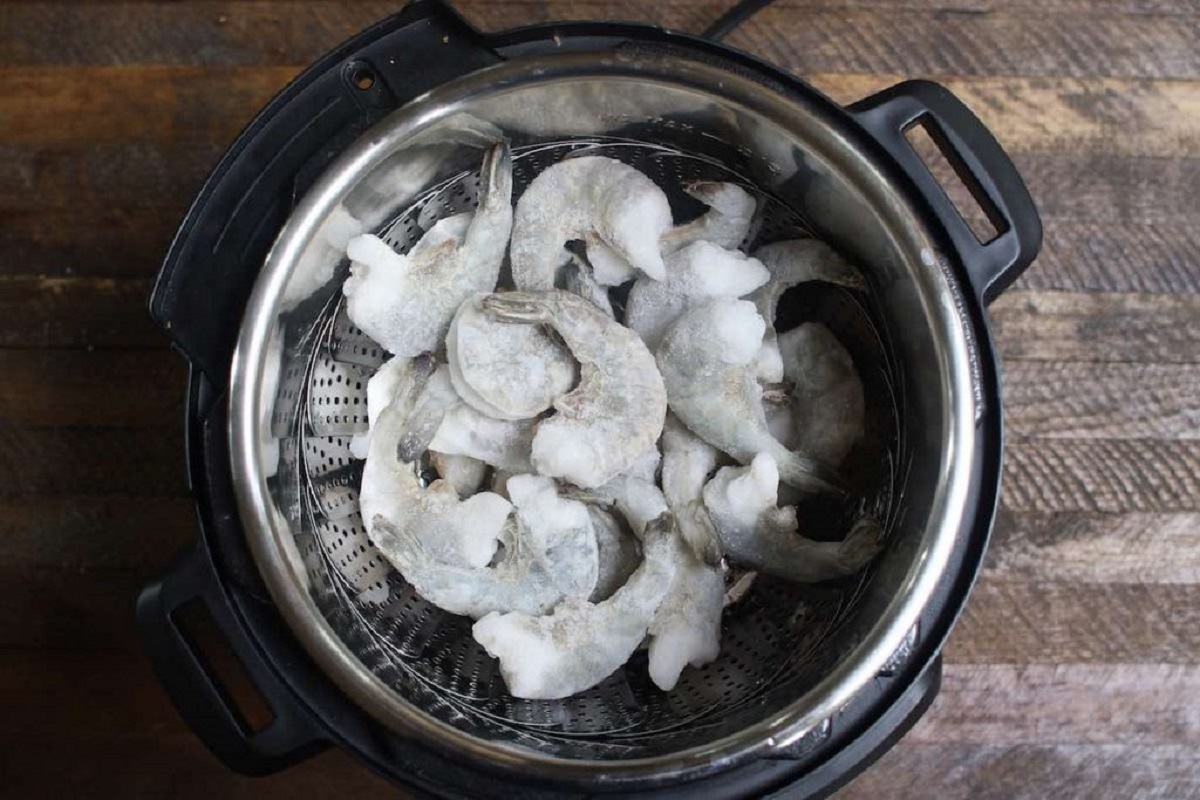
Raw, Cooked, and Frozen Shrimp
Raw shrimp
Raw shrimp need enough heat to reach 145°F. They usually need 20 to 30 minutes on LOW when added to a hot dish.
Fully cooked shrimp
Fully cooked shrimp only need reheating. Add them during the final 10 to 15 minutes on LOW.
If cooked shrimp stay in the slow cooker for an hour or more, they may become dry and tough. Stir them in just before serving when possible.
Frozen raw shrimp
Thaw frozen raw shrimp before placing them in a slow cooker. Frozen shrimp can lower the temperature of the dish and remain in an unsafe temperature range for too long.
Thawing also improves texture. Ice crystals release water as they melt, which can make a sauce watery and shrimp soft.
Frozen cooked shrimp
Thaw frozen cooked shrimp first when possible. Add them near the end and heat only until warm.

How to Tell When Slow-Cooker Shrimp Are Done
Use appearance as a quick check and temperature as the safety check.
Raw shrimp change from gray and translucent to opaque and pinkish-white as they cook. The center should not look glassy or clear.
A food thermometer gives the strongest answer. Insert it into the thickest part of the shrimp. Because shrimp are small, temperature checks can be difficult. Test more than one large shrimp if the pieces vary in size.
If the shrimp are still translucent, cook for another 5 minutes and check again. If they are firm, tightly curled, or dry, remove them from the heat at once.
Do not judge doneness by color alone. Some shrimp have natural color patterns, and sauces can change how the surface looks.

Common Slow-Cooker Shrimp Mistakes
Adding shrimp at the beginning
This is the most common mistake. Shrimp rarely need several hours of cooking.
Better approach: Add thawed raw shrimp during the final 20 to 30 minutes on LOW.
Using frozen shrimp without thawing
Frozen shrimp can cool the dish and cook unevenly.
Better approach: Thaw in the refrigerator or in cold water before cooking.
Trusting the recipe time without checking
Slow cookers differ in size, heat pattern, and temperature control.
Better approach: Check shrimp several minutes before the suggested finish time.
Leaving shrimp on the keep-warm setting
Keep-warm heat can continue cooking shrimp and make them tough.
Better approach: Serve shortly after they reach doneness.
Opening the lid too often
Each lid opening releases heat and can lengthen cooking time.
Better approach: Keep the lid closed until the first check.
Overfilling the slow cooker
An overfilled cooker heats slowly and may cook unevenly. Follow the fill guidance in the appliance manual.
Better approach: Leave enough space for the food to heat and circulate.

Slow-Cooker Shrimp Safety
Keep raw shrimp cold until you are ready to use them. Wash hands, cutting boards, knives, and counters after handling raw seafood.
Cook shrimp to 145°F. If you cannot measure the temperature easily, use the visual signs as a practical guide, but understand that appearance is less exact than a thermometer.
Refrigerate leftovers within 2 hours. If the room temperature is above 90°F, refrigerate them within 1 hour. Store leftovers in a shallow container so they cool faster.
Use refrigerated leftovers within 3 to 4 days, following USDA food-safety guidance. Reheat them until hot, but avoid repeated reheating because shrimp become tough quickly.
People at higher risk from foodborne illness, including pregnant people, young children, older adults, and those with weakened immune systems, should be especially careful with seafood temperature and storage.

What to Do If the Shrimp Are Undercooked
If shrimp still look clear or feel soft in the center, cover the slow cooker and cook them for another 5 minutes on HIGH or 5 to 10 minutes on LOW.
Check the thickest shrimp again. Continue in short steps rather than adding a long cooking period all at once.
If the sauce is not hot, use a saucepan on the stove to finish the dish more quickly. Bring the sauce to a safe simmer, add the shrimp, and cook until they reach 145°F.
If shrimp have been sitting in a lukewarm slow cooker for more than 2 hours, do not taste-test them. Food may be unsafe even when it looks normal.

Can You Cook Shrimp With Other Slow-Cooker Ingredients?
Yes, but the timing must match the ingredient that takes the longest to cook.
For example, dried beans, raw chicken, and tough vegetables need much more time than shrimp. Cook those ingredients first. Add shrimp after the base is fully cooked and hot.
Seafood that takes longer, such as firm fish chunks or squid, may need a different cooking plan. Adding every seafood ingredient at once can overcook the shrimp before the other seafood is ready.
For mixed seafood dishes, add each item according to its cooking time. Add shrimp near the end and delicate fish last or close to the end, depending on the recipe.

Frequently Asked Questions
Is it better to cook shrimp on LOW or HIGH in a slow cooker?
LOW is usually better because it gives you more control. Cook thawed raw shrimp for about 20 to 30 minutes on LOW in a hot dish. HIGH works when you need a faster finish, but check the shrimp after 10 minutes.
Can I put raw shrimp in a slow cooker for 4 hours?
You can, but it is not recommended. Shrimp may become dry and rubbery long before the dish is ready. Cook the base first and add shrimp during the final part of cooking.
Do shrimp need to be peeled before slow cooking?
No. Shell-on shrimp can be slow-cooked, and the shells may add flavor. Peeled shrimp are easier to eat and may cook a little faster. Remove the vein if desired.
Should I rinse shrimp before cooking?
Rinsing is not required. If you rinse shrimp, use cold running water and clean the sink and nearby surfaces afterward. Pat the shrimp dry before adding them to the slow cooker.
Can I add cooked shrimp at the start of a slow-cooker recipe?
It is better to add cooked shrimp near the end. Heat them for about 10 to 15 minutes on LOW, or add them just before serving if the sauce is already hot.

Key Takeaways
- Cook thawed raw shrimp for about 20 to 30 minutes on LOW in a hot slow-cooker dish.
- Use 10 to 15 minutes on HIGH when the dish is already hot.
- Add shrimp near the end to prevent a rubbery texture.
- Thaw frozen shrimp before slow cooking.
- Cook shrimp until opaque, firm, and 145°F in the thickest part.
- Reheat cooked shrimp for only about 10 to 15 minutes.
- Refrigerate leftovers within 2 hours and use them within 3 to 4 days.
Final Recommendation
For the best slow-cooker shrimp, cook the sauce or main dish first. Add thawed raw shrimp during the final 20 to 30 minutes on LOW, then check the thickest piece for opacity, firmness, and a 145°F internal temperature. Remove the shrimp as soon as they are done and serve right away.