
Yes. You can cook a pork shoulder in a slow cooker, and it is one of the easiest ways to make tender pulled pork at home in the United States. A thawed pork shoulder needs several hours on LOW heat until the meat is soft enough to shred.
For the best result, cook a 3- to 5-pound pork shoulder on LOW for about 8 to 10 hours. Check the meat with a food thermometer. The USDA says whole cuts of pork are safe at 145°F, followed by a three-minute rest. However, pork shoulder usually needs to reach about 195°F to 205°F for the connective tissue to break down and the meat to pull apart easily.
Introduction
Slow-cooker pork shoulder works because low, moist heat slowly softens tough connective tissue. The result is rich, tender meat that can be served as pulled pork, tacos, sandwiches, rice bowls, or a main dish with vegetables.
The most common cuts are Boston butt, also called pork butt, and picnic shoulder. Despite the name, pork butt comes from the upper shoulder, not the rear of the pig. Both cuts work well, but Boston butt is often easier to shred because it usually has more even marbling.
This guide explains how to choose the cut, prepare it, set the slow cooker, check for doneness, avoid common problems, and store leftovers safely.
What Kind of Pork Shoulder Should You Use?
Use a thawed Boston butt or picnic shoulder that fits comfortably in the slow cooker. A boneless cut is easy to portion, while a bone-in cut can add flavor and helps the meat hold its shape during cooking.
Boston butt versus picnic shoulder
| Cut | Typical features | Best use |
|---|---|---|
| Boston butt | Well-marbled, thick, and easy to shred | Pulled pork and sandwiches |
| Picnic shoulder | Often has more skin and a different shape | Roasts, pulled pork, and braised dishes |
| Boneless shoulder | Simple to cut and portion | Smaller slow cookers and meal prep |
| Bone-in shoulder | Holds together well and may add flavor | Large batches and long cooking |
A pork shoulder with some visible fat will usually stay more moist than a very lean cut. You can trim thick, hard pieces of surface fat, but do not remove every bit of fat. Much of it will melt during the long cook.
Choose a roast that leaves some space around the sides of the slow-cooker insert. The lid should close fully. If the meat is packed tightly against the lid, it may cook unevenly.

How to Cook Pork Shoulder in a Slow Cooker
The basic method is simple: season the pork, add a small amount of liquid, cover it, and cook it until tender.
Ingredients
For a 3- to 5-pound pork shoulder, you will need:
- 1 pork shoulder, thawed
- 1 to 2 tablespoons of oil, optional
– 1 to 2 tablespoons of kosher salt, depending on the size of the roast - 1 to 2 tablespoons of a dry spice blend
- 1 cup of low-sodium broth, apple juice, water, or another cooking liquid
- 1 sliced onion, optional
- 3 to 5 garlic cloves, optional
The liquid does not need to cover the pork. A slow cooker traps steam, so too much liquid can dilute the flavor and make the finished sauce thin.
Step-by-step method
-
Thaw the pork in the refrigerator.
Do not place a frozen pork shoulder directly into a slow cooker. USDA guidance warns that frozen meat may spend too long in the bacterial “danger zone” while the appliance warms. -
Trim only excess hard fat.
Leave a thin layer of softer fat for flavor and moisture. -
Pat the pork dry.
Dry meat holds seasoning better and develops a better surface. -
Season all sides.
Use salt, black pepper, paprika, garlic powder, onion powder, cumin, chili powder, or your preferred spice blend. -
Optional: brown the pork.
Heat oil in a skillet and brown each side for several minutes. This step can deepen the flavor, but it is not required for tender meat. -
Add the aromatics and liquid.
Place onion and garlic in the slow cooker. Add the pork and pour in about 1 cup of liquid around it. -
Cook with the lid closed.
Set the slow cooker to LOW. Avoid lifting the lid often because heat escapes and extends the cooking time. -
Check the temperature and texture.
Insert a thermometer into the thickest part of the meat, away from the bone. The pork is safe at 145°F, but it is usually ready to shred when it reaches roughly 195°F to 205°F and feels very tender. -
Rest the pork.
Move the roast to a tray and let it rest for 15 to 30 minutes. Then remove large pieces of fat and shred the meat with two forks or meat claws. -
Taste before serving.
Add some cooking liquid back to the shredded pork if it seems dry. Adjust salt, pepper, vinegar, barbecue sauce, or hot sauce to taste.
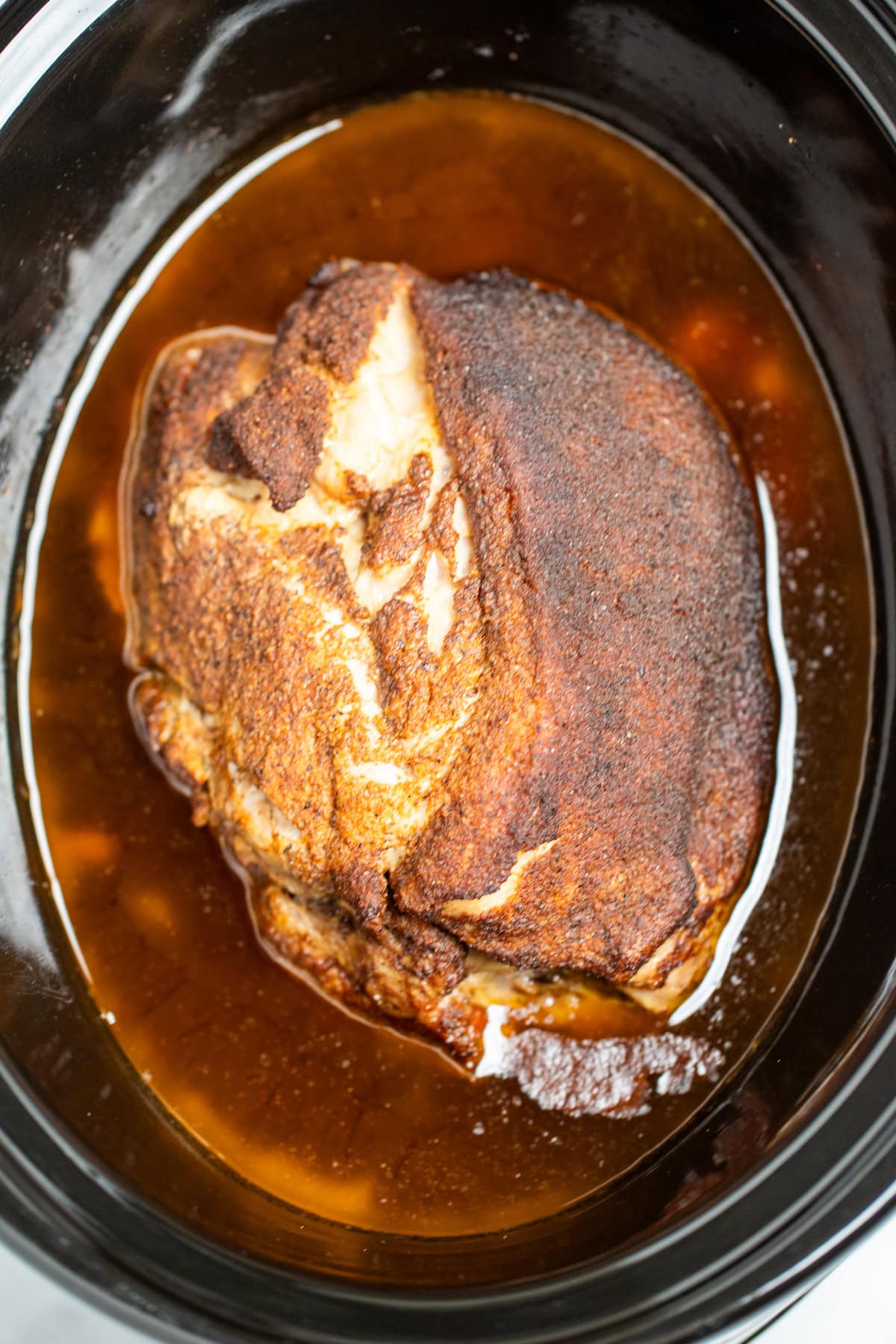
A sealed slow cooker does not brown food well. If you want a darker crust, brown the roast before cooking or place the finished pork under a broiler for a few minutes. Watch it closely because the sugars in a rub or sauce can burn.

How Long Does Pork Shoulder Take in a Slow Cooker?
A 3- to 5-pound pork shoulder usually takes 8 to 10 hours on LOW or about 5 to 7 hours on HIGH. These are planning ranges, not guarantees. The shape of the roast, the starting temperature, the slow cooker model, and how often the lid is opened can change the result.
| Pork shoulder size | LOW setting | HIGH setting |
|---|---|---|
| 2 to 3 pounds | 6 to 8 hours | 4 to 5 hours |
| 3 to 5 pounds | 8 to 10 hours | 5 to 7 hours |
| 5 to 7 pounds | 9 to 12 hours | 6 to 8 hours |
Use the thermometer and the fork test as your final guide. A pork shoulder may reach a safe temperature before it becomes tender enough to shred. If the meat is safe but still tough, it usually needs more time, not less.
Try not to cook a very small roast in a very large slow cooker. The appliance works best when the food fills a reasonable portion of the insert. Follow the instructions for your specific cooker if they give a different capacity range.

What Temperature Should Pork Shoulder Reach?
Pork shoulder is safe when the thickest part reaches 145°F, according to the USDA’s guidance for whole cuts of pork, followed by a three-minute rest. That safety temperature and the temperature needed for pulled-pork texture are different goals.
At about 145°F, the meat may be safe but still firm and difficult to shred. Long cooking helps collagen turn into gelatin. That change is what gives pulled pork its soft texture. Many cooks therefore continue cooking until the roast reaches approximately 195°F to 205°F and a fork slides into it with little resistance.
Use temperature as a guide, not the only test:
- 145°F: Meets the USDA minimum for whole-cut pork after the required rest.
- 180°F to 190°F: Often cooked through but may still be firm.
- 195°F to 205°F: Common range for shreddable pork shoulder.
- Very tender fork test: Confirms that the connective tissue has softened.
Do not rely on color alone. Pork can remain pink after cooking, especially in a moist, slow-cooked environment. A food thermometer is more dependable than appearance.
The USDA recommends refrigerating perishable food within two hours, or within one hour when the air temperature is above 90°F. Store cooked pork in shallow containers so it cools quickly. Refrigerated leftovers are generally best used within three to four days.

Should You Cook Pork Shoulder on LOW or HIGH?
Cook pork shoulder on LOW when you have time. The low setting gives the connective tissue more time to soften and makes it easier to plan an all-day cook.
The HIGH setting can work when you need the pork sooner. It may produce tender meat, but the cooking window is shorter, so check it earlier. A large roast can become overcooked around the edges before the center is fully tender if the slow cooker is too small or the meat is tightly packed.
Choose LOW when:
- You want to cook overnight or during the workday.
- The roast is large.
- You want a wider time window.
- You are making pulled pork for a later meal.
Choose HIGH when:
- The roast is smaller.
- You can monitor the cooking process.
- You need the meal ready sooner.
- Your slow cooker manual supports that cooking time.
Do not switch between LOW and HIGH to “speed up” the process without adjusting the total time. Start with a tested time range, then rely on temperature and texture.

How Much Liquid Do You Add?
Add about ½ to 1 cup of liquid for most pork shoulders. Water, broth, apple juice, cider, cola, beer, tomato sauce, or a vinegar-based mixture can work, depending on the recipe.
The liquid adds moisture and helps create a flavorful cooking juice. It does not need to cover the roast. A slow cooker creates a humid environment under the lid, so the pork cooks in trapped steam as well as liquid.
Use less liquid if:
- The pork is heavily marbled.
- You are adding a sauce with a lot of water.
- You want concentrated cooking juices.
Use closer to 1 cup if:
- The roast is very lean.
- You are adding vegetables that may absorb liquid.
- You want plenty of broth for serving.
Avoid adding a large amount of thin liquid at the start. The slow cooker has little evaporation, so the finished sauce may taste weak. You can always add more liquid near the end, but reducing a watery sauce takes extra work.

How to Tell When the Pork Shoulder Is Done
Pork shoulder is done for shredding when it is both hot enough and tender enough. A thermometer shows the internal temperature, while a fork or probe shows whether the connective tissue has softened.
Check the roast in the thickest part:
- The temperature is around 195°F to 205°F for a typical pulled-pork texture.
- A fork slides in with little resistance.
- The meat separates easily when pulled.
- The bone, if present, loosens easily.
- The roast does not feel rubbery or tight.
If the pork reaches 195°F but still feels tough, keep cooking it on LOW. Temperature alone cannot guarantee tenderness because roasts differ in size, fat content, and connective tissue.
If the pork seems dry, the most common causes are overcooking, too little fat, or shredding and holding the meat without enough cooking liquid. Mix some of the strained juices back into the shredded pork. You can also add a small amount of broth or sauce.
Common Mistakes to Avoid
The most common slow-cooker pork problems come from unsafe starting conditions, poor timing, or too much liquid.
Starting with frozen pork
A frozen roast can take too long to pass through safe cooking temperatures. Thaw it in the refrigerator first. For a large roast, allow enough time for the center to thaw fully.
Opening the lid repeatedly
Each lid lift releases heat and steam. It can add meaningful time to a long cook. Check the pork only when the planned cooking window is nearly complete.
Using too much water
Extra water can make the pork bland and leave you with a thin sauce. Start with a modest amount of liquid.
Judging doneness by the clock alone
Cooking times vary by cooker and roast shape. Use a thermometer and check for tenderness.
Cooking a roast that is too large
A pork shoulder should fit without pressing against the lid. Cut a very large roast into two pieces if your cooker and recipe allow it, or use a larger appliance.
Removing all the fat
A little fat helps protect the meat during a long cook. Remove thick, hard fat, but keep some marbling.
Holding the pork too long on “warm”
The warm setting is for short holding, not unlimited storage. Follow your slow cooker instructions and keep the food at a safe hot-holding temperature. Refrigerate leftovers promptly rather than leaving them out for hours.

Easy Ways to Flavor Slow-Cooker Pork Shoulder
A basic salt-and-spice rub works well, but the cooking liquid can steer the dish toward different styles.
Classic barbecue pork
Use paprika, brown sugar, black pepper, garlic powder, onion powder, and a small amount of chili powder. Add a little apple juice or broth. Toss the shredded pork with barbecue sauce after cooking.
Carolina-style pork
Season with salt, pepper, paprika, and garlic. Serve the finished pork with a thin vinegar sauce made with vinegar, a little sugar, red pepper, and salt.
Mexican-style pork
Use cumin, oregano, garlic, chili powder, and lime zest. Add orange juice or broth. Serve the pork in tortillas with onion, cilantro, and salsa.
Simple roast pork
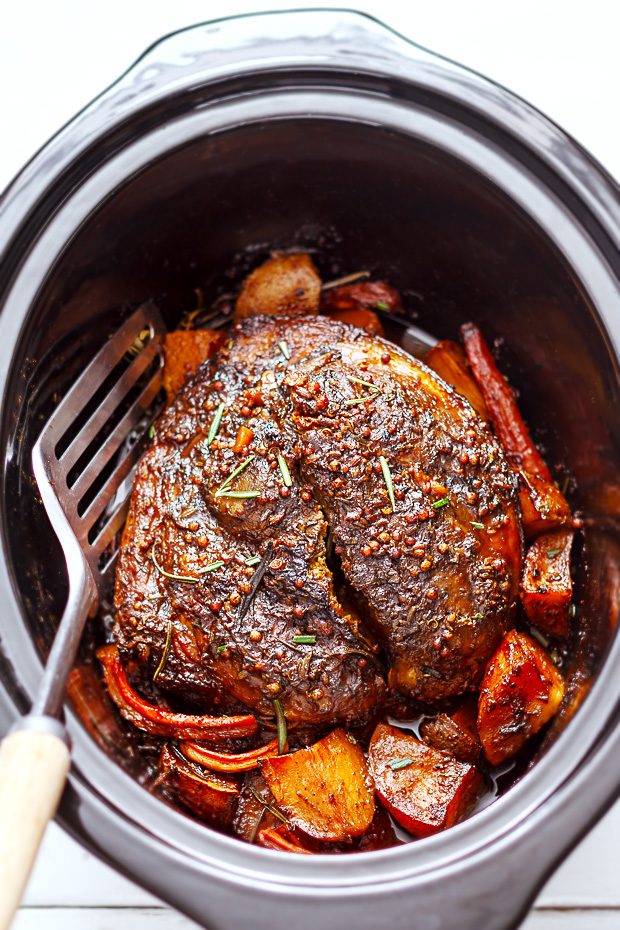
Use salt, pepper, garlic, onion, and broth. Add carrots and potatoes near the start if your slow cooker has room. This version is better served in slices or large chunks if the meat is removed before it becomes fully shreddable.
Do not add a sweet sauce too early if it contains a lot of sugar. It can become overly concentrated or burn around the edges. Add barbecue sauce during the final part of cooking or after shredding.

How to Store, Reheat, and Freeze Leftover Pork
Store leftover pork in shallow, airtight containers. Refrigerate it within two hours and use it within three to four days. Keep some cooking juices with the meat to help it stay moist.
To reheat, warm the pork gently in a covered skillet, saucepan, oven dish, or microwave-safe container. Add a splash of broth or reserved cooking liquid. Heat until the pork is steaming hot throughout.
To freeze pulled pork, cool it promptly, divide it into meal-size portions, and use freezer-safe containers or bags. Remove as much air as practical. Label the package with the date and thaw it in the refrigerator before reheating.
Frozen leftovers may lose some texture, but pork shoulder usually freezes well because the meat contains connective tissue and cooking juices. Reheat only the portion you plan to eat.

Frequently Asked Questions
Can you cook pork shoulder in a slow cooker without liquid?
Yes. Pork shoulder releases moisture as it cooks, and a slow cooker traps steam. However, a small amount of broth, juice, or sauce helps prevent scorching and gives you flavorful liquid for the finished pork. Use about ½ to 1 cup for most roasts.
Do you put the fat side up or down?
Either position can work. Fat does not “baste” the meat as perfectly as some recipes claim, because melted fat does not deeply penetrate the muscle. Place the roast where it fits best, and trim only thick, hard fat.
Can you overcook pork shoulder in a slow cooker?
Yes. The meat may become dry, stringy, or mushy if it stays hot long after the connective tissue has broken down. If you are not serving it right away, remove the pork when tender and hold it safely for a short period or refrigerate it.
Can you cook pork shoulder overnight?
Yes, if the pork is thawed, the slow cooker is in good working order, and the roast fits properly. Use LOW, follow the appliance instructions, and check the temperature and tenderness in the morning. Do not leave the finished pork at room temperature after cooking.
Why is my slow-cooker pork shoulder tough?
It may simply need more time. Pork shoulder can be safe to eat before it is tender enough to shred. If it is still firm, continue cooking on LOW and check it again later. If it is dry and stringy, it may have cooked too long or lacked enough fat and cooking liquid.

Conclusion
You can cook a pork shoulder in a slow cooker with very little hands-on work. Use a thawed Boston butt or picnic shoulder, season it well, add a modest amount of liquid, and cook it on LOW until the meat is tender.
For pulled pork, plan on about 8 to 10 hours for a 3- to 5-pound roast. Confirm the temperature with a thermometer, then use the fork test to decide whether it is ready to shred. The key is to separate food safety from texture: 145°F meets the USDA minimum for whole pork cuts, while the higher range near 195°F to 205°F is commonly needed for tender, pull-apart pork.