
Introduction
For home cooks in the United States, a slow cooker is an easy way to make tender butternut squash with little hands-on work. You can cook the squash whole or cut it into cubes, then serve it as a side dish, mash it into soup, or use it in pasta and grain bowls.
The simplest method is to peel and cube the squash, add it to the slow cooker with a small amount of liquid and seasoning, and cook it on LOW for 3 to 4 hours or HIGH for 2 to 3 hours. The squash is ready when a fork slides through the thickest pieces with little resistance.

What You Need
You need only a few basic ingredients and tools to cook butternut squash in a slow cooker.
Ingredients
For about 4 to 6 servings, use:
- 1 medium butternut squash, about 2 to 3 pounds
- 1 to 2 tablespoons olive oil or melted butter
- 1/4 cup water, vegetable broth, or chicken broth
- 1/2 teaspoon kosher salt
- 1/4 teaspoon black pepper
- Optional herbs, spices, or sweeteners
Good savory additions include:
- Garlic
- Fresh or dried sage
- Thyme
- Rosemary
- Smoked paprika
- Ground cumin
- Red pepper flakes
For a sweeter side dish, add:
- 1 to 2 tablespoons maple syrup or brown sugar
- 1/2 teaspoon ground cinnamon
- A small pinch of nutmeg
Use less liquid if you want roasted-style squash pieces. Add more liquid if you plan to mash the squash or turn it into soup.
Tools
You will need:
- A 5- to 6-quart slow cooker
- A sturdy chef’s knife
- A vegetable peeler
- A cutting board
- A large spoon
- A fork or potato masher
A sharp knife is safer than a dull knife because it is less likely to slip. Butternut squash has a hard skin, so take your time when cutting it.

How to Prepare Butternut Squash Safely
The safest way to cut butternut squash is to make a flat base before peeling or chopping it. Wash the squash under cool running water, even if you plan to remove the skin. Washing helps reduce dirt and bacteria on the surface.
- Cut off the stem and bottom ends.
- Stand the squash upright on one flat end.
- Peel the skin with a vegetable peeler.
- Cut the squash in half from top to bottom.
- Scoop out the seeds and stringy fibers.
- Cut the flesh into pieces of similar size.
Pieces that are close in size cook at the same rate. Aim for cubes about 1 to 1 1/2 inches wide.
If the squash is too hard to cut, place the whole squash in the microwave for about 2 to 3 minutes. Let it cool enough to handle, then cut it. Use a microwave-safe plate and do not seal the squash in a container.
You can save the seeds for roasting, but rinse and dry them first. Do not use damaged or moldy squash.

How to Cook Cubed Butternut Squash in a Slow Cooker
Cubed squash gives the most even results and cooks faster than a whole squash.
Instructions
- Add the liquid. Pour 1/4 cup water or broth into the slow cooker.
- Add the squash. Place the peeled cubes in an even layer when possible.
- Season. Add the oil or butter, salt, pepper, and any herbs or spices.
- Cover and cook. Cook on LOW for 3 to 4 hours or HIGH for 2 to 3 hours.
- Check for doneness. Insert a fork into several pieces, including pieces near the center.
- Drain if needed. Remove excess liquid before serving or mashing.
- Finish the dish. Add more butter, salt, pepper, herbs, or maple syrup to taste.
Slow cookers vary in heat and size. Start checking the squash near the early end of the time range. Small cubes may become soft sooner, while large or crowded pieces may need more time.
How to tell when it is done
Butternut squash is ready when:
- A fork enters the center easily.
- The pieces bend or break with gentle pressure.
- The flesh looks soft and moist.
- A spoon can mash it without force.
Do not rely on color alone. Cooked squash may keep much of its orange color even when it is soft.
How to Cook a Whole Butternut Squash in a Slow Cooker
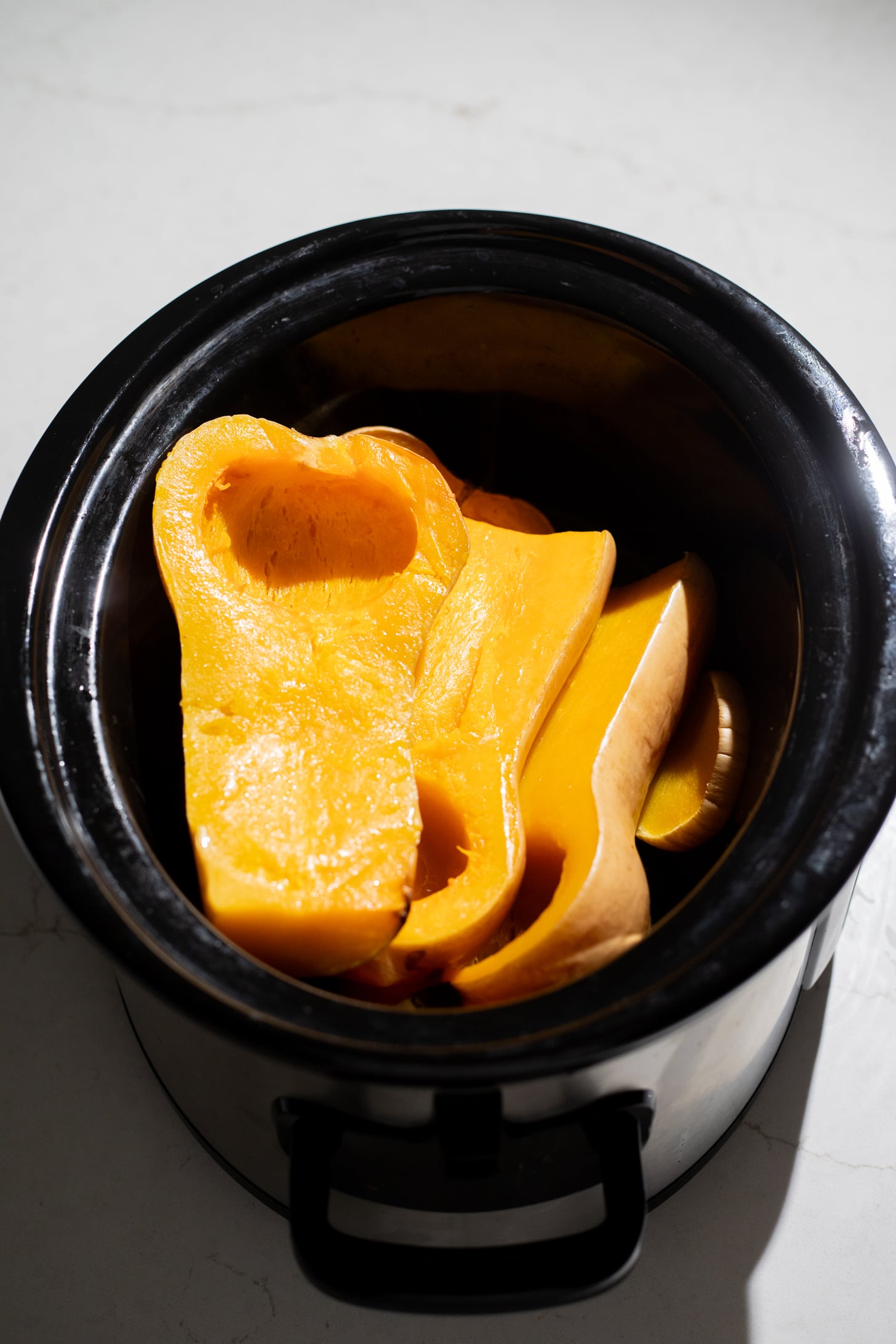
Cooking the squash whole avoids peeling and chopping before cooking. This method takes longer, but the softened flesh is easy to scoop out afterward.
Instructions
- Wash and dry the squash.
- Pierce the skin several times with a fork or the tip of a knife.
- Place the squash in the slow cooker.
- Add about 1/2 cup water to the bottom of the cooker.
- Cover and cook on LOW for 4 to 6 hours or HIGH for 3 to 4 hours.
- Check the thickest part with a fork or thin knife.
- Remove the squash carefully and let it cool until safe to handle.
- Cut it open, scoop out the seeds, and remove the soft flesh from the skin.
Piercing the squash allows steam to escape and helps prevent pressure from building under the skin. The slow cooker should remain covered during cooking so heat and moisture stay inside.
A whole squash is done when a fork reaches the center easily. If the center is still firm, cover the cooker and continue cooking in 30-minute increments.

Slow Cooker Butternut Squash Cooking Times
Use the table below as a starting guide. The actual time depends on the squash size, piece size, slow cooker model, and how full the cooker is.
| Preparation | LOW setting | HIGH setting | Doneness test |
|---|---|---|---|
| 1-inch cubes | 3 to 4 hours | 2 to 3 hours | Fork slides in easily |
| 1 1/2-inch cubes | 4 to 5 hours | 2 1/2 to 3 1/2 hours | Center is soft |
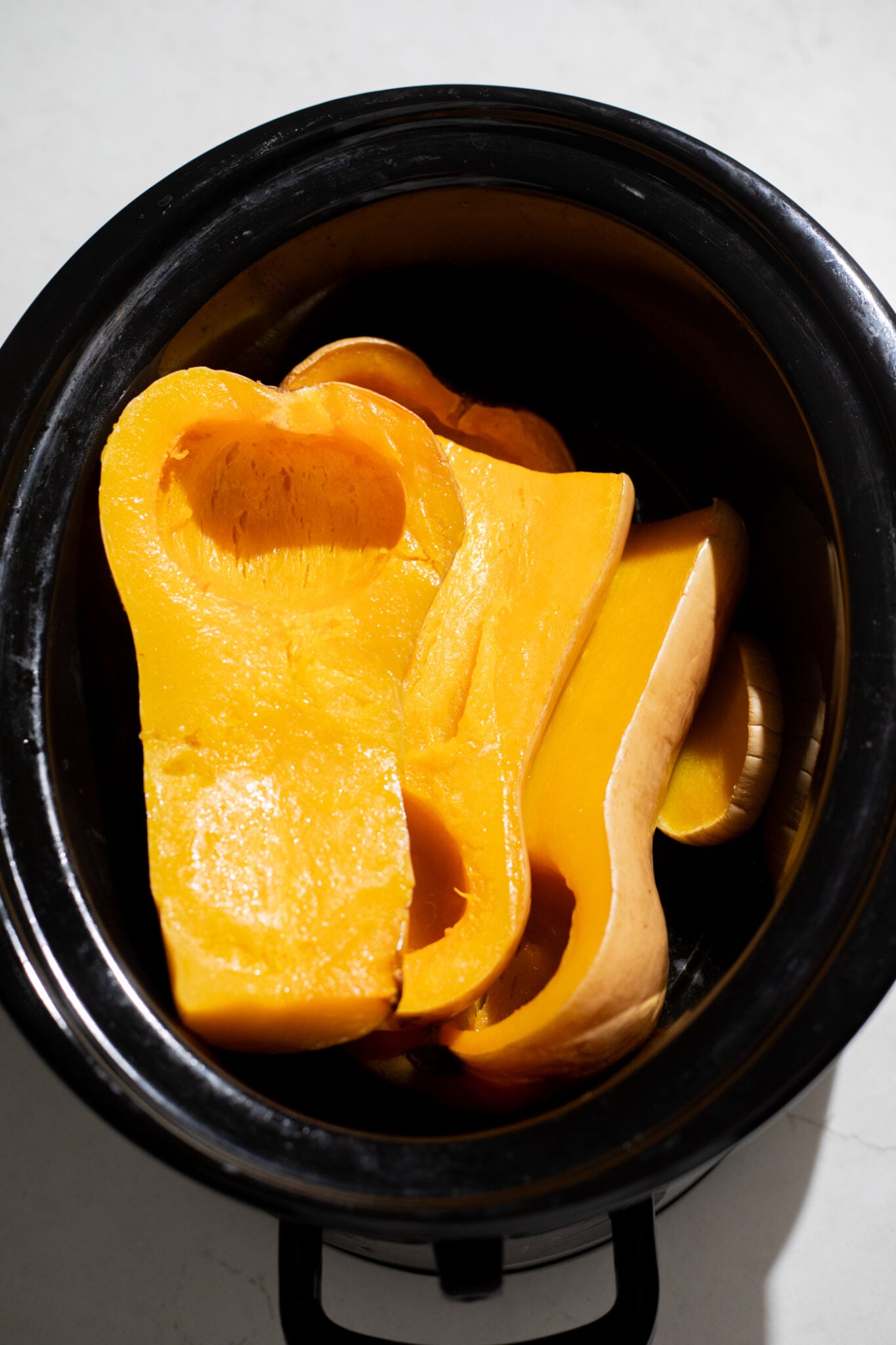
| Halved squash | 4 to 6 hours | 3 to 4 hours | Flesh is easy to scoop |
| Whole squash | 4 to 6 hours | 3 to 4 hours | Thickest area is tender |
Do not fill the slow cooker to the very top. A cooker that is too full may heat slowly and cook unevenly. A cooker that is nearly empty may cook faster than expected.
If the squash is not tender at the end of the suggested time, keep cooking with the lid on. Check it every 30 minutes. If the squash turns watery, remove the lid for the final 15 to 30 minutes only if the recipe allows some moisture to evaporate.

How to Make Mashed Butternut Squash
Slow-cooked squash is ideal for a smooth or rustic mash. Drain extra liquid first, since squash releases water as it cooks.
Mash the cooked squash with:
- 2 tablespoons butter
- 1 to 3 tablespoons milk, cream, or half-and-half
- Salt and black pepper
- Sage, thyme, cinnamon, or nutmeg
For a dairy-free version, use olive oil, unsweetened plant milk, or a small amount of coconut milk. Add liquid one spoonful at a time. It is easier to thin the mash than to fix a watery one.
For a smooth texture, use an immersion blender after removing the squash from the slow cooker. A potato masher creates a more rustic texture.
If you want to make baby food, mash the squash without added salt, sugar, or honey. Let it cool, then portion it into clean containers.

How to Use Slow Cooker Butternut Squash
Cooked butternut squash works in both savory and sweet dishes.
Use it as:
- A side dish with roasted chicken or turkey
- A filling for ravioli or stuffed pasta
- A topping for grain bowls
- A base for a blended soup
- A filling for tacos or quesadillas
- A sauce for pasta
- An ingredient in risotto
- A mash mixed with potatoes
- A puree for muffins or quick bread
To make simple squash soup, add the cooked squash to a blender with warm broth. Blend in batches, since hot liquid can expand. Keep the blender lid vented and cover the opening with a kitchen towel.
For a thicker soup, use less broth. For a thinner soup, add broth until the texture suits you. Add salt only after tasting, especially when using prepared broth.

Common Mistakes to Avoid
Adding too much liquid
Butternut squash contains a large amount of water. Extra broth can make the finished dish thin and bland. Start with a small amount and add more after cooking if needed.
Cutting uneven pieces
Small pieces may turn mushy before larger pieces are tender. Cut the squash into similar-sized cubes for even cooking.
Overfilling the slow cooker
A tightly packed cooker can slow cooking and create uneven results. Leave room for heat to circulate around the food.
Opening the lid too often
Each lid lift releases heat and steam. Check the squash only near the end of the expected cooking time unless you need to test it.
Using a dull knife
A dull blade requires more pressure and can slip. Use a stable cutting board and keep your fingers away from the blade’s path.
Seasoning too early with delicate herbs
Fresh herbs can lose their bright flavor during long cooking. Add tender herbs, lemon juice, or fresh black pepper near the end.
Cooking only by the clock
Time estimates are not a substitute for testing. Squash size and slow cooker heat differ, so use the fork test to confirm doneness.
How to Store and Reheat Cooked Squash
Cool leftover squash in a shallow container and refrigerate it promptly. The USDA advises refrigerating perishable food within 2 hours, or within 1 hour when the temperature is above 90°F.
Store cooked butternut squash in the refrigerator for 3 to 4 days. Reheat it on the stovetop, in the microwave, or in a covered oven-safe dish until it is hot throughout.
To freeze it, cool the squash first, place it in an airtight freezer container or freezer bag, and label it with the date. Frozen mashed squash is often easier to use than frozen cubes because thawed squash may become soft.
Thaw frozen squash in the refrigerator when possible. Stir it while reheating and drain excess water if the texture becomes loose.
See the USDA guidance on leftovers and food safety for storage and reheating recommendations.

Key Takeaways
- For the fastest, most even method, peel and cut the squash into 1- to 1 1/2-inch cubes.
- Cook cubed butternut squash on LOW for 3 to 4 hours or HIGH for 2 to 3 hours.
- Cook a whole squash on LOW for 4 to 6 hours or HIGH for 3 to 4 hours.
- Use only a small amount of liquid because squash releases moisture as it cooks.
- Test the thickest piece with a fork before serving.
- Refrigerate leftovers within 2 hours and use them within 3 to 4 days.
Frequently Asked Questions
Can I cook butternut squash in a slow cooker without water?
Yes. You can cook cubed squash with oil or butter and no added water. However, a small amount of liquid can reduce sticking and create steam. Use about 1/4 cup for cubed squash or 1/2 cup for a whole squash.
Do I have to peel butternut squash before slow cooking?
No. You can cook the squash whole or in large halves, then scoop out the cooked flesh. If you want cubes, peel the squash before cutting it.
Can I put raw butternut squash in a slow cooker?
Yes. Raw squash can go directly into the slow cooker. Peel, seed, and cut it first unless you are using the whole-squash method.
Why is my slow cooker squash watery?
Squash naturally releases moisture, and extra broth can increase the problem. Drain the squash, mash it without more liquid, or cook it uncovered briefly in a separate pan to reduce moisture.
Can I overcook butternut squash in a slow cooker?
Yes. Overcooked squash becomes very soft and may lose its shape, although it can still work well in soup, mash, sauces, and baked goods. Use LOW heat and check it as soon as it reaches the expected cooking time.
Can I cook frozen butternut squash in a slow cooker?
Frozen squash may release extra water and cook unevenly. For more predictable results, thaw it in the refrigerator, drain it, and reduce the added liquid. Check the pieces for tenderness before serving.
Conclusion
The easiest way to cook butternut squash in a slow cooker is to cut it into even cubes, add a small amount of liquid and seasoning, and cook it until fork-tender. Use LOW for 3 to 4 hours or HIGH for 2 to 3 hours, then adjust the texture and seasoning before serving.
For the least preparation, cook the squash whole and scoop out the soft flesh afterward. Once cooked, it can become a side dish, mash, soup, pasta sauce, or freezer-friendly meal component.