
The best can opener for arthritic hands combines easy control, soft grips, and little wrist strain.
Opening a can should take seconds, not leave your fingers sore or your wrist tired. Yet a stiff knob, hard spring, or slippery handle can turn soup night into a small battle. I tested these popular manual and electric styles with comfort in mind, focusing on grip, control, cutting action, cleanup, and daily use. This guide can help you find the best can opener for arthritic hands, whether you want a simple tool, a rechargeable model, or a one-touch electric opener.
KitchenAid Classic Can Opener

The KitchenAid Classic Multifunction Can Opener is a solid pick for people who still prefer a manual tool but need a kinder grip. Its soft handles feel less harsh than thin metal handles, and the large turn knob gives your fingers a clear place to work. I like the balance between its firm cutting wheel and light, steady action. It also opens bottles, so it earns its space in a small kitchen.
This opener does require some turning, so it may not suit severe hand pain or very weak grip strength. Still, its smooth motion can feel much easier than cheap openers with tiny knobs. The stainless steel wheel resists wear, while the black handle looks neat and wipes clean with little fuss. For many users, it is a practical choice when an electric opener feels too large or costly.
Pros:
- Soft handles cushion fingers and palms
- Large knob is easier to hold than a tiny metal knob
- Sharp stainless steel wheel cuts with steady pressure
- Works as both a can opener and bottle opener
- Simple design needs no batteries or outlet
- Compact size fits most kitchen drawers
Cons:
- Still needs repeated hand turning
- Not the best choice for very limited hand strength
- Manual use may feel slow with large cans
My Recommendation
I recommend the KitchenAid Classic to users with mild to moderate arthritis who want a familiar manual can opener. It is especially useful for cooks who dislike electric appliances or want a tool that remains ready during a power outage. The soft grip and larger knob make it more comfortable than many basic models, though you still need to rotate the knob. If you want the best can opener for arthritic hands in a simple manual style, this model offers good everyday value and is widely available online.
Canslab Ultrablade PRO Electric Opener

The Canslab Ultrablade PRO is built for people who want to avoid hand turning. It uses a rechargeable battery and starts with a simple control, then stops on its own when the cut is complete. That smart stop feature helps reduce guesswork and keeps the process calm. For arthritic fingers, removing the need to squeeze and twist can make a real difference.
Its cordless design gives you more freedom at the counter, and USB charging is convenient for modern kitchens. I find this style most helpful when a person opens cans often or has pain that changes from day to day. It may take a short learning period to place the opener correctly, but the effort is small once the motion feels familiar. Keep the unit charged so it is ready when you need it.
Pros:
- Electric action removes most twisting and squeezing
- Rechargeable battery avoids constant disposable batteries
- Automatic stop helps simplify the opening process
- Cordless body works in many parts of the kitchen
- Useful for people with moderate or severe hand discomfort
- Good fit for frequent can opening
Cons:
- Needs charging before use
- Costs more than a basic manual opener
- Requires careful placement on the can rim
- Electrical parts need more care during cleaning
My Recommendation
The Canslab Ultrablade PRO is my top choice for people who want the best can opener for arthritic hands with the least manual work. It suits users with painful knuckles, weak grip, or trouble turning small knobs. I also like it for caregivers who want an easier tool for an older family member. The rechargeable design and auto-stop function add comfort, but remember that you must charge and store it safely. Its higher price can be worthwhile when hand strain is a daily concern.
OXO Good Grips Manual Opener
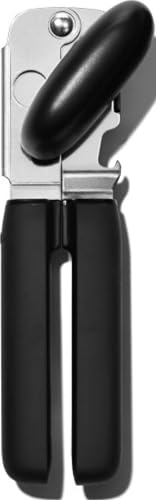
The OXO Good Grips Manual Can Opener remains a strong choice for a reason: it focuses on control. Its wide, soft handle gives the palm more surface area, which can reduce the sharp pressure caused by narrow handles. The turning knob feels easy to locate, and the opener sits securely on the rim when placed with care. It also includes a bottle opener for extra use.
In my experience, a good manual opener should feel predictable from the first turn. The OXO does that well, making it a helpful option for mild arthritis and tired hands. It still needs rotation, but the grip helps spread the work across the hand instead of forcing one finger to do all the work. Like most manual models, it should be hand washed and dried well to protect the cutting parts.
Pros:
- Wide soft-grip handles are comfortable in the palm
- Easy-to-find knob supports controlled turning
- Stable cutting action reduces slipping
- Lightweight design is easy to lift and store
- Includes a bottle opener
- Trusted simple design needs no power
Cons:
- Requires hand rotation for every can
- May not work well for severe arthritis
- Can need extra care with very thick cans
My Recommendation
I would choose the OXO Good Grips for a person who wants the best can opener for arthritic hands but still enjoys a manual kitchen tool. It is best for mild arthritis, occasional can use, and anyone who values a soft, broad grip. The handle design is the main benefit because it helps reduce pressure on tender joints. If you need a low-cost, dependable opener without charging or batteries, this OXO model offers excellent overall value.
Zulay Kitchen Heavy-Duty Opener

The Zulay Kitchen Heavy-Duty Stainless Steel Can Opener is made for shoppers who want a sturdy manual tool with a comfortable touch. Its soft grip handles help prevent the hard, pinching feel found on low-cost openers. The turn knob gives a good hold, while the stainless steel construction feels ready for regular kitchen use. It also works as a bottle opener.
This model is a good match for medium and large cans when you want a firm tool that does not flex much. I would use it with a relaxed grip and let the cutting wheel do the work rather than forcing the knob. Even so, manual turning remains the main limit for arthritic users. The rust-resistant parts are useful, but drying the opener after washing can help keep it in good shape.
Pros:
- Comfortable soft handles reduce sharp palm pressure
- Heavy-duty build feels stable on the can
- Stainless steel parts resist rust with proper care
- Large turn knob supports a firm grip
- Works on many common can sizes
- Includes a bottle opener
Cons:
- Manual turning may tire painful hands
- Heavier than some compact openers
- Needs hand washing and careful drying
My Recommendation
The Zulay is best for users with mild arthritis who want a durable manual opener for frequent cooking. It may be the best can opener for arthritic hands for someone who values strength, a soft handle, and a lower price over hands-free use. I would not make it my first choice for severe joint pain because the knob still requires force. For a busy home kitchen, however, it gives useful durability and a comfortable feel at a reasonable value.
Cuisinart One-Touch Electric Opener

The Cuisinart Electric Can Opener is a convenient countertop choice for people who want one-touch operation. You place the can in position, press the control, and let the motor turn the can. Its nonslip base helps keep the appliance steady while it works. This setup removes most wrist motion and can feel like a small daily freedom for someone with arthritis.
I see this Cuisinart as a good choice for a home where cans appear often. It is larger than a manual opener, so it needs a permanent spot or a little shelf space. The corded design also means you need a nearby outlet, but you never need to remember a charge. If ease matters more than portability, its simple control and stable base are strong advantages.
Pros:
- One-touch operation limits hand movement
- Nonslip base improves countertop stability
- Helpful for weak grip and painful wrists
- Works well for frequent can opening
- No charging or battery replacement is needed
- Countertop design is easy to find and use
Cons:
- Needs counter space and a nearby outlet
- Less portable than cordless models
- Motor noise may bother some users
- Costs more than a simple manual opener
My Recommendation
I recommend the Cuisinart to anyone who wants a countertop appliance that does the turning for them. It is especially suitable for older adults, users with limited wrist movement, and families that open cans every day. Among these options, it can be the best can opener for arthritic hands when one-touch comfort matters most. Its main tradeoff is size, but the steady base and easy control can repay that space over time.
How I Chose These Can Openers
Choosing a can opener for arthritic hands takes more than looking at a star rating. I focus on the way the tool asks the hand to move. A model may have a sharp blade, yet still be painful if its knob is small or its handles pinch the fingers.
I look first at grip shape. Wide, soft handles spread pressure over more of the palm. That can feel gentler than a narrow handle that presses into one sore spot. A textured surface also matters because it helps prevent slips when the hand feels weak.
Next, I consider the turning force. Manual openers need some wrist motion, even when their grips are well designed. Electric openers remove most of that work, but they bring other needs, such as charging, an outlet, or careful placement.
I also check stability. A can opener should sit firmly on the rim instead of jumping or sliding. A stable tool gives the user more control and reduces the urge to squeeze too hard. This matters because gripping harder can increase hand fatigue.
The cutting wheel matters, too. A sharp wheel should move through the lid with smooth pressure. A dull wheel may make the user turn the knob again and again. That repeated motion can be the difference between a comfortable task and a sore hand.
Finally, I consider cleaning and storage. Food bits can collect near the wheel, so a washable design is helpful. Electric models need extra care because the motor should not go into water. These small details often matter more after months of use than they do on the first day.
What Makes a Can Opener Good for Arthritis?
Arthritis can affect grip strength, finger movement, wrist comfort, and endurance. The best can opener for arthritic hands should respond to those limits instead of demanding more effort. A good design acts like a helper, not another obstacle.
A soft, thick handle is one of the most useful features. It gives the hand more room and reduces pressure on the joints. A handle with a light texture can also help the user hold the opener without a tight grip.
A large turning knob is helpful on a manual model. Small knobs force the fingertips to pinch and turn. A larger knob lets the user use more of the hand. Some people may still prefer an electric design if even that motion causes pain.
Smooth cutting is another key point. The blade should bite into the lid without forcing the user to push down hard. A well-made wheel can make the motion feel steady and short. It should not leave jagged metal that can cut a finger.
The best can opener for arthritic hands should also be easy to line up. If the user must adjust the tool several times, the task becomes tiring before the cutting even starts. Clear controls and a stable body make the process simpler.
An automatic stop can add peace of mind. It tells the user when the can has completed its turn. This feature is most useful for people who have trouble watching the tool closely or who want to avoid extra movement.
Manual or Electric: Which Style Is Better?
A manual can opener is usually smaller, cheaper, and easy to store. It works without power and can last for years with basic care. For mild arthritis, a soft-grip manual model may provide all the comfort needed.
The drawback is clear: you must turn the knob. That motion may be fine for one can, but it can feel hard after several cans. Hand pain can also vary, so a manual opener that feels fine one day may feel difficult the next.
An electric can opener removes most twisting and squeezing. It is often the better choice for severe arthritis, weak grip, or limited wrist movement. One-touch models can also help users who want a repeatable process.
Electric models need more space and care. A countertop unit needs an outlet, while a rechargeable unit needs a full battery. You also need to keep water away from motor parts. These are small tradeoffs, but they matter when choosing a daily kitchen tool.
I suggest matching the tool to your worst common day, not your strongest day. If your hands hurt only now and then, a comfortable manual model may be enough. If opening a can often causes pain, an electric model may be the smarter long-term buy.
Safety Tips for Opening Cans With Painful Hands
Start by placing the can on a flat counter. A stable surface keeps the can from moving and lets the opener work with less force. Avoid holding the can in the air while turning the tool.
Keep your fingers away from the cutting wheel and lid edge. Even a smooth-cut opener can leave a sharp lid. Use a fork, spoon, or dedicated lid lifter to remove the top if it does not lift easily.
Do not force a stuck opener. If the tool stops, release the pressure and check its position. Forcing the knob can strain the wrist or cause the can to slip.
Wash manual openers according to the care directions and dry them fully. A clean cutting wheel moves better than one covered in dried food. Do not soak an electric unit unless the manufacturer clearly says it is safe.
Ask for help when needed. A kitchen task is not a test of strength. The best can opener for arthritic hands should make cooking easier, but no tool should require painful effort.
Which Opener Is Easiest to Clean?
Manual openers are often the simplest to clean because you can wipe the handles and cutting area after use. Some can go in a dishwasher, but I always check the product care instructions first. Heat and moisture may affect finishes or moving parts.
The KitchenAid, OXO, and Zulay models have exposed cutting parts that are easy to reach with a small brush or damp cloth. Dry them well after cleaning. This simple habit can help limit rust and keep the wheel moving smoothly.
Electric openers need more care. Wipe the cutting area with a damp cloth and keep the motor housing dry. Some removable parts may be washable, but the full appliance should not be placed under running water unless the instructions allow it.
A clean wheel also improves comfort. Food buildup can add drag and make the user turn harder. Regular cleaning is a small step that helps preserve the smooth action that arthritic hands need.
How to Use a Manual Can Opener With Less Strain
Set the can on a firm, level surface. Hold the opener with a relaxed grip and place the wheel on the rim. You should not need to squeeze the handles with all your strength.
Turn the knob in a slow, even motion. Fast turns can make the tool slip, while steady turns let the wheel follow the rim. If your wrist hurts, pause rather than pushing through the pain.
Use both hands when that feels more comfortable. One hand can steady the can while the other turns the opener. A nonslip mat under the can can add support and reduce movement.
Choose smaller cans when possible if large cans feel tiring. You can also ask someone to open several cans at once and store the food safely in the refrigerator. The right tool should support your routine, not force you to change it in painful ways.
How to Use an Electric Can Opener
Place the electric opener on a flat surface or hold the cordless unit as directed. Line the cutting wheel with the can rim. Do not press down harder than needed, since the motor needs room to guide the wheel.
Start the control and watch the first turn. Once the can moves smoothly, let the opener finish. An auto-stop model should stop when the cut reaches its starting point, but I still check the lid before lifting it.
For a countertop model, keep the cord away from water and hot burners. For a rechargeable model, charge it before the battery becomes empty. A regular charging habit helps avoid frustration during meal preparation.
Clean the cutting area after use. Wipe the body and store it where it will not fall. This protects both the appliance and the user.
Best Features at a Glance
| Best for | Why |
|---|---|
| Severe hand pain | The Canslab electric model removes most twisting and squeezing. |
| Mild to moderate arthritis | The OXO and KitchenAid offer soft grips with familiar manual control. |
| Frequent countertop use | The Cuisinart provides steady one-touch operation without charging. |
Value, Durability, and Everyday Use
Price matters, but the lowest price does not always mean the best value. A cheap opener that causes pain may sit unused in a drawer. A slightly better model can earn its cost if it helps you cook with less effort.
Manual openers usually offer strong value because they have few parts and need no power. The KitchenAid, OXO, and Zulay models are practical for shoppers who want a tool that works at any time. Their main cost is the hand motion they require.
Electric openers cost more, but they can provide a larger comfort gain. The Canslab is useful when cordless freedom matters. The Cuisinart is useful when you want a stable home station. In both cases, the higher price may make sense when hand pain limits daily tasks.
Durability depends on care as well as materials. Keep cutting wheels clean, avoid forcing the tool, and follow washing instructions. These habits help protect the opener and maintain smooth performance.
I also consider replacement risk. A manual opener is easy to replace and simple to keep as a backup. An electric model may need a battery, charging cable, or full replacement if a motor fails. Think about how much convenience you need before choosing.
Who Should Buy a Manual Opener?
A manual opener suits people with mild arthritis and fair grip strength. It is also a good backup for power outages, travel, camping, or a small apartment kitchen. The tool takes little space and is ready without charging.
Look for a soft handle and a large knob. These two features can make more difference than a long list of extra functions. A smooth wheel is also important because it limits repeated turns.
The OXO is my comfort-focused manual pick. The KitchenAid offers a familiar shape and useful bottle opener. The Zulay feels more heavy duty for shoppers who want a robust tool.
If your hand pain gets worse during use, stop and switch to an electric option. Comfort should guide the choice. The best can opener for arthritic hands is the one you can use safely without dread.
Who Should Buy an Electric Opener?
An electric opener is a better fit for severe arthritis, weak grip, painful wrists, or limited finger movement. It also helps caregivers and anyone who opens several cans in one meal. The motor takes over the hardest part of the task.
Choose a cordless model if you want to move around the kitchen or avoid a permanent appliance spot. Choose a countertop model if you want the easiest repeatable setup near an outlet.
The Canslab is a good choice for cordless convenience and automatic stopping. The Cuisinart is a good choice for stable one-touch countertop use. Both can reduce strain far more than a manual tool.
Remember that electric does not mean hands-free in every step. You still need to line up the opener, lift the can, and handle the lid. Even so, the reduction in twisting can be meaningful.
Common Buying Mistakes to Avoid
The first mistake is choosing a thin handle because the opener looks small and neat. A small handle can press into sore fingers. Look for a broad grip instead.
The second mistake is ignoring the knob. A sharp blade cannot make up for a tiny knob that is hard to pinch. Test the knob shape, size, and turning feel when you shop.
The third mistake is buying an electric model without checking space. A countertop opener may need a permanent home. Measure your counter and check the cord length before buying.
The fourth mistake is assuming every opener works on every can. Very tall, extra-thick, or unusual cans may need more power. Check the product details and user directions for the can sizes you use most.
The fifth mistake is forgetting cleanup. A tool that is hard to clean may develop buildup near the wheel. Choose a model you will realistically maintain.
Why Grip Comfort Matters More Than Looks
A can opener can look sleek in a product photo and still feel rough in the hand. Arthritis changes the way pressure travels through the fingers and wrist. A soft, rounded handle can make a plain tool feel much better than a stylish but narrow one.
I prefer tools that let the user keep the wrist in a natural position. Extreme bending can add stress to already tender joints. A stable opener also helps because it reduces the need to chase a moving can.
Texture matters, but it should not feel abrasive. A gentle non-slip surface gives control without irritating the skin. This is especially useful for older adults with sensitive hands.
Color and shape can help with visibility, too. A dark handle against a light counter is easier for some users to see. Clear controls can make an electric model less confusing.
Small design choices add up. The best can opener for arthritic hands should feel calm, steady, and easy to understand.
Can These Openers Cut Without Sharp Edges?
Some openers are designed to cut around the side of the lid and leave a smoother edge than a traditional top cut. The models in this guide use different designs and should be handled with care. No can opener makes the lid harmless.
Always treat the removed lid as sharp. Do not run a finger around the edge to test it. Use a utensil or a safe lid grip, then discard the lid right away.
A smooth cut can still help reduce accidental scratches. It may also make the lid easier to lift. However, safe handling remains the most important step.
If a lid bends or breaks during opening, stop and remove it with care. Do not force the opener through a damaged rim. A new can may be safer than trying to rescue a badly bent one.
How Arthritis Severity Changes the Choice
Mild arthritis often responds well to a soft-grip manual opener. You may still turn the knob, but the wider handle can reduce discomfort. The OXO and KitchenAid are strong places to start.
Moderate arthritis may call for a model with an especially smooth wheel and large controls. The Zulay can work if you still have enough turning strength. On difficult days, an electric opener may feel much better.
Severe arthritis often makes one-touch operation the safer choice. The Canslab and Cuisinart can remove most wrist work. Your choice between them depends on whether you prefer cordless use or a stable countertop appliance.
Hand strength is not the only factor. Tremors, limited range of motion, and fatigue can also affect control. If any opener feels unstable, choose a model with less manual handling.
A health professional can offer personal advice if opening cans causes regular pain. Product comfort is helpful, but it should not replace care for an ongoing joint problem.
Final Buying Checklist
Before you buy, ask five simple questions:
- Can I hold the handle without a tight pinch?
- Can I turn the knob without sharp wrist pain?
- Would an electric motor make daily use easier?
- Do I have space for a countertop model?
- Can I clean and store the opener safely?
If you answer yes to the first two questions, a manual model may be enough. If turning is painful, focus on electric operation. If space is limited, a cordless rechargeable model may offer the best balance.
Also think about who will use the opener. A tool for an older parent may need simpler controls and less lifting. A tool for a busy cook may need speed and easy cleanup.
The best can opener for arthritic hands is not always the most advanced model. It is the one that fits your strength, space, routine, and comfort level.
FAQs Of best can opener for arthritic hands
What is the best can opener for arthritic hands?
The Canslab Ultrablade PRO is my top pick for users who want to avoid twisting and squeezing. Its rechargeable electric design and auto-stop feature make daily use easier. For mild arthritis, the OXO Good Grips is a strong manual choice.
Are electric can openers better for arthritis?
Often, yes. Electric models remove most of the wrist motion and finger force needed by manual openers. They need charging, an outlet, or more storage space, so choose the style that fits your kitchen.
What handle is easiest for arthritic fingers?
A wide, soft, non-slip handle is usually easier than a thin metal handle. It spreads pressure across more of the palm and reduces the need for a tight pinch. A large turning knob also helps on manual models.
Can a person with weak grip use a manual can opener?
Some people can use one if it has a soft grip and smooth wheel. However, severe weakness may make an electric model safer and more comfortable. Stop if the manual opener causes pain or makes the can slip.
How do I clean an electric can opener?
Unplug or switch off the unit first. Wipe the cutting area with a damp cloth and keep the motor body dry. Follow the care directions for any removable parts.
Final Verdict: Which Should You Buy?
The Canslab Ultrablade PRO is my top choice for the best can opener for arthritic hands because it removes most twisting and squeezing. Choose the Cuisinart for a steady countertop setup, or the OXO for mild arthritis and simple manual use.
A comfortable opener can make meals feel easier again. Pick the style that matches your hand strength, space, and daily needs.