
The best can opener for seniors combines easy handling, safe edges, and reliable one-touch operation.
Opening a can should not feel like a hand workout. Yet stiff knobs, sharp lids, and weak grips can make a simple kitchen task hard for older adults. Arthritis, low hand strength, or poor vision may add to the stress. I looked at electric and manual designs with comfort, control, safety, and daily use in mind. The picks below can help make soup, beans, fruit, and pet food easier to open. They also suit caregivers who want a simple tool for a parent, grandparent, or loved one.
Cuisinart One-Touch Electric Can Opener

The Cuisinart electric can opener is a strong choice for seniors who want simple, one-touch use. Its tall shape gives the hand a stable place to rest, while the nonslip base helps keep the unit steady on a counter. I like this style because the user does not need to twist a small knob or hold a can in the air. The black finish also looks neat in most kitchens.
This model works best when placed on a flat surface near the can. The user positions the can, presses the lever, and lets the motor do the work. It is especially helpful for adults with mild hand pain, weak grip, or limited wrist motion. As with any electric opener, I suggest keeping the unit dry and checking the can position before starting.
Pros:
- One-touch electric operation reduces hand strain
- Nonslip base helps keep the opener steady
- Good fit for users with arthritis or weak grip
- Countertop design keeps the can at a comfortable height
- Useful for frequent opening of standard cans
- Simple controls are easy to understand
Cons:
- Needs access to a power outlet
- Takes more counter space than a manual opener
- May need cleaning around the cutting area
In daily use, the main benefit is the lack of twisting. A manual can opener asks the fingers to pinch, turn, and keep pressure on the tool. This electric model moves much of that work to the motor. That can make a clear difference when a person has sore joints or reduced dexterity.
The Cuisinart is also a good choice for a family kitchen. A caregiver can place it in one fixed spot, so the user does not need to search for it each time. The design is less portable than a handheld model, but that trade-off often improves ease of use. For many shoppers, this is one of the best can opener for seniors options when comfort matters most.
KitchenAid Soft-Handle Manual Can Opener

The KitchenAid Classic manual opener suits seniors who prefer a familiar hand tool. It has soft ergonomic handles and a sharp stainless steel cutting wheel. The built-in bottle opener adds useful value without adding much complexity. I would consider it for someone who has fair hand strength but dislikes narrow, hard plastic handles.
A manual opener can be a smart choice when the user wants control and does not want another appliance on the counter. The handles provide a wider area for the fingers, which may feel more comfortable than a thin metal grip. Still, the user must turn the knob through the full cut. That means this model may not suit advanced arthritis or very weak hands.
Pros:
- Soft handles feel more comfortable during use
- Stainless steel cutting wheel supports repeated use
- Manual design works without batteries or electricity
- Built-in bottle opener adds extra function
- Compact shape fits easily in a kitchen drawer
- Familiar controls require little learning
Cons:
- Requires repeated knob turning
- May be hard for users with severe arthritis
- Can leave the user holding the can during part of the cut
I see this KitchenAid model as a bridge between a basic opener and an electric one. It feels more refined than a very small, stiff manual tool, but it still asks the hand to provide the power. The broad handles may reduce pressure on the fingers. A user should test the turning action before choosing it for someone with major mobility limits.
The manual format also makes this opener dependable during a power outage or while traveling. It has no cord, motor, or charging step. That simplicity can appeal to older adults who prefer tools they already understand. For a senior with good control and moderate strength, it may be the best can opener for seniors in a small apartment or RV.
Hamilton Beach Smooth Touch Electric Opener

The Hamilton Beach Smooth Touch is made for shoppers who want electric help without a complicated control panel. Its easy push-down lever starts the cutting action with a simple press. The smooth-edge design aims to reduce the sharp rim left by many traditional openers. That feature can offer extra peace of mind for seniors, caregivers, and anyone who handles food with less confidence.
This opener sits on the counter and is best for regular kitchen use. I like the lever because it gives the user one clear action instead of several small steps. The unit can be helpful for people who find twisting painful but can still press down gently. Always use care when removing the lid, since the lid and can edge may still be sharp depending on the cut.
Pros:
- Easy push-down lever simplifies operation
- Electric motor reduces wrist and finger work
- Smooth-edge cutting style may improve lid safety
- Good option for daily countertop use
- Clear operation can help users with limited dexterity
- Does not require the user to rotate a knob
Cons:
- Requires counter space and a power outlet
- Electric parts need careful cleaning
- May not handle every unusual can shape equally well
The biggest strength here is the push-down lever. It feels more natural than trying to line up a small switch or hold a can while turning. For an older adult with hand pain, fewer movements can mean less fatigue. The smooth-edge approach is also useful, though I still recommend using a spoon or utensil to lift a lid if it feels tight.
This Hamilton Beach model may suit a shared home where several people open cans each day. It can remain on the counter and become part of the normal cooking routine. It is not the best fit for someone who has no safe counter space or cannot manage an electric cord. Even so, it remains a leading best can opener for seniors choice for easy press-and-release use.
Zulay Heavy-Duty Soft-Grip Manual Opener

The Zulay Kitchen heavy-duty opener focuses on grip comfort and simple manual control. Its soft handles give the fingers more surface area, while the turn knob helps the user move the cutting wheel around the can. The stainless steel construction is intended for regular kitchen work. A built-in bottle opener makes it useful beyond canned food.
I would look at this model for a senior who wants a manual opener but needs a more comfortable grip than a slim metal tool can provide. The wider handle can help spread pressure across the hand. Still, the user must turn the knob, so it is not a true hands-free solution. It works best when the can rests on a stable counter and the user has enough wrist motion to complete the cut.
Pros:
- Soft-grip handles improve comfort
- Manual design works during power loss
- Stainless steel parts are suited to regular use
- Heavy-duty feel may handle common household cans well
- Turn knob provides direct control
- Built-in bottle opener adds practical value
Cons:
- Turning the knob can still strain sore joints
- Requires more hand strength than an electric model
- Manual cutting takes longer than one-touch operation
The Zulay is a good example of how a small design change can matter. A soft handle feels less harsh than a narrow handle when the user opens several cans for a meal. The rust-resistant focus may also help in a busy kitchen, but the tool should still be dried after washing. I recommend checking the cutting wheel from time to time and replacing the opener if it becomes stiff or leaves rough edges.
This tool is portable, easy to store, and ready whenever needed. It does not need a cord, batteries, or a charging base. Those are useful benefits for seniors who cook in more than one room or want fewer appliances. It may be the best can opener for seniors for moderate hand strength, especially when value and portability rank above automatic operation.
Zoomsnail Rechargeable One-Touch Opener
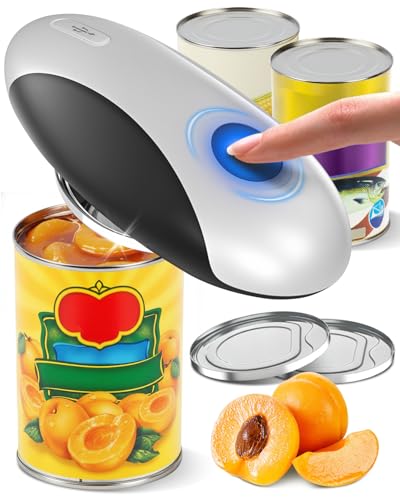
The Zoomsnail rechargeable opener is aimed at users who want a hands-free, one-touch experience. Its compact design is made to travel around the can and create a smooth edge. The magnetic lid feature can help lift the cut lid instead of forcing the user to pry it up with a finger. This makes the design especially interesting for seniors with arthritis or reduced finger strength.
Rechargeable operation removes the need for a permanent counter outlet. The user can charge the unit, place it on a suitable can, and start the cycle with one touch. I like this approach for a small kitchen, assisted living room, or office where counter space is limited. The user should charge it before a busy cooking session and follow the care directions for the cutting area.
Pros:
- One-touch design reduces hand movement
- Rechargeable format avoids disposable batteries
- Magnetic lid feature can make lid removal easier
- Compact size stores well in a drawer
- Smooth-edge cutting may reduce exposed sharp metal
- Strong fit for users with arthritis or weak fingers
Cons:
- Needs regular charging
- Small rechargeable units may take longer on large cans
- Electronic parts should not be immersed in water
The Zoomsnail stands out when finger strength is the main concern. The user does not need to clamp down hard, turn a knob, or hold the can in the air. Its small body may also feel less intimidating than a large countertop appliance. I would still supervise a first use for an older adult, since every automatic opener has a short learning curve.
This model can be a convenient choice for seniors who cook alone but want an easy tool nearby. It is also useful for caregivers who want to reduce the number of steps in meal preparation. Charging is the main habit to remember. If the user often forgets to charge devices, a countertop electric model may be more dependable. For arthritis-friendly use, however, this may be the best can opener for seniors among the compact options.
How I Chose the Best Can Opener for Seniors
A good can opener for an older adult must do more than cut metal. It should match the user’s hand strength, vision, balance, kitchen layout, and daily habits. I looked at the motions each tool requires. I also considered lid safety, grip comfort, cleaning, storage, power needs, and the types of cans found in a normal pantry.
There is no single tool that fits every senior. One person may want a manual opener because it never needs charging. Another may need a one-touch electric unit because a turning knob causes pain. The best can opener for seniors is the one that removes the hardest step without creating a new problem.
Hand Strength and Arthritis
Hand strength often changes with age. Arthritis can make pinching and twisting painful. Manual openers may work well for users with good control, but electric models usually require less effort. A wide, soft handle helps, yet it cannot fully replace motor power.
When shopping, I suggest asking one simple question: “Which motion feels hardest?” If the answer is twisting, choose an electric or rechargeable model. If the answer is gripping, choose wide soft handles. If both motions hurt, a one-touch design is usually the safer starting point.
Safe Edge Design
Traditional openers can leave a sharp lid and a rough can rim. Smooth-edge models aim to cut around the side of the lid rather than through the top in the same way. This may lower the chance of a sharp exposed edge, but it does not make the metal harmless.
The FDA advises consumers to handle food containers safely and inspect cans for damage before use. I recommend throwing away cans that bulge, leak, rust deeply, or have a severe dent near a seam. After opening, lift the lid with care and wash the opener as directed by the maker.
Electric Versus Manual Can Openers
Electric openers are often easier for seniors with arthritis. They remove most of the turning work and can keep the can on the counter. Their weak points include cords, counter space, motor noise, and the need for careful cleaning.
Manual openers are compact and work anywhere. They cost less in many cases and do not depend on a motor or charge. Their main drawback is hand effort. A manual tool may be the best can opener for seniors who travel, camp, or prefer simple equipment.
One-Touch and Rechargeable Models
One-touch openers use a simple start action. Some sit on top of the can, while others use a countertop lever. Rechargeable models add freedom from a wall outlet, but the battery needs attention.
For a senior who forgets charging steps, I prefer a plug-in countertop model. For a senior with a small kitchen, the rechargeable design may be easier to store. A caregiver should also check whether the buttons are easy to see and press.
Cleaning and Food Safety
Can opener blades touch food residue and metal dust. Clean the cutting area often, especially after opening sticky foods. Follow the maker’s instructions, since not every electric part can go under running water.
Dry the tool fully before storage. A clean, dry cutting wheel is less likely to develop buildup or odor. If the tool begins to drag, skip, or leave metal shavings, stop using it and inspect the wheel.
Can Size and Shape
Most household openers handle common soup, vegetable, fruit, and bean cans. Very small cans, tall cans, pull-tab cans, and unusual shapes can be different. An automatic opener may need a better alignment on a narrow can.
If the user opens many large cans, a sturdy countertop unit may be more useful. If the user mainly opens small cans, a compact manual or rechargeable model can save space. Always read the current product details before buying because supported sizes may vary.
Controls and Visibility
Simple controls are important for seniors with poor vision or memory concerns. A large lever or clear button is easier than a tiny switch. High contrast between the control and the body can also help.
Place the opener in a bright, stable area. Good light helps the user see the can rim and check that the lid has separated. These small changes can make the kitchen feel less like an obstacle course.
Stability and Counter Placement
A stable base prevents the opener from sliding during use. This matters when a user has limited balance or cannot hold the can firmly. Nonslip feet and a flat counter can improve control.
Keep the tool near the food preparation area, but not beside the sink where it may get wet. Leave enough space for the user to approach the counter safely. A well-placed opener is easier to use than one hidden in a crowded cabinet.
Noise and User Comfort
Electric motors make some noise. Most people adjust quickly, but a loud motor may bother users with hearing sensitivity. A manual opener is quieter but needs more hand work.
If possible, run an electric model once before giving it to a senior. Explain where to place the can and how to stop the unit. A calm first lesson can build confidence.
What I Would Avoid
I would avoid tiny openers with narrow metal handles for seniors who report hand pain. I would also avoid any tool that slips, leaves jagged metal, or needs too much force. A low price does not help if the user cannot operate the opener safely.
I would also be careful with products that make broad safety claims without clear instructions. Smooth-edge cutting can help, but users still need to handle the lid with care. The best can opener for seniors should make the task easier, not encourage careless handling.
Best Uses for Each Opener
| Best for | Why |
|---|---|
| Severe hand pain or weak grip | The Zoomsnail rechargeable opener limits twisting and gripping. |
| Daily countertop cooking | The Cuisinart and Hamilton Beach models provide simple electric use. |
| Portable, no-power use | The KitchenAid and Zulay manual openers work without charging or cords. |
My Recommendation
For most seniors with arthritis, I would start with the Hamilton Beach Smooth Touch or the Zoomsnail rechargeable model. Both reduce the need to twist a knob, which is often the hardest part of opening a can. The Hamilton Beach is better for a fixed counter, while the Zoomsnail is better for portability and compact storage.
The Cuisinart is my pick for a senior who wants a simple countertop appliance and does not mind using an outlet. It has a steady base and a clear one-touch style. The KitchenAid and Zulay are better for users with moderate hand strength who want a manual tool that works during a power outage. In short, the best can opener for seniors depends on the user’s hands, space, and routine.
FAQs Of best can opener for seniors
What is the best can opener for seniors with arthritis?
A one-touch electric or rechargeable model is often the easiest choice. The Hamilton Beach Smooth Touch and Zoomsnail reduce twisting and gripping. A senior with mild arthritis may still prefer a soft-handle manual opener.
Are electric can openers safer for older adults?
They can be easier because they reduce hand strain and keep the can on the counter. Smooth-edge designs may also reduce sharp exposed edges. However, users should still handle the lid carefully and follow the product instructions.
Is a manual can opener better than an electric model?
It depends on the user. Manual openers are portable, quiet, and ready without power. Electric openers are usually better for seniors who have weak hands, wrist pain, or arthritis.
What should I look for in a can opener for seniors?
Look for a wide grip, simple controls, a stable base, smooth operation, and clear instructions. Also consider whether the user needs a cord-free tool. The best can opener for seniors should match the person’s strength and daily routine.
How do I clean an electric can opener?
Unplug it first. Wipe the body with a damp cloth and clean the cutting area as the maker directs. Do not immerse an electric base unless the instructions clearly say it is safe.
Final Verdict: Which Should You Buy?
For most older adults, I recommend the Hamilton Beach Smooth Touch for easy countertop use. Choose the Zoomsnail for compact, rechargeable operation, or the Cuisinart for steady one-touch opening. Manual users can choose KitchenAid or Zulay.
The best can opener for seniors should feel safe, calm, and easy from the first use. Match the tool to hand strength, space, and routine, then check the current Amazon listing for price and availability.