
The best way to know if olive oil is pure is to check its label, freshness, flavor, and independent quality testing.
Learning how to know if olive oil is pure can save you money and help you enjoy better flavor. Many bottles use attractive words, but packaging alone cannot prove quality. In this guide, you will learn reliable checks, common myths, storage tips, and simple buying habits based on olive oil standards and real kitchen use.
What Does “Pure Olive Oil” Mean?
The phrase “pure olive oil” can be confusing. It does not always mean the oil is the highest grade or completely untouched.
Olive oil is usually grouped into several grades:
• Extra virgin olive oil: Made from olives by mechanical methods, without chemical refining. It must meet strict chemical and taste standards.
• Virgin olive oil: Also made without refining, but it may have more flavor defects or higher acidity than extra virgin olive oil.
• Olive oil: Often a blend of refined olive oil and virgin olive oil. It has a mild taste and fewer natural compounds.
• Olive pomace oil: Made from olive pulp left after the first pressing. It is treated and refined before sale.
In everyday shopping, people often use “pure olive oil” to mean real olive oil rather than a blend with cheaper vegetable oils. However, the word “pure” on a label is not enough to prove that the bottle is authentic.
The most useful question is not only “Is this pure?” but also “What grade is it, how fresh is it, and has it been tested?”

How to Know If Olive Oil Is Pure by Checking the Label
The label gives you the first clues. It cannot replace laboratory testing, but it can help you avoid many poor choices.
1. Look for the correct olive oil grade
If you want the least processed option, look for “extra virgin olive oil.” This grade must pass chemical tests and sensory checks. It should have a fresh smell and taste without strong defects.
A bottle labeled only “olive oil” may still be genuine. It is usually more refined and has a lighter flavor. That does not make it fake, but it is different from extra virgin olive oil.
2. Find the harvest date
A harvest date is more helpful than a simple “best by” date. Olive oil is a fresh food, not a wine that improves with age.
Choose a bottle with a recent harvest date when possible. Most oils taste best within about 18 to 24 months after harvest, although storage conditions matter greatly.
3. Check the country of origin
A clear origin statement is a good sign. Look for wording such as:
• “Produced and bottled in Italy”
• “Harvested and produced in Spain”
• “Product of Greece”
Be careful with vague wording such as “packed in” or “bottled in.” This may mean the oil was made somewhere else and only packaged in that country.
4. Look for quality seals
Independent seals can add confidence. Examples include certification from recognized olive oil councils, regional quality programs, or organic certification bodies.
A seal is not a perfect guarantee. Still, a genuine certification program usually requires traceability, testing, and production rules. Check that the seal belongs to a real organization and is not just a decorative logo.
5. Review the packaging
Good olive oil is usually sold in packaging that protects it from light. Common choices include:
• Dark green or brown glass
• A metal tin
• A sturdy, opaque container
Clear glass is not proof of bad oil, but it gives light more access. Bright store lights can slowly damage olive oil over time.
Use Your Senses to Check Olive Oil Quality
Your nose and taste buds can reveal a great deal. Professional olive oil tasters use small blue cups, but you can perform a simple home check with a clean glass.
Smell the oil
Pour a small amount into a glass. Warm it gently with your hand and swirl it. Then smell it.
Fresh extra virgin olive oil may smell like:
• Fresh grass
• Green leaves
• Herbs
• Apple
• Tomato
• Artichoke
• Green or ripe fruit
These aromas can vary by olive type, region, and harvest time. A strong smell is not always better, but fresh olive oil should smell alive rather than flat.
Taste the oil
Take a small sip and let it move across your tongue. Good extra virgin olive oil may taste fruity, bitter, or slightly spicy.
Bitterness is often a positive sign. It can come from natural phenolic compounds in fresh olives. A peppery feeling in the throat may also show that the oil contains these compounds.
The flavor should not be harsh in a spoiled way. It should feel balanced and clean.
Watch for bad flavors
Avoid oil that tastes or smells like:
• Crayons
• Wet cardboard
• Old nuts
• Vinegar
• Nail polish remover
• Musty cloth
• Rotten fruit
These odors may point to rancidity, poor storage, or production defects. A bad taste does not always mean the oil contains another vegetable oil, but it does mean the oil may no longer be fresh.
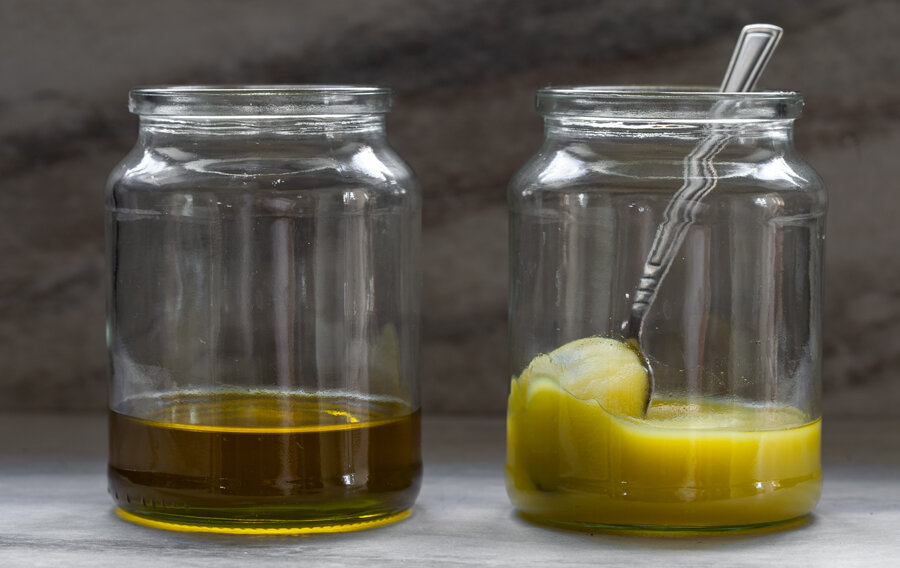
A useful kitchen lesson is this: people often judge olive oil by color first. That is a mistake. Color can range from golden yellow to deep green, and professional tasters often use colored cups so they do not judge the oil by appearance.

Home Tests That Do Not Reliably Prove Purity
The internet offers many simple olive oil tests. Some are fun, but most cannot prove whether olive oil is pure.
The refrigerator test
This test suggests that pure olive oil will become cloudy or solid in a refrigerator. The idea sounds logical because olive oil contains fats that can harden when cold.
In practice, olive oil has different fatty acids and natural compounds. Some oils become cloudy quickly, while others remain liquid for longer. Blended oils can also react in many ways.
The refrigerator test cannot confirm purity, grade, or freshness.
The flame test
Another popular idea is to place olive oil near a flame. Some people claim pure oil burns while fake oil does not.
This is not a safe or scientific home test. Water content, wick design, temperature, and the type of lamp can affect the result. Never heat oil in an unsafe container or use an open flame to test food.
The paper test
Some tests ask you to place a drop of oil on paper and wait for a ring. This cannot identify the oil’s source or prove that it contains no other oils.
Paper absorbs different oils at different speeds. Temperature, paper type, and oil thickness can change the result.
The color test
Green oil is not automatically better, and yellow oil is not automatically fake. Color depends on olive variety, ripeness, filtration, and production methods.
If you want to know how to know if olive oil is pure, remember this rule: home tests may offer clues, but only proper chemical and sensory testing can verify authenticity with confidence.
Laboratory Tests That Confirm Olive Oil Authenticity
Laboratory analysis is the strongest way to detect adulteration. Testing can identify whether olive oil meets the standards for its stated grade.
Common tests include:
• Free fatty acidity testing: This helps assess the condition of the oil and whether it meets grade requirements.
• Peroxide value testing: This measures early oxidation.
• Ultraviolet absorption testing: This can reveal oxidation or refining patterns.
• Fatty acid analysis: This helps identify unusual oil profiles.
• Sterol and wax analysis: These tests can help detect mixing with other oils.
• Sensory evaluation: Trained tasters check flavor defects and positive fruit qualities.
Modern laboratories may also use advanced methods such as gas chromatography, liquid chromatography, or isotope testing. These methods are more useful than kitchen tricks when fraud is suspected.
No single test catches every type of adulteration. Reliable programs often use several tests together, along with supply records and sensory review.
For shoppers, this means a reputable certification, traceable producer, and clear label are practical substitutes for ordering your own laboratory report.

How to Spot Rancid or Old Olive Oil
Pure olive oil can still become poor quality if it is old or badly stored. Purity and freshness are not the same thing.
Rancid oil has been damaged by oxygen, heat, light, or time. It may smell flat, waxy, stale, or like old nuts. The taste may remind you of crayons or cardboard.
Use this simple check:
-
Pour a teaspoon into a small glass.
-
Smell it before tasting.
-
Taste a tiny amount.
-
Compare the flavor with fresh herbs, fruit, or peppery notes.
-
Discard it if it has a strong stale or chemical odor.
Rancid oil is not usually an emergency after one small taste, but it is unpleasant and has lost much of its quality. Do not use a bad-smelling oil for dipping or finishing food.
You can reduce oxidation by storing olive oil in a cool, dark cabinet away from the stove. Close the cap after every use. A large bottle may seem cheaper, but a small bottle is better if you use oil slowly.

Common Signs That Olive Oil May Be Adulterated
Adulterated oil has been mixed with another oil or falsely labeled. You cannot prove adulteration from one sign alone, but several warning signs deserve attention.
Watch for:
• A price that seems far below similar extra virgin oils
• No harvest date or clear origin
• A vague label with little producer information
• A bottle that has been sitting in bright light
• A seal or certification mark that cannot be verified
• A flavor that is completely flat when the bottle claims to be fresh extra virgin olive oil
• Packaging that makes broad health claims but gives no traceability details
Price alone does not prove that oil is fake. Large producers may have lower costs, while small producers may charge more because of harvest methods and certification. Still, an extremely low price should encourage closer label reading.
A practical way to know if olive oil is pure is to buy from a producer that explains its harvest, origin, grade, and testing process. Transparency is one of the strongest trust signals in the food business.

How to Buy Pure, Fresh Olive Oil
Use this shopping checklist when you stand in front of a shelf.
-
Choose extra virgin olive oil if you want a fresh, flavorful oil with minimal processing.
-
Look for a recent harvest date.
-
Select a dark bottle, tin, or other light-resistant package.
-
Read the origin statement carefully.
-
Look for recognized quality or regional certification.
-
Buy a size you can finish within a few months.
-
Avoid bottles with leaks, damaged seals, or dusty caps.
-
Compare the label with the producer’s official information when possible.
-
Taste the oil after opening it.
-
Store it properly from the first day.
If you cook often, you may keep one mild olive oil for frying and one flavorful extra virgin olive oil for salads, bread, vegetables, and finishing. This approach gives you better control over both flavor and cost.
When I evaluate a new bottle, I do not rely on one clue. I check the date, smell the oil, taste it, and note how it performs in food. That simple habit has taught me that freshness often matters more than an impressive-looking package.

Pure Olive Oil Versus Extra Virgin Olive Oil
These terms are related, but they are not interchangeable.
Extra virgin olive oil is the highest standard among common olive oil grades. It must meet limits for chemical quality and sensory defects. It also has natural olive flavor.
“Pure olive oil” is often a commercial term for refined olive oil mixed with virgin olive oil. It may be genuine and safe, but it usually has a lighter taste and fewer natural compounds than extra virgin olive oil.
Refined olive oil can work well for cooking when you want a neutral flavor. Extra virgin olive oil is often preferred for dressings, dipping, roasting, and finishing because it adds aroma and character.
The best choice depends on your purpose. Knowing the grade helps you avoid paying extra for a product that does not match your needs.
:max_bytes(150000):strip_icc()/Avocado-Vs-Olive-Oil-a06a7271869e4cd5b6bfbcdc8141ce17.jpg)
Why Olive Oil Purity Matters
Pure, well-made olive oil offers more than a pleasant taste. It can help you prepare food with a simple ingredient that fits many eating patterns.
Fresh extra virgin olive oil contains monounsaturated fat and naturally occurring compounds. However, health claims should remain measured. Olive oil is not a cure, and its benefits depend on your overall diet.
Purity also matters for flavor. A fresh oil can make tomatoes, beans, greens, fish, and warm bread taste richer without adding complex sauces.
There is also a value issue. If a bottle is sold as extra virgin olive oil but contains cheaper oils, you are not receiving what the label promises. Clear labeling and independent checks protect both your budget and your trust.
Mistakes to Avoid When Checking Olive Oil
Many shoppers make the same errors. Avoiding them makes the process easier.
• Do not judge oil only by color.
• Do not treat the refrigerator test as scientific proof.
• Do not assume an Italian-looking label means the olives were grown in Italy.
• Do not keep olive oil beside a hot stove.
• Do not buy the biggest bottle unless you use it quickly.
• Do not ignore a stale smell because the date looks acceptable.
• Do not assume “natural,” “premium,” or “traditional” proves quality.
• Do not confuse a high price with purity.
• Do not expect one home test to detect every form of adulteration.
The clearest answer to how to know if olive oil is pure is to combine several reasonable checks. Think of each clue as one piece of a puzzle. The complete picture comes from the label, producer, freshness, sensory quality, and certification.
Frequently Asked Questions About How to Know If Olive Oil Is Pure
Can you tell if olive oil is pure by its color?
No. Olive oil can be green, gold, or yellow depending on the olive variety and harvest stage. Color does not prove purity, freshness, or quality.
Does pure olive oil solidify in the refrigerator?
It may become cloudy or partly solid, but this is not a reliable purity test. Different olive oils react differently to cold, and some blended oils may behave in a similar way.
What should pure olive oil smell like?
Fresh olive oil may smell fruity, grassy, herbal, or slightly peppery. A smell like crayons, old nuts, cardboard, or damp cloth may suggest rancidity or a production defect.
Is extra virgin olive oil always pure?
Extra virgin olive oil must meet strict chemical and sensory standards, but labels can still be misused. Buying traceable oil from a reputable producer or certified program gives you stronger confidence.
Can a laboratory prove whether olive oil is pure?
Laboratories can test chemical markers, fatty acids, oxidation, and other traits linked to authenticity. Several tests used together are more reliable than a single home test.
How long does pure olive oil stay fresh?
Many olive oils taste best within 18 to 24 months after harvest when stored well. Heat, air, light, and repeated opening can shorten that period.
Should pure olive oil taste bitter?
A mild bitter or peppery taste can be a positive sign in fresh extra virgin olive oil. The flavor should still be balanced and free from stale, musty, or chemical notes.
Conclusion
Knowing how to know if olive oil is pure does not require complicated kitchen tricks. Start with the grade, harvest date, origin, packaging, and certification. Then smell and taste the oil, while remembering that only laboratory testing can confirm authenticity with high confidence.
Avoid relying on color, the refrigerator test, or price alone. Store your oil in a cool, dark place and buy a size you can use while it is still fresh. Try these checks with your next bottle, compare the flavor, and share your experience in the comments.