
The best cheese grater for Parmesan delivers fine, fluffy shreds with less effort, mess, and risk to your fingers.
Have you ever held a hard wedge of Parmesan over a plate, only to get uneven bits and tired hands? I have, and the wrong grater can turn a quick pasta dinner into a slow chore. A good Parmesan grater should feel safe, stay steady, and make light, airy shreds without clogging. I tested the key features that matter most, including blade sharpness, grip, cleaning, speed, and storage. These picks cover rotary, handheld, and classic grater styles for different kitchens and budgets.
OXO Good Grips Rotary Cheese Grater

The OXO Good Grips Rotary Cheese Grater is a strong choice for cooks who want speed and control. Its hand crank turns the drum while a broad chamber holds the cheese in place. The design helps keep fingers away from the cutting surface, which is useful when children help in the kitchen. It works especially well with firm Parmesan, Romano, and other hard cheeses.
I like the way this rotary grater creates a steady stream of shreds over a bowl or plate. The soft-touch handle and stable body make repeated cranking more comfortable than using a small handheld tool. It also suits busy cooks who grate cheese often for pasta, salads, soup, or pizza. As with most rotary graters, you should cut a large cheese wedge into pieces that fit the hopper.
Pros:
- Comfortable hand crank for repeated use
- Enclosed design helps protect fingers
- Stable grip during grating
- Fast results for hard Parmesan
- Easy way to grate over a serving bowl
- Good fit for family kitchens
Cons:
- Needs more parts washing than a flat grater
- Large cheese pieces may need cutting first
- Requires two-hand use for the best control
Zyliss Classic Rotary Grater

The Zyliss Classic Rotary Grater is made for cooks who value a familiar, low-effort design. Its hand crank drives a rotary drum, so you can grate hard cheese without dragging your knuckles across a sharp surface. The food chamber keeps the cheese near the drum for steady contact. Its restaurant-style design also makes it a practical choice for frequent home use.
In use, the Zyliss feels direct and easy to understand. It is a helpful tool when you need a pile of Parmesan for several plates of pasta or a large family meal. The rotary action can produce fine pieces with less wrist strain than a box grater. I would still wipe or rinse it soon after use, because dried cheese can cling to the drum and make cleaning harder.
Pros:
- Protective rotary design keeps fingers away from the drum
- Good for large batches of Parmesan
- Simple hand-crank operation
- Useful for cheese, chocolate, and some firm foods
- Restaurant-style construction
- Less wrist scraping than a flat grater
Cons:
- Takes up more storage space than a handheld model
- Cheese can stick if it dries on the drum
- May not suit cooks who prefer one-handed grating
Deiss PRO Heavy-Duty Parmesan Grater
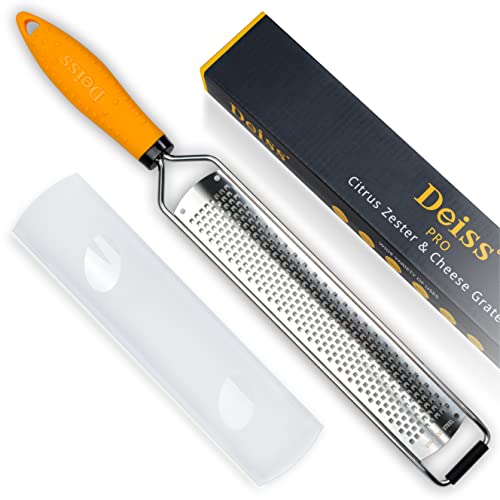
The Deiss PRO is a long handheld grater built for more than Parmesan. Its etched stainless steel surface can handle hard cheese, garlic, ginger, nutmeg, chocolate, and citrus zest. The broad face gives you a generous working area, while the handle helps keep the tool steady. This style is a good fit for cooks who want one slim tool instead of a bulky box grater.
For Parmesan, the sharp surface makes fine shreds with a light push. I find this type of grater useful when I want to work directly over a bowl or plate. It stores easily in a drawer and takes little room near the stove. The trade-off is that you must use careful hand placement, since the exposed surface requires more attention than a rotary model.
Pros:
- Versatile tool for cheese and many other foods
- Wide grating face speeds up small tasks
- Compact shape fits most drawers
- Strong stainless steel surface
- Useful for fine Parmesan and citrus zest
- Easy to hold over a bowl
Cons:
- Exposed blade needs careful handling
- Can require more hand pressure on very hard cheese
- Loose shreds may fall beside a narrow bowl
Cambom Rotary Cheese Grater

The Cambom Rotary Cheese Grater gives you a hand-crank option for Parmesan, vegetables, and other firm foods. Its enclosed drum design makes it easier to keep fingers away from the cutting surface. The crank lets you grate with a smooth turning motion rather than a repeated back-and-forth stroke. It is a useful choice for home cooks who want speed without using an electric appliance.
I see the most value here for family meals and meal prep. A rotary grater can make a larger amount of cheese feel less tiring, especially when you need toppings for several bowls. The black body also looks neat on a counter when you use it often. Clean the food-contact parts after each use, and check for trapped cheese around the drum before storing it.
Pros:
- Enclosed drum offers better finger protection
- Hand crank reduces repetitive scraping
- Good for batch grating
- Works over a bowl or plate
- Useful for cheese and firm vegetables
- Simple option for family cooking
Cons:
- Needs counter or cabinet space
- Small food pieces may remain near the end
- Several components need cleaning after use
Cambom Three-Piece Zester Grater Set

The Cambom Three-Piece Set gives you more than one grating surface for a modest kitchen footprint. It is designed for Parmesan, garlic, ginger, nutmeg, chocolate, fruits, and vegetables. The different pieces let you choose a fine or more general texture based on the food. This makes the set appealing to cooks who want one compact group of tools for many recipes.
I like a multi-piece set when a recipe calls for small details, such as fresh garlic in sauce or lemon zest over pasta. The stainless steel surfaces are useful for quick jobs, while the slim form makes storage simple. For Parmesan, choose the surface that gives the texture you want, from fine dust to larger shreds. Since there are several pieces, rinsing them soon after use helps prevent food from drying in the holes.
Pros:
- Includes several useful grating options
- Handles Parmesan, zest, garlic, and ginger
- Compact storage for a multi-tool set
- Helpful for cooks who like fresh ingredients
- Offers texture control for different recipes
- Stainless steel surfaces are easy to wipe
Cons:
- More pieces can mean more washing
- Exposed surfaces need careful storage
- May feel less fast than a rotary grater for large batches
UHIYEE Handheld Parmesan Grater

The UHIYEE handheld Parmesan grater uses two rotary drums in a compact design. That setup gives you a different approach from a full-size rotary grater with a large base. It can suit cooks who want a tool that fits easily in a drawer and comes out for quick meals. The enclosed drum concept also helps reduce direct contact between fingers and sharp grating holes.
This style is most useful when you need a small amount of Parmesan for one or two servings. I would choose it for a compact apartment kitchen, an RV, or a cook who dislikes large countertop tools. The hand motion may feel natural after a few uses, though very hard cheese can still take patience. As with any rotary tool, cut the cheese to a size that fits well and clean the drums soon after use.
Pros:
- Compact handheld size
- Two rotary drums offer useful flexibility
- Enclosed design adds a layer of finger protection
- Easy to store in a small drawer
- Good for quick Parmesan portions
- Useful choice for small kitchens
Cons:
- Not as suitable for very large batches
- Small openings may limit cheese size
- Cleaning the drums may take extra attention
OXO Good Grips Etched Medium Grater

The OXO Good Grips Etched Medium Grater is a classic handheld tool for everyday cooking. Its medium size gives you a useful balance between control and working space. The etched surface can grate Parmesan while also handling foods such as carrots, zucchini, ginger, or citrus. The comfortable handle helps you keep a firm grip as you work over a bowl.
This grater makes sense for cooks who want a simple tool with no moving parts. It is quick to pick up, quick to rinse, and easy to store. I find a medium grater especially useful for finishing pasta because it gives good control over the amount of cheese. The open face does require care, so keep fingertips behind the handle and slow down near the end of a cheese piece.
Pros:
- Simple design with no moving parts
- Comfortable grip for daily cooking
- Medium size works over many bowls
- Versatile for cheese, vegetables, and zest
- Easy to store in a drawer
- Quick to rinse after use
Cons:
- Exposed surface needs careful handling
- May require more strokes than a rotary model
- Can collect fine cheese between etched holes
Geedel Rotary Cheese Grater

The Geedel Rotary Cheese Grater is built for cooks who want a hand-crank tool for cheese and vegetables. Its rotary drum turns as you operate the handle, helping create a steady flow of shreds. The enclosed structure offers a safer feel than rubbing cheese across an open blade. It can also help keep the work area more organized by directing grated food toward the bowl.
I would consider this model for meal prep, family dinners, and anyone who finds flat graters hard on the wrist. Rotary action gives you a smooth rhythm, much like turning a small mill. It can make Parmesan for pasta, pizza, soup, or salad without needing an electric cord. Allow the parts to dry fully after washing, and store the grater where the drum will not collect dust.
Pros:
- Steady rotary action for repeated grating
- Useful for Parmesan and firm vegetables
- Enclosed drum improves hand safety
- Good for serving bowls and meal prep
- Hand crank needs no batteries or outlet
- Helpful for cooks with wrist fatigue
Cons:
- Bulkier than a handheld grater
- Requires cleaning around the drum
- Large cheese wedges may need smaller cuts
My Recommendation
After comparing these tools, I would start with the OXO Good Grips Rotary Cheese Grater for most homes. It offers a strong mix of comfort, control, speed, and finger protection. That balance makes it my leading choice for the best cheese grater for Parmesan when several people may want cheese at one meal. It also feels less tiring than a flat grater during repeated use.
The Zyliss Classic Rotary Grater is another strong pick for large batches and frequent cooking. Choose the Deiss PRO or OXO Etched Medium Grater if you prefer a slim handheld tool with no moving parts. The Cambom set suits cooks who want several textures, while the UHIYEE model fits small kitchens and quick portions. The Cambom and Geedel rotary models offer useful value when batch grating matters most.
For a clear buying choice, think about how you cook. A rotary grater is like a small food mill: it saves effort and keeps fingers farther from the cutting surface. A handheld grater is like a sharp kitchen pencil: it gives direct control but asks for more care. The best cheese grater for Parmesan is the one that matches your serving size, storage space, hand comfort, and cleaning habits.
| Best for | Why |
|---|---|
| Large family meals | A rotary grater provides steady output with less repeated scraping. |
| Small kitchens | A handheld model stores easily and works well for one or two servings. |
| Multi-purpose cooking | A grater with several surfaces can handle Parmesan, zest, garlic, and ginger. |
How I Evaluated the Best Cheese Grater for Parmesan
Parmesan is not like soft cheddar or sliced sandwich cheese. It is dry, firm, and often aged, so a weak surface can skid instead of cutting. I looked at how each style handles this texture, how much force it needs, and how easy it is to control. I also considered the shape of the shreds because fine, loose Parmesan melts and spreads well over warm food.
Safety was another key point. Open graters give excellent control, but the user must keep fingertips behind the handle. Rotary models place the drum inside a chamber and use a crank, which can feel more comfortable for repeated work. No grater removes all risk, so I recommend slowing down near the last small piece of cheese.
Cleaning also affects real-world value. Fine cheese can dry inside etched holes, around a drum, or near a food chamber. Rinsing the tool soon after use often prevents a small task from becoming a scrubbing job. Always follow the care directions supplied with the product, and make sure the tool dries before storage.
What Makes a Good Parmesan Grater?
The first feature to check is the grating surface. Sharp holes cut hard cheese cleanly and create less powdery waste. For pasta and salads, many cooks prefer fine to medium shreds because they spread across the dish. A zest-style surface can also work well, but its holes may produce a finer texture than a traditional shredder.
Grip matters just as much as sharpness. A handle that slips can make a sharp tool feel unsafe. Look for a shape that stays stable when your hand is wet or when you press against a hard cheese wedge. Rotary models should also sit firmly on the bowl or counter while you turn the crank.
Think about your portion size before you buy. A handheld grater is fast for a small topping, while a rotary grater can feel better when you need a cup or more. A multi-surface set gives more choices but may create more parts to wash. The best cheese grater for Parmesan should save time, not add a new kitchen chore.
Rotary vs. Handheld Parmesan Graters
A rotary grater uses a drum and crank. You place cheese into a chamber, hold it in place, and turn the handle. This design can produce steady shreds and keeps the cutting drum enclosed. It is often a smart choice for families, meal prep, and anyone who feels hand fatigue from a flat grater.
A handheld grater uses direct pressure. You move the cheese over an exposed surface or move the tool over the cheese. It is usually smaller, lighter, and easier to store. It also gives you close control over the amount and texture, but you need to watch your fingers and keep the grater stable.
Neither style wins for every cook. I prefer rotary models for speed and repeated work, while handheld models suit quick finishing touches. If you make Parmesan pasta once a week, either style can work well. If you grate cheese several times a day, comfort and cleaning deserve extra weight.
How to Grate Parmesan Without Waste
Start with a cold, firm wedge. A chilled piece is easier to hold and less likely to smear across a handheld surface. Use short, even movements instead of forcing the cheese. If the tool begins to clog, stop and clear it rather than adding more pressure.
For a rotary grater, cut the wedge into pieces that fit the chamber. Keep the cheese pressed toward the drum as you turn the crank. For a handheld model, hold the handle in one hand and the cheese in the other, then keep your fingers behind the cheese edge. Stop before your fingertips reach the grating surface.
Grate only what you need when possible. Freshly grated Parmesan has a better aroma and a softer feel than many pre-grated products. If you save extra, place it in a clean, covered container and refrigerate it. Use a clean tool and clean hands to protect the cheese quality.
How to Clean and Store a Cheese Grater
Cleaning is easiest when you act soon. Rinse away loose cheese before it dries. A soft brush can help remove small pieces from holes, but keep your fingers away from sharp surfaces. Do not assume every model is dishwasher safe; check the product care instructions first.
Rotary graters need special attention around the drum, chamber, and crank. Take apart only the pieces the maker says you can remove. Wash each food-contact part, rinse away soap, and let everything dry fully. Moisture left inside a closed tool can create an unwanted smell.
Store handheld graters with the sharp face protected or placed where it cannot catch a hand. Keep rotary models away from loose utensils that may press against the drum. Good storage protects the grater and makes the next cooking task easier. A well-cared-for tool can remain useful for years.
Common Parmesan Grating Mistakes
One common mistake is using a cheese wedge that is too large. It can slide, jam, or put extra force on the grater. Cut it into a comfortable size first. Another mistake is pushing too hard; sharp holes should do the work.
Some cooks also use the wrong side of a multi-sided grater. A coarse side creates larger shreds, while a fine side creates delicate pieces. Neither is wrong, but the texture changes how the cheese melts and spreads. Test a small amount before grating the whole wedge.
Finally, many people wait too long to clean the tool. Dried Parmesan is much harder to remove than fresh shreds. A quick rinse can protect the surface and save time. These simple habits help you get better results from any of the picks above.
FAQs Of best cheese grater for parmesan
What type of grater is best for Parmesan?
A rotary grater is excellent for speed, comfort, and finger protection during larger jobs. A handheld etched grater is better for small portions and easy storage. The best cheese grater for Parmesan depends on how much you grate and how much control you want.
Can I use a lemon zester to grate Parmesan?
Yes. A sturdy lemon zester can grate Parmesan into fine pieces, along with garlic, ginger, nutmeg, and chocolate. It may create a finer texture than a coarse cheese grater, so choose it when you want light shreds that spread across food.
Is a rotary cheese grater safer than a handheld grater?
A rotary model can feel safer because the drum sits inside a chamber. Still, you should keep hands clear, use the food pusher correctly, and follow the care instructions. A handheld model is also safe when you keep fingers behind the handle and avoid the final small piece.
How do I stop Parmesan from sticking to the grater?
Use a firm, cool wedge and grate with smooth pressure. Remove cheese from the surface soon after use. If the holes clog, rinse the tool before the cheese dries, then clean it with a suitable brush or sponge.
Should I buy a box grater or a rotary grater for Parmesan?
Choose a rotary grater for repeated batches and lower wrist strain. Choose a box or handheld grater if you want a compact tool with several textures. For many homes, a rotary model offers the best mix of speed and comfort.
Final Verdict: Which Should You Buy?
The OXO Good Grips Rotary Cheese Grater is my top pick for the best cheese grater for Parmesan. It offers smooth cranking, good control, and a finger-friendly design for daily use.
Choose a handheld model for small kitchens and quick toppings. Choose rotary power for family meals. Either way, fresh Parmesan will make pasta night taste better.