
The best knife sharpener for backpacking is compact, tough, easy to use, and suited to your knife’s edge.
A dull knife can turn a simple camp task into a slow, risky chore. I have felt that drag while slicing cord, trimming food, or preparing kindling after several days on the trail. The right portable knife sharpener fixes the edge without adding much weight to your pack. In this guide, I compare compact sharpeners for hikers, hunters, anglers, and campers. I focus on size, grit, control, durability, and real trail use so you can choose with confidence.
Smith’s CCKS 2-Step Sharpener

The Smith’s CCKS is one of the simplest portable sharpeners I would pack for a short hike or fishing trip. It uses two preset slots, so you do not need to guess the sharpening angle. The coarse slot helps restore a tired edge, while the fine slot helps smooth and finish it. Its bright yellow body also makes it easy to find in a dark pack.
This sharpener works well for common straight-edge pocket knives, camp knives, and fillet knives. The small plastic body keeps weight low, and the keychain-style design gives it a handy place on a pack strap or gear loop. I like it for users who want a fast touch-up tool rather than a full sharpening system. Use light pressure and a few controlled passes to avoid removing more steel than needed.
Pros:
- Very light and easy to carry
- Two preset stages simplify sharpening
- Bright color improves visibility outdoors
- Useful for many straight-edge outdoor knives
- Keychain-style body saves pack space
- Simple design suits new knife owners
Cons:
- Preset slots offer less control than a sharpening stone
- Not ideal for serrated blades
- Plastic construction may not suit heavy daily use
My Recommendation
I recommend the Smith’s CCKS to backpackers who want the smallest learning curve. It is a smart pick for day hikes, emergency kits, and anglers who need a quick edge repair. It is not the most precise option, but its low weight and simple two-step design make it a practical best knife sharpener for backpacking when convenience matters most.
| Best for | Why |
|---|---|
| Short backpacking trips | Light body and fast two-step use |
| Beginners | Preset slots reduce angle mistakes |
| Fishing kits | Compact size works well with fillet knives |
Work Sharp Guided Field Sharpener

The Work Sharp Guided Field Sharpener gives backpackers more control than a basic pull-through tool. Its guided design helps maintain a steady angle as you sharpen. It combines abrasive surfaces for repair, refinement, and finishing, so it can handle more than a quick touch-up. The compact shape still fits well in a camp kitchen box or side pocket.
I find this model especially useful for people who carry a quality fixed-blade knife. Its diamond surfaces can restore a worn edge, while the ceramic section helps refine the bite. A built-in guide supports consistent technique, but you still need to use gentle strokes and keep the blade clean. This is a stronger long-trip choice than many tiny sharpeners.
Pros:
- Offers better angle control than basic slot sharpeners
- Supports repair and fine edge work
- Compact enough for backpacking
- Works well with outdoor fixed blades
- Provides a more complete field sharpening setup
- Useful for regular knife maintenance
Cons:
- Takes more practice than a two-slot sharpener
- Heavier and larger than a keychain tool
- Can remove too much metal if used with force
My Recommendation
This is my top choice for serious hikers, hunters, and anyone who carries one trusted knife for many days. It offers a useful balance of size, control, and sharpening range. If you want the best knife sharpener for backpacking and value edge control over the lowest possible weight, the Work Sharp Guided Field Sharpener is a strong all-around choice.
| Best for | Why |
|---|---|
| Long backpacking trips | Multiple stages support ongoing edge care |
| Fixed-blade knives | Guided angles improve control on larger blades |
| Experienced users | Offers more technique and grit options |
Work Sharp Portable Pocket Sharpener

The Work Sharp Portable Pocket Sharpener is made for people who want a small tool with more function than a simple ceramic rod. Its pocket format makes it easy to carry on a belt, in a pocket, or inside a small repair pouch. The design suits hunting and outdoor knives, where a quick field touch-up can make a big difference. It feels more purpose-built than a generic kitchen sharpener.
This sharpener is useful when your blade needs a quick return to working condition rather than a full factory reset. I would use it after cutting food, rope, or light camp material during a trip. Its portable build helps reduce clutter, but compact tools require careful movement and light pressure. With regular small touch-ups, you can avoid major edge damage.
Pros:
- Convenient pocket-sized design
- Well suited to hunting and outdoor knives
- Easy to store in a repair kit
- Good for quick field maintenance
- More versatile than a single abrasive rod
- Useful for hikers who value low bulk
Cons:
- Small size may feel awkward for large hands
- Not a complete replacement for a bench sharpener
- Needs controlled strokes for best results
My Recommendation
I suggest this model for backpackers who want a capable pocket tool without carrying a full guided system. It is a good match for hunting knives, camp blades, and everyday carry knives. As a best knife sharpener for backpacking, it stands out when pocket size and fast maintenance matter more than maximum sharpening precision.
| Best for | Why |
|---|---|
| Hunters | Designed with field and hunting knives in mind |
| Minimalist packs | Pocket shape takes up very little room |
| Quick touch-ups | Easy to use during a trip |
Work Sharp EDC Pivot Plus Sharpener
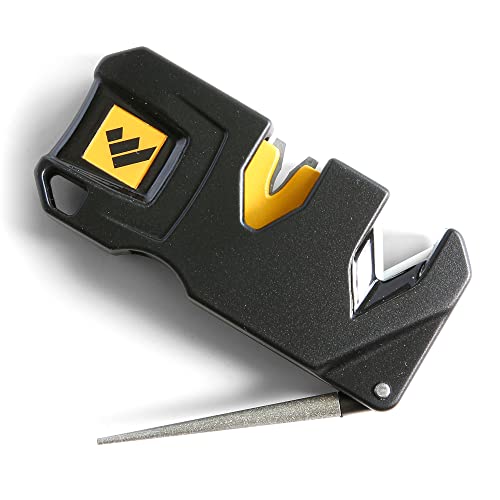
The Work Sharp EDC Pivot Plus is a compact option for hikers who carry a pocket knife every day. Its small body fits naturally in an EDC pouch or pants pocket. The pivoting design helps the abrasive follow the blade angle as you work. That feature can make sharpening feel less demanding for users who do not practice with a stone.
I like this sharpener for light edge care on folding knives and small outdoor blades. It is better suited to routine maintenance than severe damage or a badly rolled edge. The tool is easy to bring along, and its dark finish hides normal trail marks. Keep your strokes slow and use only enough pressure to maintain contact.
Pros:
- Very portable for everyday carry
- Pivoting action helps follow the blade angle
- Good for folding knives and small blades
- Simple design supports quick maintenance
- Fits easily into a pocket or small pouch
- Useful for hikers who carry an EDC knife
Cons:
- Less suitable for large fixed-blade knives
- Not the best choice for major edge repair
- Compact parts may require careful cleaning
My Recommendation
Choose this model if your backpacking knife is also your daily pocket knife. It gives you a convenient way to keep a light, sharp edge during travel without learning a full stone technique. For an EDC-focused best knife sharpener for backpacking, the Pivot Plus offers an appealing mix of size, speed, and ease.
| Best for | Why |
|---|---|
| EDC pocket knives | Small body matches everyday carry needs |
| New users | Pivoting action can simplify angle control |
| Short trips | Fast maintenance with little pack bulk |
Knafs Mini Pocket Knife Sharpener

The Knafs Mini Pocket Knife Sharpener uses a two-sided diamond surface with medium and fine grits. This simple format gives you direct contact with the edge and more freedom than preset slots. The small stone can fit into a pocket, wallet-style gear pouch, or repair kit. It is a practical choice for people who already know basic sharpening movements.
The medium side can help refresh a dull edge, while the fine side can smooth the finish. I would use short, even passes and keep the same angle from heel to tip. A diamond plate does not need oil, which makes it convenient in camp. Wipe away metal dust after use and keep the surface protected from grit in your pack.
Pros:
- Two grits support repair and finishing
- Small and easy to pack
- Direct contact gives good user control
- Diamond surface works without sharpening oil
- Useful for pocket and camp knives
- Good fit for experienced knife users
Cons:
- Requires practice to hold a steady angle
- No built-in handle or angle guide
- Small surface may feel slow on wide blades
My Recommendation
The Knafs Mini is best for backpackers who prefer a simple stone over a guided slot. It is light, clean to use, and flexible enough for many straight edges. If you have basic sharpening skill, this can be the best knife sharpener for backpacking when low weight and direct control are your main goals.
| Best for | Why |
|---|---|
| Experienced sharpeners | Allows direct angle control |
| Ultralight hikers | Small two-sided plate saves space |
| Dry camp use | Diamond abrasive needs no oil |
4-in-1 Knife Sharpener Kit
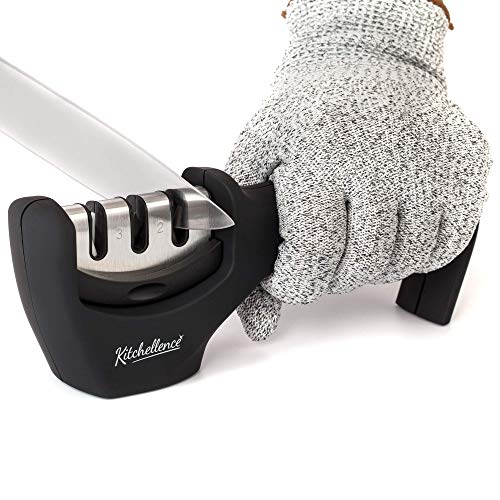
This 4-in-1 knife sharpener kit combines several sharpening functions in one compact package. It is designed to repair, restore, and polish a blade, and it includes a cut-resistant glove. That extra safety gear may appeal to new users who feel unsure around a sharp edge. The kit is more suited to a camp kitchen or base camp than an ultralight summit pack.
The staged design can help you move from a damaged edge toward a smoother finish. I would place it in a vehicle camping box, cabin, or large backpacking group kit. It may feel bulky beside a tiny diamond plate, but the added functions can serve more than one user. Always secure the sharpener and keep fingers behind the blade path.
Pros:
- Offers several sharpening stages
- Includes protective glove for safer handling
- Useful for camp kitchens and group trips
- Can repair and polish common knife edges
- Helpful for users learning sharpening basics
- Provides more accessories in one package
Cons:
- Larger than most pocket sharpeners
- Less suitable for ultralight backpacking
- Preset stages may not suit every blade angle
My Recommendation
I recommend this kit for car campers, base-camp users, and families who share several knives. The glove adds a useful safety layer, while the multiple stages provide a clear process. It is not my first pick for a strict weight-saving trip, but it can be the best knife sharpener for backpacking groups that value versatility and extra protection.
| Best for | Why |
|---|---|
| Base camp | Several functions support a larger camp kit |
| New users | Staged design and glove improve confidence |
| Shared gear | Works for common kitchen and camp knives |
Gerber Edgefield Dual-Grit Sharpener

The Gerber Edgefield is a portable dual-grit sharpener made for outdoor use. Its two abrasive levels let you work on a dull edge and then refine it. The burnt orange color gives it a strong outdoor look and helps prevent it from disappearing among dark gear. Its simple format makes sense for camping, hunting, and general trail maintenance.
Dual-grit tools offer a useful middle ground between a basic sharpener and a full sharpening kit. I would start with the coarser side only when the blade truly needs repair, then use the finer side for a cleaner finish. The tool is portable, but good results still depend on a steady angle. It suits straight blades more than serrated edges.
Pros:
- Dual grits handle repair and refinement
- Outdoor-focused portable design
- Bright color is easy to spot
- Useful for camping and hunting knives
- More flexible than a single-grit tool
- Simple format works well in field kits
Cons:
- Requires manual angle control
- May not work well on serrated blades
- Less complete than a multi-stage guided sharpener
My Recommendation
The Gerber Edgefield is a good option for outdoorsmen who want two useful grits in a compact package. It fits best in a standard backpack rather than a strict ultralight kit. For shoppers seeking a rugged-feeling best knife sharpener for backpacking, this model offers practical field function without a complex setup.
| Best for | Why |
|---|---|
| Camping | Dual grits cover common field needs |
| Hunting knives | Outdoor design suits larger working blades |
| Visible gear kits | Bright color is easy to locate |
OSFTBVT Folding Diamond Sharpener

The OSFTBVT folding sharpener uses a double-sided diamond surface with 400 and 600 grits. Its folding body helps protect the abrasive surface when the tool rides inside a pack. The orange handle also gives you a better grip than a bare pocket stone. It is a practical choice for hikers who want a traditional sharpening feel in a compact form.
The 400 side can help with a dull or slightly damaged edge, while the 600 side is better for refining the result. I like the folding design because loose grit and other gear are less likely to rub against the sharpening surface. As with any handheld stone, consistent angle control matters. Use water only if the product instructions allow it, and wipe the tool dry before storage.
Pros:
- Folding design protects the abrasive face
- Two grits cover repair and finishing
- Handle improves grip in outdoor conditions
- Compact enough for most backpacks
- Diamond surface works without oil
- Useful for straight-edge camp knives
Cons:
- Manual technique is required
- Small stone surface may take longer on broad blades
- Not designed as a serrated-edge sharpener
My Recommendation
This folding sharpener suits hikers who want a protected diamond stone at a low cost. It gives more control than many pull-through tools and packs neatly. I would choose it as a best knife sharpener for backpacking when you want two grits, a usable handle, and a compact design without carrying a large sharpening system.
| Best for | Why |
|---|---|
| General hiking | Folding body stores neatly in a pack |
| Budget shoppers | Offers two grits in a simple format |
| Stone users | Provides direct edge control |
Victorinox Dual-Knife Sharpener

The Victorinox Dual-Knife Sharpener is made for straight blades and carries the trusted name often linked with Swiss pocket knives. Its compact design makes it a natural fit for a hiking pack, travel kit, or camp kitchen pouch. The dual sharpening approach helps maintain an edge without a large stone. It is best viewed as a maintenance tool for regular touch-ups.
I would pair this sharpener with a Victorinox knife, small folding knife, or other straight-edge blade. It is easy to carry and does not demand much setup at camp. However, it is not intended to repair a heavily chipped edge or replace professional sharpening. Use light, steady passes and follow the blade care guidance from the knife maker.
Pros:
- Compact and travel friendly
- Designed for straight blades
- Simple dual-sharpening format
- Good match for Swiss Army-style knives
- Easy to keep in a camp kitchen kit
- Useful for routine edge upkeep
Cons:
- Limited for severe edge damage
- Not intended for serrated blades
- Offers less control than a flat diamond stone
My Recommendation
This Victorinox model is best for hikers who carry a small straight-edge folder and want basic maintenance. It is convenient, light, and easy to understand. If your trips involve simple food prep and light camp tasks, it can serve as a dependable best knife sharpener for backpacking without taking much space.
| Best for | Why |
|---|---|
| Swiss Army knives | Pairs naturally with small straight blades |
| Light camp work | Handles routine edge touch-ups |
| Travel kits | Compact body adds little bulk |
SHARPAL 101N 6-in-1 Sharpener
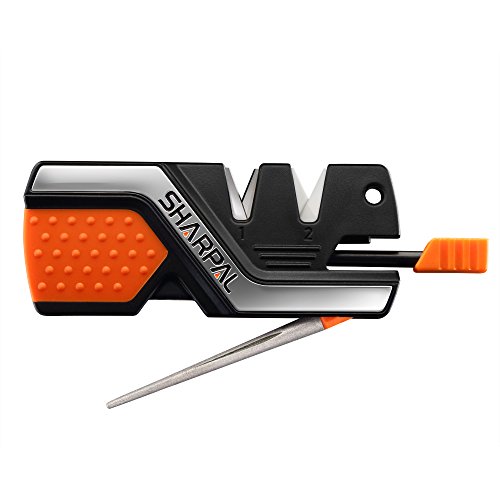
The SHARPAL 101N is more than a basic knife sharpener. It combines several functions in a pocket survival tool, including options for sharpening different edge types and helping with outdoor emergencies. Its compact body gives backpackers several useful features in one item. That makes it appealing for hikers who like multipurpose gear.
The sharpening functions can help maintain straight blades and provide support for some serrated edges, depending on the specific section used. It also includes extra survival-oriented features, which may be useful in a broader emergency kit. The trade-off is a busier design and a little more weight than a single-purpose stone. I recommend learning each function at home before relying on it in the field.
Pros:
- Combines six functions in one compact tool
- Useful for survival and emergency kits
- Supports more than one blade type
- Easy to attach to outdoor gear
- Reduces the need to carry separate tools
- Good value for multipurpose kit builders
Cons:
- More complex than a basic sharpener
- Extra functions add bulk and weight
- Small sections may require careful technique
My Recommendation
The SHARPAL 101N is best for survival-minded backpackers who want one tool for several jobs. It makes sense in emergency kits, hunting packs, and remote travel setups. For those users, it may be the best knife sharpener for backpacking because it combines edge care with other useful field functions in one compact body.
| Best for | Why |
|---|---|
| Survival kits | Combines sharpening with extra emergency tools |
| Remote trips | Reduces the number of separate items needed |
| Mixed blade kits | Supports more than one edge style |
How to Choose the Best Knife Sharpener for Backpacking
Choosing a trail sharpener starts with the knife you carry. A small folding knife needs less space and force than a thick fixed blade. A straight edge also needs a different approach from a serrated edge. Check your knife maker’s care instructions before using an unfamiliar abrasive.
Weight and pack size
Every ounce matters on a long trip, but a sharp knife can improve safety and save time. Small pull-through tools often weigh very little. Folding diamond plates and compact guided tools add some weight but may offer better control. For most hikers, a sharpener under a few ounces is easy to justify if the knife gets regular use.
Sharpening control
Preset slots are simple because they guide the blade at a fixed angle. They work well for beginners and quick touch-ups. A flat diamond stone gives more freedom but asks you to hold the correct angle. Guided field sharpeners sit between these two choices and often suit users who want control without a long learning curve.
Grit selection
Coarse abrasives remove metal faster and help repair dull or damaged edges. Fine abrasives refine the edge and can make the cut feel smoother. I do not use a coarse surface for every touch-up because unnecessary metal removal shortens the life of a blade. Start with the finest grit that solves the problem.
Blade type
Most compact sharpeners work best on plain, straight edges. Serrated blades need a narrow abrasive that can reach the individual teeth. Some multipurpose survival tools include a serration section, but you should practice before using one on an important knife. Do not assume that every pull-through sharpener suits every blade.
Grip and safety
A sharpener should stay stable while you work. Look for a body that offers a secure grip and keeps your fingers away from the blade path. Place the tool on a firm surface when possible. Move the knife away from your body, use light pressure, and wipe the blade clean before testing it.
How I Tested These Backpacking Knife Sharpeners
I compared these products by looking at the needs of real trail users. I considered pack size, ease of use, grit range, blade compatibility, grip, and likely durability. I also separated quick maintenance tools from products that can restore a more tired edge. This matters because the smallest sharpener is not always the most useful one.
I favor tools that encourage controlled sharpening rather than aggressive grinding. A good field sharpener should help you maintain an edge without turning camp into a long repair session. I also considered how easy each tool is to clean and store. Dirt, moisture, and loose metal dust can affect gear performance over time.
For safety, I follow common knife-care principles: secure the work, keep the edge pointed away, and avoid rushing. Manufacturer instructions remain the final guide because abrasive types and blade angles differ. I also recommend testing the knife on a small piece of paper or food rather than touching the edge with your finger.
Tips for Sharpening a Knife on the Trail
First, clean the blade. Food oils, sap, and dirt can make the process less smooth. Inspect the edge in good light and look for rolls, chips, or flat spots. A knife that only feels slightly dull may need a few fine passes, not a full coarse-stage repair.
Hold the same angle from the heel to the tip. Use slow strokes and keep the pressure light. Many beginners press too hard, but abrasive surfaces do the work. Stop often and check progress so you do not remove more steel than needed.
After sharpening, wipe away metal dust and test the blade with care. A sharp knife should cut cleanly rather than force its way through material. Store the sharpener where it will not rub against clothing, tent fabric, or sensitive gear. A small pouch or plastic sleeve can protect both the tool and your pack.
FAQs Of best knife sharpener for backpacking
What is the best knife sharpener for backpacking?
For most users, the Work Sharp Guided Field Sharpener offers the best balance of control, grit options, and portable size. The Smith’s CCKS is better for the lowest weight and simplest use. Your knife type and sharpening skill should guide the final choice.
Are pull-through sharpeners safe for backpacking knives?
They can work well when the preset angle matches the knife edge. Use light pressure and avoid repeated aggressive passes. A pull-through tool is less flexible than a diamond stone, but it is easy to use for quick maintenance.
Can I sharpen a serrated knife in the field?
Yes, but you need an abrasive designed for serrations. A flat stone or standard slot may not reach the grooves correctly. A multipurpose tool with a serrated section is a better choice, and practice at home first.
Should I pack a coarse or fine sharpener?
Pack a fine option for normal touch-ups. Add a coarse surface if your knife faces heavy work or may suffer edge damage. A dual-grit tool gives the most flexibility while keeping the size reasonable.
How often should I sharpen a backpacking knife?
Sharpen it when performance drops, not on a fixed schedule. Light touch-ups during a trip can prevent a small dull spot from becoming a larger problem. Stop once the knife cuts cleanly again.
Final Verdict: Which Should You Buy?
The Work Sharp Guided Field Sharpener is my top pick for the best knife sharpener for backpacking. It offers strong control, useful grit choices, and enough range for serious outdoor knives.
Choose the Smith’s CCKS for minimal weight or the SHARPAL 101N for multipurpose survival use. Match the sharpener to your blade, skill, and trip length.