
Finding the best knife sharpener for serrated knives means matching the tool to each blade’s teeth, size, and sharpening needs.
A serrated knife can still tear bread, crush tomatoes, or drag through meat even when its blade looks fine. I know the frustration: a flat sharpening stone may polish the high points while missing the small valleys that do the real cutting. The right sharpener uses a narrow rod, guided slot, or compatible electric wheel to reach those grooves without flattening the teeth. Below, I compare practical options for home cooks, campers, hunters, and anyone who wants cleaner cuts with less effort.
Orange Ninja 4-Stage Serrated Sharpener

The Orange Ninja sharpener is made for shoppers who want one tool for more than a single blade type. Its four-stage layout is intended to help repair, sharpen, hone, and polish, with a dedicated approach for serrated edges. That matters because serrated knives need support between the teeth, not just across the flat sides. The broad base and simple layout should feel familiar to most home cooks.
I would place this model on a counter rather than toss it into a drawer. Its multi-stage design can help with routine kitchen upkeep, but I would still use light pressure on fine serrations. A sharpener cannot fix a deeply bent tooth or a badly chipped blade in one pass. For normal dullness, this tool offers a useful mix of control, speed, and convenience.
Pros:
- Four sharpening stages cover several kitchen needs
- Designed to support serrated and straight edges
- Useful for routine blade care at home
- Simple format suits beginners
- Can help restore a dull working edge
- Countertop design encourages safer use
Cons:
- It may take practice to match each serration
- Not the best choice for severely damaged blades
- Multi-stage tools need careful cleaning
My Recommendation
I recommend the Orange Ninja for home cooks who own bread knives, tomato knives, and standard chef knives. It is especially helpful if you want the best knife sharpener for serrated knives without buying separate tools for every edge. Use gentle strokes and follow the stage order. Its overall value is strongest for regular kitchen maintenance.
| Best for | Why |
|---|---|
| Mixed kitchen blades | Several stages handle different edge needs |
| New sharpener users | The layout is easy to understand |
| Routine home care | It helps maintain everyday cutting tools |
4-in-1 Sharpener With Cut-Resistant Glove
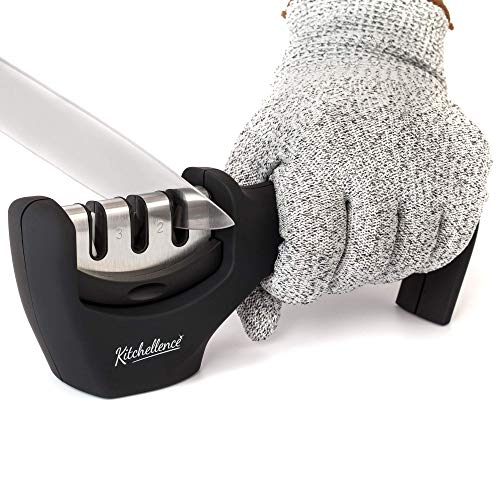
This 4-in-1 kit combines a three-stage sharpener with a cut-resistant glove. The sharpening stages are designed to help repair, restore, and polish a blade, which gives beginners a clear process to follow. The glove adds a useful safety layer when someone feels unsure about handling a dull knife. For a household with several basic kitchen knives, this is a practical starter package.
Serrated blades still require care, since a general slot may not reach every groove equally well. I would use this tool for compatible serrated edges and confirm the instructions before sharpening a narrow or unusual tooth pattern. The glove does not replace safe technique, but it can improve confidence. This kit works best when the blade needs light to moderate maintenance rather than major repair.
Pros:
- Includes a cut-resistant glove
- Three sharpening stages offer a clear sequence
- Useful for repair, restoration, and polishing
- Good starter option for a small kitchen
- Helps users build a regular sharpening habit
- Offers more than a single-purpose tool
Cons:
- The glove does not make careless handling safe
- It may not suit every serration size
- Heavy damage may need professional sharpening
My Recommendation
This kit suits cautious beginners and families that want a little extra hand protection. I would consider it when searching for the best knife sharpener for serrated knives plus a basic safety accessory. It offers good everyday value, but users should still keep fingers away from the edge and work slowly. Availability and kit contents may change, so check the current Amazon listing before ordering.
| Best for | Why |
|---|---|
| Beginner cooks | The stage system gives simple guidance |
| Safety-minded users | The included glove adds hand coverage |
| Small knife collections | One kit handles common maintenance tasks |
SHARPAL 191H Knife and Scissors Sharpener

The SHARPAL 191H is a compact multi-use sharpener built for people who want to maintain knives and scissors with one tool. Its shape is easy to store, and the design targets more than one edge style. That makes it attractive for a busy kitchen, workshop, or utility drawer. A compact sharpener also travels well for light outdoor use.
For serrated knives, I would take a careful, controlled approach and avoid forcing the blade through any slot. The teeth on a serrated edge vary by knife, so compatibility matters more than speed. This type of tool is most useful for quick upkeep when a blade has lost bite but does not have major chips. It can reduce clutter for users who dislike owning several sharpening tools.
Pros:
- Handles knife and scissor maintenance
- Compact size saves drawer space
- Convenient for quick touch-ups
- Useful in kitchens, workshops, and camps
- Multi-purpose design improves tool value
- Simple storage makes it easy to reach
Cons:
- It may require care on narrow serrations
- Compact tools can offer less hand clearance
- Not a full replacement for a precision system
My Recommendation
I suggest the SHARPAL 191H for practical users who want one compact tool for several tasks. It may be the best knife sharpener for serrated knives for a small apartment, camper, or workshop where storage matters. Use it for maintenance, not aggressive metal removal. Its value comes from versatility and easy storage.
| Best for | Why |
|---|---|
| Small kitchens | The compact body takes little space |
| Mixed tools | It supports both knives and scissors |
| Quick touch-ups | The design is convenient for routine care |
AccuSharp Sharpener for Straight and Serrated Knives

The AccuSharp sharpener focuses on a simple handheld format with an ergonomic handle. It is made to restore and hone both straight and serrated knives, which makes it appealing to cooks who want a fast solution. The handle gives the user a firm place to grip while the blade moves through the sharpening area. Its white body also makes metal dust and food residue easier to notice during cleaning.
I like this style for people who do not want to learn stone sharpening first. Still, a serrated blade needs slow movement and light pressure, especially if the teeth are fine. The goal is to restore bite without changing the shape of the edge. For a busy home, this model offers a direct path from dull knife to usable knife.
Pros:
- Ergonomic handle supports a steady grip
- Works with straight and serrated knives
- Compact design stores easily
- Simple operation suits busy cooks
- Useful for quick edge restoration
- Does not require oil or a separate stone
Cons:
- Handheld use still requires careful control
- It may remove more metal than gentle honing
- Not ideal for collectors seeking exact angles
My Recommendation
The AccuSharp is a strong choice for cooks who value speed and a comfortable grip. If you want the best knife sharpener for serrated knives for everyday use, this model deserves attention because it supports both common edge styles. I would choose it for basic kitchen knives rather than expensive specialty blades. Its value is simple, direct, and easy to understand.
| Best for | Why |
|---|---|
| Busy home cooks | It offers a quick sharpening routine |
| Users who dislike stones | The handheld format is easy to learn |
| Mixed edge types | It is designed for straight and serrated knives |
Narcissus Electric Diamond Knife Sharpener

The Narcissus sharpener uses electric power and diamond abrasives to sharpen stainless steel and ceramic knives. It also includes a scissors sharpening function and a metal dust collection box. That collection feature can help keep the counter cleaner than an open abrasive tool. For users who prefer a powered process, this model promises a quick and tidy approach.
Electric sharpeners can save time, but they demand restraint. I would check the manual for serrated knife support before placing a toothed blade into any powered stage, since many electric slots are intended for straight edges. The dust box is useful, yet I would still wipe the unit after use. This is a better fit for convenience seekers than for people who want to control every stroke by hand.
Pros:
- Electric operation can reduce sharpening effort
- Diamond abrasives suit several blade materials
- Includes a scissors sharpening function
- Metal dust collection helps contain residue
- Useful for users who want fast results
- Supports regular household maintenance
Cons:
- Powered sharpening may remove metal quickly
- Users must confirm serrated compatibility
- It needs an outlet and counter space
My Recommendation
I recommend the Narcissus for households that value speed and cleaner operation. It can be the best knife sharpener for serrated knives only when the specific serrated blade is compatible with the instructions. For straight knives and scissors, its multi-function design is appealing. Buy it for powered convenience, not for delicate hand-controlled sharpening.
| Best for | Why |
|---|---|
| Fast kitchen care | Electric power speeds up routine work |
| Mess-conscious users | The collection box helps hold metal dust |
| Mixed household tools | It also supports scissors and more than one blade material |
Chef’sChoice 15XV EdgeSelect Electric Sharpener
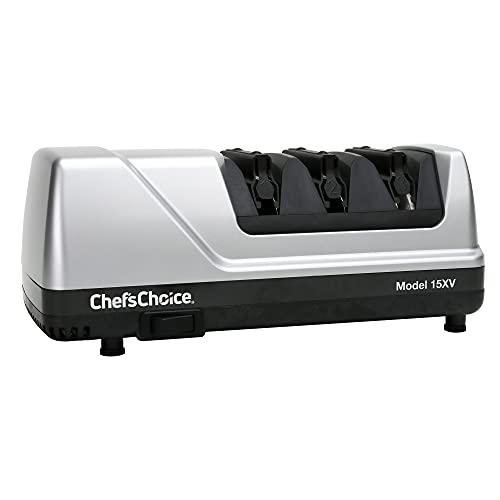
The Chef’sChoice 15XV EdgeSelect is a premium three-stage electric sharpener with diamond abrasives and precision angle guides. It is designed for straight and serrated knives, which makes it one of the more complete choices in this group. The guided stages help support a repeatable edge instead of relying only on hand position. Serious home cooks may appreciate that extra structure.
This model is powerful, so I would read the instructions before sharpening a valuable serrated knife. Serrated blades often need a different treatment from plain edges, and the correct stage matters. The 15XV is not a casual “push harder” tool; gentle passes are the safer path. Its cost is higher, but the guided design can justify it for frequent users with a large knife collection.
Pros:
- Designed for straight and serrated knives
- Three stages support repair, sharpening, and polishing
- Diamond abrasives provide durable sharpening surfaces
- Precision guides improve repeatability
- Electric operation saves time and effort
- Well suited to frequent kitchen use
Cons:
- Higher price than basic handheld sharpeners
- It takes counter space and needs power
- Incorrect use can remove too much metal
My Recommendation
For many serious cooks, the Chef’sChoice 15XV is the best knife sharpener for serrated knives in this comparison. I would choose it for a busy kitchen, costly cutlery, or anyone who wants guided electric sharpening. It offers strong control for a powered unit, but users should follow the angle and stage instructions closely. The premium price makes the most sense for regular use.
| Best for | Why |
|---|---|
| Serious home cooks | Guided stages support repeatable results |
| Large knife collections | Electric power saves time across many blades |
| Straight and serrated users | The design supports both edge styles |
Work Sharp Precision Adjust Elite

The Work Sharp Precision Adjust Elite uses a guided, fixed-angle sharpening system for kitchen and pocket knives. Its key strength is control: the user sets an angle and moves the abrasive across the edge in a measured way. That approach appeals to people who want more precision than a pull-through sharpener can provide. The system also suits users who enjoy learning the craft of sharpening.
Serrated knives can be more complex because each groove may need a suitable narrow abrasive surface. I would not assume that a fixed-angle system automatically reaches every serration. Instead, I would use the included parts as directed and check the knife maker’s guidance. This tool is best for patient users who value control, repeatability, and careful edge work.
Pros:
- Fixed-angle design improves sharpening control
- Useful for kitchen and pocket knives
- Good choice for users who enjoy precision work
- Guided movement can reduce angle mistakes
- Supports a repeatable sharpening process
- More flexible than a basic pull-through tool
Cons:
- It has a steeper learning curve
- Sharpening serrations can take more time
- Setup is slower than a simple handheld tool
My Recommendation
I recommend the Work Sharp Precision Adjust Elite for careful hobbyists and knife owners who want hands-on control. It may become the best knife sharpener for serrated knives for someone willing to learn the correct abrasive and angle for each blade. It is less convenient for a rushed cook. Its value comes from precision, flexibility, and repeatable technique.
| Best for | Why |
|---|---|
| Sharpening hobbyists | The guided system rewards patient practice |
| Premium knives | Angle control helps support careful work |
| Users who want flexibility | The system offers more control than pull-through tools |
Retractable Diamond Rod Serrated Sharpener

This pocket sharpener uses a retractable diamond sharpening rod made for serrated edges. The narrow rod can reach between teeth more directly than a wide sharpening slot. Its compact body makes it useful for kitchen drawers, tackle boxes, backpacks, and camping kits. For a serrated blade, that focused shape is often more useful than a general-purpose stone.
A rod demands a steady hand because the user controls the angle and pressure. I would match the rod to the curve of each tooth and use short, gentle strokes. The retractable design also helps protect the abrasive surface during storage. This is a practical tool for touch-ups, but it may feel slow when a knife has many fine serrations.
Pros:
- Narrow diamond rod reaches serration grooves
- Retractable design improves storage safety
- Small size suits travel and outdoor kits
- Useful for targeted touch-ups
- Gives the user direct control
- Works well for field and kitchen repairs
Cons:
- Hand control affects the final edge
- It can take time to sharpen many teeth
- Not ideal for users who want automatic guidance
My Recommendation
I would choose this rod for campers, anglers, hunters, and home cooks with a few serrated knives. It has a strong claim to being the best knife sharpener for serrated knives when portability and groove access matter most. Use it slowly and keep the rod clean. Its low-clutter design gives it excellent practical value.
| Best for | Why |
|---|---|
| Camping and travel | The retractable body is easy to carry |
| Deep serration grooves | The narrow rod reaches between teeth |
| Quick field repairs | It needs no outlet or large setup |
Wamery Retractable Diamond Rod Sharpener

The Wamery serrated knife sharpener follows the compact retractable rod format. Its diamond surface is intended to refresh the working edge between the teeth, while the pocket design keeps the tool easy to store. I like this kind of sharpener for users who want a dedicated serrated tool instead of a broad kitchen system. The black body also looks at home in an outdoor gear kit.
Like any manual rod, it rewards patience rather than force. I would keep the angle consistent and sharpen only the bevel side unless the knife maker gives different instructions. A few light passes can restore bite, while too much pressure may widen the grooves. It is a simple tool, but good technique makes a large difference.
Pros:
- Retractable rod protects the sharpening surface
- Portable design fits a pocket or drawer
- Diamond surface targets serration grooves
- Dedicated format avoids oversized equipment
- Useful for kitchen and outdoor knives
- Does not need electricity
Cons:
- Users must control the sharpening angle
- It may not suit very large serrations
- Manual sharpening takes longer than electric sharpening
My Recommendation
The Wamery is a good match for anyone who wants a small, dedicated serrated tool. I see it as a strong candidate for the best knife sharpener for serrated knives in a travel or emergency kit. It is easy to carry and simple to use once the correct angle feels natural. Choose another style if you need fast sharpening for a whole drawer of knives.
| Best for | Why |
|---|---|
| Portable knife care | The pocket format travels easily |
| Outdoor users | It works without power |
| Dedicated serrated upkeep | The rod reaches individual grooves |
Wolfride Two-Piece Serrated Sharpener Set

The Wolfride set includes two retractable diamond sharpening rods for kitchen, fishing, hunting, and outdoor use. A two-piece set is useful when more than one person needs a sharpener or when you want one tool at home and one in a gear bag. The rods are designed for serrated maintenance rather than broad flat-edge sharpening. Their small size makes them easy to keep near the knives that need them.
I would use this set for touch-ups and light restoration, not for repairing crushed teeth. The rods require the same care as any manual serrated sharpener: light pressure, steady movement, and attention to the tooth shape. Having a spare can be convenient, but both pieces still depend on correct technique. For outdoor users, the extra tool adds a little peace of mind.
Pros:
- Two rods provide a useful spare
- Retractable design supports safer storage
- Portable for fishing, hunting, and camping
- Diamond surfaces target serrated grooves
- Works without batteries or an outlet
- Good value for multi-location use
Cons:
- Manual control can challenge beginners
- Not intended for major blade damage
- Two pieces may be unnecessary for one kitchen
My Recommendation
I recommend the Wolfride set for outdoor users and households that want a backup sharpener. It can be the best knife sharpener for serrated knives when portability, spare capacity, and low cost matter. I would keep one rod in the kitchen and one with camping or fishing gear. Its value is strongest for people who will use both pieces.
| Best for | Why |
|---|---|
| Campers and hunters | Two portable tools support separate gear kits |
| Backup storage | A spare remains available if one is misplaced |
| Budget shoppers | The set offers more than one sharpening rod |
How to Choose the Best Knife Sharpener for Serrated Knives
The tooth pattern should guide your choice. A serrated knife has raised points and recessed gullets, so a flat stone cannot reach the entire cutting edge. A narrow tapered rod works well when you want to sharpen each groove by hand. A guided or electric system may be easier for users who prefer speed, but it must clearly support serrated blades.
Next, think about control. Manual rods offer excellent access but require practice. Pull-through systems are faster, yet they may not match every tooth size. Electric sharpeners can deliver repeatable results, but they may remove metal quickly. I always favor the least aggressive tool that can solve the problem.
Look at the knife’s condition. A slightly dull bread knife needs a light touch-up. A blade with bent teeth, deep chips, or a damaged tip may need professional repair. Sharpening cannot restore missing steel. It can only refine the edge that remains.
Safety matters too. Use a stable surface, keep your fingers behind the edge, and follow the product instructions. Wear eye protection if the manufacturer recommends it, and clean away abrasive dust after use. Never treat a cut-resistant glove as permission to hold the blade carelessly.
How I Evaluated These Serrated Knife Sharpeners
I compared each tool by edge access, ease of use, control, storage, and likely kitchen value. I also considered whether the design suits fine bread-knife teeth, wider outdoor serrations, or a mixed collection. Product claims can change, so I recommend checking the current listing, manual, and compatibility notes before purchase.
My main test standard is simple: can the sharpener restore useful bite without flattening or reshaping the serrations? A good tool should help the blade cut with less tearing. It should also be easy enough that the owner will use it before the knife becomes dangerously dull. That balance matters more than a long feature list.
How to Sharpen a Serrated Knife Safely
Start by cleaning and drying the knife. Find the beveled side of the serrated edge, then select a rod that fits the grooves without forcing. Secure the sharpener or hold it as the instructions show. I recommend working under bright light so you can see where the abrasive touches the metal.
Place the rod in one groove and use short strokes that follow the existing angle. Do not push hard. Stop when you see a small, even burr on the flat side, then remove that burr with a very light pass or a fine finishing method approved for the knife.
Move from groove to groove and count your strokes. Consistent work helps prevent one tooth from becoming smaller than the others. Wipe the blade, test it on food or paper with care, and store the knife safely. If a tooth is bent or missing, stop and seek expert repair.
Common Mistakes to Avoid
The first mistake is using a flat pull-through sharpener on a deeply serrated blade. It may touch only the peaks and leave the valleys dull. Another mistake is using too much pressure, which can enlarge the grooves and change the knife’s original shape.
Some users sharpen both sides of a serrated blade equally. Many serrated knives have a primary bevel on one side and a flatter side on the other. Follow the knife maker’s instructions instead of guessing. Also avoid sharpening a dirty blade, since food residue can clog the abrasive surface.
Finally, do not judge sharpness by touching the edge with your finger. A knife can feel smooth and still cut skin. Test it with a suitable material and handle it as if it is sharp from the start.
FAQs Of best knife sharpener for serrated knives
Can I use a regular knife sharpener on a serrated knife?
Sometimes, but only if the manufacturer says it supports serrated edges. Many flat stones and standard slots cannot reach the recessed grooves. A narrow diamond rod is often a safer match.
How often should I sharpen a serrated knife?
Sharpen it when the knife starts to drag, crush, or tear food. Light home use may need only occasional touch-ups. Avoid sharpening on a fixed calendar if the blade still cuts well.
Is an electric sharpener safe for serrated knives?
It can be safe when the model specifically supports serrated knives and you follow the manual. Use light pressure and the correct stage. Never assume that every electric slot accepts a toothed blade.
What is better: a rod or a pull-through sharpener?
A rod gives better control over individual serrations. A pull-through tool is faster and easier for many beginners. Choose the rod for unusual teeth or careful maintenance, and choose a guided system for convenience.
Can sharpening fix a broken serration?
No. Sharpening can refine existing metal but cannot replace a missing or badly broken tooth. A damaged blade may need professional grinding or replacement.
Final Verdict: Which Should You Buy?
For most serious home cooks, the Chef’sChoice 15XV is the best knife sharpener for serrated knives because it combines guided stages, diamond abrasives, and support for straight and serrated edges. Choose a retractable rod for travel or a lower-cost manual option.
The right sharpener protects the shape of each tooth and restores clean cutting. Check compatibility, use light pressure, and keep your serrated knives maintained for safer, easier kitchen work.