
The best knife sharpener for super steels is a diamond or CBN system used with careful angle control.
If your S30V, M390, Maxamet, or S90V knife suddenly feels dull, a basic kitchen steel may not fix it. Super steels resist wear, so they need an abrasive that is harder than ordinary aluminum oxide. The honing rods below are useful for light edge care, burr removal, and daily touch-ups, but a diamond rod is the better match for true sharpening. I explain what each rod can and cannot do, so you can choose the best knife sharpener for super steels without wasting money or damaging a fine edge.
Utopia Kitchen 12-Inch Honing Rod

The Utopia Kitchen 12-inch honing rod is a simple tool for daily edge care. Its long size gives you enough room to work with chef knives, slicing knives, and larger blades. The rod is designed mainly to realign a rolled edge rather than remove a large amount of steel. That makes it more of a maintenance tool than a full sharpener for hard super steels.
I would use this rod after light kitchen work, not after a knife has become truly blunt. It can help a tough blade feel smoother when the edge has only folded slightly. Use gentle pressure and a steady angle, since force can make a thin premium edge worse. For owners who already use diamond stones or a guided sharpener, this rod offers a handy way to extend the time between full sharpening sessions.
Pros:
- Long 12-inch working surface
- Useful for daily edge maintenance
- Works well with larger kitchen knives
- Simple design with no setup time
- Easy to store in a knife block or drawer
- Low-cost way to maintain a working edge
Cons:
- Not aggressive enough for badly dull super steels
- May not remove chips or deep edge damage
- Requires good hand-angle control
Flat 12-Inch Sharpening Steel Rod

This flat honing rod gives the user a broad contact area along the knife edge. The flat shape can feel more stable than a narrow round rod, especially when you are learning basic honing technique. It is best suited to small edge corrections and routine knife care. However, the rod should not be confused with a diamond-coated sharpening plate.
Super steels often have high wear resistance because of their carbide content and heat treatment. A plain steel rod will not quickly recreate a new bevel on these alloys. I like this type of rod for a knife that still cuts but feels less crisp than it did yesterday. Keep the strokes light, use the same angle on both sides, and stop after a few passes rather than chasing a perfect edge.
Pros:
- Flat profile offers broad edge contact
- Good for light edge alignment
- Long 12-inch format suits most kitchen blades
- Simple manual operation
- Helps reduce the need for frequent full sharpening
- Useful for cooks who prefer traditional tools
Cons:
- Limited cutting power on premium wear-resistant steel
- Does not replace a diamond or CBN abrasive
- Hand use can produce uneven results for beginners
Kota Japan 12-Inch Diamond Rod
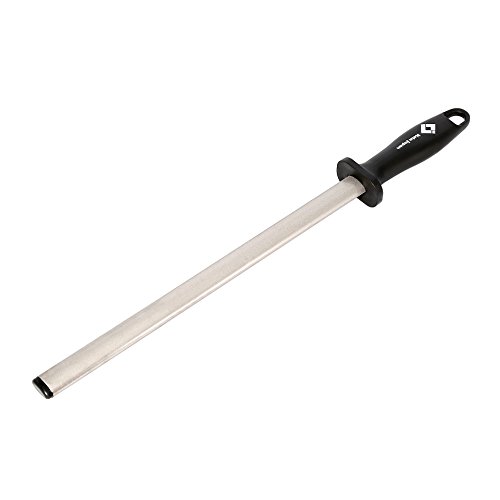
The Kota Japan 12-inch diamond rod is the most suitable option in this group for actual work on super steels. Diamond is harder than the carbides found in many modern knife alloys, so it can cut metal instead of merely pushing the edge back into place. The long rod gives useful reach on chef knives, hunting knives, and outdoor blades. It can also refresh a worn bevel when used with care.
I would choose this model when I want the best knife sharpener for super steels among these rod-style options. Still, a diamond rod removes steel quickly, so a light touch matters. Start with two or three passes per side and inspect the edge before doing more. It is not a substitute for a precision stone system when you need to repair a chip or set a new bevel, but it is far more capable than ordinary honing steel.
Pros:
- Diamond surface is suited to wear-resistant steels
- Can perform real touch-up sharpening
- Long 12-inch length supports large knives
- Useful for kitchen, hunting, and outdoor blades
- Can reduce the need for frequent stone sessions
- More effective on S30V, S35VN, M390, and similar alloys
Cons:
- Can remove too much metal with heavy pressure
- Requires careful angle control
- May leave a coarser finish than a fine ceramic rod
Cutluxe 10-Inch Honing Rod

The Cutluxe 10-inch honing rod offers a compact size for normal home kitchens. It is easy to handle, and the length works well with most 6- to 8-inch chef knives. A honing rod like this is useful when the edge has rolled from cutting soft food or working on a board. It is less useful when the blade has lost its full bevel or contains visible damage.
For super steel owners, I see this as a companion tool rather than a complete sharpening solution. It can help keep an already sharp knife lively between sessions with a diamond stone. Work slowly from heel to tip and avoid sawing motions. If the knife feels dull after several gentle passes, switch to a true abrasive instead of increasing pressure.
Pros:
- Manageable 10-inch length for home use
- Easy to control on medium-size knives
- Helpful for routine edge alignment
- Compact storage footprint
- Good companion to a diamond sharpening system
- Simple for quick use before meal preparation
Cons:
- Not the best choice for severe dullness
- May have limited effect on very hard super steels
- Shorter reach than a 12-inch rod
Flat 12-Inch Honing Steel

This 12-inch flat honing steel is made for repeatable daily maintenance. Its broad face can make the edge feel supported as you draw the knife across the surface. The tool is best for minor alignment work, especially on standard kitchen blades. It will not act like a coarse stone or diamond plate when a super steel edge needs a new apex.
I recommend it for cooks who already understand the difference between honing and sharpening. Honing moves or aligns a small amount of edge material, while sharpening removes metal to create fresh bevels. Use a 15- to 20-degree angle only when it matches your knife’s existing edge. The safest habit is gentle contact, short sessions, and frequent inspection under bright light.
Pros:
- Long surface covers large blades well
- Flat form gives a clear contact area
- Useful for quick edge maintenance
- Does not require electricity or assembly
- Easy to clean and store
- Suitable for users who prefer manual control
Cons:
- Not a complete sharpener for super steels
- Can damage a thin edge if used with force
- Needs practice to maintain a steady angle
HOSHANHO 10-Inch Professional Rod

The HOSHANHO 10-inch rod is a practical fit for a smaller kitchen station. Its shorter working length can feel less awkward than a long rod when you maintain paring knives, utility knives, and standard chef knives. It is designed for honing, so it helps with light edge alignment rather than major sharpening. That distinction matters when you use a tough alloy such as S45VN or Elmax.
I would pair this rod with a fine diamond stone or guided system. Use it after washing and drying the knife, since grit and food residue can affect the edge. Keep the blade moving in one smooth direction and use almost no downward force. For a home cook who wants a quick touch-up tool, the compact size may be more useful than a large professional rod.
Pros:
- Compact 10-inch working size
- Easy to use in a small kitchen
- Good for paring and utility knives
- Supports quick daily edge care
- Simple manual design
- Works well as a companion tool
Cons:
- Less reach for long slicing knives
- Does not replace a diamond sharpener
- Limited use on badly worn super steel edges
Flat 12-Inch Sharpening Steel
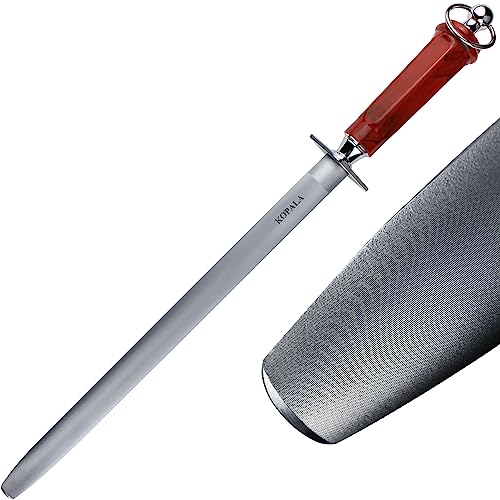
This flat 12-inch rod is aimed at users who want a wide, steady honing surface. The length works well when the knife is longer than a standard chef blade. It can help restore a smoother feel after light use, when the edge has bent but has not worn away. It is not designed to grind a new edge on a highly wear-resistant alloy.
In my view, this is a maintenance-first product. It makes sense for a cook who sharpens with stones every few months and wants a quick tool between those sessions. Avoid rapid back-and-forth strokes, which can create inconsistent contact. A clean edge, a fixed angle, and low pressure will give better results than speed.
Pros:
- Broad flat surface for controlled contact
- 12-inch length suits larger knives
- Useful for light edge realignment
- Works without power or batteries
- Easy to add to a kitchen tool set
- Good for frequent touch-ups
Cons:
- Weak choice for serious super steel sharpening
- Cannot repair chips or broken tips
- Technique has a strong effect on results
12-Inch Fine Carbon Honing Steel
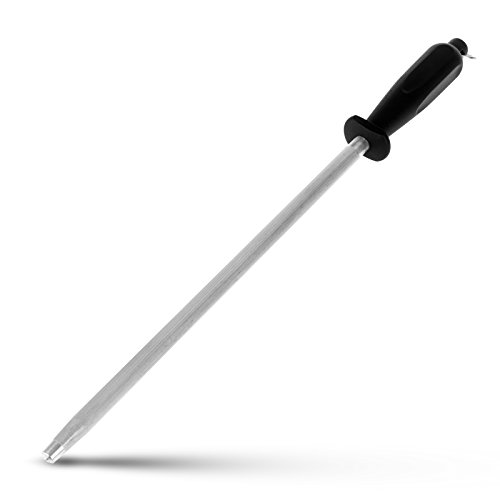
This 12-inch fine carbon honing steel focuses on gentle edge care. A fine surface is useful when the knife still cuts well but feels slightly less smooth during food prep. The long profile gives enough working room for many chef knives and carving knives. It is a traditional honing option, not a high-powered answer for a fully dull super steel.
I would use it as the final step after sharpening, or between sharpening sessions. It can polish and align a working edge when the knife receives regular, careful use. Do not press hard in an attempt to make it cut like diamond. With premium steels, that approach can stress the apex and cause small chips or a wire edge.
Pros:
- Fine surface supports gentle touch-ups
- 12-inch length handles larger blades
- Good for maintaining a polished edge
- Useful after stone sharpening
- Simple tool for regular kitchen work
- Helps preserve a sharp edge when used lightly
Cons:
- Slow on high-wear super steel alloys
- Not intended for heavy metal removal
- Needs careful cleaning and dry storage
13-Inch Carbon Steel Honing Rod

The 13-inch carbon steel rod provides one of the longest work surfaces in this selection. That extra reach helps with long chef knives, carving blades, and some outdoor knives. It gives you room to complete a pass from heel to tip without stopping in the middle. Like other plain steel rods, it mainly supports alignment and maintenance.
This rod makes sense for users who value reach and already know how to hone by hand. It will not be my first pick as the best knife sharpener for super steels, because carbon steel lacks the cutting action of diamond or CBN. Still, it can be useful after a proper sharpening session. Store it dry and keep it away from abrasive grit that could scratch the knife or rod.
Pros:
- Extra-long 13-inch working surface
- Useful for carving and slicing knives
- Supports full-length honing passes
- Good for daily edge alignment
- No power source or special parts required
- Helpful for experienced manual users
Cons:
- Not aggressive enough for most super steel sharpening
- Long size may feel awkward for small knives
- Can cause damage if used with too much pressure
Round 12-Inch Honing Steel
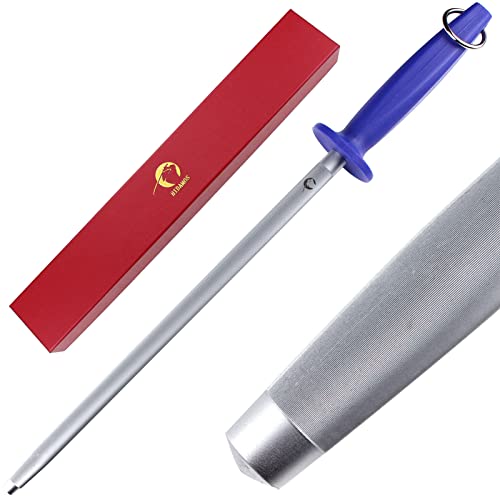
The round 12-inch honing steel follows the classic kitchen rod design. Its round profile lets the knife meet the surface at many positions, which can feel natural for an experienced user. The length fits most chef knives and gives a smooth path from heel to tip. It is primarily a honing aid, so it will not reshape a badly worn super steel edge.
I recommend this kind of rod to a cook who wants a familiar tool for quick maintenance. Begin with the heel near the handle and move toward the tip in one controlled pass. Keep the same angle on both sides and use light contact. If your knife has a high-hardness powder steel, use a diamond abrasive for real sharpening and save this rod for minor upkeep.
Pros:
- Classic round profile feels familiar
- 12-inch length fits most kitchen knives
- Good for quick edge alignment
- Allows smooth heel-to-tip passes
- Easy to use without electricity
- Useful as a low-cost maintenance tool
Cons:
- Limited sharpening action on super steels
- Round shape may be harder for new users
- Does not fix chips or major edge rolls
My Recommendation
For a true super steel knife, I would choose the Kota Japan diamond rod from this list. Diamond gives it the cutting ability that plain carbon and honing steels lack. It is best for S30V, S35VN, M390, S90V, and similar alloys when the edge needs a light refresh. Use it slowly, because a diamond rod can remove steel faster than a traditional honing rod.
The other rods are better for maintenance than full sharpening. The Utopia, Cutluxe, HOSHANHO, and fine carbon models suit cooks who already sharpen their knives with stones and want a quick daily touch-up. The long 12- and 13-inch rods are useful for larger blades, while the 10-inch models are easier to handle on small knives. In 2026, I still prefer a guided diamond or CBN system for a fully dull super steel, but a good diamond rod offers strong value and is widely available.
| Best for | Why |
|---|---|
| Actual super steel touch-ups | The Kota Japan diamond rod cuts wear-resistant alloys better than plain honing steel. |
| Daily kitchen maintenance | The Utopia and Cutluxe rods offer simple, quick edge care for working knives. |
| Large chef and carving knives | The 12- and 13-inch rods provide enough length for smooth full-edge passes. |
How to Choose the Best Knife Sharpener for Super Steels
Choosing a sharpener starts with the steel, not the handle or the color. Super steels often contain hard carbides that resist ordinary abrasives. This is why a rod that works well on softer kitchen steel may seem useless on M390 or Maxamet. A sharpener must either cut those carbides or remove the surrounding steel in a controlled way.
Choose Diamond or CBN for Real Sharpening
Diamond is one of the hardest common sharpening abrasives. It works well on powder metallurgy steels and other high-wear alloys. CBN, or cubic boron nitride, is also a strong option, especially for high-carbon tool steels. For most home users, a quality diamond plate, diamond rod, or guided diamond system is easier to find.
Plain steel does a different job. It can move a rolled edge back toward alignment, but it does not remove enough material to create a new bevel. Ceramic can polish and lightly refine an edge, but it may also be slow on very hard steel. If your knife no longer slices paper or food cleanly, use a true abrasive instead of pressing harder on a steel rod.
Think About Edge Angle
Angle control matters as much as abrasive choice. Many modern folding knives use an edge near 15 to 20 degrees per side, but the maker’s design may vary. A thin slicer may need a lower angle, while a hard-use outdoor knife may need a stronger, wider edge. Follow the factory angle when possible.
A guided sharpener makes this easier. A freehand rod takes more practice because the user must hold the angle through the full stroke. I suggest marking the bevel with a washable marker. Make a light pass, then inspect the mark. If the abrasive removes ink only at the shoulder or very edge, adjust your angle before continuing.
Use Light Pressure
Heavy pressure is a common mistake with super steels. It can flex the apex, create a burr, and leave the knife feeling sharp for only a short time. It can also strip diamond particles from a low-quality abrasive surface. Let the abrasive do the work.
Start with two or three light passes per side. Check the edge by slicing paper or shaving a small section of cardboard. If the knife improves, stop. More strokes are not always better. The finest edge is often the one with the least unnecessary metal removed.
Match the Tool to the Damage
A fine rod is useful for a rolled edge. A diamond rod is better for a dull edge. A coarse diamond plate is needed for a new bevel, a broken tip, or a visible chip. If the edge has deep damage, begin with a coarse abrasive and move through finer grits.
Do not expect a 10-inch honing steel to repair a chipped S90V blade. That is like using a toothbrush to repair a cracked wall. Use the correct tool for the job, and the knife will need less work in the long run.
Consider Knife Size and Safety
A 10-inch rod is easy to control with small and medium knives. A 12-inch rod gives more space for chef knives. A 13-inch rod is helpful for long slicing blades but may feel bulky in a small kitchen. A guard or wide handle can also improve safety during use.
Always keep your fingers behind the guard. Place the tip of the rod on a stable cutting board if that position helps you control the angle. Keep the blade moving away from your hand. Clean the rod after use so metal dust and food grit do not scratch the next knife.
How I Evaluate Knife Sharpeners for Super Steels
I look at abrasive type first. A product must suit the wear resistance of the knife steel. I then consider length, surface shape, handle control, cleaning needs, and how easy it is for a home user to hold a consistent angle.
I also separate maintenance from sharpening. Many product pages use the word “sharpener” for a honing rod, but those tools do not perform the same job. My recommendations reflect that difference. A plain steel rod may be excellent for daily care but still be the wrong answer for a dull M390 blade.
Finally, I consider value. A low-cost rod can make sense when it extends the life of a good edge. It makes less sense when a buyer expects it to repair a damaged premium knife. Honest expectations help users protect their blades and avoid needless wear.
FAQs Of best knife sharpener for super steels
What is the best knife sharpener for super steels?
A diamond or CBN sharpener is usually the best choice. Diamond rods and guided diamond systems can cut high-wear steels more effectively than plain honing steel. For major repairs, use a coarse diamond plate or a professional sharpening system.
Can a regular honing steel sharpen S30V or M390?
A regular steel can help align a slightly rolled edge, but it will not quickly create a new bevel on S30V or M390. Use it only for light maintenance. Choose diamond when the knife feels truly dull.
Is a diamond rod safe for premium knives?
Yes, when you use light pressure and the correct angle. Diamond cuts quickly, so aggressive strokes can remove too much metal. Make a few passes, inspect the edge, and stop when the knife cuts well.
Should I use ceramic or diamond on super steel?
Use diamond for dullness and ceramic for light refinement. Ceramic can polish an edge, but it may work slowly on very wear-resistant alloys. A fine diamond abrasive offers more versatility for most users.
How often should I sharpen a super steel knife?
Sharpening frequency depends on use, edge angle, cutting surface, and steel hardness. Light home use may need attention every few weeks or months. Use a cutting board, avoid glass or stone surfaces, and touch up the edge before it becomes fully dull.
Final Verdict: Which Should You Buy?
The Kota Japan diamond rod is my top pick here and the best knife sharpener for super steels among these products. It offers the abrasive power needed for light work on modern, wear-resistant knife alloys.
Choose a plain rod for maintenance, but use diamond or CBN for real sharpening. With light pressure and steady angles, the right tool keeps a premium blade cutting cleanly in 2026.