
The best knife sharpener stone balances grit, control, safety, and value for a clean edge at home.
A dull knife can turn a simple tomato or onion into a tiring chore. I have found that a good whetstone brings back the smooth bite without taking much space or skill. The right stone also gives you more control than many pull-through sharpeners. In this guide, I compare popular Amazon options by grit, build, ease of use, safety, and real kitchen value.
Sharp Pebble 1000/6000 Whetstone

The Sharp Pebble 1000/6000 stone is a strong pick for everyday kitchen knives. Its 1000-grit side removes small dull spots and rebuilds a working edge. The 6000-grit side then smooths that edge for a cleaner cut. This two-step layout keeps the process simple for new users.
I like this stone for cooks who want a calm, hands-on sharpening method. It suits stainless steel chef knives, utility knives, paring knives, and many carbon steel blades. You need to soak or wet the stone as directed and keep the blade angle steady. With a little practice, it can turn a tired knife into a much more useful tool.
Pros:
- Useful 1000 and 6000 grit combination
- Good fit for routine kitchen sharpening
- Fine side leaves a smooth cutting edge
- Simple design for first-time users
- Works with many common kitchen knives
- Usually costs less than premium single-grit stones
Cons:
- May need flattening after repeated use
- Requires some angle practice
- Not the fastest choice for badly damaged edges
My Recommendation
This is the best knife sharpener stone for home cooks who want one practical stone for regular care. The medium grit repairs normal dullness, while the fine grit gives the edge a polished feel. It is also a sensible choice for anyone who prefers a traditional whetstone over an electric sharpener. Overall, it offers strong value when you want a simple two-sided stone that is easy to understand.
| Best for | Why |
|---|---|
| Daily kitchen knives | The 1000/6000 grit range covers repair and finishing. |
| New stone users | The two-step layout is easy to learn. |
| Budget shoppers | It provides useful sharpening control without a premium price. |
Intelitopia Complete Sharpening Stone Set

The Intelitopia set is made for shoppers who want more than one basic stone. It includes 400, 1000, 3000, and 8000 grit surfaces for repair, sharpening, and polishing. The set also includes a flattening stone, leather strop, bamboo base, rubber supports, and an angle guide. That makes it a full home sharpening station.
The 400 grit side helps with chips and very dull edges, while the 1000 grit side handles normal sharpening. The 3000 and 8000 sides can refine the edge on quality kitchen or pocket knives. I value the included tools because they remove much of the guesswork. Still, the larger grit range takes more time and care than a simple dual-sided stone.
Pros:
- Four useful grit levels
- Includes a flattening stone
- Leather strop helps remove fine burrs
- Several rubber bases improve stability
- Angle guide helps new users build good habits
- Useful for both repair and finishing work
Cons:
- More parts need storage and cleaning
- Beginners may find the grit choices confusing
- Coarse grit can remove metal quickly if used too hard
My Recommendation
I recommend this as the best knife sharpener stone set for people who want a complete system. It suits serious home cooks, hobbyists, and anyone who sharpens several types of blades. The 400 grit can rescue a neglected knife, while the high grits support a refined finish. Its value is strongest when you will use the extra tools instead of letting them sit in a drawer.
| Best for | Why |
|---|---|
| Complete home setups | It includes stones, supports, a strop, and an angle guide. |
| Damaged blades | The 400 grit side helps repair dull or lightly chipped edges. |
| Knife hobbyists | Four grits allow more control over the final edge. |
KEENBEST 400/1000 Whetstone Set
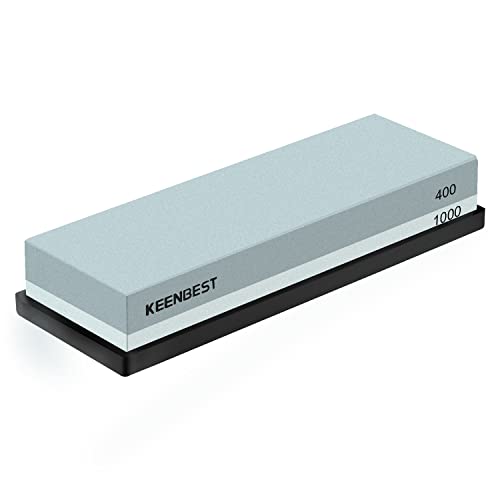
The KEENBEST 400/1000 stone focuses on the two grits most people use for basic knife care. The 400 side cuts faster when a blade is very dull or has a small damaged area. The 1000 side then creates a practical working edge for cooking. Its dual-sided design keeps the kit compact and easy to store.
I see this as a useful choice for cooks who do not need a polishing stone. The included non-slip base helps keep the stone steady during strokes. You still need to use light pressure and maintain a steady angle. For regular kitchen maintenance, this stone can give good results without adding extra steps.
Pros:
- Helpful coarse and medium grit pairing
- Compact design fits small kitchens
- Non-slip base supports safer use
- Good for dull household kitchen knives
- Simple layout reduces setup time
- Practical option for budget-minded cooks
Cons:
- No fine polishing grit
- Coarse grit may wear faster with heavy use
- May not suit users seeking a mirror-like edge
My Recommendation
This is the best knife sharpener stone for basic edge repair on a modest budget. I would choose it for a home where knives often become dull but do not need a polished finish. The 400 grit gives it more repair power than many 1000/6000 stones. Its limits are clear, but its focused design makes it easy to use.
| Best for | Why |
|---|---|
| Very dull kitchen knives | The 400 grit removes metal faster than a medium stone. |
| Small kitchens | The two-sided stone needs little storage space. |
| Simple sharpening tasks | There are only two grit choices to manage. |
HMPLL Four-Side Sharpening Stone
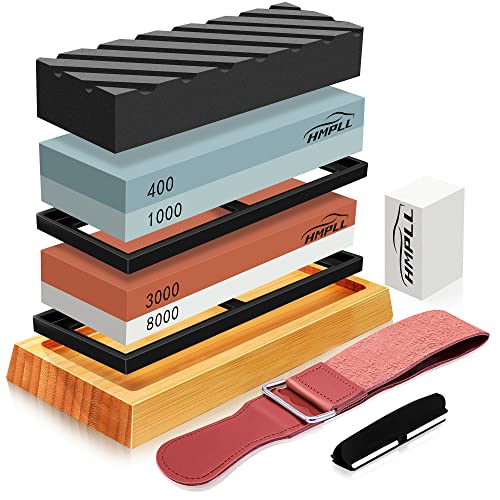
The HMPLL stone set offers four sharpening surfaces in one compact package. Its range is designed to cover rough repair, standard sharpening, and edge refinement. That broad setup gives you more options than a basic two-sided stone. It can be useful when one knife needs repair and another only needs a light touch-up.
This set may appeal to cooks who enjoy learning the details of edge work. Moving through the grits can create a smoother edge when you use the correct pressure. I suggest starting with the least aggressive grit that solves the problem. As with any multi-grit stone, good labeling and careful cleaning matter after each use.
Pros:
- Four sharpening surfaces provide flexibility
- Can support repair and finishing work
- Useful for different blade conditions
- Compact compared with several separate stones
- Good choice for users who want to practice
- May reduce the need to buy more stones soon
Cons:
- Requires more time than a single-grit stone
- Users must learn when to change surfaces
- Small surfaces may feel limiting on long blades
My Recommendation
I recommend this as the best knife sharpener stone for learners who want room to grow. It offers a wider sharpening path than a simple starter block. It is a good fit for cooks with several knives and different levels of dullness. The best value comes from using each side with care instead of treating every knife the same way.
| Best for | Why |
|---|---|
| Multiple knife types | Several grits let you adjust the process to each blade. |
| Sharpening practice | The set helps users learn the effect of different grits. |
| Flexible home use | One stone can handle several levels of dullness. |
SHARPAL 162N Double-Sided Diamond Stone

The SHARPAL 162N uses diamond abrasive surfaces rather than a traditional waterstone material. Diamond stones need little setup and do not require soaking before use. The large eight-by-three-inch format gives you useful room for chef knives and other long blades. Its double-sided design offers two levels of sharpening in one tool.
This type of stone is convenient when you want quick maintenance. It can work well for many steels, including harder blades that may feel slow on softer stones. I recommend light pressure because diamond surfaces cut efficiently. The stone also works well for people who prefer a dry or lightly lubricated process over soaking and slurry management.
Pros:
- No long soaking step before use
- Large surface suits longer knives
- Diamond abrasive cuts efficiently
- Useful for many blade steels
- Double-sided format saves storage space
- Easy to clean after routine use
Cons:
- Can feel less forgiving than a soft waterstone
- Heavy pressure may shorten abrasive life
- May not provide the same polished feel as very fine stones
My Recommendation
This is the best knife sharpener stone for users who want low-maintenance sharpening and a broad working surface. I would pick it for busy kitchens, outdoor kits, and people who do not want to soak a stone before every session. Its diamond surface also helps with harder steel. Use a gentle hand, and it can become a fast, dependable part of your knife care routine.
| Best for | Why |
|---|---|
| Fast setup | Diamond plates do not need the same soaking routine as many waterstones. |
| Long kitchen knives | The eight-inch surface gives the blade more room. |
| Harder blade steel | Diamond abrasive can cut steel efficiently with light pressure. |
HiramWare 400/1000 Whetstone

The HiramWare stone combines 400 and 1000 grit surfaces for practical blade repair. The coarse face helps restore an edge that has lost its shape. The 1000 face refines the rough work and leaves a useful cutting edge. A rubber base helps reduce movement while you sharpen.
I see this as a straightforward tool for kitchen maintenance and manual sharpening practice. It does not add a high-polish finishing side, so it keeps the process focused. That can be a benefit for users who want fewer steps. Wet the stone as directed, use short controlled strokes, and check the edge often instead of removing more metal than needed.
Pros:
- Strong 400/1000 grit pairing for repair
- Non-slip base improves working confidence
- Good for common home kitchen blades
- Simple two-sided construction
- Coarse side helps neglected knives
- Easy choice for first-time stone buyers
Cons:
- Lacks a fine finishing grit
- Needs angle control for even results
- May need flattening after extended use
My Recommendation
This is the best knife sharpener stone for a new user who mainly needs to fix dull kitchen knives. Its two grit levels are easy to understand, and the base adds useful stability. It is not a complete polishing kit, but it handles the core job well. I consider it a good value when repair matters more than a glossy final edge.
| Best for | Why |
|---|---|
| Starter sharpening | The two sides make the learning path clear. |
| Neglected knives | The 400 grit side supports faster repair work. |
| Stable countertop use | The rubber base helps limit sliding. |
Sharp Pebble Complete 1000/6000 Kit

This Sharp Pebble kit pairs the popular 1000/6000 grit stone with useful setup accessories. The 1000 grit side restores a working edge, while the 6000 side smooths and refines it. A complete kit can make the first sharpening session less stressful. It gives beginners a clearer starting point than a loose stone alone.
I like this option for cooks who want a polished result but do not need four grit levels. The two sides cover the most common home sharpening tasks. A stable base and proper angle support can make it easier to repeat the same motion. As always, the final result depends on steady technique more than on the brand name alone.
Pros:
- Balanced 1000/6000 grit combination
- Useful accessories support setup
- Good option for home cooks
- Fine side improves edge smoothness
- More complete than a bare sharpening stone
- Suitable for routine knife care
Cons:
- Not designed for serious chips or deep damage
- Needs regular care to stay flat
- Can take practice for consistent angles
My Recommendation
I recommend this as the best knife sharpener stone kit for a beginner who wants useful extras. The 1000/6000 pairing handles most home cooking jobs without making the process too complex. It is also a good gift for someone building a kitchen tool collection. Its overall value is strongest when you want a ready-to-use package rather than a single stone.
| Best for | Why |
|---|---|
| Beginner gift buyers | The kit offers a clear path from setup to sharpening. |
| Polished kitchen edges | The 6000 grit side refines the edge after sharpening. |
| Routine knife care | The grit range fits common touch-up needs. |
Sharp Pebble 400/1000 Sharpening Kit

This Sharp Pebble kit uses 400 and 1000 grit surfaces for edge repair and basic sharpening. The 400 side is useful when a knife feels very blunt or has a small rolled section. The 1000 side follows with a more refined working edge. It is a focused setup for function rather than high-gloss polishing.
The kit can help a new user understand the difference between coarse and medium grit. I suggest using the 400 side only when needed, then moving to 1000 as soon as the edge is even. A non-slip base can make the work feel more controlled. This is a practical choice for home cooks who care more about cutting performance than mirror polish.
Pros:
- Useful for dull and neglected knives
- Clear two-stage sharpening process
- Compact and easy to store
- Good for basic kitchen repairs
- Coarse side saves time on blunt edges
- Simple design suits beginners
Cons:
- No fine polishing surface
- May remove too much metal with hard pressure
- Needs careful angle control
My Recommendation
This is the best knife sharpener stone for a home cook whose knives often become very dull. The 400 grit offers more bite than a standard medium stone, and the 1000 grit completes the basic job. It is especially useful for people who do not need a polished edge. The kit gives solid everyday value when repair speed matters most.
| Best for | Why |
|---|---|
| Blunt household knives | The coarse side restores an edge with fewer strokes. |
| Simple routines | Two grits keep the process easy to follow. |
| Practical cutting edges | The 1000 grit side gives a useful finish for cooking. |
Dual-Sided 1000/6000 Whetstone Set

This dual-sided 1000/6000 whetstone is aimed at routine sharpening and final edge refinement. The medium side handles the main sharpening work. The fine side smooths the burr and helps the blade feel cleaner through food. It follows a familiar format that many home cooks can learn quickly.
The set is a good match for chef knives, slicers, and general kitchen blades that are dull but not badly damaged. I would not start with the fine side if the knife has lost its bevel. Begin with the 1000 grit, inspect the edge, and use the 6000 grit with light pressure. That approach helps preserve the blade while still giving a crisp result.
Pros:
- Useful grit range for routine sharpening
- Fine side helps smooth the edge
- Easy format for new users
- Suitable for many kitchen knives
- Compact storage footprint
- Good choice for regular touch-ups
Cons:
- Not ideal for large chips
- Requires a stable setup during use
- Fine grit may be unnecessary for rough repair
My Recommendation
This is the best knife sharpener stone for someone who wants a familiar 1000/6000 setup at home. It works best on knives that need regular care rather than major restoration. The two surfaces let you sharpen and refine without buying a large collection. I see it as a sensible option for cooks who want a smooth, controlled routine.
| Best for | Why |
|---|---|
| Routine touch-ups | The 1000 grit side restores common dullness. |
| Smoother edges | The 6000 grit side refines the burr. |
| New stone users | The two-step process is simple to learn. |
1000/6000 Whetstone With Bamboo Base

This whetstone kit combines 1000 and 6000 grit surfaces with a bamboo base and angle guide. The 1000 side supports normal sharpening, while the 6000 side gives the edge a finer finish. The slip-resistant setup helps keep the stone from shifting on the counter. An angle guide may also help beginners build a more repeatable stroke.
I find this style useful for cooks who want more support than a loose stone provides. The guide can help you start, but you should still learn to feel the bevel over time. The stone works best when you use light pressure and keep the blade flat against the guide or at a steady angle. It is a friendly option for a first sharpening station.
Pros:
- Balanced 1000/6000 grit combination
- Bamboo base adds countertop support
- Angle guide helps beginners
- Slip-resistant design improves control
- Fine side supports a smoother edge
- Good for common household knives
Cons:
- Angle guides may not fit every blade
- Not intended for severe edge damage
- Wood parts need to stay clean and dry
My Recommendation
This is the best knife sharpener stone for a beginner who wants extra help with angle control. The base and guide make the first few sessions feel less uncertain. The 1000/6000 pairing also covers normal sharpening and finishing in one kit. It offers good overall value for cooks who want a stable, approachable setup.
| Best for | Why |
|---|---|
| First-time users | The angle guide gives a clear starting point. |
| Countertop sharpening | The bamboo base and support help reduce movement. |
| Everyday chef knives | The two grits cover normal edge care. |
How to Choose the Best Knife Sharpener Stone
Choosing the best knife sharpener stone starts with the condition of your knife. A blade that only feels a little dull needs less work than one with a chip or rolled edge. Using a very coarse stone on a nearly sharp knife wastes metal. I always match the grit to the problem before I begin.
Understand grit numbers
Lower grit numbers mean a more aggressive surface. A 400-grit stone can reshape a damaged or very dull edge. A 1000-grit stone is a common starting point for standard kitchen sharpening. Higher grits, such as 3000, 6000, or 8000, smooth and polish an edge after the main sharpening work.
For most home cooks, a 1000/6000 stone offers a useful balance. If your knives are often neglected, a 400/1000 set may make more sense. If you sharpen hard steel or want less setup, a diamond stone may be a better fit. There is no single grit that solves every knife problem.
Waterstones and diamond stones
Traditional waterstones use water to reduce friction and carry away metal particles. They often feel smooth and responsive, but many need soaking or wetting before use. They also wear and may need flattening. That care is not difficult, but it is part of owning a waterstone.
Diamond stones use a hard abrasive surface fixed to a plate. They usually need less preparation and can cut hard steel well. They may feel more direct under the blade, so a gentle touch matters. I would choose diamond when speed, low maintenance, and portability matter most.
Look for a stable base
A moving stone makes sharpening harder and less safe. A rubber base, silicone feet, or bamboo holder can improve control. Place the stone on a flat counter with a damp towel beneath it if the kit does not include a base. Keep your fingers away from the cutting edge and move the blade with calm, even strokes.
Check the stone size
A wider and longer stone gives the blade more room to travel. This helps with chef knives and long slicing blades. Small stones can still work well for pocket knives and paring knives. If you own several long kitchen knives, I prefer a full-size stone with enough width for a smooth stroke.
Consider flattening needs
Waterstones slowly develop a hollow area in the middle. This happens because users often sharpen in the same spot. A hollow stone can change the angle and make the edge uneven. A flattening stone or lapping plate helps restore a flat surface.
Diamond stones usually stay flatter for longer, though their abrasive surface can wear. Check the care instructions for the product you buy. A few minutes of maintenance can protect the stone and improve your results.
How I Test a Knife Sharpening Stone
I look at more than the grit number when reviewing a sharpening stone. I consider how easy it is to set up, whether it stays stable, and how clearly the surfaces are marked. I also think about the type of user who will buy it. A professional may value speed, while a beginner may value guidance and simple steps.
I compare coarse stones by how well they restore a dull edge without forcing the user to push hard. I compare medium stones by the feel of the finished edge. For fine stones, I look for smooth burr removal and a clean cutting feel. I also consider whether the stone needs soaking, flattening, or special storage.
Safety is part of performance. A stone that slides or feels too small can make good technique difficult. I favor products with stable bases, clear grit changes, and enough surface area for the blade. These details may seem small, but they shape the whole sharpening experience.
How to Use a Whetstone Safely
Read the care instructions before the first use. Some waterstones need a soak, while others only need a splash of water. Diamond stones may work dry or with a small amount of lubricant, depending on the design. Never assume that every stone follows the same routine.
Set the stone on a stable surface. Hold the knife at the bevel angle used by the blade. Many kitchen knives work in the broad range of about 15 to 20 degrees per side, but the correct angle depends on the knife. Use slow strokes and light pressure, then check your progress often.
Work one side until you feel a small burr along the opposite side. Then sharpen the other side in the same way. Move to a finer grit only after the edge is even. Finish with a few gentle alternating strokes, rinse the blade, and dry it right away.
Do not use a coarse stone for every touch-up. Coarse abrasives remove more metal and can shorten the useful life of a knife. For small maintenance jobs, use a medium or fine stone when possible. Store the stone dry and clean to help prevent odor, cracks, or surface damage.
Common Whetstone Mistakes to Avoid
The most common mistake is using too much pressure. Pressure can dig into a soft waterstone and create an uneven surface. It can also make the blade jump or create a rough burr. Let the abrasive do the work.
Another mistake is changing the angle during each stroke. A moving angle can create a rounded bevel instead of a clean one. Use a guide at first if you need help. With practice, your hand will learn the position.
Many users also skip the flattening step. A dished stone cannot support the same angle across the blade. Check the surface from time to time, especially if you sharpen often. A flat stone gives you a more honest and repeatable result.
Finally, do not rush to the finest grit. A polished edge cannot fix a bevel that the coarse or medium stone did not establish. Build the edge first, then refine it. The best knife sharpener stone works well only when the user follows the right order.
FAQs Of best knife sharpener stone
What grit is best for most kitchen knives?
A 1000-grit stone is a useful starting point for most dull kitchen knives. A 6000-grit side can refine the edge after sharpening. Use 400 grit only when the blade is very dull or damaged.
Is a whetstone better than a pull-through sharpener?
A whetstone gives you more control over the angle and the amount of metal removed. It takes more practice, but it can produce a more precise edge. A pull-through tool is faster but offers less control.
Do I need to soak a sharpening stone?
It depends on the stone. Some waterstones need soaking, while others only need water on the surface. Diamond stones usually need little or no soaking. Always follow the product instructions.
Can I sharpen hard steel with a waterstone?
Yes, but the process may take longer with some hard steels. A diamond stone can cut many hard steels more quickly. Use light pressure and choose a stone made for the blade material.
How often should I sharpen a kitchen knife?
Sharpen when the knife starts to slip or crush food instead of cutting cleanly. Many home cooks need a full sharpening every few months. Light touch-ups may be needed more often, depending on use and the cutting board.
Final Verdict: Which Should You Buy?
The Sharp Pebble 1000/6000 kit is my top pick as the best knife sharpener stone for most home cooks. It offers a useful grit range, simple use, and strong everyday value.
Choose a 400/1000 set for dull knives or a diamond stone for fast, low-maintenance work. With steady technique, any quality option here can restore a clean kitchen edge.