
Your ice maker may be making too much ice because its shutoff sensor, control arm, or water inlet valve is not working correctly.
Wondering, “why is my ice maker making too much ice?” You are not alone. This problem often starts with a small sensor issue, but it can waste water, fill your freezer, and create a large frozen block. This guide explains the likely causes, safe checks, simple fixes, and signs that you need a professional repair.
Why Is My Ice Maker Making Too Much Ice?
An ice maker should stop producing ice when the ice bucket reaches a set level. It does this with a shutoff arm, an optical sensor, or an electronic control system. If that system cannot detect a full bin, the ice maker may keep running.
The most common reasons include:
- The shutoff arm is stuck or blocked.
- The optical sensor is dirty.
- The ice bucket is not sitting in the correct position.
- The water inlet valve is leaking.
- The ice maker thermostat or control board has failed.
- The freezer temperature is too warm or too cold.
- A recent power outage reset the ice maker.
- The ice maker switch is damaged or set incorrectly.
In simple terms, the ice maker has lost its “stop” signal. Think of it like a faucet with a faulty handle. Water keeps flowing because the part that should stop it is not responding.
Many modern refrigerators use electronic sensors rather than a traditional shutoff arm. These sensors can be blocked by frost, food packages, spilled ice, or a misaligned storage bin. Therefore, the best solution depends on the design of your refrigerator.

How an Ice Maker Knows When to Stop
A typical ice maker fills a mold with water, freezes it, ejects the cubes, and then starts the cycle again. A shutoff system checks the ice level before the next fill cycle.
Older ice makers often use a metal or plastic arm. When the ice pushes the arm upward, the ice maker stops. Lowering the arm turns the ice maker back on.
Newer models may use infrared sensors. One sensor sends a light beam across the ice bucket, and another receives it. When the ice blocks the beam, the refrigerator should stop making ice.
Some models use a small electronic control board and a temperature sensor. This system checks the freezer temperature and controls the motor, heater, and water valve.
When people ask, “why is my ice maker making too much ice,” they are often dealing with one of these three shutoff systems:
- Mechanical shutoff arm
- Infrared or optical sensor
- Electronic thermostat and control board
Knowing which system your refrigerator uses can save time. Check the owner’s manual or look inside the ice maker compartment. Do not force a sensor arm or remove a cover unless the manual allows it.

Common Reasons Your Ice Maker Keeps Making Ice
A stuck shutoff arm
A shutoff arm can become trapped under ice cubes or pressed against the side of the bucket. It may also stick because of frost or food debris.
Move the arm gently by hand. It should move freely and return to its normal position. Never push it hard. A bent arm may not reach the stop position, even if the ice bin is full.
A blocked optical sensor
If your refrigerator uses sensors, a bag of food or a large ice clump may block the sensor path. Dust and frost can also stop the beam from working.
Remove items near the ice bucket. Wipe the sensor area with a dry, soft cloth. Avoid spraying cleaner inside the freezer, since moisture can damage electrical parts.
A misplaced ice bucket
The ice bin must sit in the correct position. If it is slightly tilted or pushed back, the shutoff arm may not touch it correctly. On sensor models, the bin may block or miss the sensor beam.
Remove the bucket and reinstall it carefully. Make sure it rests on its rails and sits flush with the rear wall or support points.
A leaking water inlet valve
The water inlet valve controls the flow of water into the ice maker. When it wears out, it may allow a slow stream of water to enter even when the ice maker is off.
Signs of a leaking valve include:
- Thin ice sheets or large frozen clumps
- Water dripping into the ice mold
- Ice cubes joined together
- A puddle or frozen trail below the ice maker
- Ice production that continues after the ice maker is switched off
A leaking valve is not usually fixed by cleaning. It often needs replacement.
A failed ice maker thermostat
The ice maker thermostat helps determine when the water has frozen. If it fails, the ice maker may cycle too often or operate at the wrong time.
This problem can be hard to test without a multimeter or service mode. Some refrigerators display an error code, but many do not. If basic checks do not help, a trained technician can test the thermostat and control circuit.
A faulty control board
The control board manages the ice maker motor, water valve, heater, and sensor signals. A damaged board may ignore the full-bin signal.
Control board failures are less common than blocked sensors or stuck arms. Still, they become more likely when the refrigerator has suffered a power surge, water damage, or repeated electrical problems.
Incorrect freezer temperature
Most ice makers work best when the freezer is near 0°F. A much warmer freezer can cause slow or soft ice. A very cold freezer can create frost, block sensors, or affect moving parts.
Use an appliance thermometer to check the actual temperature. The number on the refrigerator display may not match the temperature inside the ice compartment.
A recent power outage
A power interruption can reset some electronic ice makers. After power returns, the ice maker may restart its cycle even if the bin is full.
Remove excess ice, check the shutoff system, and give the refrigerator several hours to stabilize. If the problem returns, the control system may need testing.
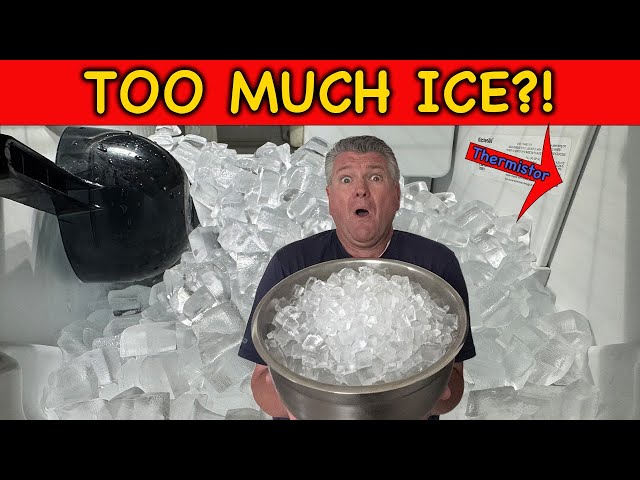
How to Diagnose an Ice Maker That Makes Too Much Ice
Before removing parts, turn off the ice maker. Use the switch, lift the shutoff arm, or follow the instructions in the manual. Keep your hands away from the motor and heater area.
Follow these steps:
- Check the ice level. Remove excess ice so you can see the shutoff system clearly.
- Inspect the shutoff arm. Confirm that it moves freely and is not trapped under a cube.
- Look for optical sensors. Remove food packages, frost, or ice that may block them.
- Reinstall the ice bucket. Make sure it sits level and fully in place.
- Check the freezer temperature. Aim for about 0°F unless your manual gives a different setting.
- Look for water leaks. Inspect the mold, fill tube, and area below the ice maker.
- Turn the ice maker back on. Watch it for several hours instead of checking only once.
- Record what happens. Note whether it overfills, makes thin sheets, or continues after shutdown.
A useful test is to switch off the ice maker overnight. If the bucket still gains ice or becomes wet, the water valve may be leaking. If production stops but resumes too aggressively after turning it on, the sensor, thermostat, or control board may be at fault.
When researching “why is my ice maker making too much ice,” many people jump straight to replacing the water valve. That can waste money. First confirm whether the ice maker is actually receiving water when it should be off.
How to Fix an Ice Maker That Makes Too Much Ice
Clean the shutoff area
Remove loose ice and wipe the shutoff arm or sensor area with a dry cloth. Do not pour hot water over frozen parts. Sudden heat can crack plastic or damage components.
If frost blocks the area, turn off the ice maker and allow the freezer to defrost naturally. Keep the freezer door closed as much as possible. Do not use a knife, hair dryer, or heat gun to remove ice.
Reset the ice maker
Some models have a reset button. Others require you to turn the ice maker off for a few minutes and then turn it back on.
Use the reset method listed in the manual. A reset may clear a temporary control error, but it will not repair a leaking valve or broken sensor.
Reposition the ice bucket
Empty the bucket and check for cracks, warping, or broken rails. Replace it correctly and confirm that the shutoff arm or sensor lines up with the bin.
A damaged bucket can cause repeated shutoff problems. In some models, the bucket also activates a small switch, so even a slight misalignment matters.
Adjust the freezer temperature
Set the freezer close to 0°F. Wait at least 24 hours before judging the result, since temperature changes take time.
Do not pack food tightly around air vents. Poor airflow can create warm spots, frost, and uneven ice production.
Replace a leaking water valve
A water inlet valve involves electrical connections and a pressurized water line. Unplug the refrigerator and close the water supply before any repair.
If you are not comfortable working with water and electricity, arrange professional service. A wrong connection can cause leaks, flooding, or electrical injury.
Replace a defective ice maker assembly
If the motor, thermostat, or internal control parts have failed, replacing the full ice maker assembly may be more practical than repairing individual components.
The correct part must match the refrigerator model number. Ice makers can look similar but use different wiring, mounting points, and water-fill settings.

When to Call an Appliance Repair Professional
Some ice maker problems are simple. Others require electrical testing or sealed parts. Contact a qualified technician if:
- The ice maker keeps running after you switch it off.
- Water continues flowing into the mold.
- The refrigerator leaks onto the floor.
- You smell burning plastic or see damaged wires.
- The ice maker has heavy frost around electrical parts.
- A replacement part does not solve the problem.
- The control panel shows an error code.
- The refrigerator is still under warranty.
Unplug the refrigerator and close the water valve if you see active leaking. Do not keep using an ice maker that fills the freezer with water. A small leak can damage shelves, insulation, flooring, and nearby cabinets.
A technician can test the fill valve, thermostat, wiring, motor, and control board. This approach is safer than replacing several parts by guesswork.
How to Prevent Ice Overproduction
Once you solve the problem, a few habits can help prevent it from returning.
- Keep the ice bucket in its correct position.
- Do not push food against the sensor area.
- Break apart large ice clumps before they block the shutoff system.
- Keep the freezer near 0°F.
- Check the water line for kinks.
- Replace a cracked ice bucket.
- Clean spilled ice and frost early.
- Avoid opening the freezer door more than needed.
- Test the ice maker after a power outage.
- Follow the refrigerator manual for cleaning and reset steps.
Do not store items on top of the ice maker. Heavy packages may press the shutoff arm or interfere with the sensor. Also, do not use sharp tools to break ice. A small scratch in a water line can become a major leak later.
In my experience with appliance troubleshooting, the simplest mistake is often the most expensive one: ignoring a full bin because the ice still looks usable. Excess ice can hide a sensor problem for weeks. Checking the shutoff system once a month is a quick way to catch trouble early.
Safety and Food Quality Tips
Too much ice is more than an inconvenience. Water leaks can create slip hazards and damage the freezer. Frost buildup can also reduce airflow and make the refrigerator work harder.
Throw away ice if it has contacted dirty water, food spills, or unknown residue. Old ice may also absorb freezer odors. It is safe to remove and replace questionable ice rather than risk poor taste or contamination.
Keep the refrigerator door seals clean and intact. A weak seal lets warm air enter, which can cause frost and temperature swings. If the door does not close firmly, repair the seal before judging the ice maker.
Never bypass a shutoff sensor permanently. It may seem like a quick fix, but the ice maker could overfill again and create water damage. The sensor is a safety feature, not an optional part.
Mistakes to Avoid When Troubleshooting
When people ask, “why is my ice maker making too much ice,” they often try several repairs at once. That makes it hard to know which part caused the issue.
Avoid these common mistakes:
- Replacing the ice maker before checking the shutoff arm
- Buying a valve without checking for actual water leakage
- Using a knife to chip away frost
- Pouring hot water into the ice maker
- Ignoring the freezer temperature
- Resetting the refrigerator repeatedly without inspecting it
- Using a part that does not match the model number
- Working on live electrical connections
Take one step at a time. Photograph the wiring and part position before removing anything. If you need to order a component, use the refrigerator’s complete model number, not just the brand name.
This method may feel slower, but it prevents repeat repairs. It also helps a technician understand what changed if the problem continues.
Frequently Asked Questions About Why Is My Ice Maker Making Too Much Ice
Why is my ice maker making too much ice even when the bin is full?
The shutoff arm may be stuck, misaligned, or blocked by ice. On sensor models, the optical beam may be dirty or blocked, so the refrigerator does not recognize that the bin is full.
Can a bad water valve cause an ice maker to overfill?
Yes. A worn water inlet valve may allow water to drip into the ice mold after the fill cycle ends. This can create oversized cubes, ice sheets, or a frozen mass in the bucket.
Should I turn off my ice maker when the bucket is full?
Most automatic ice makers should stop on their own, but turning them off is wise if the shutoff system is not working. This prevents excess ice and reduces the risk of water leaks.
Can freezer temperature cause too much ice production?
Temperature usually affects ice speed and quality more than the shutoff signal. However, extreme temperatures can cause frost, sensor problems, or unusual cycling that may lead to excess ice.
How long does it take for an ice maker to stop after the bin is full?
Many ice makers stop after the shutoff arm rises or the sensor detects a blocked beam. The exact timing varies by model, but production should not continue for hours after the bin reaches the shutoff level.
Is it safe to keep using an ice maker that will not stop?
No. Turn it off until you find the cause. Continued operation may cause water leaks, freezer damage, electrical problems, or a large block of unusable ice.
How often should I clean my ice maker?
Clean the ice bucket and nearby surfaces when you notice odors, residue, or large clumps. Follow the manufacturer’s cleaning instructions, since some models have special parts or cleaning cycles.
Conclusion
If you are asking, “why is my ice maker making too much ice,” start with the shutoff arm, optical sensors, ice bucket position, and freezer temperature. These simple checks solve many cases. If water continues to flow or the ice maker ignores the full-bin signal, a leaking valve, failed thermostat, or control board may be responsible.
Turn off the ice maker before the problem causes water damage. Check one part at a time, use the correct replacement parts, and call a professional when electrical or water-line repairs feel unsafe. Share this guide with someone dealing with an overflowing ice bin, and explore your refrigerator manual for model-specific repair steps.