
Yes. Rice can be cooked in a slow cooker, but the method works best when you use the right rice, enough liquid, and a suitable batch size. White rice usually takes about 1½ to 2½ hours on HIGH. Brown rice often needs 2½ to 3½ hours on HIGH.
Slow cookers vary. Some cook much hotter than others. Start checking the rice before the suggested finish time, especially if you use a small cooker or cook a small batch.
This guide explains how to cook rice in a slow cooker, which rice types work best, how much water to use, and how to avoid wet, hard, or burnt rice.

Is a Slow Cooker Good for Cooking Rice?
A slow cooker can cook rice, but it is not always the best tool for the job. A saucepan or rice cooker gives you more control and usually cooks rice faster. A slow cooker is useful when you are already making a meal in it or need rice to cook without close attention.
The main challenge is heat. A slow cooker heats gently and slowly. Rice needs enough heat to absorb water and soften. If the cooker is not hot enough, the rice may stay firm for a long time.
Slow cookers also hold steam inside the pot. This can help rice cook, but it can also make the final dish soft or wet if you add too much water.
When a slow cooker makes sense
Use a slow cooker for rice when:
- You are cooking a large meal at the same time.
- You need rice ready while you handle other tasks.
- You want to cook brown rice, wild rice, or a rice-based dish.
- You have a slow cooker with a reliable HIGH setting.
A slow cooker is less useful when you need one small serving quickly. For that, a stovetop pot or microwave method is often easier.
What affects the result?
Several factors change the cooking time and texture:
- Rice type
- Rice age and brand
- Slow cooker size
- Cooker temperature
- Batch size
- Lid openings
- Water or broth amount
- Whether the rice is rinsed
Keep the lid closed during cooking. Each time you lift it, heat and steam escape. This can add several minutes to the cooking time.
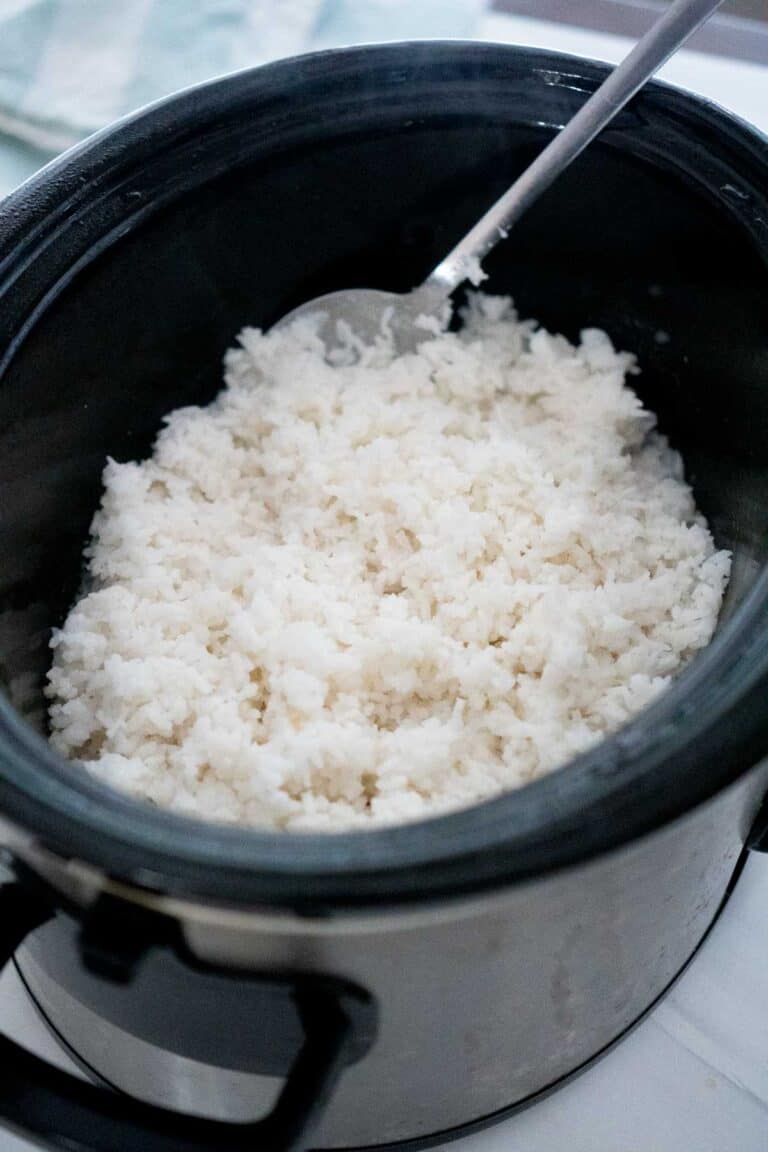
How to Cook White Rice in a Slow Cooker
For basic long-grain white rice, use 1 cup of rice with about 1½ cups of liquid. This makes roughly 3 cups of cooked rice, depending on the rice and cooking conditions.
Ingredients
- 1 cup long-grain white rice
- 1½ cups water or broth
- ½ teaspoon salt, optional
- 1 teaspoon butter or oil, optional
Steps
- Rinse the rice. Place it in a fine-mesh strainer and rinse under cool water until the water looks less cloudy. This removes some surface starch and can reduce gumminess.
- Grease the slow cooker. Lightly coat the inside with butter or oil. This helps reduce sticking.
- Add the rice and liquid. Put the rice, water or broth, salt, and fat into the cooker.
- Cover the cooker. Keep the lid in place.
- Cook on HIGH. Begin checking the rice after 1½ hours.
- Check the texture. The rice is done when the grains are tender and most of the liquid is absorbed.
- Rest the rice. Turn off the slow cooker and let the rice stand, covered, for 10 minutes.
- Fluff and serve. Use a fork rather than a spoon to separate the grains.
Cooking time may range from 1½ to 2½ hours on HIGH. Cooking white rice on LOW may take much longer and can produce uneven results.
A simple white rice ratio
| Rice type | Rice | Liquid | Starting time |
|---|---|---|---|
| Long-grain white rice | 1 cup | 1½ cups | 1½ hours on HIGH |
| Basmati rice | 1 cup | 1¼ to 1½ cups | 1½ hours on HIGH |
| Jasmine rice | 1 cup | About 1¼ cups | 1½ hours on HIGH |
| Short-grain white rice | 1 cup | About 1½ cups | 1½ to 2 hours on HIGH |
These amounts are starting points, not fixed rules. A slow cooker does not evaporate liquid in the same way as an open pot. The best ratio may differ by cooker and rice brand.
If the rice is still hard but the liquid is gone, add 2 to 4 tablespoons of hot water. Cover the cooker and continue cooking for 15 to 20 minutes.
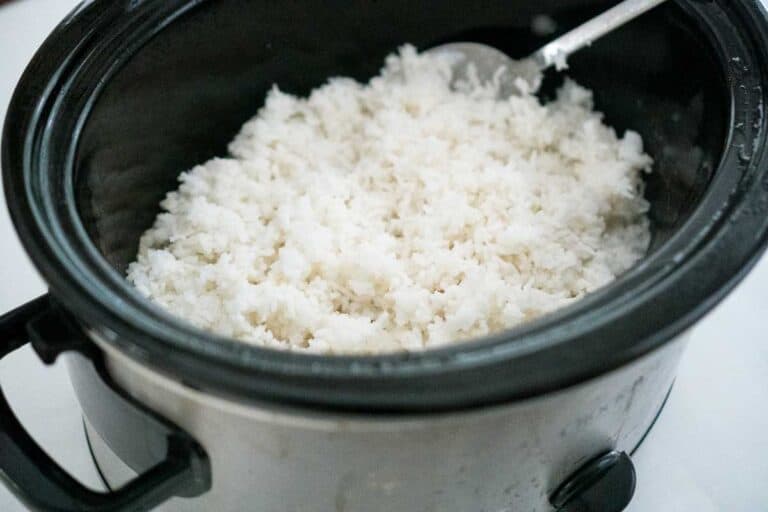
Can You Cook Brown Rice in a Slow Cooker?
Yes. Brown rice works well in a slow cooker, but it needs more time and liquid than white rice. The bran layer around each grain makes brown rice slower to soften.
Use about 1 cup of brown rice with 2 cups of liquid. Cook it on HIGH for about 2½ to 3½ hours, then check the texture.
Brown rice method
- Rinse 1 cup of brown rice.
- Add the rice to a greased slow cooker.
- Add 2 cups of water or broth.
- Add salt and a small amount of oil or butter if desired.
- Cover and cook on HIGH.
- Check the rice after 2½ hours.
- Continue cooking until the grains are tender.
- Let the rice rest for 10 minutes before serving.
Brown rice can remain slightly chewy even when fully cooked. It should not be hard in the center, though. If the grains are firm and dry, add a little hot liquid and cook longer.
Brown rice and white rice should not cook together
Do not mix white rice and brown rice in the same slow cooker unless you use a recipe made for that blend. The two types need different amounts of liquid and different cooking times. White rice may turn soft before the brown rice is ready.

Can You Cook Wild Rice or Rice Blends in a Slow Cooker?
Yes, but wild rice is not the same as white or brown rice. Wild rice is an aquatic grass seed. It has a firm outer coating and usually needs more liquid and more time.
Use about 1 cup of wild rice with 3 cups of liquid. Cook it on HIGH for roughly 3 to 4 hours, or until the grains split and become tender.
Rice blends need special care. A package may contain white rice, brown rice, wild rice, herbs, or other grains. Follow the package directions when available. If no directions are provided, use the cooking instructions for the slowest-cooking grain in the blend.
Good slow-cooker choices
These rice types are generally suitable:
- Long-grain white rice
- Basmati rice
- Jasmine rice
- Brown rice
- Wild rice
- Rice blends made for slow cooking
Rice types that need extra care
- Arborio rice can become very creamy or sticky.
- Sushi rice may become too soft.
- Instant rice can turn mushy if cooked for a long time.
- Parboiled rice may need a different liquid ratio.
- Pre-seasoned rice mixes may contain salt or starch that changes the result.
For risotto, a slow cooker can work well because the dish is meant to be creamy. However, use a recipe designed for slow-cooker risotto instead of a plain rice formula.

How Much Rice Can You Cook in a Slow Cooker?
The slow cooker should be at least half full but not more than two-thirds full for the most even results. This rule applies to the full contents, including rice, liquid, meat, and vegetables.
For plain rice, a 3-quart slow cooker can handle a small batch. A 5- or 6-quart cooker is better for larger amounts.
| Slow cooker size | Practical plain-rice batch |
|---|---|
| 3-quart cooker | About 1 to 2 cups dry rice |
| 5-quart cooker | About 2 to 3 cups dry rice |
| 6-quart cooker | About 2 to 4 cups dry rice |
These are practical starting ranges. Always leave room for the rice to expand. One cup of dry rice can produce about 3 cups of cooked rice, though the final amount varies by rice type.
A very small batch in a large cooker may cook unevenly. The thin layer can dry out at the edges before the center is done.

Can You Cook Rice With Chicken, Beans, or Vegetables?
Yes, but the ingredients must be compatible with the cooking time. Rice can cook with broth, vegetables, beans, and meat in one pot. The recipe must provide enough liquid for both the rice and the other ingredients.
With chicken
Use boneless chicken pieces of a similar size. Raw chicken must reach a safe internal temperature of 165°F, measured with a food thermometer. Rice may be done before thick chicken pieces are safe, so check the meat separately.
For best results:
- Use small, even pieces of chicken.
- Add enough liquid for the rice.
- Avoid opening the lid often.
- Check the chicken in the thickest part.
- Do not rely on the rice texture to confirm that chicken is safe.
With beans
Canned beans can be added near the start because they are already cooked. They mainly need to heat through.
Dried kidney beans require special care. Slow cookers may not heat them enough to destroy naturally occurring lectins. The U.S. Food and Drug Administration advises boiling dried kidney beans before eating them. Do not place unboiled dried kidney beans directly into a slow cooker.
Other dried beans also need proper soaking and cooking. Follow tested food-safety guidance for the specific bean.
With vegetables
Firm vegetables such as carrots and onions can cook with rice. High-water vegetables, such as zucchini or tomatoes, release liquid and may make the rice soft. Reduce the added liquid only when a tested recipe accounts for that extra moisture.

How to Keep Slow-Cooker Rice From Getting Mushy
Mushy rice usually has too much liquid, too much cooking time, or too much stirring. Slow cookers trap steam, so excess water has fewer ways to escape.
Use these fixes:
- Measure the rice and liquid carefully.
- Rinse the rice before cooking.
- Use a little less liquid if your cooker traps a great deal of steam.
- Avoid opening the lid.
- Check the rice as soon as it may be done.
- Turn off the cooker when the grains are tender.
- Do not leave finished rice on HIGH.
If the rice is already soft, remove the lid for a few minutes and allow some steam to escape. You can also spread the rice on a shallow tray to cool. Do not keep cooking mushy rice, since more heat will not restore firm grains.
Why is slow-cooker rice still hard?
Hard rice usually means one of four things:
- The cooker is not hot enough.
- The lid was opened too often.
- There was not enough liquid.
- The rice needed more time.
Add a small amount of hot water or broth, cover the cooker, and continue cooking. If the slow cooker stays only warm after several hours, move the rice to a saucepan and finish it safely on the stove.

Slow-Cooker Rice Safety
Cooked rice needs prompt cooling and safe storage. Uncooked rice can contain spores of Bacillus cereus. Cooking may destroy many bacteria, but some spores can survive. If cooked rice sits at room temperature for too long, bacteria can grow and produce toxins.
For safer handling:
- Serve rice soon after cooking.
- Refrigerate leftovers within 2 hours.
- Refrigerate within 1 hour when the air temperature is above 90°F, such as at an outdoor event.
- Store rice in shallow containers so it cools faster.
- Use refrigerated rice within 3 to 4 days.
- Reheat leftovers to 165°F.
- Discard rice that has been left out too long.
Do not use a slow cooker as a long-term storage device for cooked rice. The “warm” setting may keep food hot, but it is not a substitute for prompt cooling and refrigeration when storing leftovers.
When reheating rice, add a small splash of water and cover it. Heat until steaming hot throughout, then check the temperature if you have a food thermometer.

Common Mistakes to Avoid
Using the same water ratio for every rice type
White rice, brown rice, and wild rice do not absorb liquid at the same rate. Match the ratio to the rice.
Filling the cooker too high
Rice expands as it cooks. Overfilling can lead to uneven cooking and may cause liquid to spill over.
Cooking on LOW without a tested recipe
LOW heat may not provide enough heat for plain rice. HIGH is usually easier to control for this task.
Lifting the lid repeatedly
Steam is part of the cooking process. Frequent checks slow the cook and can leave the rice firm.
Adding frozen ingredients without adjusting the method
Frozen meat or vegetables can lower the temperature of the cooker. Thaw meat safely in the refrigerator before cooking, and account for extra moisture from frozen vegetables.
Leaving rice on warm for hours
Rice can lose quality and may become a food-safety concern if the cooker does not keep it hot enough. Refrigerate leftovers instead.

Slow Cooker Rice vs. Stovetop Rice vs. Rice Cooker
The best method depends on your goal.
| Method | Main benefit | Main limitation |
|---|---|---|
| Slow cooker | Useful while preparing a larger meal | Slow and variable |
| Stovetop pot | Fast and easy to adjust | Needs more attention |
| Rice cooker | Consistent and convenient | Requires a separate appliance |
| Microwave | Good for small portions | Batch size is limited |
Choose a slow cooker when convenience matters more than speed. Choose a stovetop pot when you need rice in about 20 to 30 minutes. Choose a rice cooker when you make rice often and want automatic cooking with less guesswork.

Frequently Asked Questions
Can I cook rice on LOW in a slow cooker?
You can, but plain rice is more reliable on HIGH. LOW may take several hours and may leave the rice unevenly cooked. Use LOW only with a recipe designed and tested for that setting.
Do I need to rinse rice before putting it in a slow cooker?
Rinsing is not required, but it often improves texture. It removes some loose starch and can reduce sticky or gummy rice. Rinse rice in a fine-mesh strainer until the water becomes less cloudy.
Can I use broth instead of water?
Yes. Broth adds flavor and can replace water at the same volume. Check the salt level before adding extra salt, especially with canned broth or bouillon.
Can I cook rice ahead of time in a slow cooker?
Yes, but serve it soon after it finishes. For later use, cool the rice quickly in shallow containers and refrigerate it within the USDA-recommended time limits. Reheat leftovers to 165°F.
Why does rice burn around the edges?
The cooker may be too large for the batch, the liquid may be too low, or the rice may have cooked too long. Grease the crock, use a suitable batch size, and check the rice early.
Conclusion
Rice can be cooked in a slow cooker, especially when you use the HIGH setting and choose the right liquid ratio. Start with 1½ cups of liquid per cup of white rice or 2 cups per cup of brown rice, then adjust for your cooker.
The best results come from rinsing the rice, keeping the lid closed, checking early, and resting the rice before serving. For leftovers, cool and refrigerate the rice promptly. If you need speed or highly consistent results, a stovetop pot or rice cooker may be the better choice.