
Introduction
Most standard slow cookers cannot sear meat. Their ceramic crock heats slowly and does not reach the high, dry heat needed to brown meat well. However, some U.S. multi-cookers and slow cookers have a labeled Sauté, Brown, or Sear setting.
For the best flavor, sear the meat in a hot skillet first. Then move it to the slow cooker with the other ingredients. This adds a dark crust and rich taste without changing the slow cooker’s gentle cooking method.

What Does Searing Do?
Searing cooks the outside of meat with high heat. It creates a brown crust through the Maillard reaction, a chemical reaction between proteins and sugars on the meat’s surface.
Searing can add:
- A deeper roasted flavor
- A darker color
- More complex aromas
- Better contrast between the crust and the soft center
Searing does not seal juices inside meat. That common idea is not supported by cooking science. Meat may still lose moisture during cooking, but the final result depends more on the cut, cooking time, temperature, and moisture in the pot.
A slow cooker works in the opposite way. It uses low, steady heat and trapped moisture. This helps soften tough cuts, but it does not create the dry, high heat needed for a crisp brown crust.
Can a Standard Slow Cooker Sear Meat?
A standard slow cooker usually cannot sear meat properly. Its heat is designed for long, moist cooking, not fast browning.
The removable crock may also have limits:
- It may heat too slowly.
- It may not sit safely on a stovetop.
- It may crack from direct burner heat.
- Its surface may not brown food evenly.
- The manufacturer may prohibit stovetop or oven use.
Never place a slow cooker insert on a burner unless the manual clearly says it is safe. A ceramic insert can break when exposed to direct heat or sudden temperature changes.
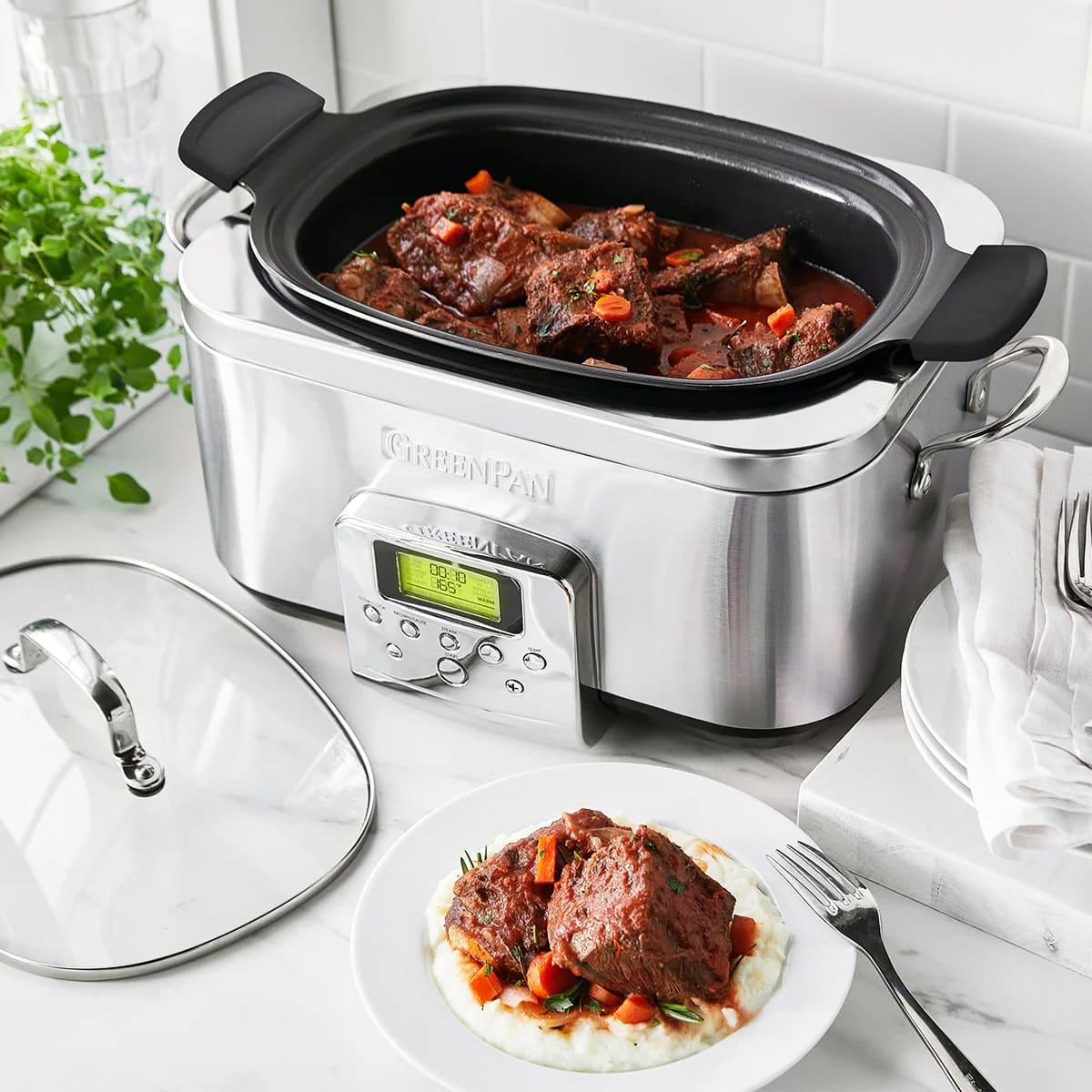
Some newer U.S. appliances combine several functions. A multi-cooker may include settings such as:
- Sauté
- Brown
- Sear
- Simmer
- Slow Cook
These appliances can brown meat in the same inner pot before switching to slow-cook mode. Check the manual for the exact steps. A “slow cook” label alone does not mean the appliance can sear.
The Best Way to Sear Meat Before Slow Cooking
For most slow cooker recipes, use a separate heavy skillet. Cast iron or stainless steel works well because both can hold strong heat.
What you need
- Meat cut for the recipe
- A heavy skillet
- A small amount of high-heat cooking oil
- Paper towels
- Tongs
- Salt and other seasonings
Step-by-step method
-
Pat the meat dry.
Use paper towels to remove surface moisture. Wet meat will steam instead of brown. -
Season the meat.
Salt and pepper are enough for many recipes. Add other spices if the recipe calls for them. -
Heat the skillet.
Set it over medium-high to high heat. The pan should be hot before the meat goes in. -
Add a thin layer of oil.
Choose an oil suited to high heat, such as canola, avocado, peanut, or refined vegetable oil. -
Place the meat in one layer.
Leave space around each piece. Crowding lowers the pan temperature and causes steaming. -
Let the meat brown without moving it.
Turn it when the first side has a deep brown crust. Large pieces may need several minutes per side. -
Brown the edges when useful.
For a roast, turn it with tongs to sear the sides as well. -
Transfer the meat to the slow cooker.
Add the meat, vegetables, liquid, and seasonings. -
Deglaze the skillet if desired.
Pour a small amount of broth, water, or wine into the hot skillet. Scrape up the browned bits, then add that liquid to the slow cooker if the recipe allows.
The pan should be hot enough to brown the meat but not so hot that the oil smokes heavily. If the meat burns before it develops an even crust, lower the heat slightly.

How to Sear Meat in a Multi-Cooker
If your appliance has a Sauté or Brown setting, you may be able to sear meat in the same pot. Follow the appliance manual first, since controls and heat levels differ by model.
A general method is:
- Select Sauté, Brown, or Sear.
- Allow the pot to preheat.
- Add a small amount of oil.
- Pat the meat dry.
- Brown the meat in batches.
- Remove the meat if you need to brown vegetables.
- Add the cooking liquid and scrape the bottom.
- Return the meat to the pot.
- Select Slow Cook and continue with the recipe.
Do not fill the pot so full that the meat touches the sides in one crowded layer. Brown smaller batches instead. This takes more time, but it gives the meat better contact with the hot surface.
Some multi-cookers reduce heat sharply when switched to slow-cook mode. That is normal. The appliance is changing from browning to gentle cooking.
Which Meats Benefit Most From Searing?
Searing helps most when the meat has a broad surface and the finished dish would benefit from roasted flavor.
| Meat or cut | Is searing useful? | Practical note |
|---|---|---|
| Beef chuck roast | Yes | Brown all sides before slow cooking |
| Short ribs | Yes | Searing adds strong roasted flavor |
| Pork shoulder | Often | Brown large pieces or the outside of the roast |
| Pork loin | Sometimes | Avoid overcooking because it is lean |
| Lamb shoulder | Yes | Browning pairs well with herbs and garlic |
| Chicken thighs | Often | Sear skin-side down if the skin will be served |
| Chicken breast | Sometimes | Lean meat can dry out during long cooking |
| Ground beef | Yes, but cook separately | Brown and drain it before adding it |
| Sausage | Often | Brown first for color and flavor |
Searing is less useful when the meat will be fully covered by liquid and served in a heavily seasoned sauce. It can still improve flavor, but the difference may be smaller.
For ground meat, brown it in a skillet before placing it in the slow cooker. This helps remove excess fat and gives the meat a better texture. Do not put raw ground beef into a slow cooker unless the recipe and food-safety steps specifically support that method.

Searing Versus Slow Cooking: What Each Method Does
Searing and slow cooking solve different cooking problems.
| Cooking method | Main effect | Heat and moisture |
|---|---|---|
| Searing | Browns the surface and builds flavor | High heat, little moisture |
| Slow cooking | Softens tough meat and blends flavors | Low heat, trapped moisture |
| Braising | Combines browning with moist cooking | Brown first, then cook with liquid |
| Roasting | Cooks with dry heat | Moderate to high dry heat |
The usual best method for a slow cooker roast is therefore:
Sear first, then slow cook.
This gives you the flavor of a browned crust and the tenderness of long, moist cooking. It does add one extra pan to wash, but the trade-off is usually worthwhile for beef chuck, short ribs, lamb shoulder, and similar cuts.
How Much Liquid Should You Add?
Searing does not change how much liquid a slow cooker needs. Follow the recipe’s liquid amount rather than covering the meat completely.
Slow cookers lose less moisture than uncovered pots. Ingredients also release water as they cook. Adding too much liquid can produce a thin sauce and may dilute the flavor.
A good slow cooker recipe often uses enough liquid to support cooking but does not fully submerge every ingredient. The exact amount depends on:
- The size and shape of the cooker
- The cut of meat
- The amount of vegetables
- Whether the meat is fresh or frozen
- The recipe’s sauce or broth
- The cooking time
Do not add cold liquid to a very hot ceramic insert unless the manual allows it. Sudden temperature changes may damage some inserts. Use room-temperature or warm liquid when appropriate, and handle the insert with care.
Food Safety When Searing and Slow Cooking
Searing the outside of meat does not make the inside safe to eat. A quick sear may brown the surface while the center remains raw.
Use a food thermometer to check doneness in the thickest part of the meat. The U.S. Department of Agriculture lists these minimum internal temperatures:
- Whole cuts of beef, pork, lamb, and veal: 145°F, followed by a three-minute rest
- Ground meats: 160°F
- Poultry: 165°F
- Leftovers and casseroles: 165°F
The final temperature and texture may be higher or softer in a slow-cooked recipe. Tough beef cuts often need more time to become tender, even after they reach a safe temperature.
For safer slow cooking:
- Thaw meat in the refrigerator before cooking.
- Do not use a slow cooker to thaw frozen meat.
- Keep the cooker at least half full and no more than about two-thirds full when the recipe or manual gives that guidance.
- Keep the lid on during cooking.
- Do not use the warm setting to cook raw meat.
- Refrigerate leftovers within two hours.
- Divide large amounts of leftovers into shallow containers so they cool faster.
The USDA’s slow cooker food safety guidance and safe minimum internal temperature chart provide current U.S. handling guidance.

Common Problems and Fixes
The meat turned gray instead of brown
The pan may not have been hot enough, or the meat may have been wet. Pat the meat dry and preheat the pan before adding oil and meat.
The meat released a lot of liquid
The pan was likely crowded. Cook in smaller batches and let liquid evaporate before adding the next batch.
The crust burned
The heat may have been too high, or the pan may have contained leftover spices that scorched. Reduce the heat and wipe out burned residue before continuing.
The meat stuck to the pan
Meat often releases more easily after a crust forms. Give it time before trying to turn it. Stainless steel pans may need more oil and careful preheating than nonstick pans.
The finished dish tastes greasy
Trim excess fat before searing. For ground meat, drain the fat after browning. You can also chill the finished sauce and remove solidified fat from the surface.
The meat is safe but still tough
Safety and tenderness are not the same. Tough cuts contain connective tissue that needs time to break down. Continue cooking until the meat is fork-tender, while checking that the cooker is operating correctly and has enough liquid.
The recipe says to sear in the slow cooker, but mine has no Sauté setting
Use a separate skillet. Do not place the removable crock on a burner unless the manufacturer specifically approves that use.

Do You Have to Sear Meat Before Slow Cooking?
No. You can slow cook meat without searing it first.
Searing is a flavor and color step, not a required safety step. Skip it when:
- You need a quick meal
- The recipe has strong flavors that will cover the difference
- You are cooking a small amount of meat
- You want fewer dishes
- The appliance manual does not allow browning in its insert
Sear first when the dish centers on the meat’s roasted flavor. Beef roasts, short ribs, lamb, and pork shoulder often gain the most from this extra step.
Is It Better to Sear Meat Before or After Slow Cooking?
Sear meat before slow cooking when you want a browned crust and a rich base for the sauce.
Searing after slow cooking is less common. Soft meat may fall apart when handled, and its surface may be wet. If you want a crisp finish, you can sometimes place the cooked meat under a broiler or in a hot oven for a short time. Use an oven-safe dish and watch it closely.
For chicken with skin, slow cooking often leaves the skin soft. A brief broil after cooking can improve the skin, but it will not restore the same texture as traditional roasting.
Can You Put Raw Meat Directly in a Slow Cooker?
Yes, many slow cooker recipes begin with raw meat. The meat must still reach a safe internal temperature, and the cooker must heat properly.
Raw meat placed directly into the slow cooker will not have the browned flavor that comes from searing. Ground meat is the main exception: browning it first usually improves texture, removes excess fat, and reduces the chance of a greasy sauce.
Always thaw meat safely in the refrigerator before slow cooking. Frozen meat may remain too long in the food-safety danger zone as the cooker warms.
Key Takeaways
- A standard slow cooker usually cannot sear meat.
- A multi-cooker with a Sauté, Brown, or Sear setting may be able to do it.
- The safest and most reliable method is to use a separate hot skillet.
- Pat meat dry, avoid crowding, and brown it in batches.
- Searing adds flavor and color; it does not seal in juices.
- Searing is optional, not required for safe slow cooking.
- Use a food thermometer and follow USDA minimum temperatures.
- Never place a slow cooker insert on a stovetop unless the manual approves it.
FAQs
Can you sear meat in a Crock-Pot?
Most traditional Crock-Pot slow cookers are not designed to sear meat. Some models or related multi-cookers may have a Brown or Sauté function. Check the product manual before using direct heat on the insert.
Can you brown meat in a slow cooker without oil?
Usually, a small amount of oil helps prevent sticking and improves contact with the cooking surface. In a nonstick multi-cooker, you may need very little oil, but the manufacturer’s instructions should guide use.
Does searing meat make it more tender?
No. Searing mainly improves surface color and flavor. Tenderness comes from the cut of meat, cooking time, temperature, and the breakdown of connective tissue.
Should you sear stew meat before putting it in the slow cooker?
You do not have to, but browning stew meat in batches can add a deeper flavor. Avoid crowding the skillet, or the meat may steam instead of sear.
Can you sear frozen meat before slow cooking?
Do not try to sear frozen meat as a substitute for safe thawing. Thaw meat in the refrigerator first. Frozen meat may cook unevenly and can keep the slow cooker at an unsafe temperature for too long.
Conclusion
You can sear meat before slow cooking, but a standard slow cooker usually cannot do the searing itself. Use a hot skillet unless your appliance clearly includes a Sauté, Brown, or Sear function.
For the best result, dry and season the meat, brown it in batches, then transfer it to the slow cooker. Treat searing as an optional flavor step, and use a thermometer to confirm safe cooking temperatures.