
Most GE Profile ice maker problems come from a paused cycle, blocked water flow, low temperature, or a faulty inlet valve.
GE Profile ice maker troubleshooting is easier when you test the simple causes first. This guide explains what each symptom means, what you can safely fix at home, and when a trained technician should inspect the appliance.
Before you begin GE Profile ice maker troubleshooting
Start by finding the refrigerator’s exact model number. GE Profile refrigerators can use different ice maker designs, controls, water filters, and reset methods. The model number is often on the inside wall, ceiling, or door frame of the fresh-food section.
Use the owner’s manual for model-specific instructions. A reset button, test switch, or control setting may look different from one model to another.
Before working on the ice maker:
• Keep your hands dry.
• Do not remove electrical panels while the refrigerator is connected to power.
• Do not use sharp tools to break ice near plastic parts or wiring.
• Turn off the ice maker before removing a jam.
• Close the water supply valve if you disconnect a water line.
• Wear gloves when handling sharp ice or metal parts.
In my experience, many service calls begin with a small issue that looks serious. A turned-off ice maker or a clogged filter can make the entire system seem dead. A calm, step-by-step check often saves time and avoids an unnecessary repair.

How a GE Profile ice maker works
An ice maker needs four basic conditions: power, cold air, water, and a working harvest cycle. If one part fails, ice production can stop.
The cycle usually follows these steps:
-
The ice mold cools to a freezing temperature.
-
A sensor or thermostat confirms that the ice is ready.
-
The motor turns the ejector fingers.
-
The cubes leave the mold and fall into the ice bin.
-
The water inlet valve opens for a short time.
-
The mold fills with fresh water.
-
The cycle starts again.
The freezer must stay cold enough for this process. Most refrigerators work best when the freezer is set near 0°F, although the exact recommended setting may vary by model. A freezer that is too warm may keep food frozen but still fail to make ice.
The water system also matters. A kinked tube, old filter, weak water pressure, or frozen fill tube can stop the ice maker from filling. This is why GE Profile ice maker troubleshooting should check both the cooling system and the water system.
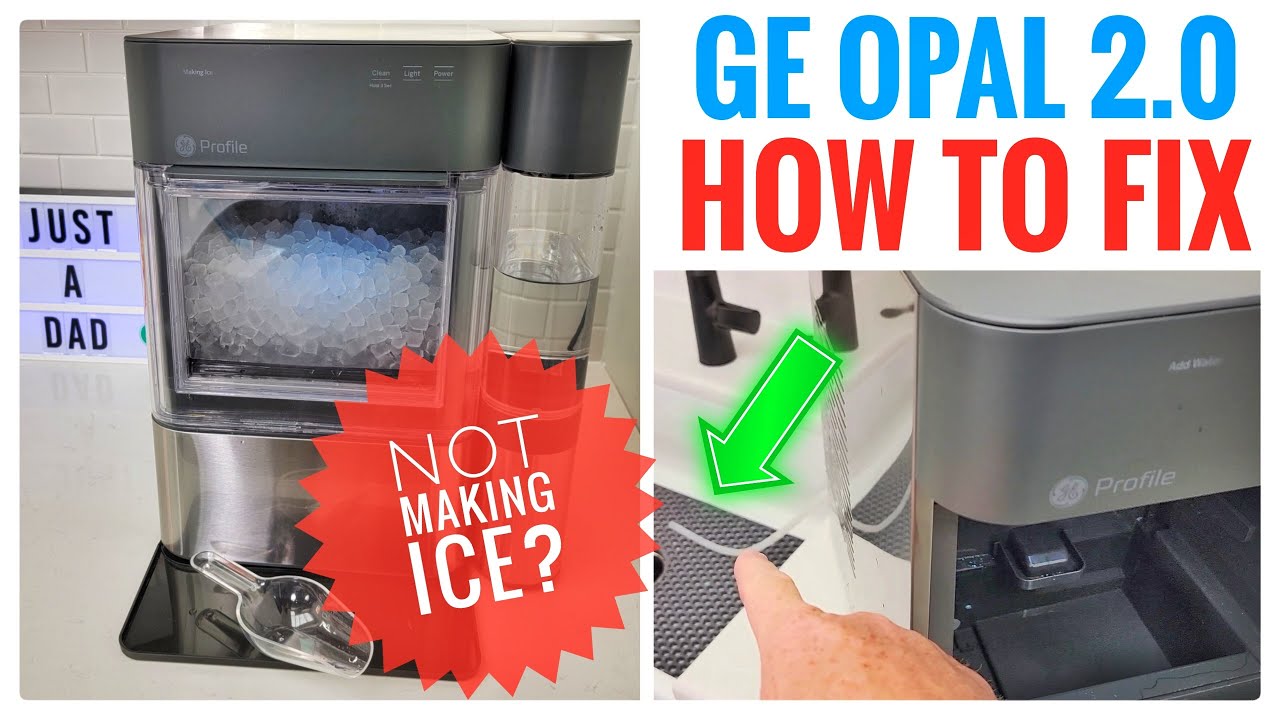
GE Profile ice maker not making ice
If your GE Profile ice maker is not making ice, check the controls first. The ice maker may be switched off, or the refrigerator may be in a vacation, showroom, or diagnostic mode.
Follow these steps:
-
Confirm that the ice maker is turned on.
-
Check whether the ice bin is seated correctly.
-
Look for ice blocking the ejector fingers.
-
Check the freezer temperature.
-
Inspect the water filter and supply line.
-
Wait several hours after making changes.
Some GE Profile models have a power switch. Others use an electronic control, a wire arm, or a test/reset button. Do not force the arm or ejector. Plastic parts can crack when they are pushed against frozen ice.
If the ice maker was recently installed, serviced, or reset, it may need time to complete a cycle. Ice production is not instant. Depending on the model and freezer temperature, the first batch may take several hours.
A full ice bin can also stop production. The bin may look empty from above while a frozen mass blocks the sensor area below. Remove the bin and check for clumped ice, then reinstall it firmly.
GE Profile ice maker troubleshooting when the ice bin is empty
An empty bin does not always mean the ice maker is broken. The appliance may be making ice slowly, or the cubes may be too small to trigger normal harvesting.
Check these common causes:
• The freezer temperature is above the recommended setting.
• The door is opened often.
• Warm food was recently added.
• The ice maker was turned off.
• The water filter is clogged.
• The supply line has low pressure.
• The ice maker has a frozen fill tube.
• The inlet valve is not opening.
Let the freezer return to its normal temperature before testing again. Avoid placing hot food inside, since it adds heat and moisture. Also check that the freezer door closes fully and that the gasket seals against the cabinet.
A simple test can help. Remove the ice bin and look inside the ice maker mold. If the mold is dry, the problem may involve water flow. If the mold is full of ice but the cubes will not release, the problem may involve the motor, thermostat, or ejector system.
This distinction is useful during GE Profile ice maker troubleshooting because it tells you where to focus. A dry mold points toward the water path. A full mold points toward the harvest cycle.

GE Profile ice maker not filling with water
When the mold is empty, inspect the water supply before replacing the ice maker. The refrigerator needs enough water pressure to open the inlet valve and fill the mold.
Check the following:
-
Make sure the household water valve is fully open.
-
Inspect the tubing behind the refrigerator.
-
Look for kinks, crushed sections, or leaks.
-
Replace an old water filter with the correct type.
-
Check whether the dispenser also has weak water flow.
-
Allow air to leave the system after installing a new filter.
If the dispenser has weak flow and the ice maker is dry, the issue may be upstream. A blocked filter, partially closed valve, or restricted tube can affect both systems.
If the dispenser works well but the ice maker does not fill, the inlet valve or fill tube may be the problem. The fill tube can freeze when water pressure is low or when the valve does not close properly after filling.
Do not use a knife, screwdriver, hair dryer, or heat gun to clear a frozen fill tube. Excess heat can damage plastic, wiring, and nearby parts. Unplugging the refrigerator and allowing the area to thaw naturally is safer, but follow the model manual before doing so.
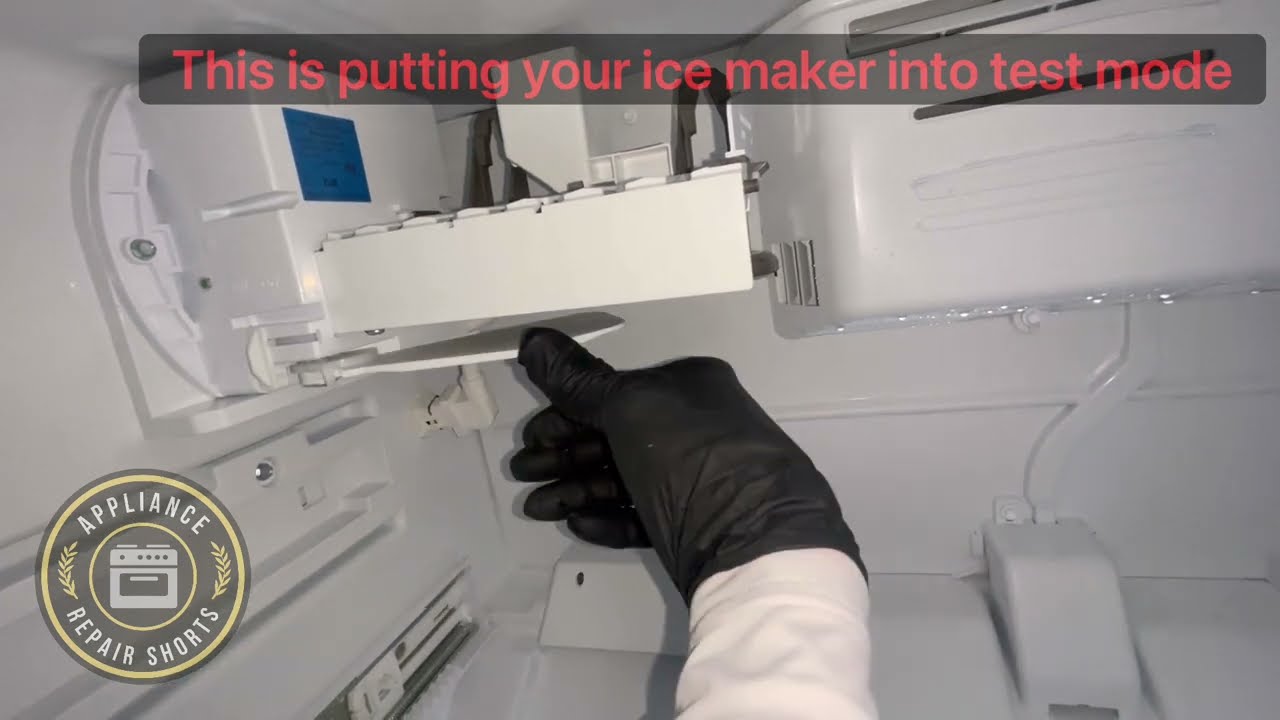
GE Profile ice maker is leaking water
Water under or inside the ice maker often comes from a loose connection, a blocked drain, or an inlet valve that does not close fully.
Look for these signs:
• Water drips from the fill tube.
• Ice cubes are joined into a large sheet.
• The ice bin contains slushy ice.
• Water appears below the crisper drawers.
• The supply line connection is wet.
First, dry the area and observe where new water appears. This makes the source easier to identify. Do not tighten plastic fittings too much, because overtightening can create cracks.
A leaking inlet valve may allow water to seep into the ice mold between cycles. A misaligned fill tube can also send water outside the mold. If the leak continues after checking the connection and filter, shut off the water supply and arrange service.
During GE Profile ice maker troubleshooting, remember that water damage can become more costly than the original appliance problem. A small leak can damage flooring, cabinets, or electronic controls.

GE Profile ice maker makes small or hollow ice cubes
Small or hollow cubes usually mean the ice maker is not receiving enough water. The cause may be a clogged filter, low household pressure, a restricted line, or a valve that opens for too little time.
Try these steps:
-
Check the water dispenser flow.
-
Replace the filter if it is overdue.
-
Confirm that the water valve is fully open.
-
Inspect the tubing for bends.
-
Check for a partially frozen fill tube.
-
Make sure the freezer is not too warm.
Hollow ice can also happen when water freezes slowly or when the mold does not fill completely. If the freezer temperature is unstable, check whether the door gasket seals and whether frost covers the rear vents.
Avoid changing the refrigerator temperature repeatedly. Frequent changes can make diagnosis harder and may cause other food storage problems. Make one adjustment, then allow enough time for the freezer to stabilize.
If the dispenser has strong flow but the cubes remain small, the inlet valve may be restricted. This repair usually requires testing the valve and checking the manufacturer’s part information.
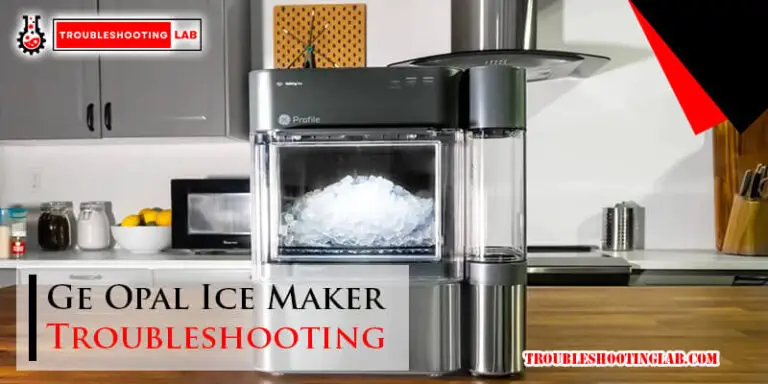
GE Profile ice maker is frozen or jammed
A jam usually occurs when wet cubes stick together or when the ejector cannot complete its cycle. A jammed ice maker may make clicking sounds, stop halfway through a cycle, or leave cubes trapped in the mold.
To clear a simple jam:
-
Turn off the ice maker.
-
Remove the ice bin.
-
Let loose ice soften at room temperature.
-
Use a plastic utensil to remove safe, loose pieces.
-
Wipe away melted water.
-
Reinstall the bin and turn the ice maker on.
Never chip hard ice with a metal object. You may puncture the mold or damage the motor housing. Never pour boiling water into the ice maker, since sudden heat can crack plastic parts.
If the fill tube freezes again, do not keep thawing it without finding the cause. Repeated freezing may point to a leaking inlet valve, low water pressure, or a control problem.
One mistake I often see in home repairs is forcing the ejector fingers by hand. They are not designed to be pushed through a solid block of ice. Gentle thawing is safer than applying force.
GE Profile ice maker makes noise but does not harvest
A normal ice maker can make several sounds. You may hear a low motor sound, a click from the water valve, or a short buzzing noise during filling.
Problem sounds include:
• Repeated clicking without movement.
• A loud grinding sound.
• A hum that continues for a long time.
• A buzzing sound with no water entering.
• A knocking sound from the ice bin.
First, remove loose ice from the bin and check whether cubes are stuck around the ejector. If the sound continues with an empty bin, the motor, gear system, or control may need testing.
A humming sound may come from the water valve. If no water enters the mold, check the supply line and filter before assuming the valve has failed. A grinding sound may indicate a motor or gear issue.
Do not place your fingers near moving parts while the ice maker is active. If the noise is loud, repeated, or paired with a burning smell, disconnect power and request professional service.
Good GE Profile ice maker troubleshooting separates normal operating sounds from warning signs. A single click is often normal. A repeated mechanical sound is more concerning.
GE Profile ice maker has a bad taste or odor
Ice can absorb odors from strong foods in the refrigerator. Old ice may also taste stale after sitting in the bin for weeks.
For fresher ice:
• Empty and wash the ice bin.
• Dry the bin fully before reinstalling it.
• Store strong foods in sealed containers.
• Replace the water filter as recommended.
• Discard the first batches after a new filter is installed.
Use mild dish soap and warm water to clean the bin. Rinse it well so soap does not affect the taste. Do not use harsh chemicals unless the owner’s manual approves them.
A new refrigerator may also produce a temporary plastic taste. This often improves after the water system is flushed and several batches of ice are discarded. If the taste is chemical, metallic, or persistent, stop using the ice and check the water supply.
Taste concerns are not always an ice maker failure. They can involve the filter, household water, plumbing, or food storage conditions.
How to reset a GE Profile ice maker
The reset method depends on the model. Some GE Profile ice makers use a test or reset button. Others use a power switch, wire arm, or electronic control panel.
A safe general process is:
-
Turn the ice maker off.
-
Wait about one minute.
-
Turn it back on.
-
Press the test or reset control only as directed by the manual.
-
Listen for a harvest or fill cycle.
-
Wait several hours for normal production.
Do not repeatedly reset the ice maker. A reset can clear a temporary control fault, but it cannot repair a blocked water line, failed motor, or defective valve.
If the ice maker does not respond after a correct reset, write down any display code or unusual sound. The model number and symptom details will help a technician diagnose the appliance faster.
Resetting is one part of GE Profile ice maker troubleshooting, not a complete repair. Think of it as restarting a computer. It may clear a small error, but it cannot replace a damaged component.
GE Profile ice maker error codes and control problems
Some GE Profile refrigerators display an error code when a sensor, fan, door, or ice maker circuit has a problem. The meaning of a code can vary by model, so use the manual for the exact refrigerator.
Before calling for service:
• Record the error code.
• Note when it appears.
• Check whether cooling is normal.
• Confirm that the doors close fully.
• Avoid changing several settings at once.
• Do not enter service mode unless the manual explains it.
Diagnostic modes can activate fans, valves, or motors. Incorrect commands may create new problems or erase useful information. Homeowners should usually limit testing to the normal controls and the steps listed in the owner’s guide.
If the refrigerator is cooling poorly and the ice maker has stopped, address the cooling issue first. Ice production depends on freezer temperature, so a failed fan, blocked vent, or sealed-system problem may affect the ice maker as a secondary symptom.
When to call a refrigerator repair technician
Some problems are safe to inspect. Others require electrical testing, sealed-system knowledge, or special tools.
Call a qualified technician when:
• The ice maker leaks after the water is turned on.
• The refrigerator trips a breaker.
• You smell burning or melted plastic.
• The motor makes loud grinding sounds.
• The freezer cannot reach a safe temperature.
• The inlet valve needs electrical testing.
• Wiring or control boards appear damaged.
• The ice maker repeatedly freezes after thawing.
• Water enters the refrigerator cabinet or floor.
Unplug the refrigerator if you notice smoke, burning odors, or exposed damaged wires. Turn off the water supply if a line or valve is leaking.
A technician can test voltage, water pressure, valve operation, thermistors, wiring, and control signals. Replacing the ice maker without testing may waste money if the real problem is the filter, valve, or control board.
A practical GE Profile ice maker troubleshooting checklist
Use this checklist in order. It moves from the easiest checks to the more involved causes.
-
Confirm that the ice maker is on.
-
Check the ice bin position.
-
Remove visible ice jams.
-
Set the freezer near the recommended temperature.
-
Check the freezer door seal.
-
Inspect the water supply valve.
-
Look for a kinked water line.
-
Check dispenser water flow.
-
Replace an old or clogged filter.
-
Inspect the ice mold for water.
-
Look for a frozen fill tube.
-
Reset the ice maker according to the manual.
-
Wait several hours after changes.
-
Schedule service if the problem remains.
Write down what you find. For example, “mold is dry,” “dispenser flow is weak,” or “motor clicks but does not turn.” These details are more useful than simply saying the ice maker stopped working.
The most important lesson from GE Profile ice maker troubleshooting is to change one thing at a time. If you replace the filter, reset the unit, lower the temperature, and move the water line all at once, you may not know which action helped.
How to prevent future ice maker problems
Regular care can reduce many ice maker issues. Replace the water filter on the schedule listed for your model and use the correct filter type. A filter that does not fit correctly can restrict flow or leak.
Keep the freezer close to its recommended setting. Do not block interior vents with food, and avoid holding the door open for long periods. Clean the ice bin when ice becomes old, wet, or clumped.
Inspect the water line during routine cleaning. Look for bends, moisture, or stress near the connection. If the refrigerator moves, check the line again because it may become pinched behind the cabinet.
Do not overfill the ice bin. Ice can block the sensing area or prevent the bin from seating correctly. Good maintenance makes GE Profile ice maker troubleshooting simpler because fewer parts are working under poor conditions.
Frequently Asked Questions About GE Profile Ice Maker Troubleshooting
Why is my GE Profile ice maker not making ice?
Check that the ice maker is on, the freezer is cold enough, and the ice bin is seated correctly. Then inspect the filter, water line, supply valve, and ice mold for signs of restricted water flow.
How long does a GE Profile ice maker take to make ice?
The first batch may take several hours, especially after installation, cleaning, or a temperature change. Production speed depends on the model, freezer temperature, room conditions, and water supply.
How do I reset my GE Profile ice maker?
The reset method varies by model and may use a button, switch, wire arm, or control panel. Follow the instructions in the owner’s manual, and avoid repeated resets if the ice maker still does not respond.
Why does my GE Profile ice maker make hollow cubes?
Hollow cubes often result from low water flow, a clogged filter, a kinked supply line, low water pressure, or a restricted inlet valve. Check the dispenser flow and filter before scheduling service.
Why is my GE Profile ice maker frozen?
A frozen fill tube, leaking water valve, low water pressure, or warm freezer temperature can cause repeated freezing. Clear only loose ice safely, then investigate the cause instead of repeatedly forcing or chipping the ice.
Can I use a hair dryer to thaw the ice maker?
It is safer not to use a hair dryer near water, wiring, and plastic appliance parts. Turn off the ice maker and follow the manual’s thawing instructions, or ask a technician for help.
When should I replace the GE Profile ice maker?
Replacement may be needed when the motor, mold heater, thermostat, or internal control fails and the part cannot be repaired. A technician should confirm the failure first because a filter, valve, or water line can create the same symptom.
Conclusion
GE Profile ice maker troubleshooting starts with the basics: confirm the ice maker is on, check the freezer temperature, inspect the bin, and verify water flow. Then look for a clogged filter, frozen fill tube, jammed ejector, leaking valve, or control problem.
Use gentle methods, follow the model manual, and avoid forcing frozen parts. If you find a leak, electrical damage, burning smell, or repeated failure, turn off the water or power and arrange professional service.
Try the checklist today and note what you discover. For more appliance care guides, explore related refrigerator troubleshooting resources and share your experience in the comments.