
Introduction
If you live in the United States, a slow cooker can make dinner easier with very little hands-on work. Add prepared food to the cooker, choose the heat setting, place the lid on top, and let the appliance cook for several hours.
A slow cooker uses low, steady heat to cook food over time. It works well for soups, stews, chili, beans, shredded chicken, pot roast, and many other meals.
Quick answer: To use a slow cooker, thaw meat first, cut food into even pieces, add enough liquid for the recipe, fill the crock about one-half to two-thirds full, cover it, and cook on LOW or HIGH until the food reaches a safe temperature and the texture is tender.

What Is a Slow Cooker?
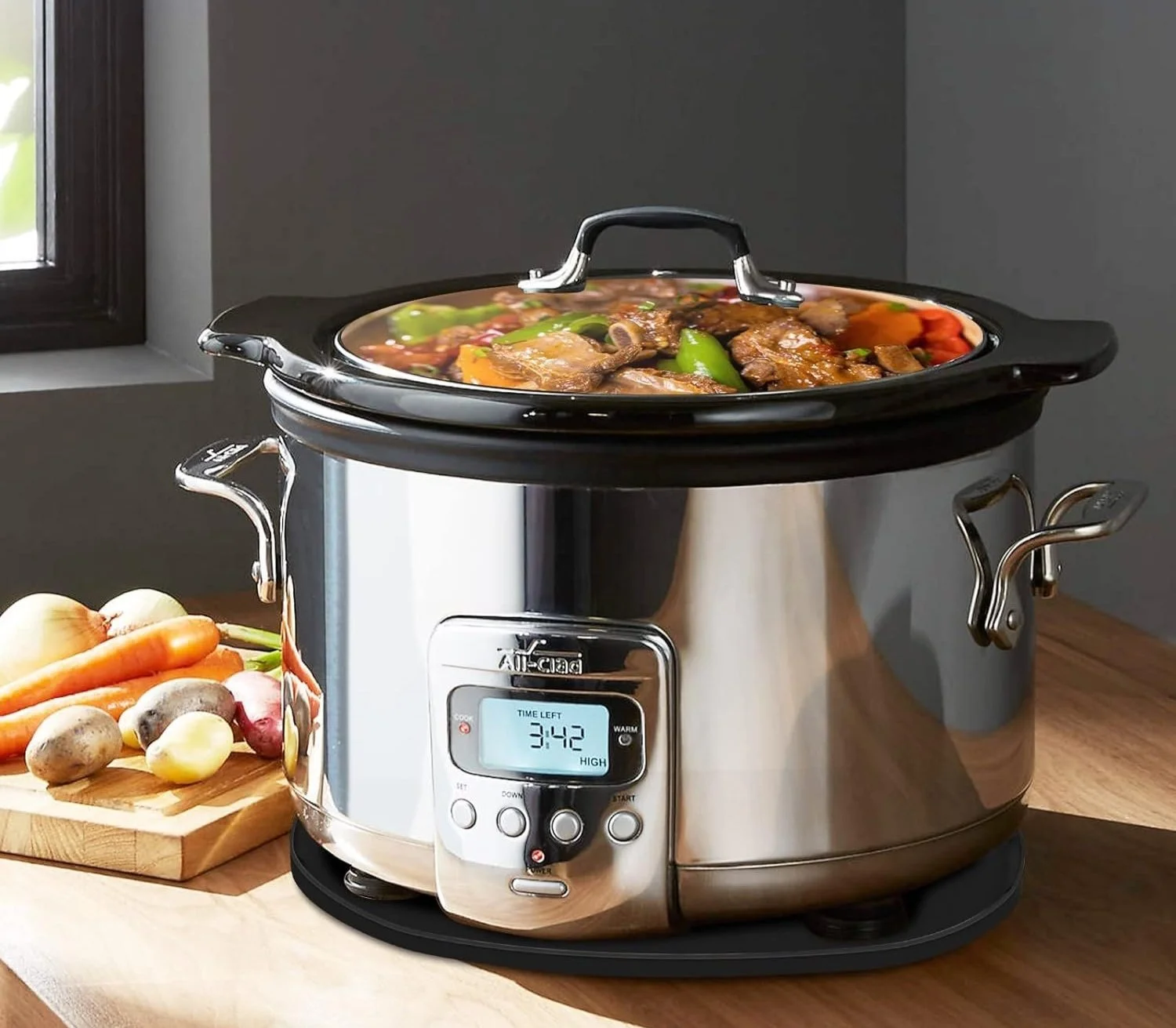
A slow cooker is an electric countertop appliance with a heated base, a removable cooking crock, and a lid. It cooks food at a low temperature for several hours.
The main parts are:
- Heating base: Warms the crock.
- Crock: Holds the food. It is often made from ceramic or another heat-safe material.
- Lid: Holds in heat and moisture.
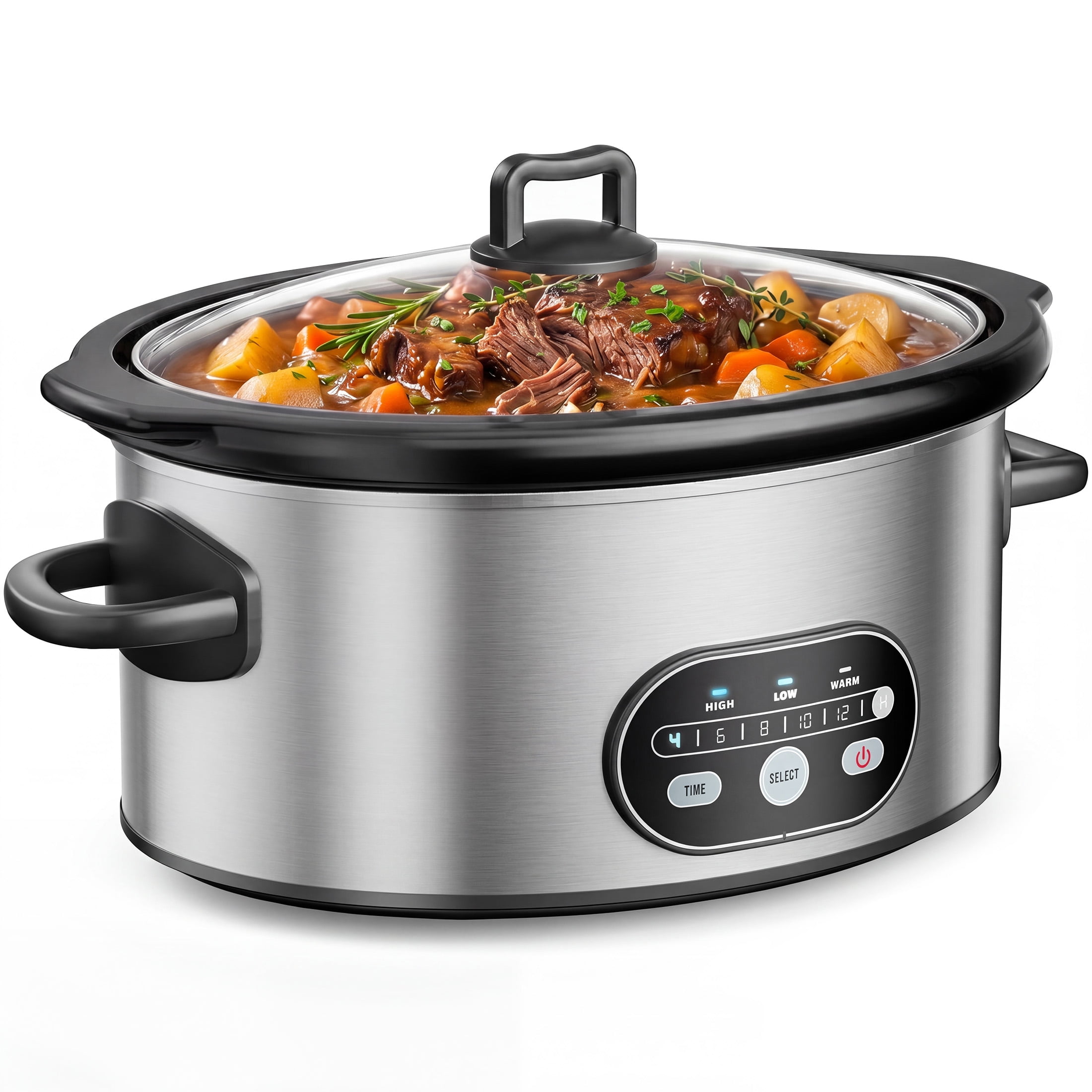
- Control panel: Usually includes LOW, HIGH, and WARM settings.
Slow cookers are different from pressure cookers. A slow cooker cooks slowly without building high pressure. A pressure cooker cooks food much faster by using steam pressure.
The WARM setting is meant to keep fully cooked food hot for a short time. It is not a cooking setting, and it should not be used to heat cold or frozen food.
How slow cooker heat works
The cooker heats the crock from the outside. The food then warms gradually. Moisture turns into steam and collects on the lid, which helps keep the food from drying out.
This gentle method is useful for tough cuts of meat. Long cooking can soften connective tissue and make meat easier to shred. It can also blend the flavors of vegetables, stock, herbs, and spices.
A slow cooker does not brown food well. Browning meat or vegetables in a skillet before slow cooking can add flavor, but it is optional unless the recipe says it is required.
What You Need Before You Start
Before using a slow cooker, gather the appliance, the recipe ingredients, a cutting board, a knife, and a food thermometer.
Check these items first:
- Read the manual. Each model may have different limits, settings, and cleaning rules.
- Inspect the crock and lid. Do not use cracked ceramic or damaged parts.
- Make sure the crock fits the base. Do not use the crock on a stovetop or in an oven unless the manufacturer says it is safe.
- Thaw meat and poultry in the refrigerator. Do not place frozen meat in a slow cooker.
- Wash fresh produce. Rinse vegetables under clean running water.
- Keep raw meat separate from ready-to-eat food.
- Use a food thermometer. Color and texture alone do not prove that meat is safe.
Wash your hands with soap and water before preparing food and after touching raw meat or poultry.
For U.S. food safety guidance, the USDA recommends thawing meat before slow cooking. Frozen food may remain too long in the temperature range where bacteria grow quickly.

How Do I Use a Slow Cooker Step by Step?
Use these steps for most slow cooker recipes. Follow the specific recipe and appliance manual when they differ.
1. Prepare the ingredients
Cut vegetables and meat into similar-sized pieces. Even pieces cook at a more similar rate.
Trim large amounts of excess fat from meat. Too much fat can make the finished dish greasy. You do not need to remove every bit of fat, because some fat adds flavor and moisture.
If you plan to brown meat, heat a skillet first. Brown the meat in small batches, then transfer it to the crock. Drain excess fat from the skillet before adding the meat.
2. Add firm ingredients first
Place dense vegetables, such as carrots, potatoes, onions, and parsnips, near the bottom. These foods usually need more heat and time than soft vegetables.
Add meat on top of the firm vegetables. Pour in the stock, sauce, or other liquid listed in the recipe.
Do not add extra liquid just because the crock looks dry. Slow cookers lose less water than uncovered pots, so too much liquid can make a stew thin.
3. Fill the crock correctly
Most slow cookers work best when filled about one-half to two-thirds full. Check your manual for the exact guidance for your model.
A crock that is too full may cook unevenly or spill. A crock that is too empty may heat food too quickly and can affect cooking time.
Do not pack food tightly. Leave enough space for heat to move through the ingredients.
4. Secure the lid
Place the lid on the crock before turning on the cooker. Keep the lid closed during cooking as much as possible.
Each time you lift the lid, heat escapes. The cooker then needs extra time to return to its cooking temperature. Look through a glass lid when possible.
If the lid does not fit, do not operate the cooker. A loose or damaged lid can affect cooking and may create a burn hazard.
5. Choose LOW or HIGH
Use LOW when you want a longer cooking time and softer results. Use HIGH when the recipe gives a shorter cooking time.
A common recipe guide is:
| Recipe instruction | Approximate slow cooker setting |
|---|---|
| 6 to 8 hours | LOW |
| 3 to 4 hours | HIGH |
| 8 to 10 hours | LOW, if the recipe allows it |
| 4 to 6 hours | HIGH, if the recipe allows it |
These times are only general estimates. The amount of food, shape of the meat, starting temperature, liquid level, and appliance design can change the result.
Do not assume that every recipe can be changed from LOW to HIGH by using a simple time formula. Use the recipe’s stated setting when possible.
6. Check for doneness
Use a clean food thermometer in the thickest part of the food. Avoid touching bone, the crock, or a large pocket of fat.
The USDA lists these minimum internal temperatures:
- Poultry: 165°F
- Ground meats: 160°F
- Whole cuts of beef, pork, lamb, and veal: 145°F, followed by a three-minute rest
- Leftovers and casseroles: 165°F
Meat should also have the texture the recipe requires. For example, a pot roast may be safe at one temperature but still need more time to become tender enough to shred.
7. Add finishing ingredients
Add quick-cooking ingredients near the end. These may include:
- Fresh herbs
- Dairy products
- Cream
- Cooked pasta
- Seafood
- Frozen vegetables
- Lemon juice
- Fresh greens
Pasta can become soft if it cooks for many hours. Dairy can separate or curdle during long cooking. Adding these items later often gives a better texture.
8. Serve or cool the food safely
Serve the food as soon as it is ready, or keep it hot according to the appliance instructions.
Do not leave cooked food at room temperature for long periods. The FDA advises refrigerating perishable food within two hours, or within one hour when the room or outdoor temperature is above 90°F.
Place leftovers in shallow containers so they cool more quickly. Refrigerate them promptly and use them within the time recommended by USDA guidance.
How Much Liquid Should I Add?
Add the amount of liquid listed in the recipe. Slow cookers trap steam, so recipes often need less liquid than stovetop recipes.
Good liquid choices include:
- Water
- Chicken, beef, or vegetable stock
- Canned tomatoes
- Tomato sauce
- Coconut milk
- Wine used as part of a tested recipe
- Barbecue sauce or another cooking sauce
The liquid does not always need to cover the meat. In many recipes, the meat releases moisture as it cooks.
Use care with thick sauces. If the sauce is very thick, it may scorch around the edges. A small amount of stock or water may help, but too much can weaken the flavor.
Do not use alcohol as the only liquid in a slow cooker. Long cooking reduces some alcohol, but it may not remove all of it. Use a tested recipe if cooking with wine, beer, or spirits.

How Should I Layer Food in a Slow Cooker?
Layer food based on cooking time and density. Dense foods usually belong at the bottom, where they receive direct heat from the crock.
A useful order is:
- Root vegetables and onions
- Beans that have been prepared according to the recipe
- Meat or poultry
- Sauce, stock, or other liquid
- Quick-cooking vegetables and delicate ingredients near the end
Do not place raw meat on top of food that will be served without further cooking unless the entire dish will reach a safe temperature.
If you use dried beans, follow a trusted recipe. Some dried beans, especially red kidney beans, contain naturally occurring toxins that must be reduced through proper preparation and boiling. A slow cooker alone may not provide the needed first step.
Canned beans are already cooked. Drain and rinse them if the recipe calls for it, then add them at the time listed in the instructions.

Slow Cooker Cooking Times and Temperature Tips
Slow cooker recipes often use LOW and HIGH rather than exact cooking temperatures. The actual heat can vary by model and recipe size.
Use this table as a planning guide, not a guarantee:
| Food | Typical approach | How to check |
|---|---|---|
| Chicken pieces | Cook until the thickest piece reaches 165°F | Check several pieces |
| Beef roast | Cook until safe and fork-tender | Test temperature and texture |
| Chili | Cook until hot throughout and flavors blend | Stir and check the center |
| Stew | Cook until vegetables are tender and meat is tender | Check large pieces |
| Casserole | Follow the recipe closely | Check the center |
| Fish or seafood | Add near the end | Check for an opaque center and safe temperature |
Large pieces of meat may take longer than small pieces. A full crock may take longer than a half-full crock. Opening the lid often can also extend the cooking time.
A slow cooker may not visibly boil. That does not mean it is not heating. Use the recipe time, your appliance manual, and a thermometer to judge progress.

Common Slow Cooker Mistakes
Most slow cooker problems come from too much liquid, poor timing, an incorrect fill level, or opening the lid too often.
Overfilling the crock
An overfilled cooker may cook unevenly and spill. Keep the food below the maximum fill line if the crock has one.
Underfilling the crock
A very small amount of food can cook faster than expected. Use a smaller slow cooker when the recipe produces only a small portion.
Adding frozen meat
Frozen meat may thaw too slowly inside the cooker. Thaw it safely in the refrigerator first.
Lifting the lid repeatedly
Opening the lid releases heat and steam. Keep it closed unless you need to add an ingredient or check doneness near the end.
Adding dairy too early
Milk, cream, sour cream, and soft cheese can split during long cooking. Stir them in late unless the recipe has been designed for long cooking.
Adding delicate vegetables at the start
Peas, spinach, zucchini, and fresh herbs may turn soft or lose color. Add them during the final part of cooking.
Adding raw pasta too soon
Pasta can become mushy after several hours. Add it near the end, or cook it separately and stir it into the finished dish.
Using the WARM setting to cook food
WARM helps hold already cooked food. It does not reliably cook raw meat or heat cold leftovers.
Putting the hot crock on a cold or wet surface
A sudden temperature change may crack the crock. Place it on a dry, heat-safe surface.
Washing a hot crock with cold water
Let the crock cool before washing it. Sudden temperature changes can damage ceramic.

What Should I Do If the Food Is Not Done?
If the food has not reached a safe temperature, keep cooking it. Do not serve it based only on appearance.
Check these points:
- Measure the center temperature. The outside may be hot while the middle remains undercooked.
- Check the lid. Make sure it sits correctly.
- Confirm the setting. The cooker may have been set to WARM instead of LOW or HIGH.
- Look at the fill level. An overfilled crock may need more time.
- Keep the lid closed. Repeated checks slow the cooking process.
- Use another cooking method if needed. A covered pot or oven may finish the food more reliably, if the recipe and cookware allow it.
If the cooker was off for an unknown length of time and the food sat in the unsafe temperature range, the safest choice may be to discard it. Do not taste food to decide whether it is safe.
If the food is safe but tough, it may simply need more time. Tough beef or pork often becomes tender after additional slow cooking, while overcooked poultry can become dry and stringy.

How Do I Clean a Slow Cooker?
Unplug the slow cooker and let it cool before cleaning it.
Most removable crocks can be washed with warm, soapy water. Some are dishwasher-safe, but confirm this in the manual. Wipe the heating base with a damp cloth. Do not immerse the electrical base in water.
For stuck food, soak the cool crock in warm water. Use a soft sponge instead of metal tools that can scratch the surface.
Dry every part before storing the appliance. Store the lid loosely or according to the manufacturer’s instructions so moisture and odors do not remain trapped.
Do not use a slow cooker with a cracked crock, damaged cord, loose plug, or broken lid. Contact the manufacturer or replace the damaged part when an approved replacement is available.

Easy Slow Cooker Meal Formula
You can build a simple slow cooker meal with four parts:
- Protein: Chicken thighs, beef roast, pork shoulder, turkey, tofu, or beans
- Vegetables: Potatoes, carrots, onions, peppers, cabbage, or squash
- Liquid: Stock, tomatoes, sauce, or another recipe-approved liquid
- Seasoning: Salt, pepper, garlic, herbs, spices, or a tested sauce
A basic example is:
- Add sliced onions and carrots.
- Place thawed chicken thighs on top.
- Pour in a measured amount of chicken stock or sauce.
- Add herbs and spices.
- Cover and cook on LOW until the chicken reaches 165°F.
- Add peas or fresh herbs near the end.
- Taste and adjust seasoning after cooking.
This formula is a starting point, not a substitute for a tested recipe. Ingredients vary in size, moisture, and cooking time.

Frequently Asked Questions
Can I put raw meat in a slow cooker?
Yes. Raw meat can be cooked in a slow cooker when it is thawed, the cooker is used correctly, and the meat reaches a safe internal temperature. Browning the meat first is optional and mainly adds flavor and color.
Do I need to put water in a slow cooker?
Not always. Many slow cooker recipes use stock, tomatoes, sauce, or another liquid instead of water. Follow the recipe and avoid adding extra liquid unless needed.
Is it better to cook on LOW or HIGH?
Neither setting is always better. LOW suits meals that need more time and may help tough cuts become tender. HIGH works when you need a shorter cooking period. Use the recipe’s recommended setting.
Can I leave a slow cooker on while I am away?
Many recipes are designed for unattended cooking, but you should follow the appliance manual. Place the cooker on a stable, heat-safe surface away from water, towels, and the edge of the counter. Do not use a damaged appliance.
Can I reheat food in a slow cooker?
A slow cooker is not the best tool for quickly reheating cold leftovers. Reheat leftovers to 165°F using a microwave, oven, or stovetop, then use the slow cooker’s WARM setting to hold the food if the appliance instructions allow it.
Can I cook frozen vegetables in a slow cooker?
Frozen vegetables can often be added to a slow cooker, especially near the end of cooking. Frozen meat and poultry should be thawed first. Follow the recipe for timing and texture.
Why is my slow cooker meal watery?
The lid traps moisture, and vegetables and meat release water as they cook. Too much added liquid, watery vegetables, or frequent stirring can contribute to a thin sauce. You can thicken the finished dish with a suitable thickener, or leave the lid slightly open only if the recipe and appliance instructions permit it.
Final Takeaway
To use a slow cooker well, start with thawed ingredients, choose the right fill level, place dense foods near the bottom, add the correct amount of liquid, and keep the lid closed. Cook on LOW or HIGH according to the recipe, then confirm doneness with a food thermometer.
For the safest result, follow the USDA’s food safety guidance and your slow cooker’s manual. Start with a tested recipe, and make changes only after you understand how your appliance cooks.
Sources and further reading
- USDA: Slow Cookers and Food Safety
- USDA: Safe Minimum Internal Temperatures
- FDA: Food Safety Tips for Consumers
- Your slow cooker manufacturer’s use, care, and safety manual