
For most American slow-cooker beef stew recipes, cook the stew for 8 to 10 hours on LOW or 4 to 6 hours on HIGH. The beef is ready when it is fork-tender, the vegetables are soft, and the stew has reached a safe cooking temperature.
Cooking time can change based on the size of the beef pieces, the amount in the cooker, the cut of beef, and how full the slow cooker is. Use time as a guide, but let tenderness decide when the stew is done.

Slow Cooker Beef Stew Cooking Times
Use these times for a typical 3- to 6-quart slow cooker filled about halfway to two-thirds full.
| Slow cooker setting | Typical cooking time | Best use |
|---|---|---|
| LOW | 8 to 10 hours | Best texture and deeper flavor |
| HIGH | 4 to 6 hours | Faster cooking |
| LOW, smaller batch | 6 to 8 hours | May finish sooner |
| HIGH, large or crowded batch | 6 hours or more | May need extra time |
These times assume beef cubes about 1 to 1½ inches wide. Large chunks take longer. A packed cooker may also heat more slowly than a partly filled one.
For the most tender beef, choose LOW for 8 to 10 hours. A long, gentle cook gives connective tissue time to soften without drying the outside of the meat.
How to Tell When Beef Stew Is Done
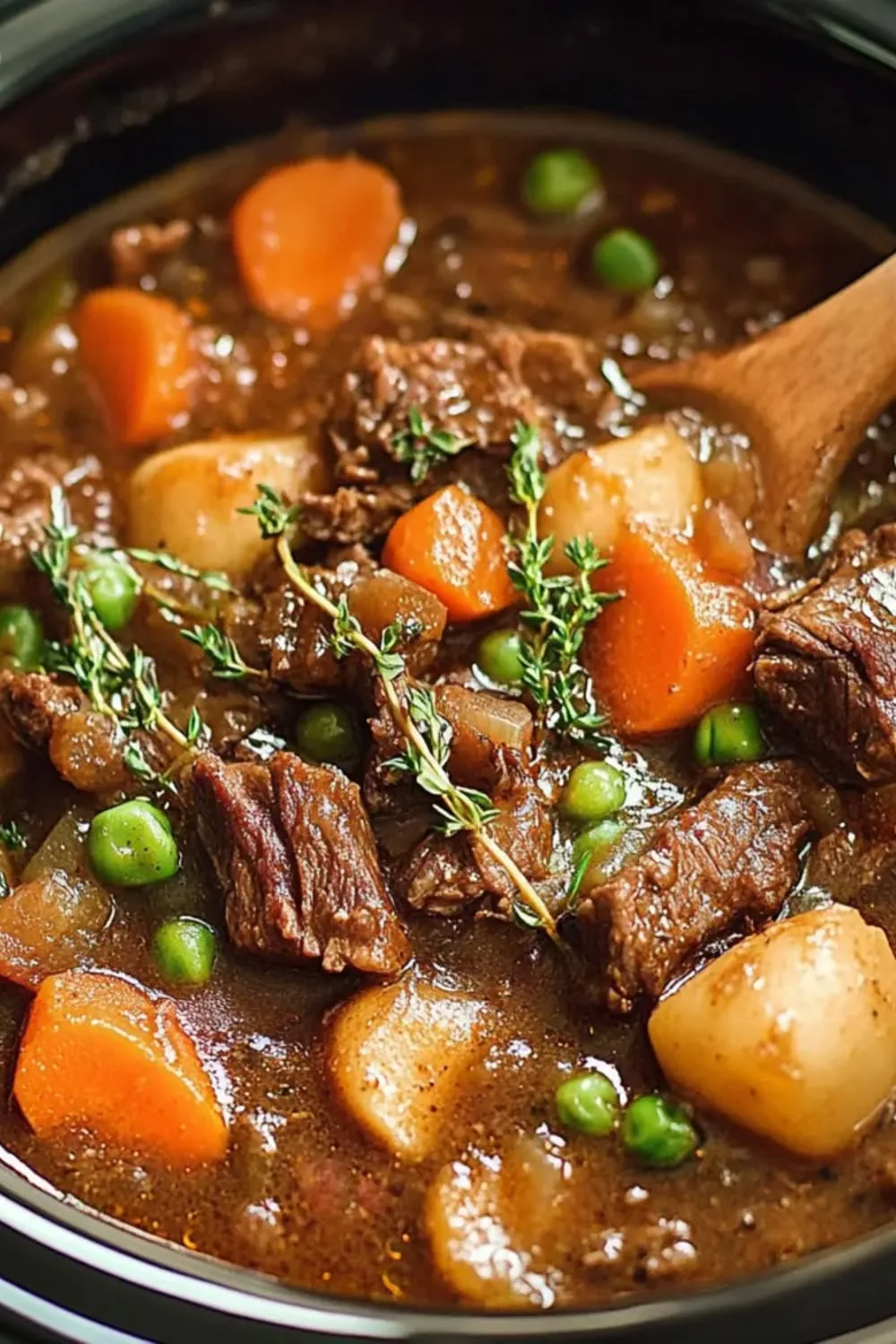
Beef stew is done when the beef is easy to pierce with a fork and the vegetables are tender. A fork should slide into the meat with little force. If the beef still feels firm or chewy, keep cooking and check it again after 30 to 60 minutes.
The USDA lists 145°F with a three-minute rest as the safe minimum internal temperature for whole cuts of beef. Beef stew meat is usually cut into small pieces, so check several pieces with a food thermometer if you need to verify temperature.
Food safety and tenderness are not the same thing. Beef can reach a safe temperature before it becomes tender. Tough stew meat needs more time for collagen, a connective tissue in meat, to break down into a soft, rich texture.
A thermometer is useful, but it does not replace the fork test. Slow-cooked beef may be safe yet still need more time to become tender.

The Best Beef Cuts for Slow Cooker Stew
The best cuts for beef stew contain enough connective tissue to stay moist during a long cook. Good choices include:
- Beef chuck roast
- Chuck shoulder
- Beef round, with enough liquid and careful cooking
- Beef brisket
- Boneless beef short rib
Chuck roast is the most reliable choice for classic American beef stew. It has a good balance of meat, fat, and connective tissue. Ask the butcher to cut it into stew pieces, or cut it yourself into even cubes.
Avoid very lean cuts when possible. Lean sirloin or tenderloin can become dry and may not develop the soft texture expected in stew. Tender cuts are better suited to quick cooking.
Cut the beef into pieces of similar size. Uneven chunks cook at different rates, so some may be tender while others remain firm.
How to Cook Beef Stew in a Slow Cooker
Follow these steps for a basic slow-cooker beef stew.
1. Prepare the beef
Cut the beef into 1- to 1½-inch cubes. Pat the pieces dry with paper towels. Season them with salt, pepper, and any herbs or spices in the recipe.
Dry beef browns better. Wet meat tends to steam instead of brown.
2. Brown the beef if you want more flavor
Heat a small amount of oil in a skillet over medium-high heat. Brown the beef in batches, turning the pieces so several sides develop a dark crust.
Browning is optional. It does not seal in juices, but it adds roasted flavor and color through the browning of proteins and sugars. Do not crowd the pan, or the meat may release water and steam.
Transfer the browned beef to the slow cooker.
3. Add vegetables and liquid
Add onions, carrots, potatoes, garlic, herbs, and broth or stock. Use enough liquid to create a moist stew, but do not cover every ingredient completely unless the recipe says to do so.
Slow cookers lose less liquid than uncovered pots. Too much broth can make the stew thin and dilute the flavor.
Add potatoes and carrots in fairly large pieces. Small pieces can become very soft during an 8- to 10-hour cook.
4. Cover and choose the setting
Place the lid on the slow cooker and set it to LOW for 8 to 10 hours or HIGH for 4 to 6 hours.
Keep the lid closed as much as possible. Each time the lid is lifted, heat escapes and cooking takes longer. Check the stew near the shortest suggested time, not every hour.
5. Check the beef and vegetables
Test a piece of beef with a fork. Check a carrot or potato as well. The stew is ready when the beef is tender and the vegetables are cooked through.
If the meat is tough, replace the lid and continue cooking. Toughness usually means the beef needs more time, not less.
6. Thicken the stew if needed
If the broth is too thin, use one of these methods:
- Mix cornstarch with cold water to make a slurry, then stir it into the hot stew.
- Mash a few cooked potatoes into the broth.
- Remove the lid for a short time only if the cooker is designed to cook safely without it.
- Transfer the liquid to a saucepan and reduce it on the stove.
For a cornstarch slurry, mix 1 tablespoon of cornstarch with 1 tablespoon of cold water. Stir it in near the end of cooking, then allow the stew to heat for about 10 to 15 minutes.

LOW or HIGH: Which Setting Is Better?
Choose LOW when you have time. It usually gives chuck roast and other stew cuts the best texture. Choose HIGH when you need the meal sooner, but start checking the stew at the early end of the suggested range.
The HIGH setting does not simply cook the stew twice as fast. Slow cookers heat food in different ways, and the final time depends on the model, batch size, starting temperature, and ingredients.
| Situation | Recommended choice |
|---|---|
| You want the most tender beef | LOW for 8 to 10 hours |
| You need dinner in the same day | HIGH for 4 to 6 hours |
| You are using frozen beef | Thaw it safely first |
| You have a small batch | Begin checking early |
| Your cooker is very full | Allow extra time |
| You are using lean beef | Check early to avoid drying |
Do not switch from LOW to HIGH near the end to “finish” tough beef. The beef usually needs more total time, and changing settings may not solve the problem. Keep the cooker covered and allow the connective tissue to soften.
Why Is My Slow Cooker Beef Stew Tough?
Tough beef usually means one of four things: it needs more time, the pieces are too large, the cut is too lean, or the cooker did not maintain enough heat.
The most common fix is simple: continue cooking on LOW until the beef is fork-tender. Meat can become firm during the middle of cooking before connective tissue fully breaks down.
Other possible causes include:
- The slow cooker was filled too heavily.
- The lid was lifted often.
- The beef started very cold.
- The beef was cut into large or uneven pieces.
- The recipe used a lean cut.
- The cooker is older or heats slowly.
- Too little liquid caused parts of the dish to dry.
If the beef is dry and stringy rather than firm, it may have been overcooked or too lean. Adding broth can improve moisture, but it cannot restore meat that has already lost its texture.
Can You Put Raw Beef in a Slow Cooker?
Yes. Raw beef can cook safely in a slow cooker when the cooker is used correctly and the meat reaches a safe temperature.
Thaw frozen beef in the refrigerator, in cold water, or in the microwave if you will cook it right away. Do not place a large block of frozen beef directly into a slow cooker. It may remain too long in the temperature range where bacteria can grow.
Browning raw beef first is optional. It improves flavor and color, but it is not required for safe slow cooking.
Wash your hands, cutting board, knife, and other surfaces after they touch raw beef. Keep raw meat separate from ready-to-eat foods.
How Full Should a Slow Cooker Be?
Fill a slow cooker about halfway to two-thirds full for the most even cooking. A cooker that is too full may heat slowly and cook unevenly. A very small amount may cook faster than expected and can dry out.
Do not pack beef tightly into one layer if the recipe is meant to serve several people. Spread the meat and vegetables evenly, then add the liquid.
The exact capacity matters. A 3-quart cooker and a 7-quart cooker may cook the same recipe at different speeds. A wide cooker may heat ingredients differently from a deep cooker.
If you double a stew recipe, do not assume the cooking time will remain the same. A larger volume may need more time, especially on LOW.
When Should You Add Potatoes, Carrots, and Peas?
Add firm vegetables such as carrots, potatoes, and onions at the start of cooking. Cut them into large, even pieces so they can withstand the full cooking time.
Add frozen peas during the last 15 to 30 minutes. They need only enough time to heat through. Adding them at the beginning can make them dull and overly soft.
Fresh herbs may be added near the end for a brighter flavor. Dried herbs can go in at the beginning because they need time to release their flavor.
If potatoes break apart, cut them larger or use a waxy potato. Russet potatoes can soften quickly and may thicken the broth as they break down.
What to Do If the Stew Is Not Ready on Time
If the beef is still tough at the end of the expected cooking time, keep the lid on and cook longer. Add a small amount of hot broth if the liquid level is low.
If the vegetables are done but the beef is not, remove the vegetables with a slotted spoon. Continue cooking the beef and return the vegetables near the end. This can help prevent them from turning mushy.
If the stew is too salty, add unsalted broth, water, or more vegetables. Do not rely on a whole potato to remove excess salt; that common kitchen tip does not selectively draw out salt.
If the stew tastes flat, adjust it after cooking with a small amount of salt, black pepper, Worcestershire sauce, vinegar, or fresh herbs. Add acidic ingredients in small amounts so they do not overpower the dish.
Slow Cooker Beef Stew Food Safety
Follow these safety rules when making beef stew in the United States:
- Thaw beef before placing it in the slow cooker.
- Keep the lid on during cooking.
- Use a clean food thermometer when checking temperature.
- Do not leave cooked stew at room temperature for more than two hours.
- Refrigerate leftovers in shallow containers so they cool faster.
- Use refrigerated leftovers within three to four days.
- Reheat leftovers to 165°F, according to USDA guidance.
- Reheat only the portion you plan to eat when possible.
A slow cooker can keep food warm after cooking, but the warm setting is not a substitute for proper cooking. Follow the instructions for your specific appliance.
For food safety, rely on current guidance from the USDA Food Safety and Inspection Service and the USDA slow-cooker safety recommendations.

Frequently Asked Questions
Is 4 hours on HIGH the same as 8 hours on LOW for beef stew?
Not always. Both settings may produce tender beef, but the result depends on the slow cooker, meat cut, batch size, and starting temperature. LOW for 8 to 10 hours is usually the safer choice for a tender texture.
Can beef stew cook too long in a slow cooker?
Yes. Beef can become dry, stringy, or break apart if it cooks far beyond the point of tenderness. Vegetables may also turn mushy. Start checking the stew near the earliest suggested time.
Should beef stew meat be covered with liquid?
No. The ingredients do not usually need to be fully submerged. Slow cookers trap steam, and too much liquid can produce a thin stew. Use enough broth to create the desired sauce and prevent dry spots.
Can I leave beef stew in the slow cooker overnight?
You can cook it overnight on LOW if the beef is thawed, the cooker is filled correctly, and the appliance is in good working order. Place the slow cooker on a stable, heat-safe surface away from the edge of the counter.
How long does beef stew last in the refrigerator?
Store cooked beef stew in the refrigerator for three to four days. Freeze it in airtight containers if you will not eat it within that period. Thaw frozen stew in the refrigerator and reheat it thoroughly.
Key Takeaways
- Cook beef stew for 8 to 10 hours on LOW.
- Cook it for 4 to 6 hours on HIGH when you need a faster meal.
- Use chuck roast or another collagen-rich cut for the best texture.
- Cut beef into even 1- to 1½-inch pieces.
- Judge doneness by tenderness, not time alone.
- Thaw frozen beef before slow cooking.
- Keep the slow cooker about half to two-thirds full.
- Refrigerate leftovers within two hours and use them within three to four days.
Conclusion
The best answer to “how long beef stew slow cooker” is 8 to 10 hours on LOW or 4 to 6 hours on HIGH. Use chuck roast, keep the lid closed, and check the beef with a fork near the early end of the time range.
If the beef is safe but still tough, it usually needs more cooking time. Continue on LOW until the meat is tender, then thicken and season the stew before serving.
Sources and Guidance
- USDA Food Safety and Inspection Service: Beef From Farm to Table
- USDA Food Safety and Inspection Service: Slow Cookers and Food Safety
- USDA Food Safety and Inspection Service: Leftovers and Food Safety
