
For a 3- to 4-pound pork butt, cook on LOW for 8 to 10 hours or HIGH for 4 to 6 hours in a slow cooker. A larger 5- to ita 8-pound roast may need 10 to 12 hours on LOW. The pork is ready when it is tender enough to shred and reaches at least 145°F for food safety. For easy pulled pork, aim for an internal temperature of about 195°F to 205°F.
Pork butt, also called Boston butt, is a well-marbled cut from the upper shoulder of the pig. Its fat and connective tissue need time to soften. That is why low, slow cooking works so well.
For home cooks in the United States, the most reliable method is simple: start with a fully thawed pork butt, use LOW heat when possible, check the temperature near the end, and judge doneness by both temperature and texture.

Pork Butt Slow Cooker Time Chart
Use the chart below as a starting point, not a strict timer. Slow cookers vary, and the shape of the roast can change the cooking time.
| Pork butt size | LOW setting | HIGH setting | Best use |
|---|---|---|---|
| 2 to 3 pounds | 6 to 8 hours | 4 to 5 hours | Small family meal |
| 3 to 4 pounds | 8 to 10 hours | 5 to 6 hours | Typical boneless roast |
| 4 to 6 pounds | 9 to 11 hours | 6 to 8 hours | Large meal or leftovers |
| 6 to 8 pounds | 10 to 12 hours | 7 to 9 hours | Party-size batch |
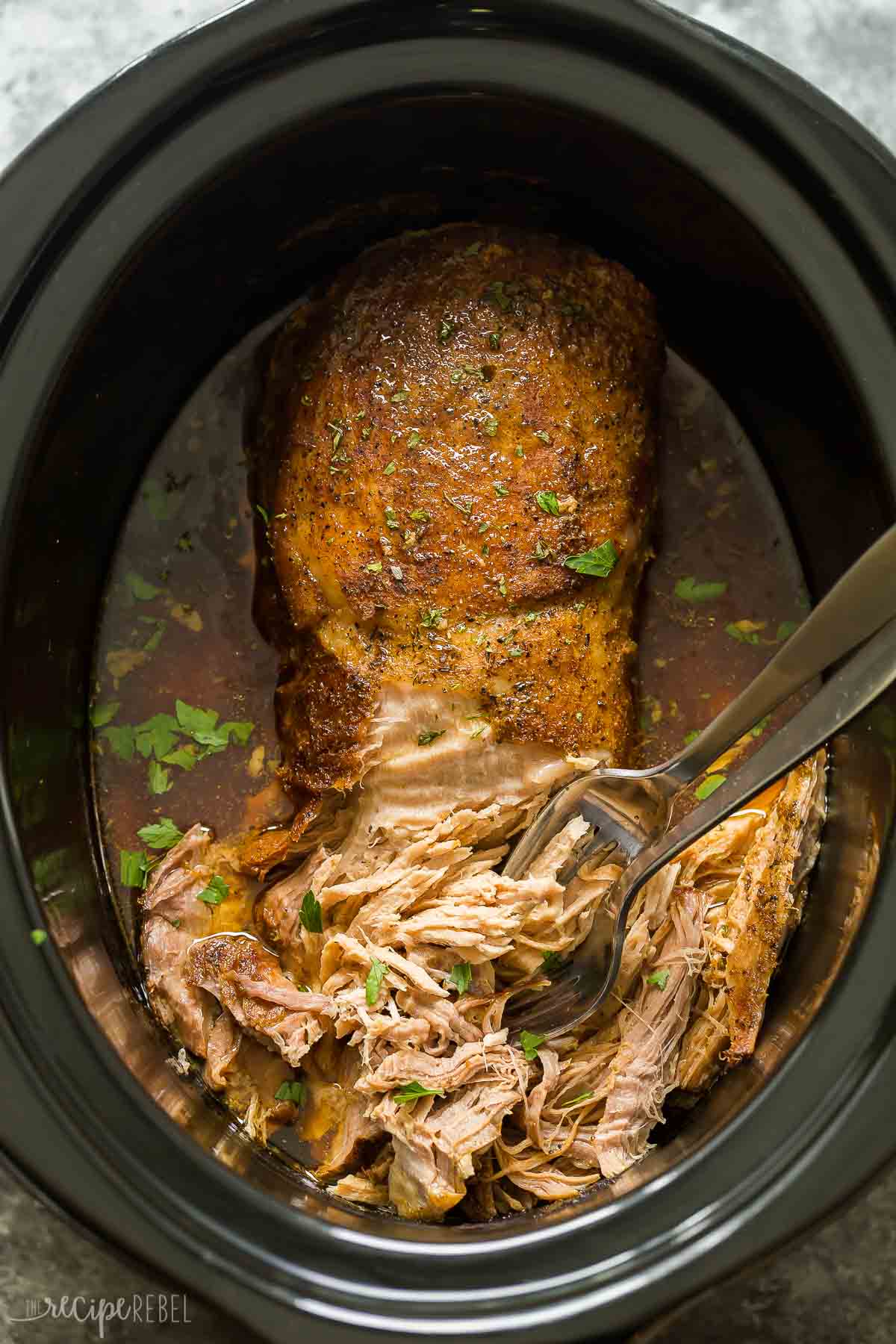
The pork is done when a fork slides into the meat with little resistance. If you want pulled pork, the meat should separate easily when pressed or twisted with a fork.
A meat thermometer still matters. The USDA says whole cuts of pork should reach 145°F, followed by a three-minute rest. That temperature makes the pork safe to eat, but it may not make a pork butt tender enough to shred. The higher 195°F to 205°F range helps break down collagen and soften the roast.
Do not use the cooking time alone to decide whether the pork is ready. A thick, compact roast may take longer than a flatter roast of the same weight.

What Temperature Should Pork Butt Reach?
Pork butt should reach at least 145°F for food safety. For pulled pork, cook it until the center reaches about 195°F to 205°F, then test the texture.
These temperatures serve different purposes:
- 145°F: Minimum safe internal temperature for a whole pork roast, followed by a three-minute rest.
- 180°F to 190°F: The pork may be cooked, but it can still feel firm.
- 195°F to 205°F: The meat is often tender enough to pull apart.
- Above 205°F: The pork may become dry if it continues cooking for too long.
Temperature is a guide rather than a finish line. Pork butt can become tender at slightly different temperatures because each roast has a different amount of fat, collagen, and connective tissue.
Insert the thermometer into the thickest part of the roast. Avoid touching the bone, if the roast is bone-in, because the bone can give a misleading reading. Check more than one spot if the roast is large.
When the pork reaches the target temperature, test it with a fork. If the fork meets strong resistance, cover the pork and continue cooking for 30 to 60 minutes before checking again.

How to Cook Pork Butt in a Slow Cooker
Follow these steps for tender slow-cooker pork butt.
1. Thaw the pork safely
Thaw the pork butt in the refrigerator before cooking. A large roast may take one to two days to thaw fully.
Do not place a frozen pork butt in a slow cooker. The meat can remain in the unsafe temperature range for too long while the center warms.
Pat the roast dry with paper towels. This helps the seasoning stick and improves the final texture.
2. Trim the excess fat
Leave a thin layer of fat for flavor, but trim away thick, hard pieces. Too much fat can make the cooking liquid greasy.
If the roast has a fat cap, place it fat-side up or down based on your preference. The slow cooker keeps the meat moist either way. The fat will not create a crisp crust because the environment is moist.
3. Season the roast
A basic rub can include:
- Kosher salt
- Black pepper
- Paprika
- Garlic powder
- Onion powder
- Brown sugar
- Chili powder
Use enough seasoning to cover the surface. Pork butt is thick, so surface seasoning alone will not flavor every bite. Shredding the pork and mixing it with the cooking juices helps spread the flavor.
4. Add a small amount of liquid
Add about ½ to 1 cup of liquid to a standard 6-quart slow cooker. Good choices include:
- Chicken broth
- Apple juice
- Low-sodium barbecue sauce
- Water with a splash of apple cider vinegar
- Beer or hard cider
The pork will release its own juices as it cooks. You do not need to cover the roast with liquid.
Too much liquid can dilute the flavor and produce watery sauce. The slow cooker lid traps steam, so the liquid level rises during cooking.
5. Place the pork in the cooker
Put the pork in the slow cooker with the thickest part toward the center. If the roast does not fit easily, cut it into two large pieces.
Do not pack the cooker too tightly. The heat needs room to move around the meat.
A slow cooker should generally be filled between one-half and two-thirds full. Follow the instructions for your specific appliance if they differ.
6. Cook on LOW or HIGH
Cook the pork for the time listed in the chart. LOW usually gives the most even, tender result. HIGH works when you need the pork sooner, but it can produce a firmer outer edge in some slow cookers.
Keep the lid closed during cooking. Each time you lift the lid, heat escapes and the cooking time increases.
7. Check temperature and texture
Begin checking a smaller roast near the lower end of the time range. Check a large roast later.
Insert a thermometer into the center. Then use a fork to test tenderness. The pork is ready for shredding when it pulls apart with little effort.
8. Rest, shred, and serve
Transfer the pork to a large bowl or cutting board. Let it rest for about 15 to 30 minutes.
Remove large pieces of fat, cartilage, and bone. Shred the meat with two forks or clean, heat-safe shredding claws. Stir in some strained cooking liquid to keep the pork moist.
If you plan to add barbecue sauce, mix it in after shredding. This gives you better control over the flavor and prevents the sauce from becoming overly sweet during a long cook.

LOW Versus HIGH: Which Setting Is Better?
Use LOW for the most forgiving result and HIGH when time is limited.
The LOW setting generally takes twice as long as HIGH, although the exact relationship depends on the slow cooker and the amount of food inside it. A 4-pound pork butt may take 8 to 10 hours on LOW but about 5 to 6 hours on HIGH.
LOW is a good choice when:
- You want to cook the pork overnight or during the workday.
- The roast is large or thick.
- You want a wider window between “done” and “overcooked.”
- You are cooking pork for pulled-pork sandwiches or tacos.
HIGH may work well when:
- You need dinner sooner.
- The roast is small.
- You can check the pork during the final hour.
- Your slow cooker runs gently on HIGH.
Do not start on HIGH and then assume the pork will finish in the same time as a full LOW cook. The timing changes when the setting changes.
For the most predictable result, choose LOW, allow enough time, and hold the cooked pork on the WARM setting only briefly. Long holding can dry the meat, even in a covered cooker.

Bone-In or Boneless Pork Butt: Does It Change the Time?
Bone-in and boneless pork butts usually need similar cooking times when they weigh the same. The roast’s thickness and shape often matter more than the bone.
Bone-in pork butt may:
- Hold its shape well during cooking.
- Add flavor to the cooking liquid.
- Need a little extra time if it is thick.
Boneless pork butt may:
- Cook somewhat more evenly.
- Be easier to cut and shred.
- Finish sooner if it is rolled or divided into smaller pieces.
Always use the roast’s weight as a starting point, then check tenderness and temperature. A 5-pound boneless roast that is long and flat may finish before a 4-pound compact roast.
The bone is not a reliable doneness test. When the bone pulls out easily, the pork is often tender, but the meat should still be checked with a thermometer and a fork.
Why Is My Slow-Cooker Pork Butt Tough?
Tough pork usually needs more cooking time, not less. The meat may have reached a safe temperature before its connective tissue has softened.
Try these checks:
The pork reaches 145°F but will not shred
Continue cooking on LOW. Check it again after 30 to 60 minutes. The safe temperature and the tender shredding temperature are not the same.
The pork is dry and stringy
The roast may have cooked too long, especially on HIGH, or it may have been a lean piece of shoulder. Mix the shredded pork with strained cooking juices, broth, or barbecue sauce.
The pork is tough on the outside but tender inside
The slow cooker may run hot, or the roast may be too small for the cooker. Use LOW next time and begin checking earlier.
The pork is still cold in the center
Check that the cooker is turned on and the lid fits tightly. If the pork has been in the slow cooker for several hours but the center remains cold, do not serve it. Follow food-safety guidance and discard meat that may have stayed at unsafe temperatures.
The cooking liquid is thin
Slow cookers do not reduce liquid well because the lid traps steam. Remove the pork, strain the liquid, and reduce it in a saucepan on the stovetop if you want a thicker sauce.
Can You Put Vegetables Under Pork Butt?
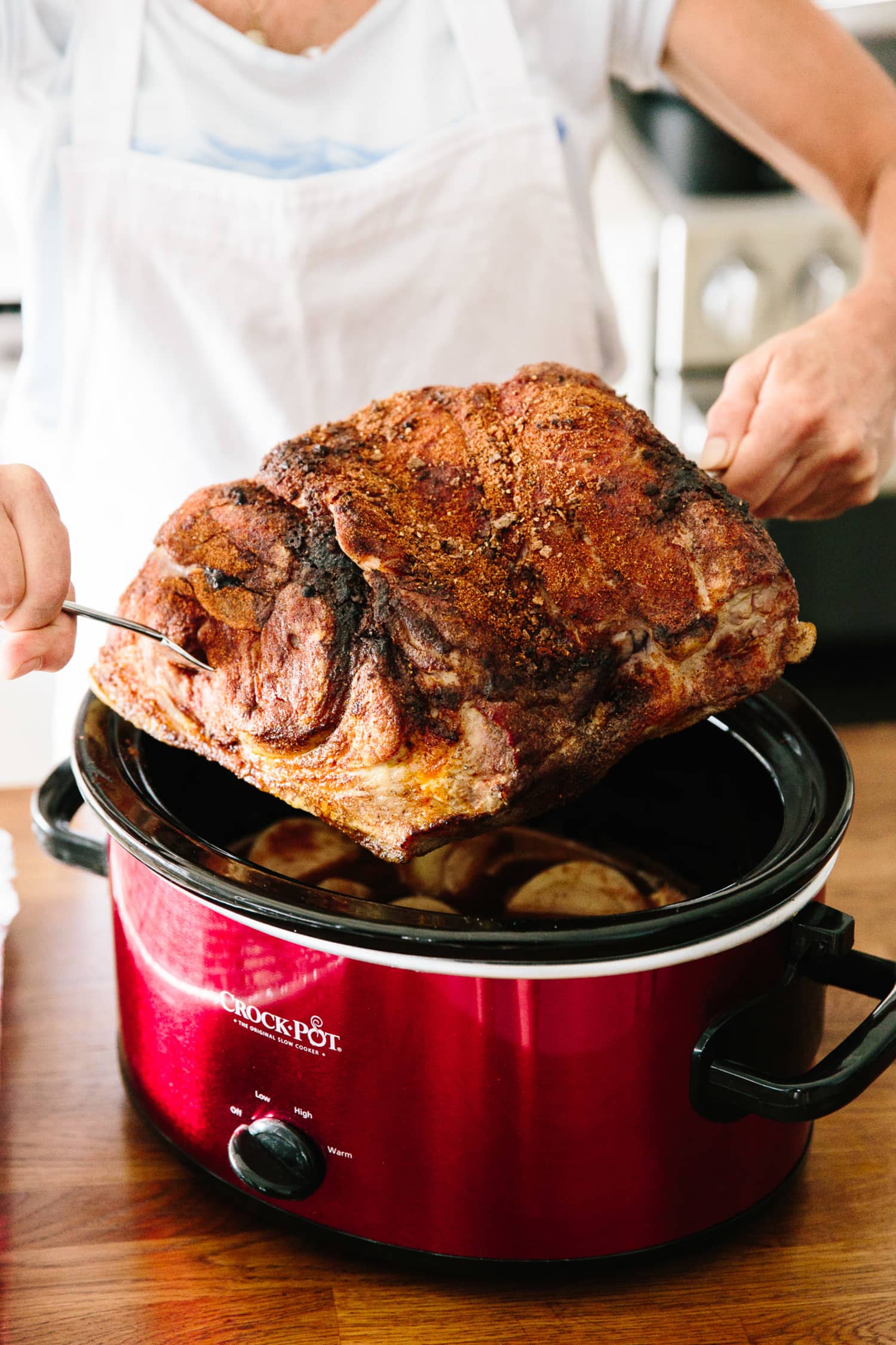
Yes. Firm vegetables can cook under pork butt, but they may become very soft during a long cooking time.
Good options include:
- Onions
- Carrots
- Celery
- Potatoes
- Sweet potatoes
Cut the vegetables into large, even pieces. Put them under or around the pork so they cook in the juices.
Potatoes and carrots can take much of the day to soften on LOW. If you want firmer vegetables, add them later or cook them separately.
Do not use vegetables to judge whether the pork is done. The pork must reach its own safe temperature and tenderness target.

How Much Pulled Pork Does One Pork Butt Make?
A raw pork butt usually loses weight during cooking because of moisture loss, rendered fat, and discarded bone or connective tissue. As a practical estimate, plan on about ⅓ to ½ pound of raw pork per person for a main meal.
For sandwiches, a 4-pound raw pork butt may provide roughly 8 to 12 servings, depending on:
- Whether it is bone-in or boneless
- How much fat you trim
- The size of each serving
- The number of side dishes
- Whether you want leftovers
For a party, it is safer to cook more than the bare minimum. Pulled pork stores well when cooled and refrigerated promptly.
Store leftovers in shallow containers. Refrigerate them within two hours, or within one hour if the room temperature is above 90°F. Reheat leftovers until hot throughout.

Slow Cooker Pork Butt Food-Safety Rules
Use these basic safety steps:
- Thaw the pork in the refrigerator.
- Wash your hands before and after handling raw pork.
- Keep raw meat separate from ready-to-eat food.
- Use a clean thermometer.
- Cook whole pork roast to at least 145°F, followed by a three-minute rest.
- Do not taste the pork before it reaches a safe temperature.
- Refrigerate leftovers within two hours.
- Reheat leftovers until steaming hot throughout.
- Do not use a slow cooker to reheat cold leftovers.
The USDA also advises cutting large pieces of meat into smaller pieces when appropriate and following the slow cooker manufacturer’s instructions. Read the appliance manual for limits on capacity, settings, and safe use.
Food-safety rules tell you when pork is safe. Texture tells you when pork butt is ready to shred. You need both measures for a good result.
Frequently Asked Questions
Can I cook pork butt overnight in a slow cooker?
Yes, if the pork is thawed, the slow cooker is in good working order, and the cooker is filled within the manufacturer’s recommended range. Use LOW and allow about 8 to 12 hours, depending on the roast’s size. Check the temperature and tenderness when you wake up.
Should I sear pork butt before slow cooking?
Searing is optional. It can add browned flavor to the outside, but it does not make the pork more tender. If you sear it, brown the roast in a hot skillet before placing it in the slow cooker.
Do I need to turn pork butt while it cooks?
No. Keep the lid closed and leave the roast in place. Turning it does not usually improve the result and can release heat from the cooker.
Can I cook pork butt from frozen in a slow cooker?
No. Thaw the pork first. A frozen roast can spend too long warming through the food-safety danger zone.
Can I leave pork butt on WARM after it finishes?
Only for a limited period and only if the pork remains at a safe holding temperature. Long holding can make the meat dry. For the best texture, shred and serve the pork soon after it finishes.
What is the best slow cooker size for pork butt?
A 6-quart slow cooker works well for many 3- to 6-pound roasts. The roast should fit without being tightly packed, and the cooker should not be overfilled. Use a larger cooker for a very large pork butt.
Quick Recommendation
For a typical 4-pound pork butt, season the thawed roast, add ½ to 1 cup of liquid, and cook it on LOW for 8 to 10 hours. Check for an internal temperature near 195°F to 205°F, then confirm that the meat pulls apart easily. Rest it, remove excess fat, shred it, and mix in some cooking juices before serving.
The safest and most reliable next step is to use a thermometer near the end of the estimated cooking time rather than relying on the clock alone.
Sources
- USDA FSIS: Safe Minimum Internal Temperatures
- USDA FSIS: Slow Cookers and Food Safety
- USDA FSIS: Pork from Farm to Table
Conclusion
Cook pork butt for about 8 to 10 hours on LOW or 4 to 6 hours on HIGH for a typical 3- to 4-pound roast. Use 145°F as the minimum safe temperature, but wait for about 195°F to 205°F and fork-tender meat when you want pulled pork.
Thaw the roast first, keep the lid closed, and let texture guide the final decision.