
Use a food-safe ice machine cleaner, warm water, and a soft cloth to remove scale, slime, and odors.
Knowing what to use to clean an ice maker helps protect the machine, improve ice quality, and prevent unpleasant tastes. In most cases, the best choice is an ice maker cleaner made for food-contact equipment, while mild dish soap, warm water, and a soft brush handle the outside and removable parts. This guide explains which cleaners work, which ones to avoid, and how to clean your ice maker safely.

What to Use to Clean an Ice Maker
The safest cleaner depends on the type of ice maker and the material inside it. A countertop ice maker, refrigerator ice maker, and commercial ice machine may need slightly different care.
For most home ice makers, use:
• Food-safe ice machine cleaner, preferably one designed to remove mineral scale
• Warm water for rinsing and wiping
• Mild, unscented dish soap for removable parts
• A soft microfiber cloth
• A soft toothbrush or nylon brush for small corners
• A clean sponge that has not been used with harsh chemicals
Food-safe ice maker cleaners often contain citric acid or another mild descaling ingredient. These products dissolve mineral buildup from hard water without being as harsh as strong household acids.
Always check the owner’s manual before cleaning. Some manufacturers require a special cleaner. Others allow diluted vinegar or citric acid. The manual is the final word because seals, coatings, sensors, and water lines can vary.
The best cleaner for mineral buildup
A commercial ice maker cleaner is usually the most reliable option for white, chalky scale. Look for a product labeled for ice machines, food-contact surfaces, or drinking-water equipment.
Choose a cleaner that:
• Lists clear dilution instructions
• Is approved or intended for food equipment
• Does not contain fragrance or dye
• Can be fully rinsed from the machine
• Matches the instructions for your model
Can you use vinegar?
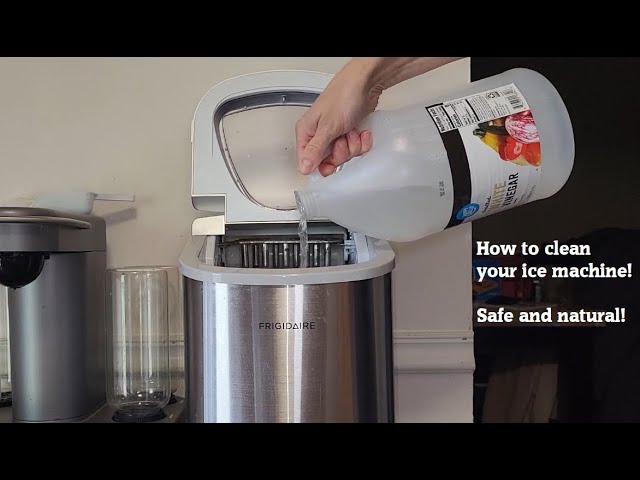
White vinegar can help with light mineral deposits and odors. However, it may not remove thick scale as well as a cleaner designed for ice machines.
Vinegar can also leave a strong smell if the machine is not rinsed well. Never mix vinegar with bleach or any product containing chlorine. The mixture can release dangerous gas.
Can you use bleach?
Bleach is not a good general choice for cleaning the inside of a home ice maker unless the manufacturer specifically tells you to use it. It can damage some parts, leave harmful residue, and create a chemical taste in ice.
For routine cleaning, use a food-safe ice machine cleaner instead. If you suspect mold or serious contamination, follow the manufacturer’s sanitation instructions or contact a qualified appliance technician.
Supplies You Should Avoid
Knowing what not to use is just as important as knowing what to use to clean an ice maker. A harsh cleaner may remove buildup, but it can also damage plastic, rubber seals, metal parts, or water lines.
Avoid these products unless your owner’s manual clearly allows them:
• Household bathroom descaler
• Oven cleaner
• Drain cleaner
• Ammonia
• Abrasive powder
• Steel wool
• Scouring pads
• Scented dish soap
• Undiluted vinegar
• Undiluted citric acid
• Bleach mixed with any other cleaner
Strong products can scratch the ice bin and create tiny spaces where dirt can collect. A scratched surface is harder to clean over time.
Why harsh chemicals are risky
Ice makers use water that eventually becomes part of your food. Any cleaner left behind can move into the next batch of ice.
Some chemicals can also attack rubber tubing or plastic parts. Damage may not appear at once. A seal may become stiff, a water line may crack, or the machine may begin to leak weeks later.
When I clean a machine, I use the mildest product that can solve the problem. Light scale needs a gentle descaler. Heavy buildup may need a second approved cleaning cycle, not a stronger chemical.
Avoid mixing cleaning products
Never mix:
• Bleach and vinegar
• Bleach and ammonia
• Ice machine cleaner and bathroom cleaner
• Different descalers
Rinse the machine fully before using a different product. Even products that seem mild can react when combined.

How to Clean a Countertop Ice Maker
A countertop ice maker is easy to overlook because it is small. Yet its water reservoir, ice basket, drain plug, and internal lines can collect scale and biofilm over time.
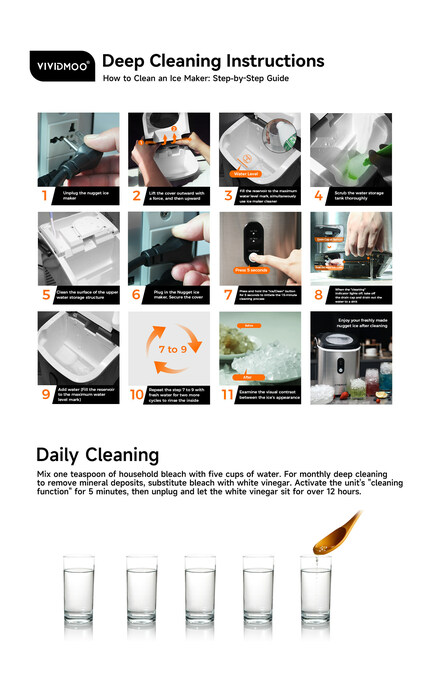
Follow these steps for a routine cleaning:
-
Unplug the ice maker and remove all ice.
-
Empty the water reservoir.
-
Remove the ice basket, scoop, drain plug, and other detachable parts.
-
Wash removable parts with warm water and mild, unscented dish soap.
-
Use a soft brush to clean around the water outlet, sensor, and corners.
-
Add the approved ice maker cleaner and water according to the product label.
-
Run the cleaning cycle if the machine has one.
-
Drain the cleaning solution.
-
Fill the reservoir with clean water and run one or more rinse cycles.
-
Wipe the inside with a clean, damp microfiber cloth.
-
Dry the parts before putting them back.
-
Make a small batch of ice and discard it.
Do not immerse the main electrical body in water. Keep the control panel, plug, and power cord dry.
Cleaning the water reservoir
The reservoir is often the dirtiest part because water sits there between cycles. Wipe the bottom and sides with a soft cloth, then rinse until no cleaner smell remains.
If you see black, pink, or green marks, stop using the machine until you clean it well. These marks may indicate mold, algae, or bacterial growth. Persistent growth may require a manufacturer-approved sanitizer or professional service.
Cleaning the ice chute and scoop
The scoop touches hands and ice, so wash it often. Clean the chute with a soft brush or cloth, but do not push debris into the internal water path.
Let the scoop dry fully before returning it to the machine. Moist tools can spread odor and microbes.
How to Clean a Refrigerator Ice Maker
A refrigerator ice maker has more parts than a countertop model. It may include a water filter, ice mold, ejector arm, fill tube, sensor, and storage bin.
Use this process:
-
Turn off the ice maker.
-
Unplug the refrigerator if the manual recommends it.
-
Remove the ice bin and discard old ice.
-
Wash the bin with warm water and mild dish soap.
-
Rinse the bin several times.
-
Wipe the ice maker housing with a damp cloth.
-
Use a soft toothbrush around the ejector area and corners.
-
Clean the water dispenser and fill area according to the manual.
-
Replace the water filter if it is due.
-
Dry the bin completely before reinstalling it.
-
Turn the ice maker back on and discard the first batch of ice.
Do not pour cleaning solution directly into the ice maker unless the manufacturer provides that instruction. Refrigerator ice makers often have sensors and electrical parts that can fail when exposed to liquid.
Do not force frozen parts
If the fill tube or ejector is frozen, do not use a knife or sharp tool to remove the ice. A sharp object can puncture the tube or damage the mold.
Turn off the ice maker and allow the part to thaw naturally. A warm, damp cloth can help. If freezing happens again, the water inlet valve, water pressure, filter, or temperature may need attention.
Clean the ice bin regularly
Old ice can absorb freezer odors and become stuck together. Wash the bin every few weeks or whenever it looks cloudy, sticky, or dirty.
Dry it before replacing it. Water left under the bin can freeze and make removal difficult.
How to Use Ice Maker Cleaner Safely
The product label tells you the correct amount of cleaner and water. Do not guess the strength. A stronger mixture is not always better and may be harder to rinse away.
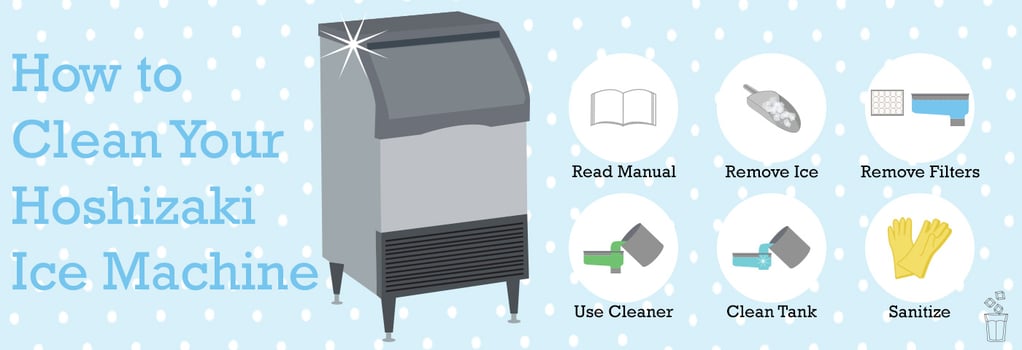
Use this safe method:
-
Read the cleaner label and appliance manual.
-
Remove all ice from the machine.
-
Turn off or unplug the unit as directed.
-
Remove washable parts.
-
Mix the cleaner with water using the stated ratio.
-
Run the cleaning cycle or apply the solution as directed.
-
Drain the solution completely.
-
Rinse with fresh water as many times as the instructions require.
-
Wipe all accessible surfaces.
-
Run and discard the first batch of ice.
Wear gloves if the product label recommends them. Keep children and pets away from the solution.
How much cleaner should you use?
There is no single amount for every appliance. A countertop model may need only a small measured dose, while a commercial machine may need more.
Using extra cleaner can leave residue and damage parts. Follow the label instead of copying a measurement from another machine.
How many rinse cycles are needed?
Most machines need at least one full rinse cycle after descaling. Some require two or three cycles.
Continue rinsing until the water is clear and free from odor. If the ice tastes sour, bitter, or chemical-like, do not serve it. Drain the machine, rinse again, and make fresh ice.
How Often Should You Clean an Ice Maker?
Cleaning frequency depends on water quality, use, temperature, and the type of ice maker. A busy machine in a hard-water area needs more care than a lightly used machine with filtered water.
A practical schedule is:
• Countertop ice maker: clean about once a month
• Refrigerator ice maker: clean the bin and accessible parts every one to three months
• Commercial ice machine: follow the manufacturer’s cleaning and sanitizing schedule
Clean sooner if you notice:
• Cloudy or soft ice
• A strange smell
• A sour or chemical taste
• White flakes in the water or ice
• Slow ice production
• A slimy water reservoir
• Black, pink, or green spots
• Ice that clumps together
A water filter may reduce scale, but it does not replace cleaning. Filters can remove some particles and odors while leaving other minerals behind.
Hard water and mineral scale
Hard water contains minerals such as calcium and magnesium. As water evaporates or freezes, these minerals can remain on the machine’s surfaces.
Scale often looks like:
• White powder
• Chalky spots
• Rough patches
• Small flakes
Mineral scale can reduce water flow and make the machine work harder. A food-safe descaler helps dissolve it.
Odor and taste problems
Ice can smell bad when the bin is dirty, food is uncovered nearby, or the water filter is old. Freezers can also transfer odors to exposed ice.
Cleaning the machine, washing the bin, replacing the filter, and storing food in sealed containers usually helps. If the odor continues, check the drain, water line, and internal tubing.

Cleaning Mistakes I Have Seen
One common mistake is cleaning the ice bin but ignoring the water reservoir. The bin may look clean while scale remains inside the machine.
Another mistake is using too much vinegar. Vinegar seems harmless, but a strong mixture can leave a lasting smell and may affect rubber parts. It is better to use a product made for the appliance or a mild solution approved by the manual.
I have also seen people restart the machine right after cleaning and keep the first batch of ice. That ice may contain diluted cleaner or loosened scale. Always discard the first batch after a deep clean.
Other mistakes to avoid include:
• Scraping scale with a knife
• Using a rough scouring pad
• Leaving removable parts wet
• Forgetting to clean the scoop
• Not replacing an old water filter
• Pouring water over electrical controls
• Mixing cleaners
• Skipping the final rinse
Think of the final rinse like washing soap from a glass. Even if the glass looks clean, you would not want soap in your drink.
Benefits of Cleaning an Ice Maker
Regular cleaning does more than improve appearance. It supports better ice quality and may help the machine operate more smoothly.
• Fresher-tasting ice
• Fewer unpleasant odors
• Less mineral buildup
• Better water flow
• More reliable ice production
• A cleaner ice bin and scoop
• Lower risk of residue and organic growth
• Longer service life when paired with proper maintenance
Cleaning cannot fix every problem. A failing water valve, broken sensor, clogged filter, or refrigerant issue needs repair. If the machine remains dirty after cleaning, leaks, makes unusual sounds, or stops producing ice, contact the manufacturer or an appliance professional.

A Simple Ice Maker Cleaning Checklist
Use this checklist when you want a quick but complete routine:
• Read the manual.
• Choose a food-safe ice machine cleaner.
• Remove all ice.
• Unplug or turn off the machine.
• Wash removable parts with mild dish soap.
• Clean the water reservoir and ice chute.
• Run the approved cleaning cycle.
• Drain the solution completely.
• Rinse with fresh water.
• Wipe the inside with a clean cloth.
• Dry removable parts.
• Replace the water filter when needed.
• Discard the first batch of ice.
• Check for leaks or unusual odors.
Keep a note of the cleaning date on your phone or calendar. A small reminder can prevent months of buildup.
Frequently Asked Questions About What to Use to Clean an Ice Maker
What is the best thing to use to clean an ice maker?
The best choice is a food-safe ice machine cleaner made for removing mineral scale. Use warm water, mild unscented dish soap, and a soft cloth for removable parts and exterior surfaces.
Can I use white vinegar to clean an ice maker?
You may use diluted white vinegar for light buildup if the owner’s manual allows it. Rinse the machine well because vinegar can leave an odor and may not remove heavy scale as effectively as an approved ice machine cleaner.
Can I use bleach to clean an ice maker?
Do not use bleach unless the manufacturer specifically instructs you to do so. Bleach can leave residue, affect materials, and create dangerous fumes if it is mixed with vinegar or other cleaners.
How often should I clean my ice maker?
Many home ice makers benefit from cleaning about once a month, while refrigerator ice makers may need cleaning every one to three months. Clean sooner when you notice odor, scale, cloudy ice, or slow production.
Why does my ice taste bad after cleaning?
Bad-tasting ice usually means cleaner remains in the machine, the water filter is old, or the ice bin still has an odor. Drain the unit, run additional fresh-water rinse cycles, replace the filter if needed, and discard the first new batch.
Is it safe to use dish soap inside an ice maker?
Use mild, unscented dish soap only on removable parts unless the manual says otherwise. Do not pour dish soap into internal water lines or leave any soap residue on surfaces that touch ice.
Should I throw away the first batch of ice after cleaning?
Yes. Discard the first batch after using a cleaner, vinegar, or any descaling solution. This helps remove any remaining residue and loosened mineral particles.
Conclusion
The safest answer to what to use to clean an ice maker is a food-safe ice machine cleaner, supported by warm water, mild dish soap, and soft cleaning tools. Avoid harsh chemicals, abrasive pads, and cleaner mixtures. Always follow the appliance manual, rinse the machine fully, and discard the first batch of ice after cleaning.
Set a simple monthly reminder, inspect the water reservoir and bin, and clean the machine before buildup becomes a problem. If this guide helped, share it with someone who has a countertop or refrigerator ice maker, and explore more appliance care tips for a cleaner, fresher kitchen.