
Use a steel knife sharpener by holding the rod steady and guiding the knife along it at a consistent angle.
Learning how to use a steel knife sharpener can make meal prep safer, faster, and more enjoyable. A honing steel does not usually remove much metal or repair a damaged edge; instead, it gently realigns the knife edge. With the right grip, angle, and light pressure, you can keep your kitchen knives cutting smoothly between full sharpening sessions.
What Is a Steel Knife Sharpener?
A steel knife sharpener, often called a honing steel or sharpening steel, is a long rod used to maintain a knife’s edge. Many rods are made from hardened steel, while others use ceramic or diamond-coated surfaces. Despite the common name, a traditional steel rod mainly realigns the edge rather than sharpening it from scratch.
When you cut food, the thin edge of a knife can bend slightly to one side. The blade may feel dull even when little metal has worn away. A honing steel nudges that edge back toward the center, much like straightening a bent picture frame.
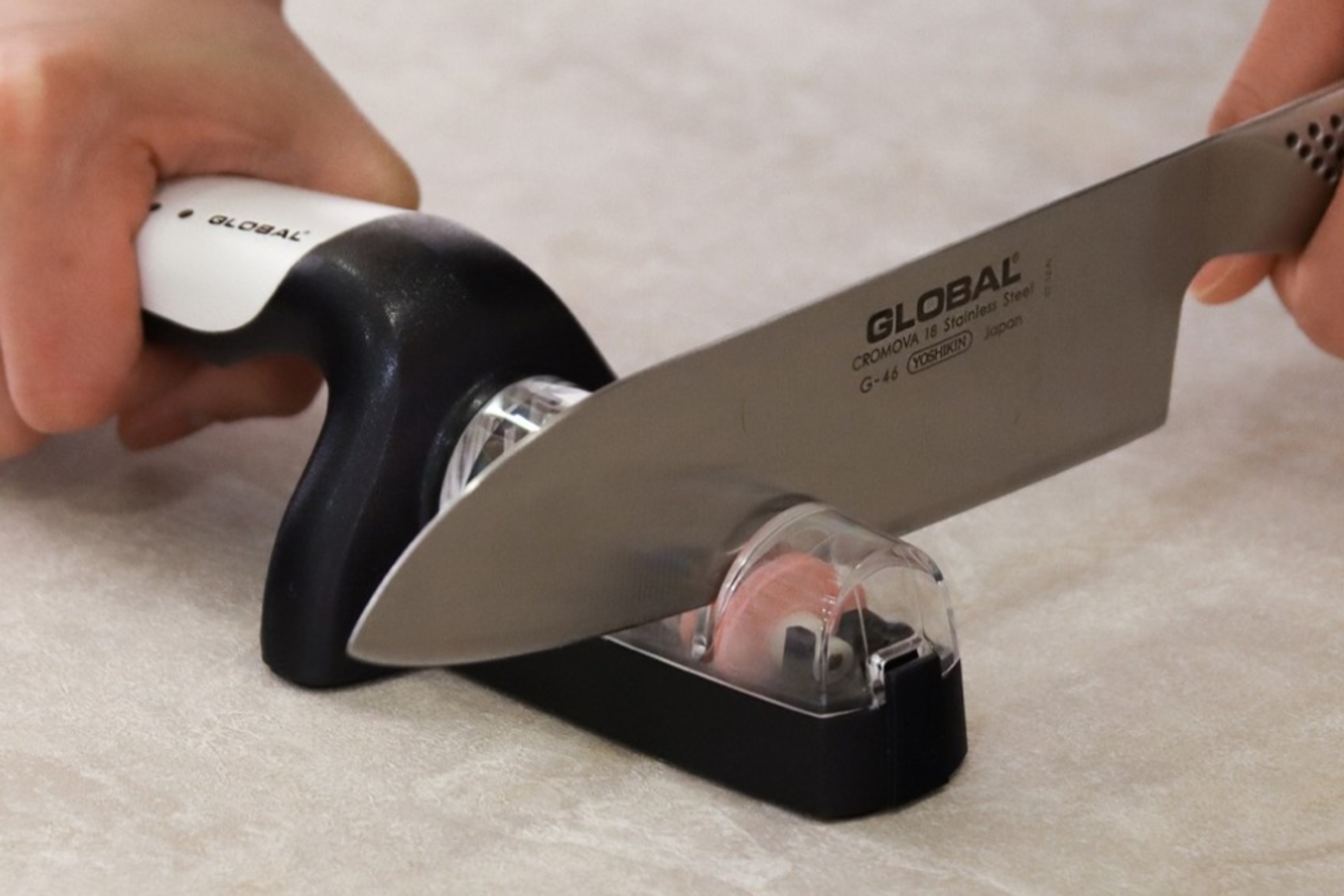
Knowing this difference is important. If your knife has chips, deep damage, or a very blunt edge, you need a whetstone, pull-through sharpener, or professional sharpening service. How to use a steel knife sharpener correctly depends on using it for light maintenance, not major blade repair.

Types of Steel Knife Sharpeners
Not every honing rod works in the same way. The surface and shape affect how much metal the tool removes and how often you should use it.
Smooth steel honing rod
A smooth steel rod is best for regular maintenance. It realigns the edge with minimal abrasion and works well for quality kitchen knives that are already sharp.
Ribbed steel honing rod
A ribbed rod has shallow lines along its surface. It may provide more contact with the blade, but rough use can leave marks on a softer knife. Use light pressure and avoid dragging the blade aggressively.
Ceramic honing rod
Ceramic rods are harder and slightly abrasive. They can remove a small amount of metal while also realigning the edge. They are useful for knives that need more than simple honing but are not badly damaged.
Diamond-coated honing rod
A diamond rod has a very abrasive surface. It can sharpen faster, but it can also remove too much metal if you press hard. Use it carefully and only when a smooth steel rod no longer restores the edge.
Rod shape and length
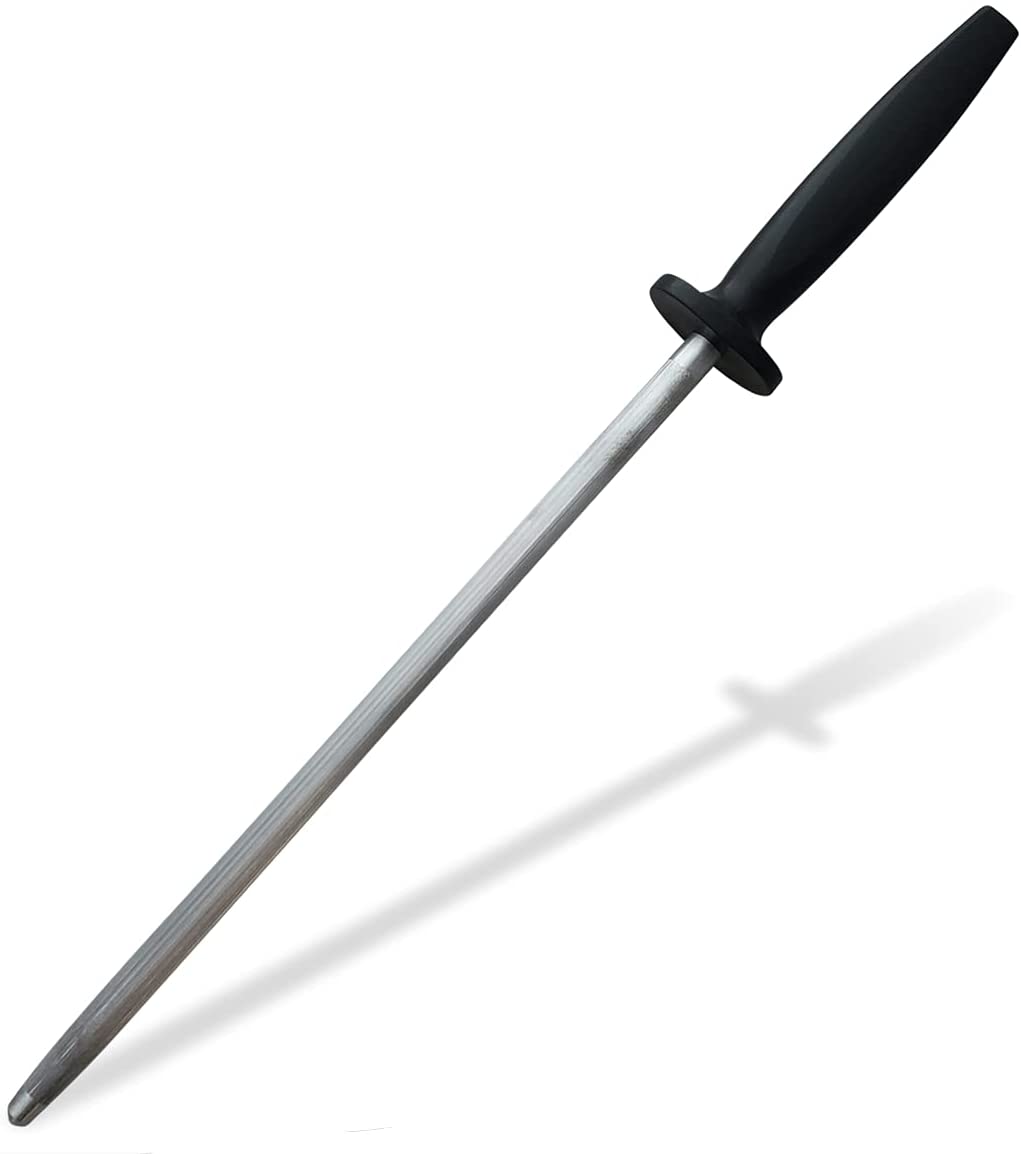
Most home cooks prefer a rod that is at least as long as the knife blade. A longer rod gives you more room for a steady stroke. A round rod is common, while oval rods offer a wider contact area.
When Should You Use a Steel Knife Sharpener?
Use a steel knife sharpener when the blade feels less smooth during normal cutting but is not deeply damaged. A knife that slips off a tomato skin, crushes herbs, or struggles with an onion may need honing.
Many cooks use a steel rod every few uses or once a week. The correct schedule depends on the knife, cutting board, food, and cooking habits. A chef who cooks daily on a hard board may need more frequent maintenance than someone who cooks twice a week.
Avoid honing automatically after every cutting task. Too much contact, especially with a rough or diamond-coated rod, can wear the edge. Feel the knife’s performance first, then decide whether it needs attention.
You should use a sharpening stone or another true sharpener when:
• The knife remains dull after careful honing.
• The blade has chips or visible damage.
• The edge feels rounded rather than slightly misaligned.
• The knife needs excessive force to cut soft foods.
• The blade has not received a full sharpening in several months.

How to Use a Steel Knife Sharpener Safely
Safety comes before speed. A moving knife can cause a serious cut if the rod slips or your hand crosses the blade’s path.
Before you learn how to use a steel knife sharpener, choose a stable position. Many experienced cooks hold the rod tip on a folded towel or cutting board. This method keeps the rod still and leaves both hands in a controlled position.
You can also hold the rod in the air, but this requires more balance. Beginners usually find the tip-down method easier because the sharpener does not move as much.
Follow these safety steps:
• Work on a dry, clear surface.
• Keep your fingers behind the rod’s guard.
• Hold the knife by its handle, not the blade.
• Keep the cutting edge pointed away from your body.
• Use slow strokes until the angle feels natural.
• Wipe metal dust from the rod and counter after use.
In my own kitchen testing, the most common mistake was rushing the first few strokes. Slow movement gives you better control and helps you notice whether the blade is sliding smoothly or catching on the rod.

How to Use a Steel Knife Sharpener Step by Step
This method works well for most Western-style kitchen knives. Always check the instructions from the knife or sharpener maker, especially if you use a thin Japanese blade.
1. Clean and dry the knife
Wash the knife with mild dish soap, then dry it fully. Food residue can make the blade slide unevenly and may hide damage along the edge.
2. Choose the correct angle
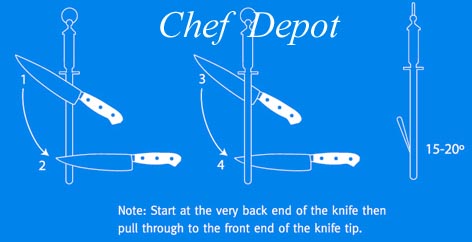
Most Western kitchen knives work well at about 15 to 20 degrees per side. A lower angle creates a thinner, sharper edge but may be more delicate. A wider angle creates a stronger edge but may feel less keen.
If you are unsure, begin near 20 degrees. Consistency matters more than chasing a perfect number.
3. Hold the rod securely
Place the tip of the rod on a stable surface. Hold the handle firmly, and keep your fingers behind the guard. The rod should remain still while the knife moves.
4. Place the heel of the blade on the rod
The heel is the part of the edge closest to the handle. Touch it gently to the upper part of the rod. Keep the blade at your chosen angle.
5. Draw the knife toward you
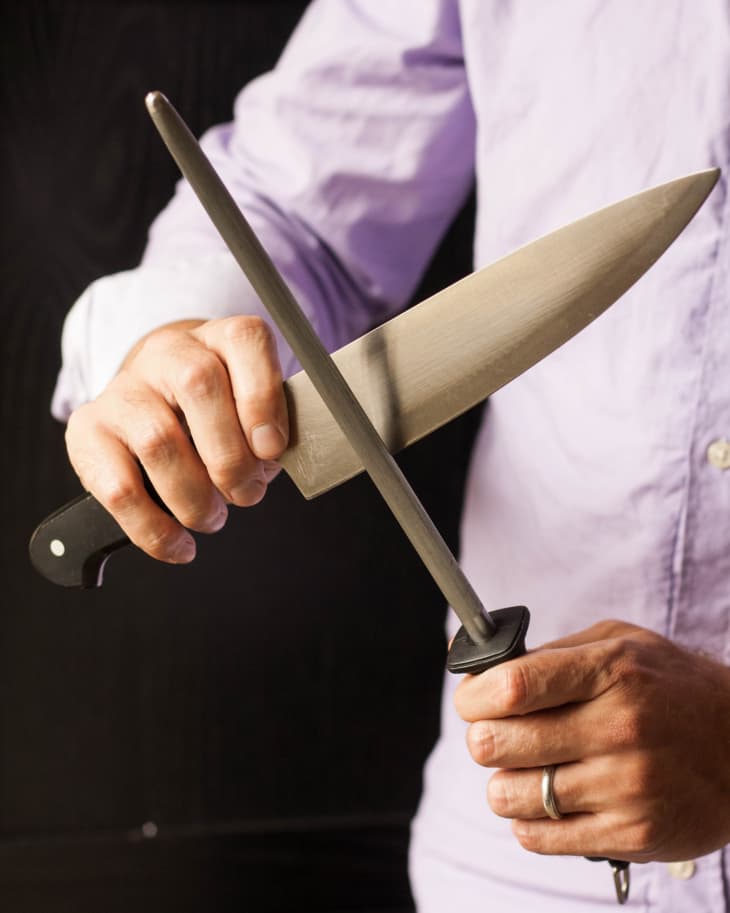
Move the knife down and toward you so the entire edge travels along the rod. Start at the heel and finish at the tip. The motion should resemble wiping water from the rod with the blade, but never use force.
6. Repeat on the other side
Switch to the other side of the blade and repeat the same motion. Use the same number of strokes on both sides. Two to five light strokes per side are often enough for routine honing.
7. Test the knife
Cut a soft food, such as a tomato or bell pepper. The blade should enter the skin with little pressure. If it still feels dull, stop and inspect the edge instead of adding many harder strokes.
8. Clean the blade and rod
Wipe both tools with a damp cloth, then dry them. Do not leave moisture on a carbon steel blade because it can encourage rust.
The key lesson in how to use a steel knife sharpener is simple: use light pressure, a steady angle, and complete strokes from heel to tip. The rod should guide the edge, not fight it.
The Two Main Honing Techniques
There are two common ways to use a steel knife sharpener. Both can work when performed with care.
Tip-down technique
The tip-down method is usually best for beginners.
-
Place the rod tip on a towel or cutting board.
-
Hold the handle firmly.
-
Set the heel of the knife against the upper rod.
-
Slide the knife down and toward you.
-
Finish with the blade tip near the lower part of the rod.
-
Repeat on the opposite side.
This technique offers more stability and makes it easier to control the angle. It also reduces the risk of the rod swinging during the stroke.
Freehand technique
With the freehand method, you hold the rod in one hand and the knife in the other. Move the knife down the rod while keeping the rod away from your body.
This method is faster for skilled cooks, but it is less forgiving. If the rod moves or the angle changes, the edge may receive uneven contact. Learn how to use a steel knife sharpener with the tip-down method first, then practice freehand honing if you feel comfortable.
How Much Pressure Should You Use?
Use less pressure than you think. The weight of the knife and the contact with the rod should do most of the work.
A good stroke feels smooth and quiet. If the blade screeches, catches, or leaves deep marks, you may be pressing too hard or using the wrong angle. Heavy pressure can bend the edge, remove excess metal, and shorten the knife’s useful life.
A useful rule is to begin with the pressure you would use to press a ripe peach without bruising it. You can add only a little more pressure if the edge does not respond.
When teaching someone how to use a steel knife sharpener, I often suggest starting with three gentle strokes per side. This prevents the common mistake of making 20 fast strokes and assuming more effort will create a sharper knife.
Common Mistakes to Avoid
Even a good honing rod can damage a knife when used incorrectly. These mistakes are common in home kitchens.
Using a steel rod on a truly dull knife
A honing steel cannot replace a full sharpening process. If the knife edge has worn away, realignment will not restore it.
Changing the angle during each stroke
An inconsistent angle can create a rounded or uneven edge. Keep your wrist steady and move your arm as one unit.
Pressing too hard
Hard strokes can scratch the blade and remove useful metal. Gentle contact is safer and usually more effective.
Honing only one side
Some knives have a single bevel, but most household chef’s knives have two bevels. Honing both sides keeps a double-bevel edge balanced.
Stopping before the tip reaches the rod
The tip is often the weakest part of a knife’s edge. Let the blade follow the curve of the rod so the tip receives the same care as the heel.
Using a damaged rod
A bent, chipped, or heavily worn rod may not provide a smooth surface. Replace it if it has deep grooves or rough spots that catch the blade.
Using a honing steel on a serrated knife
A standard steel rod does not fit the individual teeth of a serrated blade. Use a tapered ceramic rod designed for serrated knives, or seek professional help.

How to Tell Whether the Knife Is Sharp
A sharp knife should cut with little downward force. You should not need to saw aggressively or push hard through food.
Try these simple tests:
• Slice a tomato without crushing the skin.
• Cut a sheet of paper carefully, away from your fingers.
• Slice a piece of cooked meat without tearing it.
• Cut an onion with a smooth forward motion.
Avoid testing sharpness by running your finger across the edge. That can cause an injury even when the knife feels dull.
A visual check can also help. Hold the clean blade under a bright light. A dull or damaged section may reflect light as a bright line. A sharp edge usually reflects less light because it is narrower.
These tests are useful, but they are not perfect. Knife geometry, blade thickness, and food texture all affect cutting performance.

How Often Should You Hone a Knife?
There is no single schedule for every kitchen. A practical starting point is to hone a frequently used chef’s knife once a week or every few cooking sessions.
You may need to hone more often when:
• You prepare food every day.
• You use a wooden or plastic cutting board.
• You cut dense vegetables or meat often.
• The knife begins to drag through food.
You may need to hone less often when:
• The knife is made from very hard steel.
• You cook only occasionally.
• You use a fine ceramic rod with care.
• The knife receives regular professional sharpening.
Do not confuse honing frequency with sharpening frequency. Honing maintains the edge, while sharpening removes material to create a new edge. Many home cooks need honing often but full sharpening only a few times a year.
Steel Knife Sharpener Care and Storage
Clean the rod after each use. A dry cloth is often enough for a smooth steel rod, while ceramic and diamond rods may need the care instructions supplied by the maker.
Store the sharpener where it cannot fall or rub against other tools. A drawer guard, knife block slot, or wall-mounted holder can protect the surface.
Keep the rod dry. Although stainless steel resists corrosion, no metal tool benefits from standing water. If you see rust, clean it according to the manufacturer’s instructions and inspect the surface for rough areas.
Do not place a knife or rod loose in a crowded drawer. Contact with other tools can dull the blade and create a safety hazard.
Can You Use a Steel Knife Sharpener on Every Knife?
Most stainless steel chef’s knives, utility knives, and paring knives can be honed with a suitable rod. However, some blades need special care.
Very hard Japanese knives may have thin edges that chip under heavy pressure. Use a fine ceramic rod or follow the knife maker’s recommended angle.
Single-bevel knives, such as some traditional Japanese slicers, require a different technique. Hone the bevel side as directed and avoid treating both sides like a standard Western chef’s knife.
Serrated knives also need a specialized tool. The teeth and grooves require individual attention, so a standard smooth honing steel is not the right choice.
When in doubt, check the knife’s care guide. A few minutes of research can prevent permanent damage.
Steel Honing Versus Knife Sharpening
The words “honing” and “sharpening” are often used as if they mean the same thing, but they describe different tasks.
Honing mainly straightens an edge that has bent out of alignment. It is gentle and helps maintain an already sharp knife.
Sharpening removes a small amount of steel to form a fresh cutting edge. A whetstone, sharpening system, or professional service can do this job.
A simple comparison helps:
• Honing is like straightening a bent bicycle wheel spoke.
• Sharpening is like replacing worn material to restore the wheel’s shape.
Learning how to use a steel knife sharpener is valuable because regular honing can delay the need for abrasive sharpening. Still, no honing rod can restore steel that has already worn away.
A Simple Maintenance Plan
A basic knife care routine does not need to take long.
-
Wash and dry the knife after use.
-
Store it in a block, sheath, or protected drawer.
-
Hone it lightly when cutting performance drops.
-
Sharpen it when honing no longer helps.
-
Inspect the blade for chips, rust, and uneven wear.
-
Replace or repair damaged tools before they become unsafe.
This routine keeps the edge in better condition and reduces the temptation to force a dull knife through food. A maintained knife is easier to control, which supports safer cutting habits.
Frequently Asked Questions About How to Use a Steel Knife Sharpener
Should I push the knife into the steel rod?
No. Use light pressure and let the blade glide across the rod. Heavy pressure can scratch the knife, bend the edge, or remove more metal than needed.
How many times should I run the knife over the rod?
For routine maintenance, try two to five gentle strokes per side. Stop when the edge feels smooth; repeated strokes will not fix a knife that needs true sharpening.
What angle should I use with a honing steel?
Most Western kitchen knives work well at about 15 to 20 degrees per side. If the knife maker gives a specific angle, follow that guidance instead.
Can a honing steel sharpen a completely dull knife?
Usually, no. A honing steel mainly realigns an edge, while a dull or damaged blade needs an abrasive sharpener such as a whetstone or professional sharpening service.
Is it safer to hold the steel vertically?
For beginners, placing the tip on a stable cutting board or folded towel is often safer and easier to control. A freehand method can work, but it requires more practice and steady movement.
Can I use a steel rod on a serrated knife?
A standard smooth rod is not suitable for most serrated knives. Use a narrow tapered sharpener designed to fit the knife’s individual serrations.
How do I know when to stop honing?
Stop when the knife cuts smoothly with little pressure. If the blade still drags, crushes food, or shows chips after careful honing, it likely needs full sharpening or repair.
Conclusion
A steel knife sharpener is a simple maintenance tool, but good results depend on technique. Hold the rod securely, keep a steady angle, use light pressure, and guide the blade from heel to tip. Remember that honing realigns an edge, while sharpening removes metal and creates a new one.
Start with a few slow strokes on an inexpensive kitchen knife, then test the result on a tomato or piece of paper. With regular care, your knives can stay smoother, safer, and easier to use. Share your favorite knife care tips or explore more guides to build a confident kitchen routine.