
In the United States, an Instant Pot can replace a separate slow cooker for many meals, such as chili, soup, pulled pork, pot roast, and beans. To use the slow cooker setting, add your ingredients, choose Slow Cook, select Less, Normal, or More, set the cooking time, and keep the steam release set to Venting.
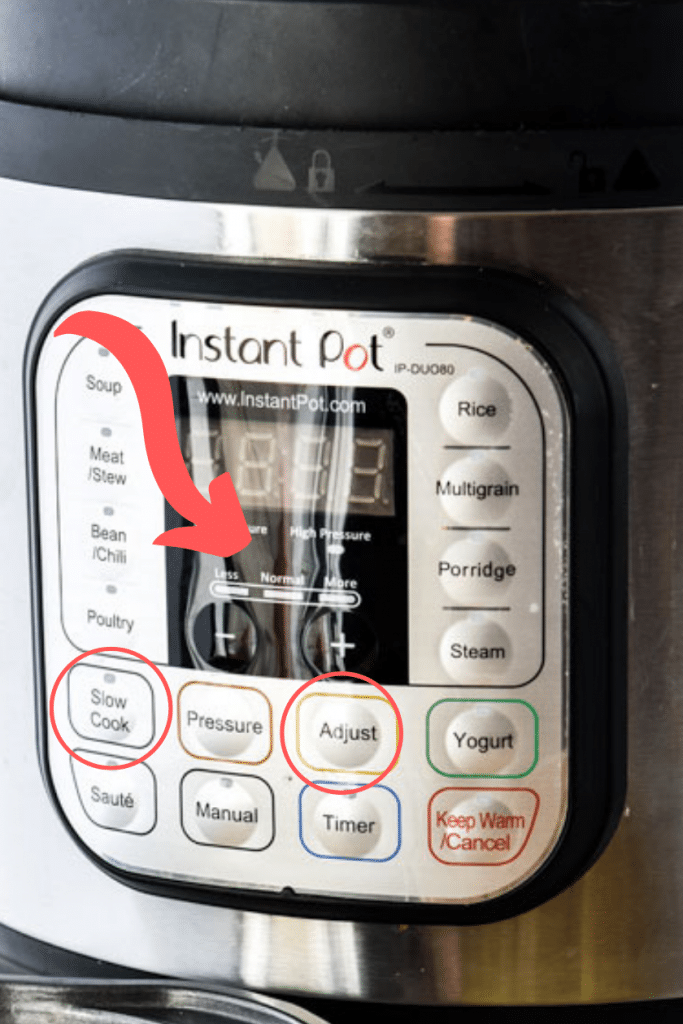
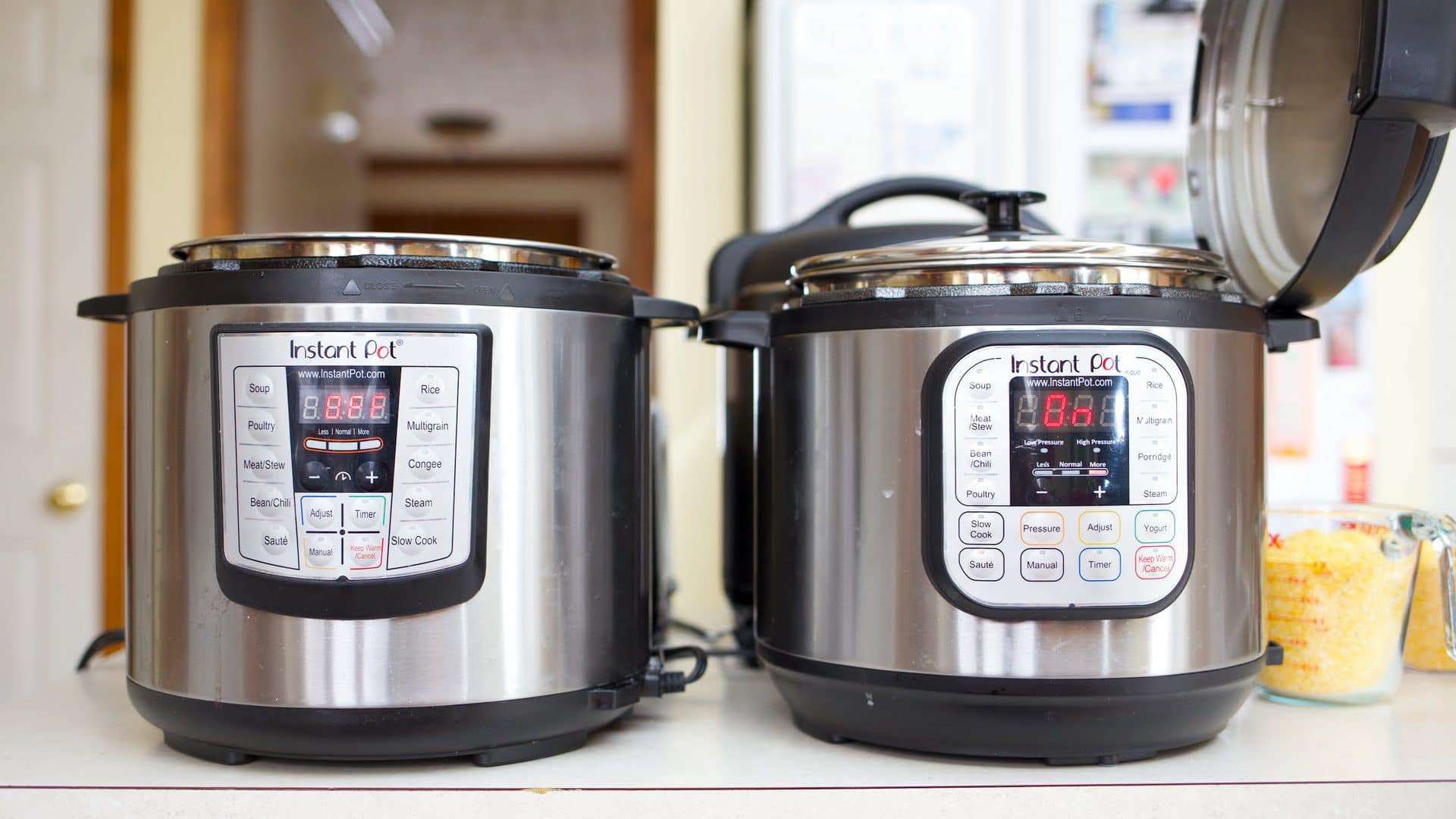
The exact buttons vary by model. Always check your Instant Pot manual before cooking, especially if your model uses a different name for the setting.
What the Instant Pot Slow Cooker Setting Does
The slow cooker setting uses low, steady heat rather than pressure. The Instant Pot does not build pressure during this mode, so the food cooks over time in a way that is similar to a traditional countertop slow cooker.
Most Instant Pot models offer three heat levels:
| Instant Pot setting | General use | Important note |
|---|---|---|
| Less | Low and slow cooking | Useful for long cooking times |
| Normal | Standard slow cooking | Good for most soups, stews, and meats |
| More | Higher slow-cook heat | Helps food cook faster, but it is not pressure cooking |
The names and heat ranges can differ by model. Some Instant Pot manuals list approximate slow-cook ranges near 180°F to 210°F, but these values are not universal. Use the settings in your model’s manual as the final guide.
Slow cook is not the same as pressure cook
The Pressure Cook setting traps steam and raises the temperature inside the pot. The Slow Cook setting does not use pressure. This difference affects cooking time, liquid needs, texture, and food safety.
A pressure-cooker recipe usually cannot be changed to slow cooking by using the same time. For example, meat that cooks in 35 minutes under pressure may need several hours on a slow-cook setting.
Instant Pot slow cooking versus a traditional slow cooker
An Instant Pot may work well for slow cooking, but it may not behave exactly like a dedicated slow cooker. The shape of the inner pot, the heating element, and the lid design can affect heat movement.
A dedicated slow cooker often heats food from the sides. An Instant Pot mainly heats from the bottom. As a result, some recipes may cook more slowly or less evenly in an Instant Pot.
How to Use the Slow Cooker Setting on an Instant Pot
Follow these steps when your Instant Pot model includes a Slow Cook function.
1. Check the lid and steam release
Use the Instant Pot pressure lid or an approved glass lid. If you use the pressure lid, set the steam release handle to Venting.
Do not set the valve to Sealing for slow cooking. The appliance should not build pressure in this mode.
Some models allow the lid to rest loosely or use a glass lid. Other models require the pressure lid to be locked in place. Follow the instructions for your model.
2. Add the ingredients
Place the meat, vegetables, liquid, and seasonings in the inner cooking pot. Cut ingredients into similar sizes so they cook at a similar rate.
Do not fill the pot above the Max line. For foods that expand, such as beans or grains, leave extra space and follow a tested recipe.
3. Press the Slow Cook button
Press Slow Cook on the control panel. On some Instant Pot models, you may need to press More Programs or select the function from a menu.
The screen may show a default cooking time. You can change it before cooking begins.
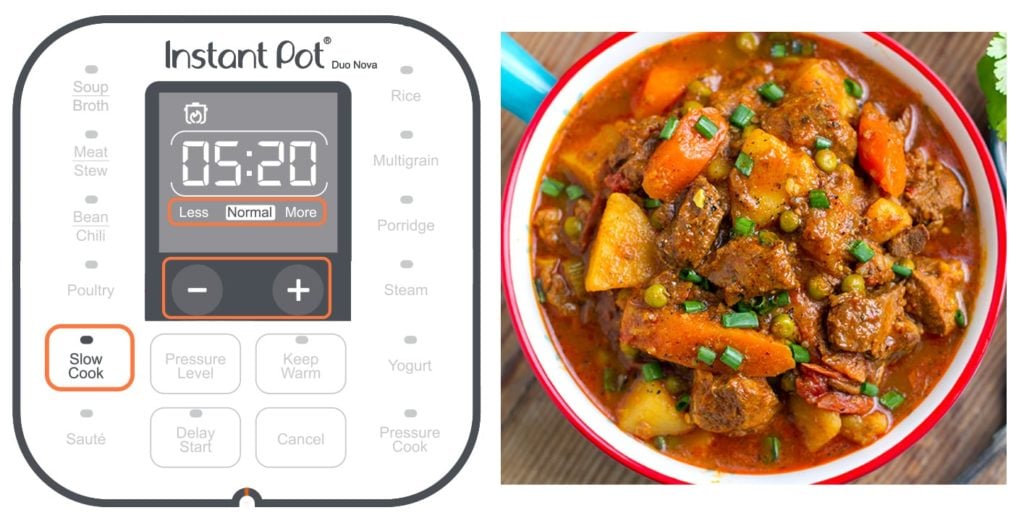
4. Choose Less, Normal, or More
Press the Adjust button or the corresponding heat-level button to select the setting.
Use:
- Less for a low setting and longer cooking.
- Normal for most slow-cooker recipes.
- More when the recipe needs higher slow-cook heat.
Do not assume that More means pressure cooking. It only changes the slow-cook heat level.
5. Set the cooking time
Use the + and − buttons to choose the cooking time. Many models allow the time to be set in hours and minutes, but the available range depends on the model.
If you are adapting a recipe from a traditional slow cooker, start with the recipe’s stated time. Check the food before serving, because Instant Pot models can cook at a different rate.
6. Let the cooking cycle begin
After a short delay, the display may show On or begin counting down. The timer may not start immediately because the pot needs time to warm.
Keep the lid in place during cooking. Removing it lets heat escape and may add a significant amount of cooking time.
7. Check that the food is fully cooked
Use a food thermometer for meat, poultry, and reheated foods. The USDA lists these minimum internal temperatures:
- Poultry: 165°F
- Ground meats: 160°F
- Whole cuts of beef, pork, lamb, and veal: 145°F, followed by a three-minute rest
- Leftovers and casseroles: 165°F
Check the thickest part of the food. Avoid touching the bone or the inner pot with the thermometer tip.
Which Slow Cooker Setting Should You Use?
The best setting depends on the food, the recipe, and the time available. For most meals, Normal is the safest starting point because it is the middle setting.
Use Less for long, gentle cooking
Choose Less when:
- The recipe calls for a low slow-cooker setting.
- You want meat to cook gently for several hours.
- You are cooking a dish that may become dry or tough at higher heat.
Less may not be hot enough for every recipe. Check the food’s temperature and texture before serving.
Use Normal for most recipes
Choose Normal for:
- Soups
- Stews
- Chili
- Pot roast
- Pulled pork
- Chicken dishes
- Beans prepared with a tested recipe
Normal is a practical first choice when a recipe says only “slow cook” and does not name a heat level.
Use More for higher heat
Choose **More when:
- The recipe calls for a high slow-cooker setting.
- You need the food to cook more quickly.
- The ingredients are still undercooked after the planned time.
More is still slow cooking. It does not replace the Pressure Cook function.
A simple setting guide
| Recipe instruction | Instant Pot choice |
|---|---|
| Low | Less |
| Medium or standard slow cook | Normal |
| High | More |
| Pressure cooking | Do not use Slow Cook |
This table is a starting point, not a guarantee. Instant Pot models and traditional slow cookers can heat differently.
How Long Does Slow Cooking Take in an Instant Pot?
Cooking time depends on the food’s size, starting temperature, liquid level, setting, and the number of ingredients in the pot.
Typical ranges include:
| Food | Approximate slow-cook time |
|---|---|
| Boneless chicken pieces | 3 to 5 hours |
| Beef stew | 6 to 8 hours |
| Pot roast | 8 to 10 hours |
| Pulled pork | 8 to 10 hours |
| Chili | 4 to 8 hours |
| Dried beans | Often 6 to 10 hours, depending on the bean and recipe |
These are broad planning ranges, not guaranteed cooking times. Use a tested recipe when possible.
Do not compare pressure time with slow-cook time
A recipe that says “cook for 20 minutes” may refer to pressure cooking. That time does not transfer directly to the slow-cook setting.
Pressure cooking reaches a much higher cooking temperature. Slow cooking needs more time to soften connective tissue and bring the center of large foods to a safe temperature.
Start with fully thawed meat
The USDA advises against slow cooking frozen meat because it may remain too long in the temperature range where bacteria multiply quickly. Thaw meat in the refrigerator before placing it in the Instant Pot.
Do not use the slow-cook setting to thaw meat.
How to Adapt a Slow Cooker Recipe for an Instant Pot
Most traditional slow-cooker recipes can be adapted, but you should account for the Instant Pot’s shape and heating pattern.
Keep enough liquid in the recipe
Slow cookers lose less liquid than many stovetop pots, but evaporation can still occur. Use the liquid amount in the recipe as a starting point.
Avoid adding large amounts of extra liquid unless the food needs it. Too much liquid can dilute flavor and make sauces thin.
Unlike pressure cooking, slow cooking does not depend on a minimum pressure-building liquid requirement. However, the ingredients still need enough moisture to prevent scorching and support even cooking.
Brown meat first when flavor matters
Use Sauté to brown meat before slow cooking. Browning creates a deeper roasted flavor and can improve the finished dish.
After browning, remove excess grease if needed. Add a small amount of liquid and scrape the bottom of the pot to loosen browned bits before starting the slow-cook cycle.
Do not leave stuck, burned food on the bottom. It can affect flavor and may cause the appliance to heat unevenly.
Add delicate ingredients later
Add soft vegetables, dairy, fresh herbs, seafood, and cooked pasta near the end when the recipe calls for it. Long cooking can make these foods mushy or cause dairy-based sauces to separate.
Add pasta near the end or cook it separately. Many types of pasta become too soft during a long slow-cook cycle.
Use the right order for ingredients
Put firm vegetables, such as carrots and potatoes, near the bottom. Place meat on top or in the center. Add liquid around the ingredients rather than pouring it only over the top.
Cut large pieces into smaller, similar pieces when the recipe allows. A large roast may need much longer than several smaller pieces of meat.
How to Use the Instant Pot Slow Cooker Without Overcooking Food
The simplest way to prevent overcooking is to choose a suitable time, avoid lifting the lid, and check the food before the cycle ends.
Use the timer as a guide
The programmed time is not a guarantee. Food may finish early or need more time, especially when:
- The ingredients start cold.
- The pot is very full.
- The meat is unusually thick.
- The recipe contains dense vegetables.
- You use Less instead of Normal or More.
Begin checking at the early end of the recipe’s time range.
Use the Keep Warm function carefully
Many Instant Pot models switch to Keep Warm after cooking. Keep Warm is not the same as continued cooking, but it can affect texture and food safety if food sits for too long.
Perishable food should not remain at room temperature for more than two hours. If the surrounding temperature is above 90°F, the limit is one hour, according to USDA food-safety guidance.
Transfer leftovers to shallow containers and refrigerate them promptly. Do not rely on Keep Warm as a substitute for refrigeration.
Check the texture, not only the clock
Tender meat should separate easily when the recipe calls for a shreddable texture. Vegetables should be tender but not falling apart unless the dish requires that texture.
If food is safe but too firm, continue cooking. If it is safe but too soft, shorten the next cooking cycle or add delicate ingredients later.

Common Instant Pot Slow Cooker Problems
Most slow-cooking problems come from the wrong setting, the wrong lid position, too little time, or recipe differences.
The Instant Pot does not seem to heat
Possible causes include:
- The Slow Cook program did not start.
- The inner pot is not seated correctly.
- The lid is not installed as the model requires.
- The selected setting is Less and needs more time.
- The appliance is warming before the timer begins.
Press the correct program again and confirm the selected heat level. If the pot remains cold, stop using it and contact Instant Pot support or a qualified appliance technician. Do not open or repair the electrical base yourself.
The food is still raw
Check the center of the thickest piece with a food thermometer. If it has not reached a safe temperature, continue cooking.
If the food is still far from done, confirm that you selected Slow Cook and not a delayed-start feature. Also check that the lid is fitted correctly and that the steam release is in Venting.
A full pot, frozen ingredients, or very large meat pieces can greatly increase cooking time.
The food is dry
Dry food may result from:
- Too much cooking time.
- Too little liquid.
- Lean meat.
- Small pieces that cook faster.
- A lid that was removed often.
Add enough sauce or cooking liquid for the recipe, but do not flood the pot. Choose fattier or more suitable cuts for long cooking when appropriate.
The vegetables are hard
Dense vegetables often need more time than meat cut into small pieces. Cut potatoes and carrots into similar sizes and place them near the bottom of the pot.
If the meat is already done, remove it and continue cooking the vegetables until tender.
The sauce is too thin
Slow cooking does not always reduce liquid enough to create a thick sauce. After removing the cooked food, use Sauté to reduce the sauce while stirring.
You can also use a tested cornstarch slurry. Mix cornstarch with cold water before adding it to hot liquid. Do not add dry cornstarch directly to the pot, where it can clump.
The Instant Pot displays a burn message
A burn message is more common during pressure cooking, but food can still scorch during other programs. Turn off the appliance if food is stuck or burning.
Remove the contents and inspect the bottom of the inner pot. Clean away burned food before trying again. If the problem happens repeatedly with enough liquid and a clean pot, stop using the appliance and seek model-specific support.
Instant Pot Slow Cooker Safety Rules
Use the slow-cook function only as described in your model’s manual. The following rules apply to most household use:
- Keep the steam release set to Venting during slow cooking.
- Never force the lid open.
- Do not exceed the inner pot’s Max line.
- Do not cook frozen meat in the slow-cooker setting.
- Use a thermometer for meat and poultry.
- Keep the appliance on a stable, heat-safe surface.
- Keep the cord away from hot surfaces and standing water.
- Do not immerse the electrical base in water.
- Do not leave the appliance unattended if the manual warns against it.
- Refrigerate leftovers within the USDA time limits.
- Stop using the appliance if the cord, plug, lid, sealing parts, or control panel is damaged.
The pressure lid may become hot. Use handles and oven mitts as needed, and keep your face and hands away from escaping steam.

Can You Use a Glass Lid on an Instant Pot for Slow Cooking?
You can use a compatible Instant Pot glass lid if your model supports it. A glass lid makes it easy to monitor the food, but lifting the lid still releases heat and increases cooking time.
Do not use a random lid that does not fit securely or is not rated for the heat. If you use the pressure lid instead, follow the model’s instructions for its position during slow cooking.
A glass lid does not make the pot pressure-safe. It should never be used for pressure cooking.
Can You Leave the Instant Pot on Slow Cook Overnight?
Some recipes are designed for overnight slow cooking, but this depends on the food, recipe, appliance condition, and manufacturer instructions.
Before leaving the appliance on for several hours:
- Confirm that your manual permits unattended slow cooking.
- Use a tested recipe with a suitable cooking time.
- Start with thawed ingredients.
- Do not overfill the pot.
- Keep the appliance on a clear, stable surface.
- Confirm that the steam release is set correctly.
- Plan for safe refrigeration after cooking.
Do not leave food on Keep Warm all day without checking food-safety conditions. When in doubt, cook the food while you are present or use a programmable appliance designed for that purpose.
Instant Pot Slow Cooker FAQs
Do I need to seal the Instant Pot when using Slow Cook?
No. Set the steam release to Venting so the pot does not build pressure. Some models require the pressure lid to be locked, while others allow a compatible glass lid. Check your manual.
Does the Instant Pot slow cooker setting get as hot as a regular slow cooker?
It may, but the actual heat range varies by model. Instant Pot slow-cook settings are not guaranteed to match a separate slow cooker’s low and high settings. Use the manufacturer’s instructions and check the food’s internal temperature.
Can I put raw meat directly into the Instant Pot for slow cooking?
Yes, if the meat is fully thawed and the recipe supports it. Brown the meat first when you want more flavor, but browning is not required for every recipe.
Can I use the Instant Pot slow cooker setting without liquid?
Most recipes need some liquid or moisture. Slow cooking without enough moisture can produce dry food or scorching. Use the recipe’s stated liquid amount and avoid adding extra liquid without a reason.
Why does my Instant Pot slow cook more slowly than my old crockpot?
The two appliances may use different heating patterns and pot shapes. A full pot, cold ingredients, large meat pieces, or the Less setting can also increase cooking time. Use Normal or More only when the recipe and food type support it.
Key Takeaways
- Press Slow Cook, choose Less, Normal, or More, and set the time.
- Keep the steam release on Venting during slow cooking.
- Use thawed meat and verify doneness with a food thermometer.
- Normal is a useful starting setting for many recipes.
- Slow-cook times do not match pressure-cook times.
- Check your exact Instant Pot manual because controls and lid rules vary.
- Refrigerate leftovers within USDA food-safety time limits.
Conclusion
The Instant Pot slow cooker setting is simple to use once you understand that it does not cook under pressure. Add thawed ingredients, select the right heat level, keep the steam release venting, and allow enough time for the food to become tender.
For the best results, adapt recipes carefully, avoid lifting the lid, and check meat with a thermometer. When the controls or lid instructions differ, the manual for your specific Instant Pot model should take priority.