
Usually, keep the ice maker lever down to make ice and up to stop production.
Knowing whether your ice maker lever is up or down can prevent missed ice, water spills, and needless repairs. Most refrigerator ice makers use a simple shutoff arm, but the exact design can vary by brand and model. This guide explains how the lever works, what each position means, and what to check when your ice maker does not respond.
Ice Maker Lever Up or Down: The Simple Answer
For most refrigerators, the ice maker lever works like this:
• Lever down: The ice maker is on and can make ice.
• Lever up: The ice maker is off and should stop making ice.
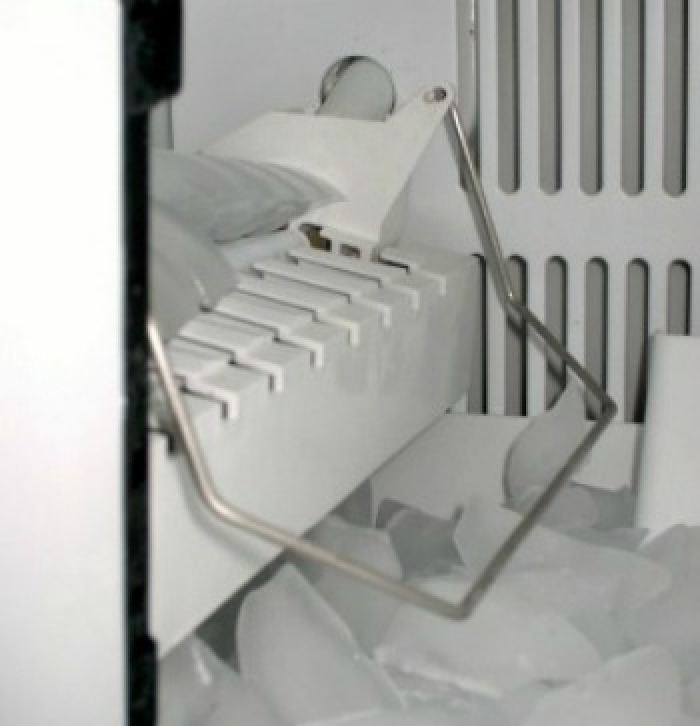
The lever is often a metal wire arm. Some newer models use a plastic paddle or electronic control instead. In both cases, the control senses whether the ice bin has enough ice.
When the ice level rises, the ice pushes the arm up. This tells the ice maker to stop making more ice. When you remove ice and the arm drops, the unit can begin another cycle.
So, when asking “ice maker lever up or down,” the usual answer is down for ice and up for no ice.

How the Ice Maker Shutoff Lever Works
The shutoff lever acts like a simple traffic light for the ice maker. It does not usually start the entire ice-making process by itself. Instead, it tells the ice maker whether it is safe to run.
Inside the ice maker, a small switch or sensor reads the arm’s position. When the arm is down, the unit may fill with water, freeze it, and release the ice. When the arm is raised, the ice maker stops the cycle or prevents a new cycle from starting.
Most automatic ice makers follow this basic process:
-
The ice maker checks that the shutoff arm is down.
-
A water valve sends a measured amount of water into the ice mold.
-
The water freezes inside the mold.
-
A motor turns the ejector fingers.
-
The ice drops into the storage bin.
-
The unit waits before starting another cycle.
The exact timing depends on freezer temperature, water pressure, and the refrigerator model. Many ice makers need several hours to produce the first batch after being turned on.
A common mistake is to lift the lever only a little. If the arm stays in a raised position, the ice maker may remain off. The lever must usually rest fully down for normal operation.

What Does the Ice Maker Lever Down Position Mean?
A lever in the down position usually means the ice maker is turned on. It allows the control system to monitor the ice level and begin a harvest cycle when needed.
However, lever down does not guarantee that ice will appear at once. The freezer must be cold enough, the water supply must work, and the ice maker must have power.
Check these conditions if the ice maker lever is down but there is no ice:
• The freezer should usually be near 0°F, or the temperature recommended by the appliance maker.
• The refrigerator must be connected to a working water line.
• The water shutoff valve should be open.
• The ice mold should not be packed with frozen ice.
• The ice bin should sit in the correct position.
• The refrigerator should have power.
A freezer that is too warm may keep food frozen but still fail to make ice. Ice production depends on a cold, stable temperature. Frequent door opening, blocked air vents, or a weak door seal can slow the process.
If the ice maker lever is down, wait several hours after correcting a problem. The ice maker may need time to complete a full cycle.
What Does the Ice Maker Lever Up Position Mean?
A lever in the up position usually turns the ice maker off. It stops the unit from making more ice, which is useful when the bin is full or when you plan to leave home.
Raising the arm can also help during cleaning or repairs. It prevents the ice maker from calling for water while you work near the ice bin.
Do not force the lever upward. A wire arm can bend, and a plastic arm can crack. Lift it gently until it reaches its normal stop.
Some models use a different system. They may have:
• An on and off switch.
• A sliding control.
• A touch button.
• A sensor behind the ice bucket.
• A paddle that moves rather than a wire arm.
For these models, the ice maker lever up or down rule may not apply in the usual way. Always check the owner’s manual if the control does not look like a standard shutoff arm.

Why Your Ice Maker Lever May Be Up
There are several normal reasons for an ice maker lever to stay up. The most common reason is that someone turned it off, often while cleaning or removing the ice bin.
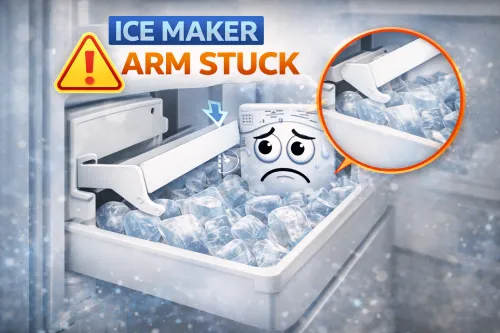
The arm may also rise because the ice bin is full. In some refrigerators, ice cubes can pile up under the arm and hold it in the raised position. This can happen even when the bin is not completely full.
Other possible causes include:
• A cube stuck between the arm and the ice maker housing.
• A storage bin that is not seated correctly.
• A bent shutoff arm.
• A broken arm spring.
• A damaged internal switch.
• Ice buildup around the control area.
Remove loose ice with your hand. Do not use a knife, screwdriver, or other sharp tool. Sharp tools can damage plastic parts, wiring, or the cooling system.
If the lever will not move with gentle pressure, stop. A stuck arm often needs inspection rather than force.
Ice Maker Lever Up or Down After Emptying the Bin
After emptying the ice bin, place the shutoff arm down if you want the ice maker to run. Then make sure the bin is pushed fully into place.
Some refrigerators will not make ice when the bucket is missing. This safety feature helps keep ice from falling into the freezer or onto the floor.
Follow these steps:
-
Remove the ice bin.
-
Clear old ice from the bin and the ice maker area.
-
Check that the shutoff arm moves freely.
-
Replace the bin correctly.
-
Lower the lever.
-
Confirm that the freezer is cold enough.
-
Wait several hours for a new batch.
Old ice can form a large frozen block. It may stop the ejector motor or hold the arm up. Discard the block and wash the bin with warm water. Dry it well before putting it back.
Do not pour hot water directly over the ice maker. A sudden temperature change may damage plastic parts or create water that freezes in the wrong place.
How to Turn an Ice Maker On or Off
The correct method depends on the control style. For a standard wire arm, use these steps.
To turn the ice maker on
-
Open the freezer.
-
Find the metal shutoff arm near the ice maker.
-
Make sure the ice bin is in place.
-
Lower the arm gently.
-
Confirm that the water supply is open.
-
Close the freezer and wait for production.
To turn the ice maker off
-
Open the freezer.
-
Raise the shutoff arm until it stops.
-
Make sure it stays in the upper position.
-
Remove ice or water from the area if you are cleaning it.
-
Close the freezer.
If the ice maker has an electronic switch, use the switch instead of forcing the arm. The ice maker lever up or down position may be only part of the control system on newer models.
When cleaning or servicing the refrigerator, unplug it if the manual recommends doing so. Never work on exposed wiring while the appliance has power.

Ice Maker Lever Is Down but Not Making Ice
When the lever is down but there is no ice, start with the easy checks. Many ice maker problems come from temperature, water supply, or a blocked bin rather than a broken ice maker.
Use this troubleshooting order:
• Check the freezer temperature.
• Confirm that the water line is connected.
• Open the water shutoff valve.
• Test the refrigerator’s water dispenser, if it has one.
• Inspect the ice mold for frozen water.
• Check the ice maker’s fill tube for ice.
• Make sure the ice bin is seated.
• Look for a blinking error light or display message.
If the water dispenser also has low flow, the issue may be a clogged filter, kinked line, or weak water supply. Replace the filter only with the correct model. A filter that is not installed correctly can reduce water flow.
If the dispenser works but the ice maker does not fill, the problem may involve the ice maker valve, fill tube, thermostat, sensor, or control board. These parts require model-specific testing.
Avoid replacing parts based only on a guess. A service manual or qualified appliance technician can help identify the fault safely.

Ice Maker Keeps Making Ice When the Lever Is Up
An ice maker that keeps producing ice with the lever up may have a stuck switch, damaged sensor, or misaligned arm. It may also be a different type of ice maker that uses an electronic control rather than the arm as the main shutoff.
First, check whether the arm is truly in the upper stop position. Ice cubes or the storage bin may prevent it from rising fully.
Then check these points:
• The arm is not bent.
• The arm is attached correctly.
• The bin is not pushing the arm into a strange position.
• The refrigerator display does not show ice maker “on.”
• No ice is stuck around the arm.
If the ice maker continues to run, turn it off with the refrigerator’s control switch. If there is no switch, unplug the refrigerator only if it is safe and practical to do so. Continued water filling can cause a leak and damage floors or cabinets.
This is a good time to use the exact refrigerator model number. Manufacturer manuals show the correct shutoff method and part layout for each design.
Common Mistakes to Avoid
The ice maker lever looks simple, but a few small mistakes can create bigger problems.
• Do not force the lever past its normal stop. This can break the arm or internal switch.
• Do not chip ice with a sharp object. You may puncture plastic parts or damage hidden wiring.
• Do not assume a warm freezer will make ice normally. The ice maker needs a stable freezing temperature.
• Do not leave the ice maker on when the water supply is disconnected. The valve may try to fill the mold.
• Do not wash the ice bin and return it while wet. Extra water can freeze the bin in place.
• Do not repeatedly reset the ice maker without finding the cause. A reset may hide a water or temperature problem.
In my experience troubleshooting household appliances, the most common error is setting the lever down and expecting ice within minutes. Ice makers need time. A better approach is to correct the basic conditions, close the door, and check again later.
Safety and Maintenance Tips
Ice makers handle food, water, electricity, and cold temperatures. Basic care helps protect both the appliance and the ice.
Keep the ice bin clean. Wash it with mild dish soap and warm water, then rinse and dry it fully. Avoid strong cleaners unless the manufacturer allows them.
Replace the refrigerator water filter on the schedule listed in the manual. Filter life varies by model and water quality. A clogged filter can reduce ice production and affect the taste of the water.
Inspect the water line from time to time. Look for kinks, wet spots, or frost near connections. A small leak can become a serious problem if it runs behind the refrigerator.
If you smell burning, see damaged wiring, or notice water near electrical parts, stop using the ice maker. Turn off the water supply and seek professional help.
Food safety matters too. Discard ice that has a strange smell, unusual color, or contact with dirty surfaces. Clean hands and a clean bin are simple ways to keep the ice fresh.
When to Call an Appliance Technician
Many ice maker issues are easy to solve, but some need professional testing. Call a qualified technician when the unit leaks, trips a breaker, makes a burning smell, or has damaged wiring.
Professional service may be needed when:
• The shutoff arm is broken.
• The ice maker fills continuously.
• The water valve does not close.
• The freezer temperature is correct but no ice forms.
• The ice maker motor hums but will not harvest.
• The fill tube freezes again and again.
• The control board shows an error.
• The refrigerator has a sealed-system cooling problem.
A technician can test voltage, water pressure, thermostats, switches, and valves. This is safer and often cheaper than replacing several good parts.
The ice maker lever up or down setting is an important first check, but it is not a complete diagnosis. Think of it as the starting point, not the whole repair.
Frequently Asked Questions About Ice Maker Lever Up or Down
Should the ice maker lever be up or down to make ice?
The lever should usually be down to make ice. A raised lever normally turns the ice maker off by telling it that the bin is full or production is not wanted.
What does it mean when the ice maker lever is up?
A raised lever usually means the ice maker is off. If it will not stay up or keeps falling down, the arm or its internal switch may be damaged.
How long does it take to make ice after lowering the lever?
The first batch may take several hours, depending on the freezer temperature, water supply, and refrigerator model. New ice makers often need extra time after being turned on.
Why is my ice maker lever down but there is no ice?
Check the freezer temperature, water valve, filter, fill tube, and ice bin position. If these items are fine, the ice maker may have a faulty sensor, valve, motor, or control board.
Can I leave the ice maker lever down all the time?
Yes, if the water supply is connected and you want the refrigerator to make ice. Raise the lever when the bin is full, the water is turned off, or you are cleaning the appliance.
Why will my ice maker lever not move?
Ice may be blocking the arm, or the arm may be bent or frozen in place. Remove loose ice gently, but do not force the lever or use sharp tools.
Does every refrigerator use an up or down ice maker lever?
No. Some models use switches, buttons, sliding controls, or electronic sensors. Check the owner’s manual when your refrigerator does not have a standard wire arm.
Conclusion
For most refrigerators, the ice maker lever is down when you want ice and up when you want the ice maker off. A down lever still needs a cold freezer, working water supply, clear fill tube, and correctly seated ice bin.
Use gentle movements, avoid sharp tools, and give the ice maker several hours to work. If the lever behaves strangely or the unit leaks, use the model manual or contact a qualified technician. Check your refrigerator today, and share your model or experience in the comments to help others solve the same problem.