
On a slow cooker in the United States, High is the hotter cooking setting. It usually cooks food in about 3 to 4 hours, while Low often takes 6 to 8 hours. The exact heat varies by brand, model, recipe, and the amount of food in the crock.
High does not mean “boil as fast as possible.” A slow cooker still heats food gently over time. It is useful when you need dinner sooner, but it may produce softer meat and less-developed flavor than a longer cook on Low.
Introduction
The word High on a slow cooker describes the appliance’s heat cycle. It does not give one exact temperature for every model. Most slow cookers reach a similar food-safe cooking range, but they may heat at different speeds.
For safe results, follow the recipe and your cooker’s manual. Keep the lid on, use enough liquid, and check meat with a food thermometer. The USDA recommends cooking poultry, ground meat, and other meats to their safe internal temperatures before serving.
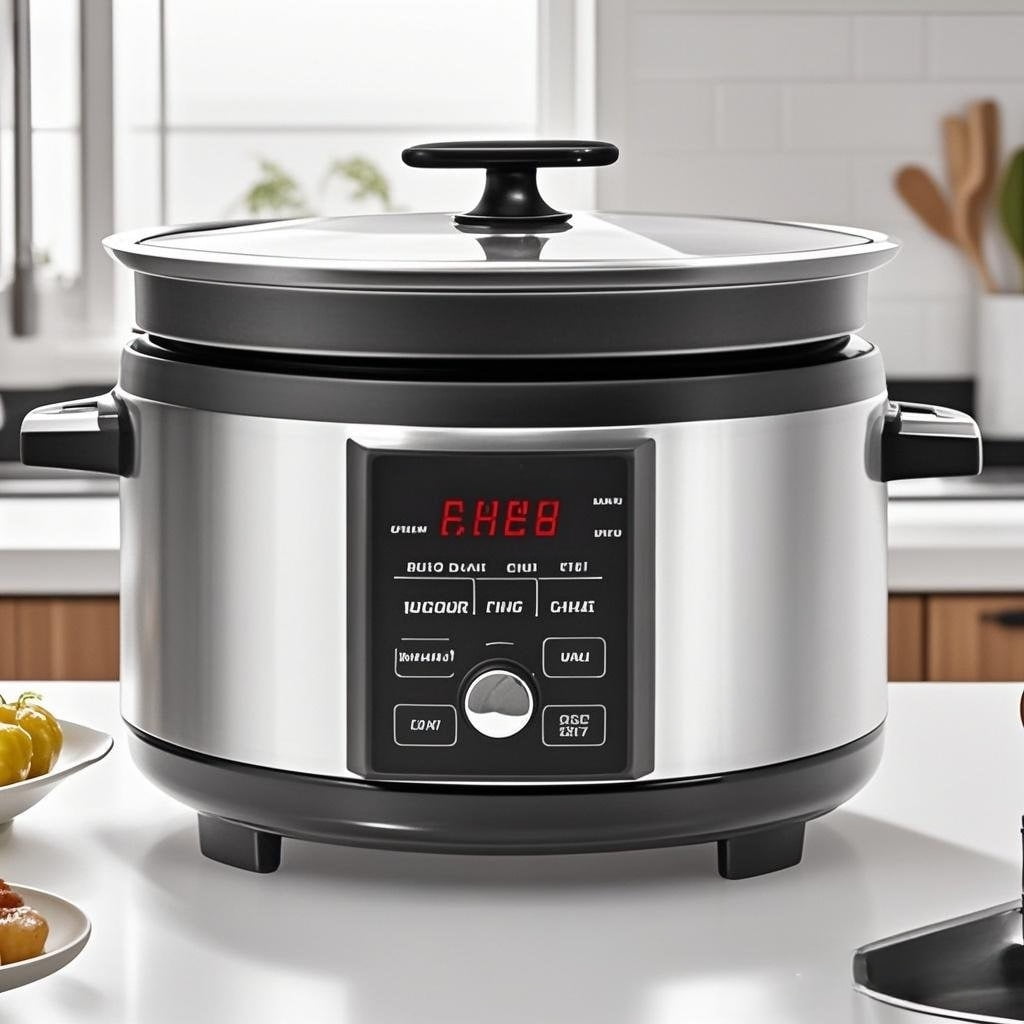
What Does High Mean on a Slow Cooker?
High means the slow cooker uses its hotter programmed setting. The heating element cycles on and off to keep the crock hot. It may bring food to a simmer sooner than Low, but it is still much slower than cooking on a stovetop.
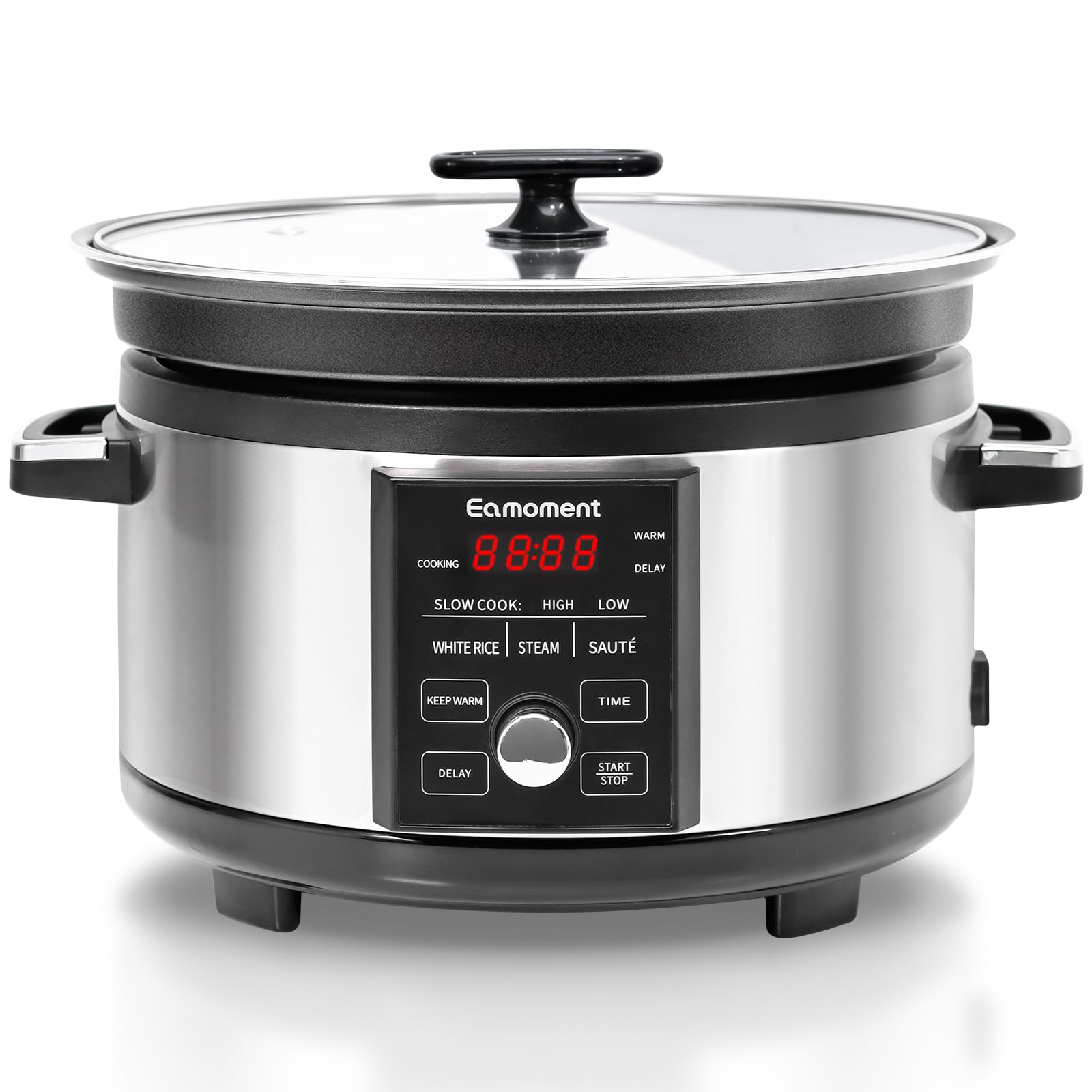
A slow cooker has three common settings:
- Low: Longer, gentler cooking
- High: Shorter cooking with more heat
- Warm: Holds cooked food at a serving temperature; it is not meant to cook raw food
The High setting is helpful for recipes that need a shorter cooking time. It can also help a large batch heat more quickly at the start. However, High does not always give the same result as Low.
High is not one fixed temperature
Slow cooker makers do not all use the same controls. Some models use a thermostat. Others use timed heat cycles. The cooker may reach a simmer on both Low and High after several hours, but High generally reaches that point sooner.
The food temperature also depends on:
- The size and shape of the crock
- How full the crock is
- The amount of liquid
- Whether ingredients are cold or partly frozen
- The age and design of the cooker
- How often the lid is removed
For this reason, “High equals a specific number of degrees” is not a reliable rule for every slow cooker.
How Long Is High on a Slow Cooker?
A common cooking guide is:
| Recipe direction | Approximate equivalent |
|---|---|
| 1 hour on High | About 2 hours on Low |
| 2 hours on High | About 4 hours on Low |
| 3 hours on High | About 6 hours on Low |
| 4 hours on High | About 8 hours on Low |
This table is a starting point, not a guarantee. It works best for recipes designed for slow cookers and for foods that tolerate longer cooking.
Some foods need a different approach. A lean chicken breast may become dry if cooked for too long. Tough beef or pork may need more time for connective tissue to soften. Beans, large roasts, and dense root vegetables may also need extra cooking time.
When changing a recipe from Low to High, begin checking near the shortest suggested time. Use texture and internal temperature to decide whether the food is done.
When Should You Use High?
Use High when you have less time or when the recipe specifically calls for it. High often works well for soups, stews, chili, shredded meat, and many vegetable dishes.
High may be a good choice when:
- You need a meal ready in three to four hours
- The ingredients are already thawed
- The recipe gives a High setting
- The pieces are small and similar in size
- You can check the food before serving
High is not always the best setting for delicate foods. Fish, seafood, dairy, lean poultry, and some vegetables can overcook or separate. Add these ingredients later when the recipe allows it.
High versus Low
Choose the setting based on time, texture, and the food itself.
| Factor | High | Low |
|---|---|---|
| Typical time | About 3–4 hours | About 6–8 hours |
| Best for | Shorter schedules | All-day cooking |
| Texture | Can soften food faster | Often gives more gradual softening |
| Risk | More chance of overcooking delicate foods | More time for food to dry if liquid is low |
| Flavor | Good, but may give less time for flavors to blend | Often allows deeper flavor development |
Low is often better for tough cuts of meat because collagen needs time to break down. High can cook the meat through, but a shorter cook may leave some cuts firm.
How to Convert a Slow Cooker Recipe to High
You can often convert a recipe from Low to High by using the approximate two-to-one time rule. A recipe that says 8 hours on Low may take about 4 hours on High.
Use this method:
- Check the original recipe. Look for the food type, cut size, liquid amount, and stated setting.
- Convert the time. Divide the Low cooking time by about two.
- Keep the lid closed. Each lid lift lets heat escape and may add cooking time.
- Start checking early. Check meat, vegetables, and sauce at the lower end of the new time.
- Confirm doneness. Use a thermometer for meat and poultry.
- Adjust only after checking. If the food is not tender, keep cooking and check again later.
For example, a beef stew listed as 8 hours on Low may take about 4 hours on High. This is only an estimate. Large beef chunks may need longer, while small pieces may finish sooner.
Do not use the conversion rule for every recipe without thought. Rice, pasta, dairy, seafood, and baking recipes can react differently to heat and time.
When the conversion may fail
The two-to-one rule may be less accurate when:
- The crock is very full or nearly empty
- The meat is frozen
- The pieces are unusually large
- The recipe contains dry beans
- The recipe uses a small amount of liquid
- The slow cooker runs hotter or cooler than average
- The recipe depends on a precise texture
A slow cooker should not be used to thaw frozen meat. Frozen food may stay too long in the bacterial “danger zone” before the center becomes hot. Thaw meat in the refrigerator before placing it in the cooker.

How to Use the High Setting Safely
Safe slow cooking starts with proper food handling. The USDA advises keeping perishable food out of the danger zone, which is between 40°F and 140°F. Bacteria can grow quickly in that range.
Follow these basic steps:
- Thaw meat in the refrigerator before cooking.
- Cut large foods into smaller, even pieces when the recipe calls for it.
- Fill the slow cooker about halfway to two-thirds full unless the manual says otherwise.
- Keep the lid closed during cooking.
- Use a food thermometer to check meat and poultry.
- Refrigerate leftovers within two hours, or within one hour when the room is above 90°F.
- Store leftovers in shallow containers so they cool faster.
The USDA lists these safe minimum internal temperatures:
| Food | Minimum internal temperature |
|---|---|
| Whole cuts of beef, pork, lamb, and veal | 145°F, followed by a 3-minute rest |
| Ground meats | 160°F |
| Poultry, including chicken and turkey | 165°F |
| Leftover foods for reheating | 165°F |
Measure the thickest part of the food. Avoid touching bone, the crock, or a pocket of liquid with the thermometer probe.
Keep the lid on
Removing the lid can release a large amount of heat. It also extends the cooking time. Open the cooker only to stir when the recipe requires it or to check the food near the expected finish time.
Do not use Warm to cook raw food
Warm is designed to hold food after it has been fully cooked. It may not heat raw meat or poultry quickly enough. It also should not be treated as a replacement for refrigeration.
For detailed food safety guidance, consult the USDA slow cooker safety recommendations.
What Foods Work Best on High?
High works best for foods that can handle steady heat and a shorter cooking time. Soups, chili, stews, pulled pork, and shredded chicken are common examples.
Meat and poultry
High can cook meat and poultry well when the pieces are thawed and evenly sized. However, lean meat can dry out if left on High too long. Chicken breast, pork loin, and thin cuts need closer timing than chuck roast or pork shoulder.
For a tough cut, look for tenderness as well as temperature. Meat can reach a safe temperature before it becomes tender. If it is safe but still firm, it may need more time for connective tissue to soften.
Vegetables
Root vegetables such as potatoes, carrots, and parsnips usually tolerate High. Cut them into similar sizes so they cook at the same rate.
Dense vegetables may need to sit near the bottom of the crock, where they receive more direct heat. Softer vegetables can be added later to prevent them from turning mushy.
Beans
Dry beans require special care. Some slow cooker recipes use canned beans, while others require a separate boiling step. Certain dried beans, especially red kidney beans, contain naturally occurring toxins that must be destroyed by a full boil.
Do not assume that a slow cooker alone is suitable for every type of dry bean. Follow a tested recipe and the bean package instructions. The U.S. Food and Drug Administration provides additional information about naturally occurring toxins in foods.
Dairy, pasta, and seafood
Add dairy near the end when the recipe allows it. Long cooking can cause milk, cream, yogurt, and some cheeses to curdle or separate.
Pasta can become soft and absorb too much liquid. Seafood cooks quickly and may become tough. These ingredients often work better when added during the final part of cooking rather than at the beginning.

Why Is My Slow Cooker Not Getting Hot on High?
A slow cooker on High should become hot over time, but the food may not boil right away. A cold, full crock can take several hours to heat.
Check these points:
- Confirm the setting. Make sure the control is on High, not Warm or Off.
- Check the power. Test the outlet with another appliance and inspect the cord for damage.
- Keep the lid in place. Frequent opening slows heating.
- Check the fill level. A very full crock heats slowly. A nearly empty crock may cook food too fast.
- Consider the recipe. Large pieces and cold ingredients take longer.
- Compare results with the manual. The manufacturer may describe normal heat-up behavior.
- Stop using the cooker if it acts unsafe. A damaged cord, burning smell, sparking, or cracked crock requires replacement or qualified service.
Do not place a ceramic insert directly on a stovetop unless the manufacturer says it is designed for that use. Sudden heat can crack some inserts.
If food remains lukewarm for an extended period, do not taste it to judge safety. Discard perishable food that may have stayed in unsafe temperatures, and replace or service the cooker.
Common Mistakes When Using High
The most common mistake is treating High as a precise temperature rather than a general cooking mode. Other errors can affect both safety and texture.
Using frozen meat
Frozen meat may take too long to heat through. Thaw it in the refrigerator first.
Overfilling the crock
An overfilled cooker heats slowly and may cook unevenly. Food can also bubble over. Follow the fill range in the owner’s manual.
Underfilling the crock
A small amount of food in a large cooker may dry out or cook too quickly. Use a recipe suited to the size of your crock.
Adding too much liquid
Slow cookers lose less moisture than uncovered pots. Extra liquid can make a stew thin. Add only the amount the recipe needs, unless the manufacturer gives different guidance.
Opening the lid often
Every check releases heat. Use the glass lid to observe the food when possible.
Leaving food on Warm for too long
Warm is for short-term holding, not indefinite storage. Move leftovers to the refrigerator within the USDA’s recommended time.
Assuming High always saves half the time
The two-to-one rule is only a rough guide. Food size, recipe design, cooker type, and ingredient choice all change the result.

Frequently Asked Questions
Is High on a slow cooker hotter than Low?
Yes. High is the hotter cooking setting and usually brings food to a simmer sooner. It does not provide one exact temperature across all slow cookers.
Is 4 hours on High the same as 8 hours on Low?
It can be a useful estimate, but the results may differ. The texture, moisture, and tenderness of the food may not match exactly. Check the recipe and test the food near the expected finish time.
Can I switch from Low to High while cooking?
Usually, yes, if the slow cooker manual permits normal setting changes. The total cooking time will depend on how long the food spent on each setting. Make sure the food reaches a safe internal temperature.
Can I cook frozen chicken on High in a slow cooker?
No. Thaw chicken in the refrigerator first. Starting with frozen poultry can keep the center at an unsafe temperature for too long.
Can I leave a slow cooker on High while I am away?
Use the appliance only as directed by the manufacturer. Place it on a stable, heat-safe surface, keep the cord away from water and heat, and do not use a damaged cooker. Never leave raw food sitting in the crock before the cooker starts.
Conclusion
High on a slow cooker is the hotter setting, usually used for a cooking time of about 3 to 4 hours. Low often takes about 6 to 8 hours, but the conversion is not exact.
For the best result, use thawed ingredients, follow the recipe, keep the lid closed, and check meat with a thermometer. If a recipe gives only Low instructions, divide the time by about two, then begin checking early for doneness and texture.