
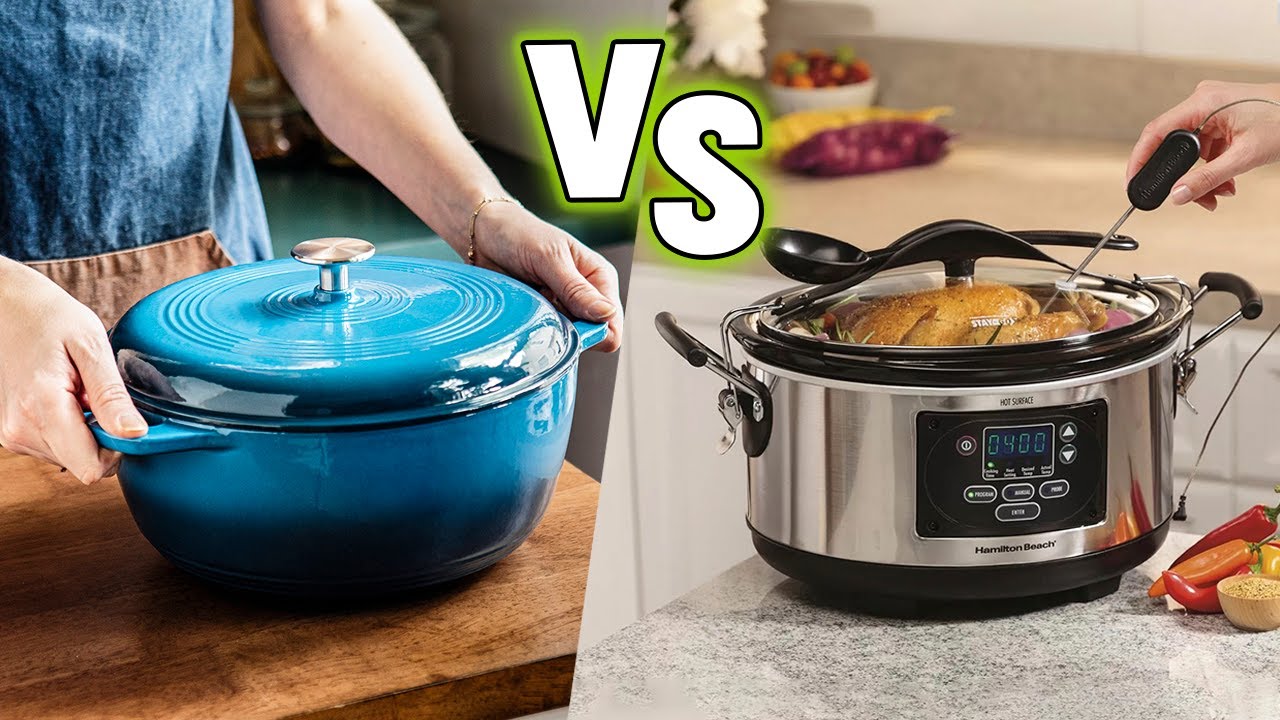
A Dutch oven is not the same as a slow cooker, but both can cook food low and slow. In U.S. kitchens, a slow cooker uses electricity and steady heat from a countertop base. A Dutch oven is a heavy pot that works on a stovetop, in a conventional oven, and sometimes over a fire.
A Dutch oven can replace a slow cooker for many recipes. However, the cooking method, heat control, cleanup, and safety steps are different. The best choice depends on whether you want hands-off cooking or more control over browning and heat.
<figcaption style=”font-size:14px;color:#555;margin-top:8px;”>
Source: cookingclassla.com
Dutch Oven vs. Slow Cooker: The Main Difference
The main difference is how each appliance creates and controls heat.
A slow cooker has an electric heating base. It warms the ceramic or metal insert from the outside and holds food at a low cooking temperature for several hours. Most models have settings such as Low, High, and Warm.
A Dutch oven is a thick pot with a tight lid. It stores and spreads heat well. You can place it on a burner to sear food, then move it to the oven for slow cooking.
| Feature | Dutch oven | Slow cooker |
|---|---|---|
| Heat source | Stovetop, oven, or fire | Electric heating base |
| Main material | Cast iron, often with enamel | Ceramic, metal, or other insert materials |
| Browning | Excellent before slow cooking | Usually requires a separate pan |
| Cooking control | Direct and precise | Simple, gradual, and steady |
| Typical cooking style | Sear, braise, bake, simmer | Hands-off simmering |
| Can cook without electricity? | Yes, if using a stovetop or oven | No |
| Easy to leave unattended | Less suitable | Designed for unattended cooking within the manual’s limits |
| Best strength | Versatility and deep browning | Convenience and long cooking times |
A Dutch oven gives you more control. A slow cooker gives you more convenience. Neither is always better.
What Is a Dutch Oven?
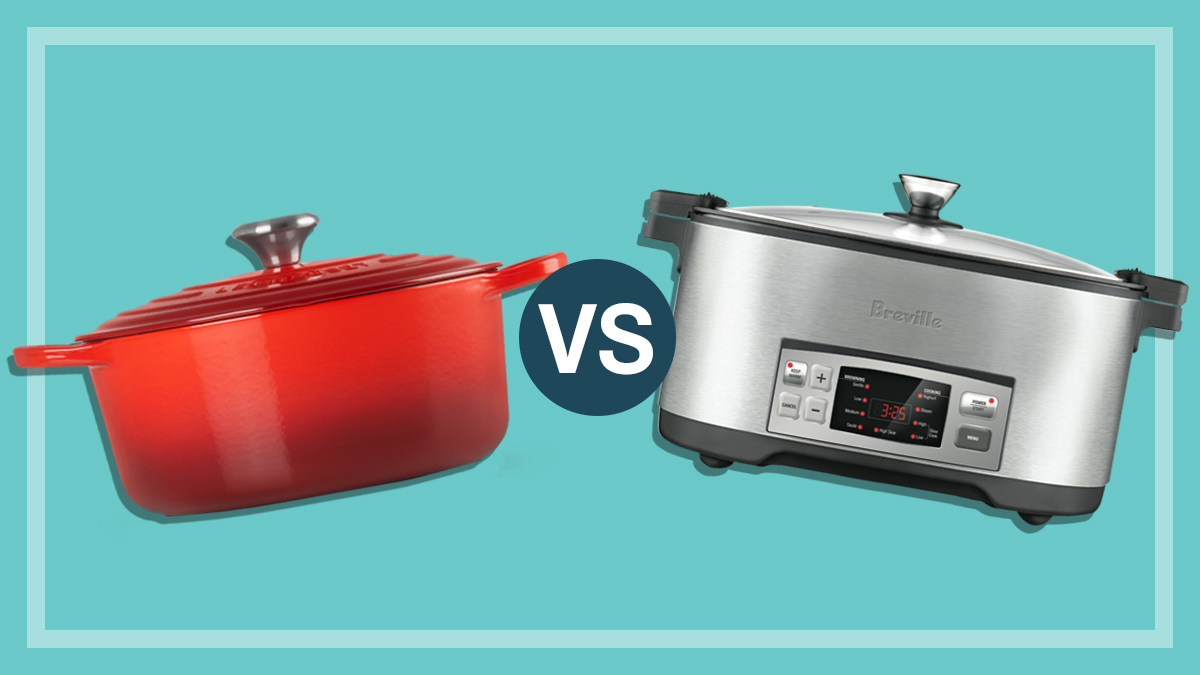
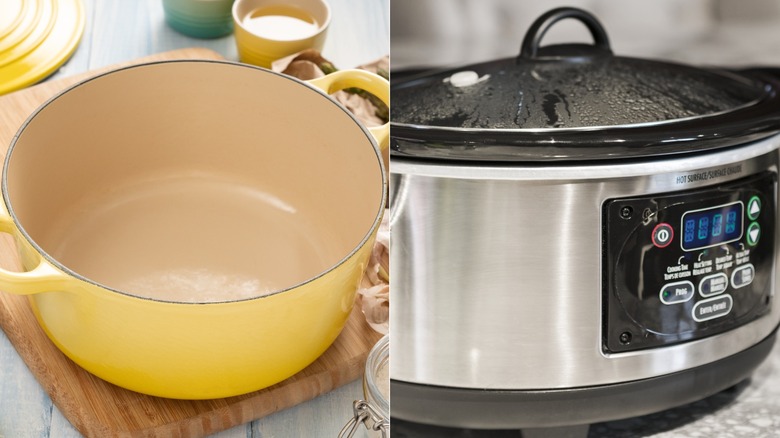
A Dutch oven is a heavy cooking pot with thick walls and a close-fitting lid. Traditional Dutch ovens are made from bare cast iron. Many modern versions have a smooth enamel coating.
The thick metal helps the pot hold heat. The lid traps steam and helps keep food moist. This makes the pot useful for:
- Braising meat
- Making soups and stews
- Baking bread
- Cooking beans
- Roasting
- Frying
- Simmering sauces
- Preparing one-pot meals
An enameled Dutch oven works well on a stovetop and in a conventional oven, subject to the manufacturer’s limits. A bare cast-iron Dutch oven can also work over a campfire or hot coals when designed for outdoor use.
A Dutch oven is not one exact size or design. Some are small enough for one or two servings. Others hold 7 quarts or more and suit large family meals.
How a Dutch oven cooks food
A Dutch oven transfers heat directly from the burner or oven into the pot. The heavy walls then spread and retain that heat.
This design creates two useful effects:
- Food can brown before liquid is added.
- The pot can maintain a steady simmer in the oven.
That first step matters. Browning meat and vegetables adds flavor that a typical slow cooker cannot create as easily because most slow cookers do not brown food well.

What Is a Slow Cooker?
A slow cooker is an electric countertop appliance made for long, low-temperature cooking. It usually has a removable insert, a heating base, a lid, and simple controls.
You place the ingredients in the insert, choose a setting, and let the cooker work over several hours. Many recipes use:
- Low for a longer cooking time
- High for a shorter cooking time
- Warm for holding food after cooking
The exact temperature and timing vary by model. A “Low” setting on one slow cooker may not behave exactly like “Low” on another.
Slow cookers work well for:
- Pulled pork
- Chicken soup
- Chili
- Pot roast
- Beans
- Lentils
- Stews
- Shredded beef
- Some oatmeal and dessert recipes
The sealed environment reduces evaporation. As a result, slow-cooker recipes often need less liquid than stovetop recipes.
How a slow cooker cooks food
The heating base warms the insert slowly. The food then cooks through gentle heat over a long period.
A slow cooker is built for steady cooking rather than quick changes. It takes time to heat up, and lifting the lid can release heat and extend the cooking time.
For this reason, avoid opening the lid often. Check the food only when needed, and follow the recipe or appliance manual.
Can You Use a Dutch Oven Like a Slow Cooker?
Yes, you can use a Dutch oven for many slow-cooker-style meals. The usual method is to brown the ingredients, add liquid, cover the pot, and cook it at a low oven temperature.
This method is often called oven braising.
Basic Dutch oven method
- Read the Dutch oven manual. Check the oven-safe temperature for the pot, lid, knobs, and handles.
- Brown the meat or vegetables. Use the stovetop if the pot is safe for direct heat.
- Add the liquid and seasonings. Scrape up browned bits from the bottom.
- Cover the pot. A tight lid helps limit moisture loss.
- Move the pot to a preheated oven. Use the temperature stated by a reliable recipe.
- Cook until tender and safe to eat. Use a food thermometer for meat and poultry.
- Check the liquid during cooking. Add more only if the food is drying out.
A common oven-braising range is about 275°F to 325°F, but the correct temperature depends on the recipe, ingredients, and pot. A Dutch oven does not need to match a slow cooker’s setting exactly.
Dutch oven to slow cooker conversion
There is no universal conversion chart. Slow cookers differ in size, shape, wattage, and heat pattern.
As a rough cooking guide, recipes cooked on Low in a slow cooker often take about:
- 6 to 8 hours on Low
- 3 to 4 hours on High
In a Dutch oven, the same meal may cook in about:
- 2 to 4 hours at a low oven temperature
These are only starting points. Meat size, bone structure, starting temperature, liquid level, and the oven all affect the result.
The best sign of completion is not the clock alone. Tough meat should become tender, beans should soften fully, and meat should reach a safe internal temperature measured in the thickest part.

Which Is Better for Your Cooking Style?
A Dutch oven is better when you want control, browning, and flexible cooking methods. A slow cooker is better when you want to load the ingredients and leave the appliance to cook for hours.
Choose a Dutch oven if you:
- Want to sear meat in the same pot
- Cook on a stovetop and finish in the oven
- Want rich browning and reduced sauces
- Bake bread or roast food
- Need a pot that can work without electricity
- Like to adjust heat during cooking
- Want one pot for several cooking methods
Choose a slow cooker if you:
- Want simple hands-off cooking
- Leave for work while dinner cooks
- Prefer low-effort meal preparation
- Make soups, chili, shredded meat, or stews
- Do not want to heat the oven
- Need food to stay warm after cooking
- Prefer simple controls
A slow cooker also uses less active attention. You do not need to stir most dishes, and the appliance is designed for long cooking. A Dutch oven needs more care because the pot can become very hot and liquid can evaporate faster.

Dutch Oven and Slow Cooker Results Are Not Always the Same
The same recipe can taste and feel different in each appliance.
A Dutch oven often produces:
- More browned meat
- More concentrated sauce
- Less remaining liquid
- Stronger roasted flavors
- A thicker surface crust on some dishes
A slow cooker often produces:
- More moist cooking conditions
- Softer vegetables
- More liquid in the finished dish
- Less browning
- A softer, more uniform texture
This difference comes from heat and moisture. A Dutch oven in an oven can lose some moisture, especially if the lid does not seal well. A slow cooker traps more steam inside the insert.
Adjusting a slow-cooker recipe for a Dutch oven
When moving a recipe to a Dutch oven:
- Use less liquid at first if the slow-cooker recipe contains a lot of broth.
- Brown meat and vegetables before adding liquid.
- Keep the lid on to prevent excess evaporation.
- Check the dish during cooking.
- Add delicate vegetables later if you want them to keep their shape.
- Add dairy near the end unless the recipe says otherwise.
- Use a thermometer for meat and poultry.
Do not reduce liquid too aggressively. The food still needs enough moisture to prevent scorching and to create steam.
Adjusting a Dutch oven recipe for a slow cooker
When moving a Dutch oven recipe to a slow cooker:
- Add enough liquid for the long cooking period.
- Brown meat first if you want deeper flavor.
- Do not fill the insert beyond the manufacturer’s recommended level.
- Avoid lifting the lid repeatedly.
- Add quick-cooking ingredients near the end.
- Add dairy, seafood, and some fresh herbs late when the recipe requires it.
A slow cooker may not reduce a sauce as well as an uncovered Dutch oven. You may need to transfer the liquid to a saucepan after cooking and reduce it on the stovetop.

Safety Rules for Both Cooking Methods
Both tools can make safe meals when used correctly. The main risks are burns, broken cookware, undercooked food, and unsafe food storage.
Follow these Dutch oven safety rules
- Check that the pot, lid, and knob are oven-safe at the selected temperature.
- Use oven mitts; the handles stay hot.
- Do not place a hot Dutch oven on a cold, wet, or fragile surface.
- Avoid sudden temperature changes, especially with enamel.
- Do not heat an empty enameled pot for a long time.
- Lift the lid away from your face to release steam.
- Follow the manufacturer’s rules for glass, induction, and outdoor use.
A Dutch oven can be extremely heavy when filled. Use both hands when possible.
Follow these slow cooker safety rules
- Use the insert supplied or approved by the manufacturer.
- Do not use a cracked ceramic insert.
- Keep the appliance on a stable, heat-safe surface.
- Do not place the base in water unless the manual says it is washable that way.
- Keep the lid on during cooking.
- Do not use the appliance to reheat cold leftovers unless the manual and food-safety guidance allow it.
- Refrigerate leftovers promptly in shallow containers.
The USDA advises keeping perishable food out of the 40°F to 140°F danger zone as much as possible. Use a food thermometer to confirm that meat and poultry reach safe internal temperatures. The USDA lists 165°F for poultry and gives separate temperatures for whole cuts, ground meats, and leftovers.
A slow cooker’s Warm setting is for holding cooked food, not for bringing cold food up to a safe temperature.

Common Mistakes to Avoid
Treating “Low” as a precise temperature
Slow-cooker settings are not exact temperature labels. They describe a cooking mode, and performance varies by model.
Better approach: Follow the recipe, use the appliance manual, and judge doneness with texture and temperature.
Using a Dutch oven at the same time and temperature as a slow cooker
A Dutch oven transfers heat differently. A direct burner can scorch food, while an oven may cook it more evenly.
Better approach: Use a low oven temperature and check the dish during the first attempt.
Adding too much liquid
Slow-cooker recipes often assume little evaporation. A Dutch oven may need less liquid, especially if it cooks uncovered or has a loose lid.
Better approach: Start with enough liquid to partly cover the food, unless the recipe gives a different instruction.
Filling a slow cooker too much
An overfilled insert can cook unevenly. It can also increase the chance of spills.
Better approach: Stay within the fill level in the manufacturer’s instructions.
Opening the slow-cooker lid often
Each opening releases heat and steam. This can lengthen the cooking time.
Better approach: Keep the lid closed until the recipe reaches its expected cooking stage.
Using a Dutch oven for long unattended cooking without checking it
A Dutch oven can lose liquid or develop a hot spot, especially on a burner.
Better approach: Use the oven for steadier heat, and check the liquid and food when the recipe calls for it.

Can You Put a Dutch Oven in a Slow Cooker?
Usually, no. A regular Dutch oven should not be placed inside a slow cooker unless the slow-cooker manufacturer specifically approves that setup.
The slow cooker is designed to heat its own insert. Adding another pot can block heat transfer, damage the appliance, or create uneven cooking. A bare cast-iron Dutch oven may also scratch the insert or put too much weight on the heating base.
If you want slow cooking in a Dutch oven, use the Dutch oven in a conventional oven or on a suitable stovetop. If you want electric slow cooking, use the slow cooker insert by itself.

FAQs About Dutch Ovens and Slow Cookers
Does a Dutch oven cook faster than a slow cooker?
Often, yes. A Dutch oven in a hot oven can finish a braise in a few hours, while the same meal may take six to eight hours in a slow cooker. The exact time depends on the recipe, food size, temperature, and desired tenderness.
Can a Dutch oven replace a slow cooker?
For many recipes, yes. It can cook stews, chili, beans, and braised meat. It does not provide the same electric, hands-off experience, and it may require more liquid checks.
Is a Dutch oven better for soup?
It depends on the soup. A Dutch oven is useful when you want to sauté vegetables, brown meat, or reduce the broth. A slow cooker is convenient when you want the soup to cook with little attention.
Can you slow cook on a stovetop with a Dutch oven?
Yes, but use low heat and check the pot often. A burner can create a hot spot on the bottom. An oven usually gives more even heat for long braises.
Can you use a slow cooker recipe in a Dutch oven?
Yes. Brown the ingredients first, use a covered pot, reduce the liquid when appropriate, and adjust the cooking time. Begin checking the food well before the slow-cooker time would end.
Key Takeaways
- A Dutch oven and a slow cooker are different tools.
- A Dutch oven uses direct heat from a burner, oven, or fire.
- A slow cooker uses an electric heating base.
- A Dutch oven is better for searing, browning, baking, and heat control.
- A slow cooker is better for hands-off cooking over several hours.
- You can adapt many slow-cooker recipes for a Dutch oven.
- There is no single exact Dutch oven-to-slow-cooker conversion.
- Use the appliance manual and a food thermometer for safe results.
Conclusion
A Dutch oven is not the same as a slow cooker, but it can perform many of the same slow-cooking tasks. Choose a Dutch oven when you want strong browning, flexible heat, and one-pot control. Choose a slow cooker when convenience and unattended cooking matter most.
For a first recipe conversion, brown the food in the Dutch oven, add a moderate amount of liquid, cover it, and finish it in a low oven. Check the food early, watch the moisture level, and confirm that meat reaches a safe internal temperature.
Sources for further reading
- [USDA FSIS: Safe Minimum Internal Temperatures](https://www.fsis.usda.gov/food-safety/safe-food-handling-and-preparation/meat/food-safety and)
- USDA FSIS: Slow Cookers and Food Safety
- USDA FSIS: Keep Food Safe
- Always consult the user manual for the specific Dutch oven or slow cooker, especially for oven temperatures, fill limits, and approved uses.