
The biggest standard household slow cooker is usually 12 quarts. Most large models sold for home use range from 8 to 10 quarts, while 12-quart units are less common. Larger appliances do exist, but they are often commercial cookers, roaster ovens, or electric braising pans, not traditional countertop slow cookers.
For most homes, a 10-quart slow cooker is the largest practical size. Choose a 12-quart model when you need food for a large gathering and have enough storage space.
Introduction
A slow cooker’s size is measured in quarts of total vessel capacity. A 12-quart cooker can hold up to 3 gallons by volume, but you should not fill it to the rim. Food cooks best when the crock is filled about one-half to two-thirds full, depending on the manufacturer’s instructions.
The largest slow cooker you can buy depends on what you mean by “slow cooker.” A standard household model, a commercial unit, and a roaster oven with a slow-cook setting are different products. This guide explains the size limits, useful capacity, safety rules, and the best size for different groups.
What Is the Largest Household Slow Cooker?
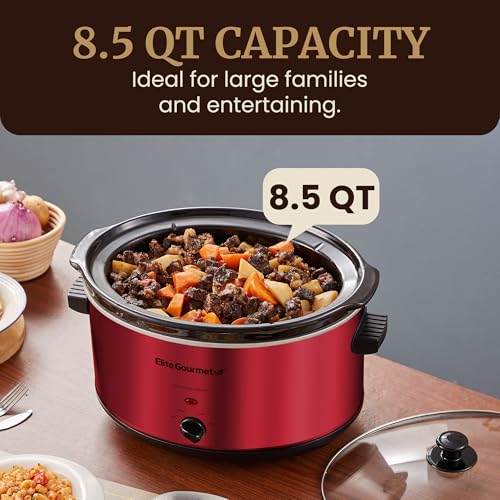
A 12-quart slow cooker is generally the largest size marketed as a regular household slow cooker. It is designed for large meals, holiday gatherings, parties, meal prep, and large cuts of meat.
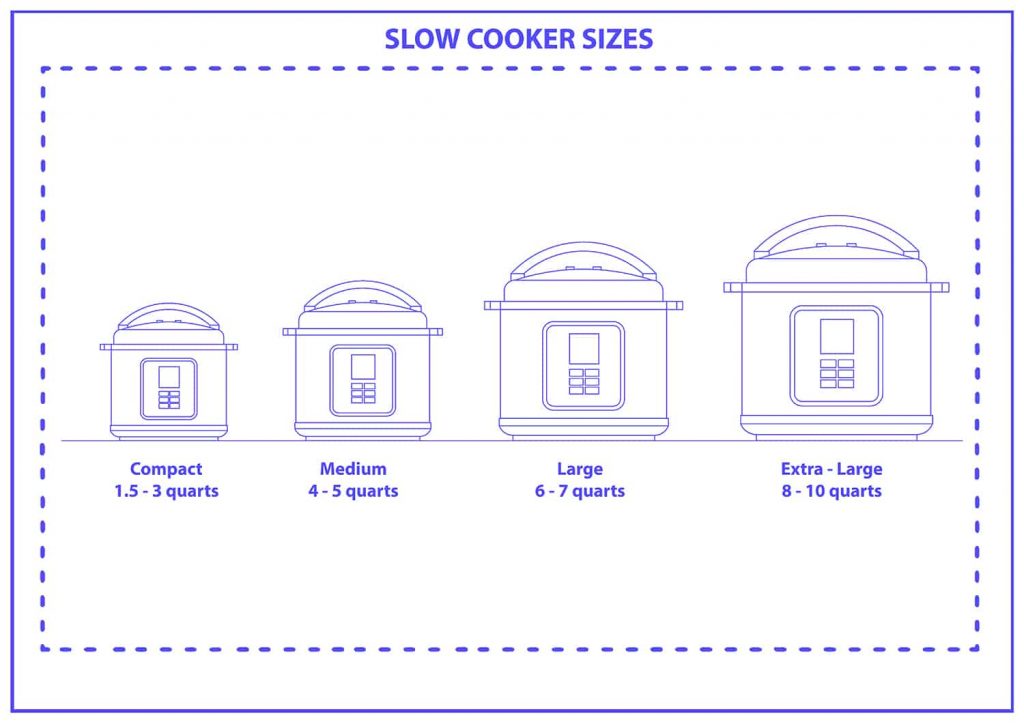
Common household slow cooker sizes include:
| Size | Approximate total volume | Best use |
|---|---|---|
| 1.5–3 quarts | 0.4–0.75 gallons | Dips, sauces, and meals for 1–2 people |
| 4–5 quarts | 1–1.25 gallons | Small families and everyday meals |
| 6–7 quarts | 1.5–1.75 gallons | Families of 3–6 people |
| 8 quarts | 2 gallons | Large family meals |
| 10 quarts | 2.5 gallons | Parties, large roasts, and batch cooking |
| 12 quarts | 3 gallons | Very large groups and event cooking |
The 10-quart slow cooker is more widely available than a 12-quart model. It often offers a better balance of capacity, price, storage, and cooking performance.
A 12-quart slow cooker may have a larger footprint, a heavier ceramic crock, and a longer heating time. Check the manufacturer’s manual before buying because capacity, temperature controls, and usable fill limits vary by model.

Is There a Slow Cooker Larger Than 12 Quarts?
Yes, larger appliances exist, but they may not be conventional slow cookers. Commercial kitchens use large slow-cooking equipment that can exceed 12 quarts. These units may use stainless-steel pans, water baths, or hotel pans instead of a removable ceramic crock.
You may also find products labeled as:
- Commercial slow cookers
- Electric roasters
- Roaster ovens
- Electric braising pans
- Multi-cookers with slow-cook settings
- Countertop food warmers
An electric roaster oven may hold 18 quarts or more. However, its cooking method is not always the same as that of a traditional slow cooker. A roaster oven often heats with an exposed electric element around the pan. A traditional slow cooker normally heats through the sides of a ceramic or metal crock.
Why the label matters
A larger capacity does not automatically mean better slow cooking. The shape, heating method, lid seal, temperature control, and manufacturer instructions all affect results.
For example, a large roaster oven may be useful for:
- Turkey and large cuts of meat
- Pulled pork
- Large batches of soup
- Holiday meals
- Keeping cooked food warm
A traditional 10- or 12-quart slow cooker may be better for:
- Stews
- Chili
- Beans
- Meatballs
- Dips
- Recipes designed for slow-cooker heat
Do not assume that a roaster oven can replace a slow cooker in every recipe. Follow the appliance manual and use recipes suited to that appliance.
How Much Food Can a 12-Quart Slow Cooker Hold?
A 12-quart slow cooker holds 12 quarts at its maximum volume, but the safe cooking load is lower. If the recommended fill level is two-thirds, the practical cooking capacity is about:
12 quarts × two-thirds = 8 quarts of food
That is about 2 gallons of food before allowing for ingredients that expand during cooking.
This does not mean every recipe should be scaled to exactly 8 quarts. Beans, rice, pasta, grains, and some vegetables expand as they cook. A recipe with liquid may also bubble during heating.
Use the manufacturer’s fill guidance first. If the manual is not available, leaving room below the lid is safer than filling the crock to the top.
Approximate serving capacity
Serving size depends on the recipe and appetite, but these rough estimates can help:
- 4 quarts may serve about 4–6 people
- 6 quarts may serve about 6–8 people
- 8 quarts may serve about 8–12 people
- 10 quarts may serve about 10–15 people
- 12 quarts may serve about 12–18 people
These numbers are estimates, not fixed rules. Chili served as a main dish may provide more servings than a thick meat dish. A recipe with bones, large meat pieces, or a high amount of vegetables also produces fewer servings than its liquid volume suggests.
A simple scaling example
Suppose a recipe makes 6 servings in a 6-quart cooker. Doubling the recipe may fit a 12-quart cooker by volume, but the cooking time may not stay the same.
A doubled recipe can:
- Take longer to reach a safe cooking temperature
- Need more time for the center to cook
- Produce a different texture
- Exceed the recommended fill level
- Need changes to seasoning and liquid
Scale recipes by the cooker’s usable capacity, not just its printed quart rating.

What Is the Best Large Slow Cooker Size for a Family?
For most families, 6 to 8 quarts is the best large slow cooker size. A 6-quart model works well for daily meals, while an 8-quart model gives more room for leftovers and large cuts of meat.
Choose a 10-quart slow cooker when you often cook for:
- More than eight people
- Potlucks and parties
- Holiday meals
- Church or community events
- Meal preparation for several days
- Large roasts, briskets, or whole chickens
Choose a 12-quart slow cooker only when the extra capacity solves a clear problem. It takes more cabinet space and may be awkward to lift when full. A full ceramic crock can also be heavy and difficult to clean in a small sink.
Size guide by household
| Household or event | Recommended size |
|---|---|
| One person | 2–3 quarts |
| Two people | 3–4 quarts |
| Family of 3–4 | 5–6 quarts |
| Family of 5–6 | 6–8 quarts |
| Family of 7–10 | 8–10 quarts |
| Large gathering | 10–12 quarts |
| Catering or institutional use | Commercial equipment |
A larger cooker is not always better. A cooker that is too large for the recipe may heat less evenly because the food layer is too shallow. It may also dry food around the edges.

How Do You Choose Between a 10- and 12-Quart Slow Cooker?
Choose a 10-quart model if you want the largest practical size for normal home use. Choose a 12-quart model if you regularly prepare very large batches and can manage its weight and storage needs.
Compare these features before buying:
Internal shape
A wide, oval crock fits ribs, brisket, roasts, and whole poultry better than a tall, narrow crock. A round crock may suit soups, beans, and stews.
Usable fill area
Look for the manufacturer’s recommended minimum and maximum fill level. A large crock may not perform well when used for a small recipe.
Lid design
A tight-fitting lid helps retain heat and moisture. Some large models include a locking lid for transport. A locking lid is useful for travel, but it does not replace safe food-temperature control.
Controls
Basic models may have Low, High, and Warm settings. Digital models may add timers and programmable cooking periods. A timer does not make food safe if the recipe, temperature, or holding time is unsuitable.
Weight
Check the weight of the empty crock and the full appliance. A 12-quart slow cooker filled with food can be hard to move safely.
Counter and storage space
Measure the appliance before buying. Include room for:
- The power cord
- The lid
- Ventilation around the housing
- Safe access to the controls
- A heat-safe surface
Never place a slow cooker under cabinets if steam or heat could damage them.
How to Use the Biggest Slow Cooker Safely
Use a large slow cooker on a stable, heat-resistant surface away from the edge of the counter. Keep the lid on during cooking unless the recipe tells you to stir or add an ingredient.
Follow these basic steps:
- Thaw meat in the refrigerator before placing it in the cooker.
- Cut large ingredients into similar sizes.
- Add enough liquid for the recipe, but do not fill the crock to the rim.
- Keep the cooker at the recommended fill level.
- Plug the cooker directly into a suitable outlet.
- Avoid lifting the lid often.
- Check that the food reaches a safe internal temperature.
- Refrigerate leftovers within two hours, or within one hour when the surrounding temperature is above 90°F.
The U.S. Department of Agriculture recommends keeping hot food at 140°F or above and cold food at 40°F or below. Food held between those temperatures can spend time in the bacterial “danger zone.”
For final cooking temperatures, use a food thermometer. Common USDA minimum internal temperatures include:
- 145°F for whole cuts of beef, pork, lamb, and veal, followed by a three-minute rest
- 160°F for ground meats
- 165°F for poultry
- 165°F for leftovers and casseroles
A slow cooker may cook food safely, but it is not a substitute for checking temperature when the recipe or food type requires it.
Do not use the Warm setting to cook raw food
The Warm setting is meant to hold already cooked food. It may not heat raw meat quickly or evenly enough for safe cooking.
Do not use a slow cooker to reheat cold leftovers. Reheat leftovers on the stove, in an oven, or in a microwave until steaming hot, then transfer them to the slow cooker for holding if the appliance instructions allow it.
Sources for these food-safety principles include the USDA slow-cooker guidance and the USDA safe minimum internal temperature chart.
Common Mistakes With Extra-Large Slow Cookers
The most common mistake is treating the printed capacity as the amount of food that should be cooked. A 12-quart label describes the vessel’s total volume, not the recommended food load.
Avoid these errors:
Filling the crock to the top
Overfilling can cause spills and uneven heating. It may also prevent the lid from sealing correctly.
Cooking a small recipe in a very large crock
A shallow layer can dry out or cook unevenly. Use a smaller cooker when the recipe does not fill the large one to its recommended level.
Adding frozen meat
Frozen meat can keep the food in an unsafe temperature range for too long. Thaw meat in the refrigerator first.
Removing the lid repeatedly
Each lid lift releases heat. The cooker may need extra time to return to its normal temperature.
Using a liner that is too small
A liner should fit the cooker and follow the liner maker’s instructions. Do not use a liner that hangs near heating parts or blocks the lid from closing.
Moving a full cooker
A full 10- or 12-quart crock may weigh far more than expected. Turn off the appliance, let it cool as needed, and use both hands. Ask for help when the load is heavy.
Leaving it unattended in an unsafe location
Keep the appliance away from water, loose cloth, paper, and the counter edge. Inspect the cord before use and stop using the appliance if the cord or housing is damaged.
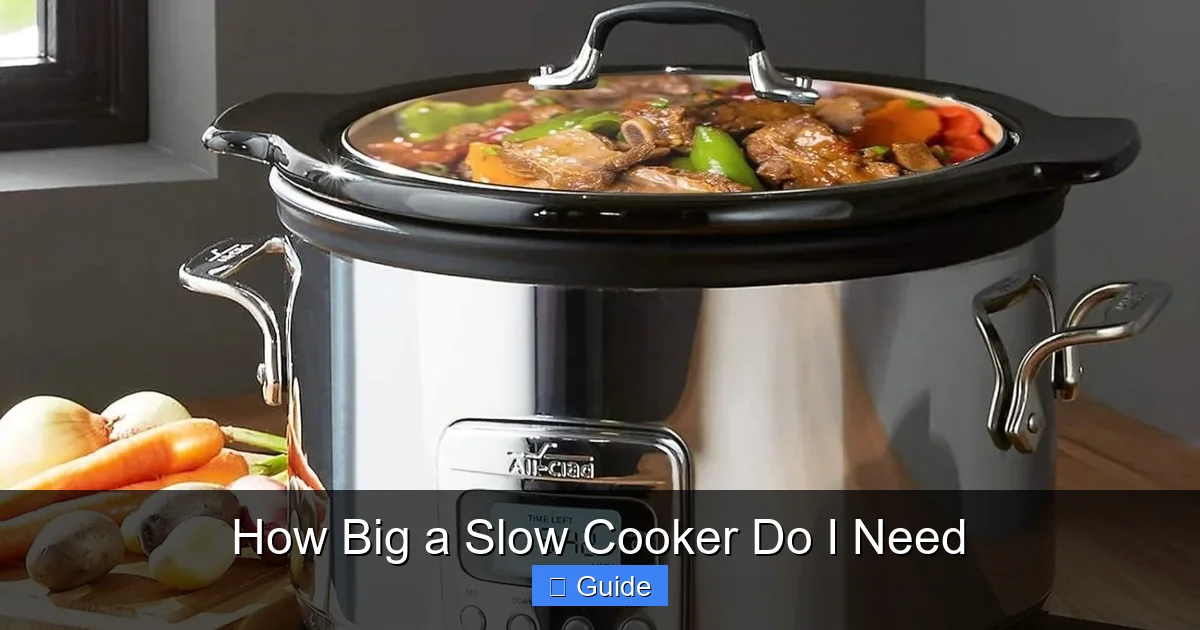
Biggest Slow Cooker vs. Largest Crock-Pot
“Crock-Pot” is a brand name, while “slow cooker” is the general product category. People often use the terms as if they mean the same thing, but not every large slow cooker is made by Crock-Pot.
When comparing models, check:
- The actual quart capacity
- The model number
- The cooking modes
- The shape of the crock
- The manufacturer’s fill instructions
- The warranty and replacement-part policy
- Whether the crock and lid are dishwasher safe
Do not assume that one brand’s 8-quart model has the same shape or usable space as another brand’s 8-quart model. Published capacity is useful for comparison, but it does not reveal every practical difference.
FAQ About the Biggest Slow Cooker
Is a 12-quart slow cooker too big for home use?
It can be too large for many homes. A 12-quart model makes sense for large families, frequent entertaining, batch cooking, or holiday meals. For everyday cooking, a 6- or 8-quart model is usually easier to fill, lift, clean, and store.
Can I cook a small meal in a 12-quart slow cooker?
You can, but the result may not be ideal if the food layer is too shallow. Use the manufacturer’s minimum fill guidance. A smaller slow cooker is often better for a small recipe.
What is the largest slow cooker for a large family?
A 10-quart slow cooker is often the most practical large household option. A 12-quart model provides more capacity but is harder to store and move. For groups larger than a normal household, commercial equipment may be more suitable.
Is an 18-quart roaster the same as a slow cooker?
No. An 18-quart roaster is usually a different type of appliance. It may cook, roast, or hold food with a different heating pattern. Use the roaster’s instructions rather than assuming slow-cooker cooking times will transfer directly.
How full should a large slow cooker be?
Follow the manual first. As a general USDA guideline, slow cookers are commonly filled about one-half to two-thirds full. Do not fill the cooker to the rim, and leave room for ingredients that expand.
Conclusion
The largest common household slow cooker is about 12 quarts, while 10 quarts is often the most useful large size for home kitchens. A 12-quart cooker can prepare large batches, but its full capacity is not the same as its safe working capacity.
For daily family meals, choose 6 to 8 quarts. For parties and large meal preparation, choose 10 quarts. Choose 12 quarts only when you need the extra space, have enough storage, and can safely handle the appliance when full.