
A 16 degree angle knife sharpener creates a fine, precise edge for many kitchen and outdoor knives.
A 16 degree angle knife sharpener is a useful tool for cooks who want clean cuts, less effort, and better control. This angle is common for Japanese-style knives and many modern blades with thin edges. The right sharpener does more than remove metal. It helps you keep the angle steady, repair small dull spots, and protect the blade from uneven wear. This guide explains how a 16 degree angle knife sharpener works, who should use one, and how to get safer, sharper results.

What Is a 16 Degree Angle Knife Sharpener?
A 16 degree angle knife sharpener guides the blade at about 16 degrees on one side of the edge. The sharpener may use ceramic rods, diamond plates, abrasive wheels, or a guided clamp system to shape the bevel.
Most kitchen knives have two bevels. If each side is sharpened at 16 degrees, the total edge angle is about 32 degrees. This detail matters because product labels do not always explain whether the listed angle applies to one side or the complete edge.
A narrow angle makes a thin cutting edge. It can glide through onions, herbs, fish, and boneless meat with little pressure. However, the edge may be less resistant to chips if you use it on hard food, bones, frozen items, or a cutting board made from glass.
A 16 degree angle knife sharpener is not right for every blade. Thick outdoor knives, cleavers, and heavy Western work knives often need a wider angle. Always check the knife maker’s instructions when they are available.

Why the Sharpening Angle Matters
The edge angle is a balance between sharpness and strength. Think of it like a pencil tip. A very fine tip can write with great detail, but it may break more easily. A thicker tip is stronger, but it cannot make the same fine mark.
A smaller angle usually gives these benefits:
• Smooth, precise cuts
• Less force during slicing
• Better control with delicate foods
• A clean edge for peeling and chopping
• A refined finish on thin kitchen knives
A larger angle usually provides:
• More edge strength
• Better resistance to rough use
• More stability on firm foods
• Greater durability for outdoor and utility knives
The best angle depends on the blade steel, edge thickness, knife design, and your habits. A skilled cook who only cuts vegetables may enjoy a 16 degree edge. Someone who cuts squash, poultry joints, or cardboard may need a stronger bevel.

Which Knives Work Best at 16 Degrees?
A 16 degree angle knife sharpener often works well for thin Japanese knives and many light kitchen knives. It can also suit selected Western knives when the manufacturer recommends a narrow edge.
Knives that may benefit include:
• Santoku knives
• Gyuto knives
• Nakiri knives
• Petty knives
• Fillet knives
• Thin chef’s knives
• Some high quality folding knives
Be careful with single bevel knives. A single bevel blade has one main sharpened side and a flat side. It needs a different method from a double bevel knife, so a standard two-sided sharpener may damage the intended geometry.
Avoid forcing a 16 degree angle on these blades unless the maker approves it:
• Heavy cleavers
• Thick hunting knives
• Survival knives
• Machetes
• Choppers
• Knives used to split bones
• Very thick German-style blades
The steel also matters. Hard powder steel can hold a fine edge well, but it may need diamond abrasives. Softer stainless steel may sharpen quickly, but the thin edge can roll if used roughly.
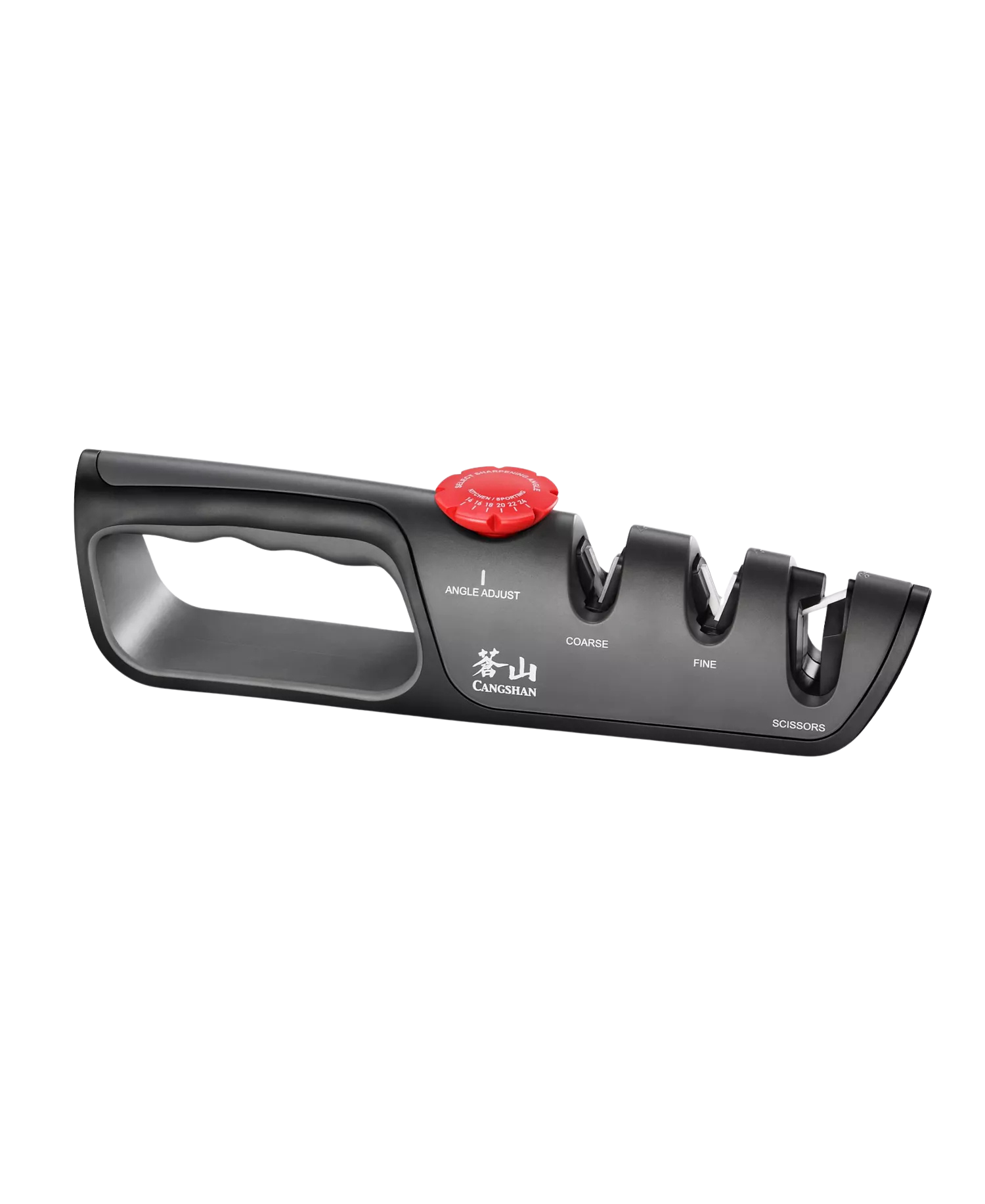
Types of 16 Degree Angle Knife Sharpeners
Different sharpeners offer different levels of control. Choosing the right type can make the process easier and safer.
Guided Angle Sharpeners
A guided sharpener holds the blade or abrasive at a set angle. Some models use a clamp, while others have ceramic slots or adjustable arms.
These sharpeners are helpful for beginners because they reduce guesswork. They also produce more consistent results across several knives. Look for a model that clearly states whether 16 degrees means each side or the total edge.
Electric Knife Sharpeners
Electric sharpeners use powered abrasive wheels. Many have separate stages for grinding, honing, and polishing.
They are fast and convenient. However, an electric sharpener can remove too much metal if you press hard or make too many passes. Use light pressure and follow the instructions carefully.
Manual Pull Through Sharpeners
Manual models usually have fixed slots. You pull the knife through the slot several times.
These are simple and portable, but they offer less control. Some inexpensive models use coarse carbide cutters that can leave a rough edge. A fine ceramic stage can improve the finish, but it cannot correct every type of damage.
Sharpening Stones
Water stones, oil stones, and diamond plates give the most control. They also require the most practice.
A 16 degree angle knife sharpener made from a guided stone system can produce an excellent edge. Freehand sharpening takes time because you must hold the angle yourself. A small angle guide can help while you build muscle memory.
Ceramic Honing Rods
A ceramic rod can realign a slightly rolled edge and polish the bevel. It does not usually remove enough metal to repair a very dull knife.
Use the rod lightly. Hard pressure can create uneven wear, especially on a thin edge.

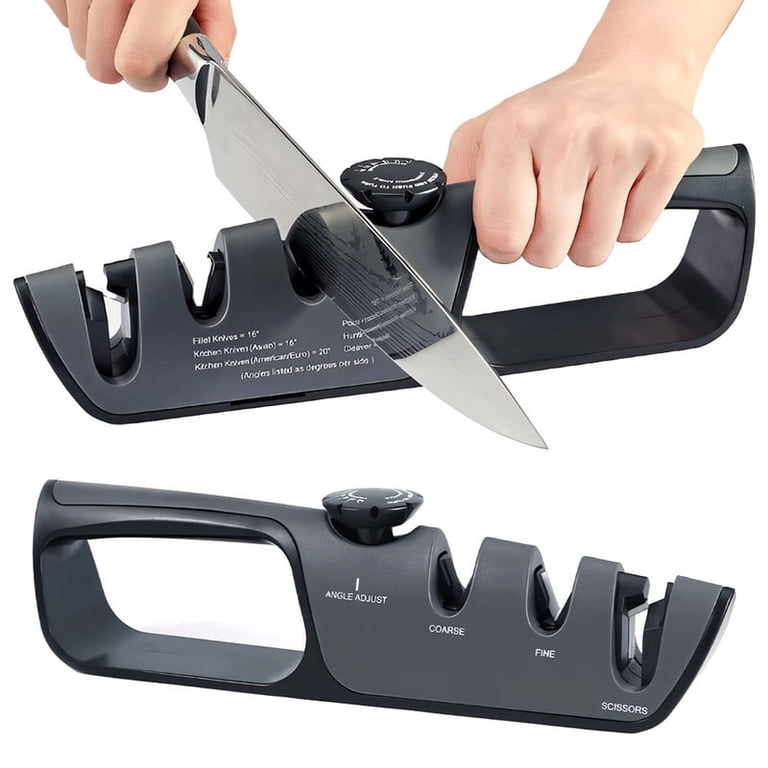
How to Use a 16 Degree Angle Knife Sharpener
The exact steps depend on the tool, but this method works for many guided systems.
- Clean and dry the knife. Remove food oils and moisture from the blade.
- Place the sharpener on a stable surface. A damp towel can stop some models from sliding.
- Confirm the angle. Check whether the sharpener uses 16 degrees per side.
- Start with the least aggressive abrasive that can solve the problem.
- Place the heel of the blade into the guide or sharpening area.
- Move the blade toward the tip in one smooth motion.
- Repeat the same number of passes on both sides for a double bevel knife.
- Check for a small burr along the edge. This raised strip shows that the abrasive reached the apex.
- Move to a finer honing or polishing stage.
- Wash and dry the knife before use.
Do not saw the blade back and forth unless the manufacturer specifically allows it. A smooth, controlled pass gives better contact and reduces scratches.
Use light pressure. The abrasive should do the work. Heavy pressure can flex the blade, damage the guide, and create an uneven bevel.

How to Tell When the Knife Is Sharp
A sharp knife should cut food with little force. It should not need a hard push or repeated sawing.
Try these simple checks:
• Slice a tomato without crushing the skin.
• Cut a sheet of paper with a smooth motion.
• Slice a soft potato or cucumber cleanly.
• Inspect the edge under bright light. A dull flat spot may reflect light.
• Feel for a burr carefully with a fingertip moving across the edge, never along it.
The paper test is useful, but it is not perfect. Some rough edges cut paper while still performing poorly on food. Real cutting performance matters most.
Never test sharpness by running your finger along the blade. That can cause a serious cut. Keep your fingers behind the edge during every inspection.

My Practical Lessons From Using a 16 Degree Angle Knife Sharpener
One mistake I often see is starting with the coarsest setting every time. Coarse abrasives remove metal quickly, but most knives only need light honing or a few fine passes. I now begin with a fine stage and move backward only when the edge remains dull.
Another lesson is to keep the blade clean. Oil, food residue, and metal dust can reduce contact with the abrasive. A quick wash and full dry often make the sharpening process feel much smoother.
I also learned not to chase a perfect angle at the cost of the knife. A small factory variation is normal. Trying to reshape the whole blade by hand can remove too much steel and shorten its life.
For a home chef, consistency beats speed. Five gentle, even passes are usually better than one aggressive session. When a knife has deep chips or a bent tip, professional repair may be the wiser choice.
Common Mistakes to Avoid
A 16 degree angle knife sharpener can work very well, but poor technique may damage the edge.
• Using the wrong angle: A 16 degree setting may be too narrow for a thick or heavy blade.
• Pressing too hard: Excess force removes metal quickly and can create a weak edge.
• Making too many passes: Stop when the knife is sharp.
• Skipping the burr check: Without reaching the apex, you may polish the sides without sharpening the edge.
• Mixing angles: Uneven passes create a crooked bevel.
• Sharpening a dirty blade: Food residue can affect the abrasive surface.
• Using a dull cutting board: Glass, stone, and ceramic boards can damage a fine edge.
• Cutting bones or frozen food: These tasks can chip a narrow bevel.
• Storing knives loose in a drawer: Blades can strike other tools and lose their edge.
• Ignoring the guide: A sharpener may advertise 16 degrees but apply that angle differently on each side.
A knife does not need to feel razor-like to be useful. A stable, clean edge is safer than a fragile edge that folds during the first meal.

Benefits and Limitations of a 16 Degree Edge
The main benefit is cutting efficiency. A narrow edge enters food easily, which can reduce hand strain and improve control.
It can also help with detailed work. Slicing herbs, trimming meat, and preparing decorative vegetables often feels easier with a fine edge.
Still, the design has limits. A narrow edge can chip, roll, or lose sharpness when used on hard materials. It also demands good technique and proper storage.
The steel may change the result. Hard, well-treated steel can support a thin edge for a long time. Soft steel may bend sooner, even if the sharpening angle is correct.
Consider your habits before choosing a 16 degree angle knife sharpener. The sharpest possible edge is not always the most useful edge for your kitchen.
How Often Should You Sharpen at 16 Degrees?
There is no single schedule for every knife. A home cook may need light honing every few weeks and full sharpening several times each year. A busy restaurant worker may need maintenance much more often.
Sharpen when the knife begins to:
• Slip on tomato skin
• Crush soft food
• Require extra pressure
• Produce uneven slices
• Feel rough during a cut
Use a honing rod for light maintenance if the knife only feels slightly dull. Use a sharpening abrasive when honing no longer restores performance.
Do not wait until the blade is completely blunt. Restoring a neglected edge takes more time and removes more metal. Small, regular maintenance helps the knife last longer.
How to Choose the Best 16 Degree Angle Knife Sharpener
Look for these features when comparing products:
• A clearly marked 16 degree setting
• An explanation of per-side or total angle
• Fine and coarse abrasive stages
• A stable base or secure clamp
• Replaceable abrasive parts
• Compatibility with your knife steel
• A design that protects your fingers
• Clear cleaning and maintenance instructions
• Reliable angle control
• A warranty or helpful customer support
Diamond abrasives are useful for hard steel and damaged edges. Ceramic surfaces are often better for fine honing and polishing. Coarse carbide slots may be convenient, but they can be aggressive.
An adjustable 16 degree angle knife sharpener offers more flexibility than a fixed model. However, more settings also mean more room for user error. Choose simplicity if you want quick maintenance, or choose adjustability if you sharpen several types of knives.
Caring for a Knife After Sharpening
A good edge can disappear quickly without proper care. Wash the knife by hand with mild soap and warm water. Dry it at once, especially near the handle and spine.
Avoid the dishwasher. Heat, detergent, and contact with other utensils can damage the edge and handle. Store the knife in a block, on a magnetic strip, or in a protective blade guard.
Use a wood, soft plastic, or rubber cutting board. Hard boards can wear a fine 16 degree edge faster. Never use the knife as a pry tool, scraper, or can opener.
Keep the sharpener clean as well. Remove metal filings according to the product instructions. A dirty abrasive surface may work unevenly and leave marks on the blade.
Safety Tips for Sharpening
Knife sharpening is simple, but it still involves an exposed cutting edge.
• Work in a bright, dry area.
• Keep children and pets away.
• Secure the sharpener before starting.
• Hold the knife by the handle.
• Keep your free hand away from the edge.
• Wear cut resistant gloves if the tool maker recommends them.
• Never rush the final passes.
• Wipe metal dust from the work area.
• Store the knife safely after cleaning.
• Replace damaged guides or loose parts.
A cut resistant glove can reduce risk, but it does not make sharpening safe by itself. Good control and a stable setup matter more.
Frequently Asked Questions About a 16 Degree Angle Knife Sharpener
Is a 16 degree angle good for kitchen knives?
Yes, a 16 degree angle can work well for thin Japanese knives and some modern kitchen knives. Check the manufacturer’s recommendation because heavy knives may need a wider angle.
Does 16 degrees mean both sides of the knife?
Usually, a 16 degree sharpener refers to 16 degrees on each side. That creates an approximate 32 degree included angle, but product descriptions can vary.
Can I use a 16 degree angle knife sharpener on a single bevel knife?
Use caution. Single bevel knives are designed to be sharpened mainly on one side, so a standard two-sided sharpener may change the blade geometry.
Is a sharpening stone better than an electric sharpener?
Neither is always better. Stones offer greater control, while electric sharpeners provide speed and repeatable guidance when used correctly.
How many passes should I make with a 16 degree angle knife sharpener?
Start with a small number of light passes, such as three to five per side. Stop when the edge cuts cleanly and avoid repeated passes that remove unnecessary metal.
Can a 16 degree edge chip easily?
It can be more vulnerable than a wider edge, especially on hard food, bones, frozen items, or hard cutting boards. Proper knife use and suitable steel greatly reduce the risk.
Should I sharpen a new knife immediately?
Not usually. Test the knife first and follow the maker’s care instructions. A new knife may already have a well-formed edge that only needs light maintenance.
Conclusion
A 16 degree angle knife sharpener can give the right kitchen knife a fine, clean, efficient edge. It works best when the blade supports a narrow bevel and when you use light pressure, steady passes, and proper maintenance.
Check the angle, understand the difference between per-side and total angles, and match the sharpener to your knife’s steel and purpose. Start gently, protect the edge with a suitable cutting board, and sharpen only as much as needed.
Try these steps on one compatible knife first, then build your technique over time. Explore more knife care guides, share your sharpening experience, or leave a comment with the method that works best for you.