
The Blender app is a free 3D creation program for modeling, animation, rendering, and visual effects.
You may have heard “Blender app” and wondered if it is a recipe tool, a photo editor, or a design app. I understand the confusion, especially when app stores and online listings use the word “Blender” for many unrelated products. In simple terms, Blender is a powerful open-source 3D program for computers. It helps users make 3D models, animated scenes, games, visual effects, and product images. The items below are useful study, note-taking, and productivity products that can support a Blender learning plan, even though they are not the Blender software itself.
Five Star Notebook for Blender Notes

The Five Star five-subject notebook is a practical choice for anyone learning Blender from videos, classes, or a structured course. I like the five-section layout because it lets you separate shortcuts, modeling notes, animation steps, rendering tips, and project plans. The wide-ruled pages also give new users room to write clear notes without crowding the page. Its 200 sheets offer enough space for a long beginner journey.
The water-resistant cover adds useful protection when the notebook travels between home, school, and work. The paper is made to reduce ink bleed, which helps when you use both sides of a page. I would use one section for Blender keyboard commands and another for common fixes, such as missing textures or odd lighting. This notebook does not run the Blender app, but it can make the learning process feel less scattered.
Pros:
- Five sections help organize Blender study topics
- Large 8-by-10.5-inch format gives you writing room
- 200 sheets support long-term project notes
- Water-resistant cover helps protect daily notes
- Paper helps reduce ink bleed
- Useful for class notes, sketches, and shortcut lists
Cons:
- It is not a digital notebook or Blender software tool
- Wide-ruled paper may feel limiting for detailed drawings
- The notebook adds weight to a small laptop bag
How to Build a Billion Dollar App

How to Build a Billion Dollar App is not a guide to Blender 3D. Instead, it explores the business and product thinking behind large technology companies. That makes it a useful companion for Blender users who want to turn 3D skills into an app, game, design service, or creative business. I see it as a strategy book rather than a technical manual.
The book can help you think beyond the screen. While the Blender app teaches you how to create, this book encourages you to ask who needs your work and how you can deliver it. It may be especially helpful for freelancers, startup-minded creators, and students who want to build a portfolio with a clear purpose. Keep in mind that business examples can age faster than core design lessons, so compare ideas with current market conditions in 2026.
Pros:
- Encourages product and business thinking
- Useful for creators planning a digital service
- Helps connect creative work with customer needs
- Can inspire Blender-based business ideas
- Works well as a reading companion for design students
- Offers a wider view than a software tutorial
Cons:
- It does not teach Blender tools or 3D workflows
- Some business examples may feel dated
- Readers seeking hands-on lessons may need another book
The Parent App: A Small Town Beach Romance
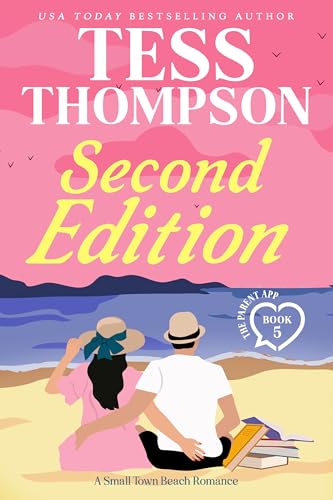
The Parent App is a small-town beach romance, so it is not connected to Blender, 3D graphics, or computer software. I included it because creative work needs rest as much as focus. A light novel can give you a break after a long modeling session, especially when you have spent hours staring at a timeline or correcting a mesh.
This book may suit readers who enjoy warm settings, relationship-driven stories, and a relaxed escape. It is easy to keep on a nightstand while a more technical Blender guide stays beside your computer. I would not buy it as a Blender learning resource. I would choose it as a personal downtime option for a creative student or busy parent who wants a simple story between projects.
Pros:
- Provides a relaxing break from technical screen work
- Fits readers who enjoy beach romance settings
- Works well for short evening reading sessions
- Can help balance a demanding creative routine
- Portable format makes it easy to read anywhere
Cons:
- It has no Blender instruction
- It may not suit readers who dislike romance
- Series readers may prefer to start with earlier books
Rocketbook Core Reusable Notebook

The Rocketbook Core is one of the most relevant products here for a Blender learner who prefers paper but also wants digital backup. Its reusable pages let you write notes, scan them with the companion app, and erase them for later use. I like this setup for people who rewrite shortcut lists often. It can reduce paper waste while keeping handwritten planning in your workflow.
The executive size is compact enough for a desk beside a keyboard, though it may not provide enough space for large concept drawings. You need the correct compatible pen and must follow the care instructions for clean erasing. For Blender study, I would use it for node diagrams, scene plans, keyboard commands, and task lists. It does not replace Blender, but it can act like a bridge between hand-written ideas and digital project files.
Pros:
- Reusable pages reduce the need for new notebooks
- App connection supports digital note storage
- Compact size fits beside a computer
- Useful for scene plans and Blender shortcuts
- Durable cover supports regular use
- Good choice for students and organized creators
Cons:
- Requires compatible pens for proper use
- Pages may not suit large sketches
- Users must follow the erasing instructions carefully
- It is an accessory, not the Blender app
Retired Educational App Developer T-Shirt

This educational app developer T-shirt is a casual clothing item for people who enjoy software, teaching, or technology humor. It is not a Blender shirt in the strict sense, and it does not contain a download code or software feature. Still, it may appeal to a Blender user who works in education, coding, digital art, or app design. The message gives it a clear identity without looking like a technical manual.
The tri-blend fabric is generally chosen for a soft, light feel, which can be comfortable during long study sessions. Fit and color can vary by size choice, so I recommend checking the current Amazon size chart before ordering. This is best viewed as a gift or casual wardrobe item. It supports the creative lifestyle around the Blender app rather than the software itself.
Pros:
- Clear technology-themed design
- Suitable for app developers and educators
- Soft tri-blend style may feel comfortable
- Works as a casual gift for tech fans
- Light clothing can suit desk-based work
Cons:
- It offers no Blender lessons or software access
- Fit may vary between users
- Graphic shirts may not suit formal settings
20 Principles of Productivity

20 Principles of Productivity covers focus, motivation, time management, habits, goals, and procrastination. These topics matter when you are learning Blender because the program has a steep feature set and many small skills to practice. A good routine can turn a confusing first week into steady progress. I would use this book to plan short sessions instead of trying to learn every Blender tool at once.
The strongest value is its broad coverage. You can pair one idea with one creative goal, such as modeling for 20 minutes or completing one lighting exercise. The book is not a Blender manual, and it cannot show you where a button sits in the interface. However, it may help you protect practice time and finish more personal projects. In my view, that makes it useful for beginners who struggle more with consistency than motivation.
Pros:
- Supports better study and practice habits
- Covers focus and time management in simple themes
- Useful for Blender beginners with busy schedules
- Can help reduce project delays
- Encourages clear goals and repeatable routines
- Works alongside technical training
Cons:
- It does not explain Blender features
- Broad advice may feel basic to advanced readers
- Results depend on applying the ideas
Outrage Machine: Technology and Society

Outrage Machine looks at how technology can increase conflict, spread anger, and affect public life. It is not a Blender tutorial, but it offers useful context for anyone who creates digital content. Blender artists often make images, animations, and videos that people share online. Understanding how online systems shape attention can help creators think carefully about tone, audience, and responsibility.
This is a better fit for advanced students, educators, journalists, and digital creators than for someone who only wants to learn modeling. The subject is serious, so it may not be a light read after a long day. Still, it can encourage more thoughtful media habits. If you use the Blender app to make public content, this book may help you consider how your work travels through modern platforms.
Pros:
- Explores the social effects of digital platforms
- Useful for thoughtful online content creators
- Supports media literacy and critical thinking
- Relevant to artists who publish work online
- Encourages responsible technology use
Cons:
- It is not a Blender software guide
- The topic may feel heavy for casual readers
- Readers seeking quick creative tips may prefer another book
Designing the iPhone User Experience

Designing the iPhone User Experience focuses on user-centered design, sketching, and prototyping for iPhone apps. It does not teach 3D modeling, sculpting, or animation in Blender. However, it may help a Blender artist who designs app visuals, interface mockups, product demos, or mobile game assets. The main lesson is to think about the person using the product, not only the person making it.
Some platform details may feel tied to the period when the book was published, so I would not use it as the only source for current iPhone design rules in 2026. Its planning ideas can still support strong creative work. Before building a Blender scene for an app or game, you can sketch the user flow and decide what the viewer must understand first. That simple step can save time and make a polished render more useful.
Pros:
- Introduces user-centered design thinking
- Useful for app, game, and product creators
- Encourages sketching before production
- Can improve Blender-based interface visuals
- Helps connect art with user needs
- Useful for students building design portfolios
Cons:
- Some iPhone details may be outdated
- It does not teach Blender tools
- Readers focused only on 3D art may find it indirect
What Is the Blender App?
When people ask, “what is the Blender app,” they usually mean Blender, the free and open-source 3D creation suite. Blender is developed with support from the Blender Foundation and its global community. It is available for major desktop operating systems, including Windows, macOS, and Linux. It is not normally a phone app, and it is not the same as a kitchen appliance or a generic mobile app with “Blender” in its name.
Blender brings many creative tools into one program. You can model objects, sculpt characters, add materials, set lights, animate scenes, render images, edit video, create visual effects, and work with simulations. It also supports rigging, compositing, motion tracking, and game asset production. That wide range is its greatest strength, but it can also make the first few days feel like entering a large workshop with every tool already on the wall.
What Can You Do With Blender?
A beginner can use Blender to create a simple cup, chair, room, logo, or low-poly character. With practice, the same program can produce cinematic scenes, product visualizations, animated short films, architectural views, and game-ready assets. Many users start with modeling because it gives quick visual results. Others begin with animation, sculpting, or materials because those areas match their goals.
The Blender app also supports a complete production path. You can create a model, unwrap its surface, add textures, place lights, animate a camera, and render the result without moving to several different programs. That does not mean Blender is always the easiest choice. Complex jobs may still use other tools, especially when a team needs a specialized pipeline. For personal learning, however, having many features in one free program is a major advantage.
Is Blender Free?
Yes. Blender is free and open-source software. You can download it from the official Blender website without paying a subscription for the core program. The software license allows users to study, modify, share, and use Blender for personal or commercial work, subject to the terms of its license.
Free does not mean simple. You may still spend money on a computer, graphics tablet, training course, add-ons, textures, or paid assets. A strong computer can improve render times and viewport performance. Still, the lack of a software purchase cost makes Blender one of the most approachable ways to enter 3D art.
What Devices Support Blender?
Blender is mainly designed for desktop and laptop computers. A newer Windows, macOS, or Linux computer can run it, but the experience depends on the processor, memory, graphics hardware, and storage. Simple scenes may work on modest systems. Heavy simulations, high-resolution textures, and advanced renders need more power.
Blender is not designed like a standard tablet app. You may view tutorials or manage notes on a phone, but serious modeling and animation need a larger screen and a keyboard with shortcut keys. A mouse is helpful, and a graphics tablet can improve sculpting. Before installing a current release, check the official system requirements because hardware support and performance needs can change.
Is Blender Good for Beginners?
Blender is good for beginners who accept that learning takes time. The interface has many editors, menus, modes, and shortcuts. At first, it may feel like learning a new language. The good news is that you do not need to understand everything at once. Start with navigation, object movement, simple modeling, basic materials, and one small render.
I recommend short practice sessions. Make a simple object, save it, and write down what worked. A notebook such as the Five Star model can keep those notes in one place, while a Rocketbook can store them digitally. The productivity book listed above may also help you build a steady habit. Small steps work like laying bricks: one session may seem small, but many sessions create a strong skill base.
Blender App Features to Know
3D Modeling
Modeling lets you build objects from points, edges, and faces. Beginners often start with basic shapes, then use tools to cut, move, scale, extrude, and smooth them. Good modeling depends on clean form and sensible topology. Clean topology helps later with textures, animation, and deformation.
Sculpting
Sculpting gives you digital brushes that work like clay tools. You can push, pull, smooth, and carve a digital form. It is useful for faces, creatures, clothing, and organic shapes. A graphics tablet can make pressure-based sculpting feel more natural.
Materials and Textures
Materials control how an object looks. They can make a surface appear like metal, glass, wood, cloth, skin, or plastic. Textures add color and detail. Beginners should learn the difference between a material and an image texture because the two work together but serve different roles.
Lighting and Rendering
Lighting changes the mood and clarity of a scene. A simple key light, fill light, and rim light can make a model easier to read. Rendering turns the 3D scene into a finished image or animation. Blender includes different render methods, and each one balances speed, quality, and hardware use in a different way.
Animation and Rigging
Animation gives movement to objects, cameras, and characters. Keyframes tell Blender where something starts and ends. Rigging adds a control system to a character or object. These tools require patience, but even a bouncing ball can teach timing, spacing, and weight.
Blender App Advantages and Limitations
The biggest advantage is range. Blender combines many creative functions in one free program. Its active community also provides tutorials, forums, sample files, and add-ons. The program receives regular development, so current releases can improve tools, performance, and workflow.
The main limitation is complexity. New users may struggle with shortcuts, menus, file paths, materials, and render settings. Blender can also use a lot of computer resources. Some tutorials become outdated after interface changes, so compare older lessons with current official documentation. I also recommend saving versioned copies of projects because a broken file can erase hours of work.
How to Start Learning Blender in 2026
First, download Blender from its official website. Avoid unknown download pages that may add unsafe files. Next, learn viewport navigation and basic shortcuts. Then complete one small project from start to finish. A finished simple scene teaches more than an abandoned ambitious film.
Use trusted learning material and check the date of each tutorial. Blender changes over time, and a button may move while the core idea stays the same. Keep a short list of new terms. Save often. Name your files clearly. Make backup copies. These habits sound plain, but they protect your time.
After the basics, choose one path. You might focus on product renders, character art, animation, architecture, game assets, or visual effects. A focused path reduces noise. Once you understand one workflow, other Blender tools become easier to approach.
My Recommendation
If your main goal is to learn what is the Blender app, I recommend starting with Blender itself and using a simple note system beside it. The Rocketbook is the strongest support product because it connects handwritten plans with digital storage. The Five Star notebook is better for students who want plenty of room and clear sections. The productivity book is useful when your biggest problem is finding time to practice.
The other products serve different needs. The user-experience book suits creators who plan app or game projects. The technology book suits people who publish digital work and want to understand its wider impact. The romance book and T-shirt are lifestyle choices, not learning tools. The most important point is honesty: none of these Amazon listings is the Blender software. They can support your routine, but you should get Blender from its official distribution channel.
| Best for | Why |
|---|---|
| Organized Blender study | The Five Star notebook gives you five sections and lots of writing space. |
| Digital and reusable notes | Rocketbook lets you scan, save, erase, and reuse your notes. |
| Creative business planning | How to Build a Billion Dollar App adds product and business ideas. |
FAQs Of what is the blender app
What is the Blender app used for?
Blender is used for 3D modeling, sculpting, animation, rendering, visual effects, compositing, and more. It can also help create assets for games, films, product images, and digital art.
Is the Blender app free?
Yes. Blender is free and open-source software. Download it from the official Blender website and review the current license and system requirements before use.
Can I use Blender on my phone?
Blender is mainly made for desktop and laptop computers. A phone can help with tutorials and notes, but serious Blender work needs a computer with a keyboard and a larger display.
Is Blender hard to learn?
Blender has many tools, so the first steps can feel hard. Start with simple projects, learn a few shortcuts at a time, and practice often.
Do these Amazon products include Blender software?
No. The products reviewed here are notebooks, books, clothing, and other support items. They do not include the Blender program or a Blender download license.
Final Verdict: Which Should You Buy?
For Blender learners, the Rocketbook is the best support pick because it combines handwritten notes with digital storage. Choose the Five Star notebook if you prefer a larger paper system.
Blender remains a powerful free 3D tool. If you are asking what is the Blender app, start with the official software, one small project, and a steady study plan.