
A slow cooker set to High usually heats food to about 200°F (93°C) once the contents are fully hot. That is close to a gentle simmer. The exact temperature depends on the brand, model, recipe, amount of food, and whether the lid stays closed.
The High setting does not usually mean the food stays at 300°F. Instead, it heats the food to its cooking range faster than the Low setting. Both settings may reach a similar final food temperature after several hours.

<figcaption style=”font-size:14px;color:#555;margin-top:8px;”>
Source: storage.googleapis.com
What Temperature Is “High” on a Slow Cooker?
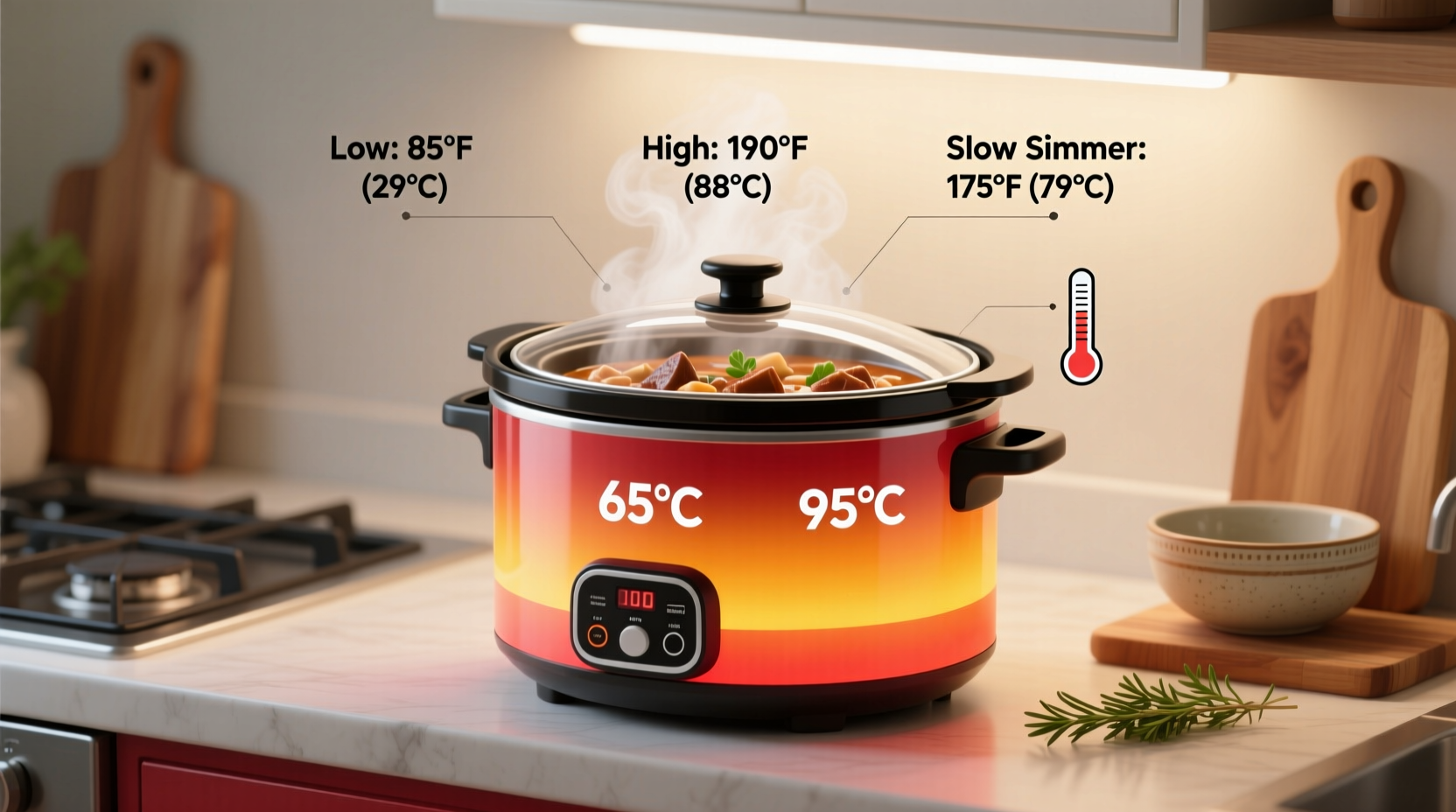
The High setting on most slow cookers brings the food to roughly 190°F to 212°F (88°C to 100°C). Many models settle near the boiling point of water, but the food itself may remain below a full boil.
Slow cookers do not work like ovens. An oven controls the air temperature around the food. A slow cooker warms a ceramic or metal crock from the sides and bottom, while the lid holds in heat and moisture.
Typical slow cooker temperature ranges
| Slow cooker setting | Approximate food temperature | Main effect |
|---|---|---|
| Low | About 190°F–200°F | Slow heating and gentle cooking |
| High | About 200°F–212°F | Faster heating and cooking |
| Keep Warm | Often about 145°F–165°F | Holds cooked food at a serving temperature |
These are general ranges, not fixed settings. Slow cooker designs vary. The temperature can also change between the center, edges, and surface of the food.
A slow cooker may take time to reach its full temperature. A small batch of soup may heat faster than a large roast. Cold ingredients, a crowded crock, and frequent lid lifting can all slow the process.

Does High Mean 300°F?
Usually, no. Some slow cooker heating elements may become much hotter than 212°F, but that does not mean the food cooks at 300°F.
The heating element transfers heat to the crock. The liquid-based food inside then limits its temperature to a range near the boiling point of water. As long as moisture remains, the food generally cooks through simmering rather than dry roasting.
A dry ingredient or exposed surface can become hotter than the wet center. This is one reason food near the sides may cook faster or brown more than food in the middle.
The number “300°F” sometimes appears in slow cooker discussions because it may describe a heating element, an internal design value, or a rough comparison. It should not be treated as the actual temperature of the food.
How Long Does a Slow Cooker Take to Reach High Heat?
A slow cooker often needs about 1 to 2 hours to become fully hot on High, though the time can be longer for a large or cold batch.
Several factors affect the warm-up time:
- The starting temperature of the ingredients
- The amount of food in the crock
- The size and shape of the slow cooker
- The material of the crock
- The room temperature
- How often the lid is removed
- Whether the recipe contains a large amount of liquid
Keep the lid closed during cooking. Removing it lets heat escape and may add around 15 to 30 minutes to the cooking time, depending on the appliance and recipe.
For best results, preheat the slow cooker only if the manufacturer allows it. Do not place a cold ceramic insert on a hot stovetop or in a hot oven unless the manual specifically says it is safe.
Is High Hotter Than Low?
High usually heats food faster, but High and Low may reach a similar final temperature after the slow cooker has had enough time.
The main difference is the rate of heating:
- High: Reaches the simmering range sooner.
- Low: Reaches the simmering range more slowly.
- Keep Warm: Holds already-cooked food at a lower temperature.
A recipe that takes 6 to 8 hours on Low may take about 3 to 4 hours on High. This is only a general rule. Tough meat, dried beans, dense vegetables, and large roasts may not finish in exactly half the time.
The texture can also change. Low cooking may give tough cuts of meat more time to soften. High cooking can finish sooner but may produce firmer meat or softer vegetables, depending on the recipe.
Do not switch between settings simply to speed up a recipe without checking the food. Use the recipe time as a starting point, then check texture and internal temperature.
How to Check the Temperature of a Slow Cooker
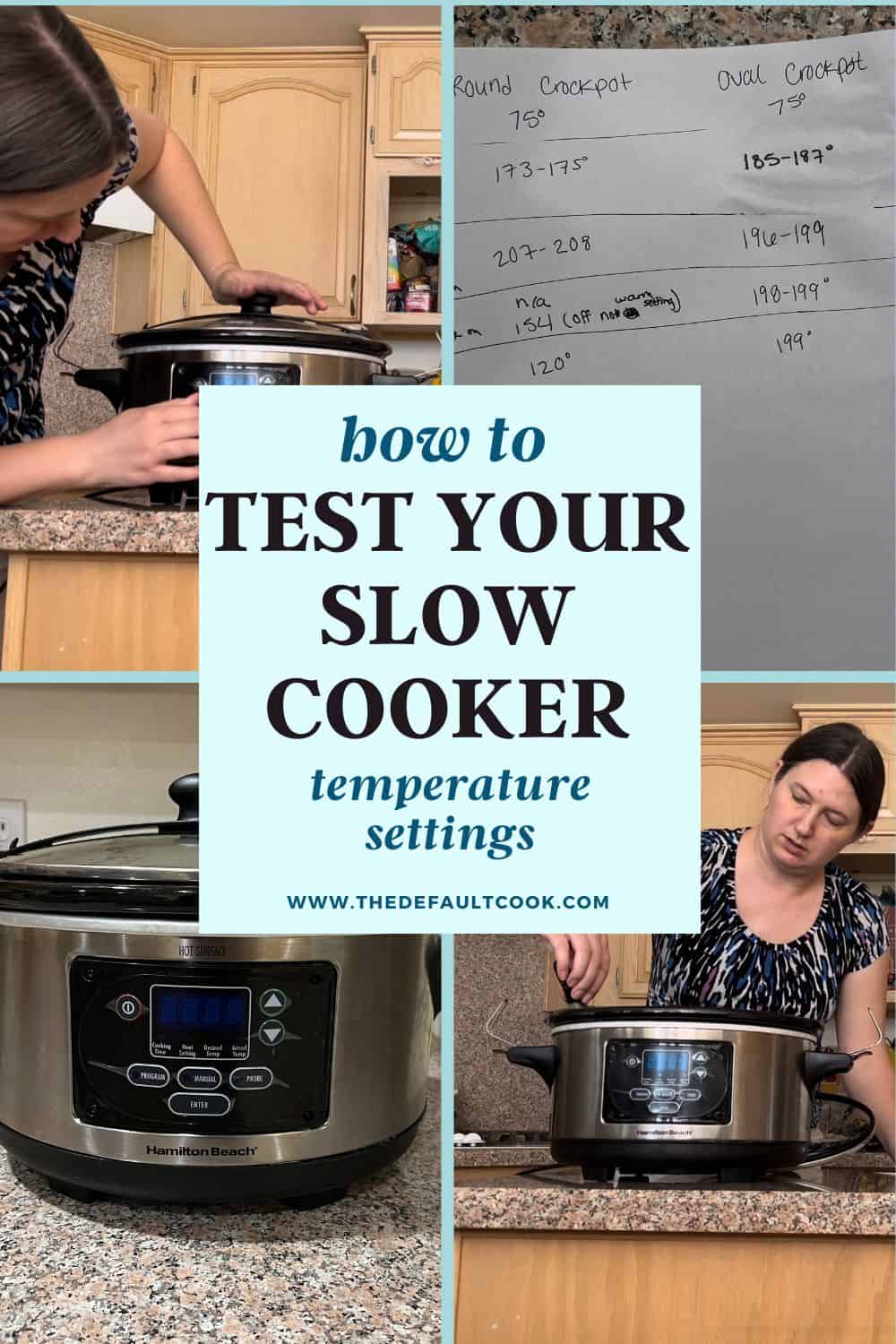
Use an instant-read food thermometer to check the food, not just the outside of the crock.
Follow these steps:
- Insert the thermometer into the thickest part of the food.
- Avoid touching the crock, bones, or large pockets of fat.
- Check more than one location if the food is uneven or crowded.
- Wait for the thermometer reading to stabilize.
- Clean the thermometer after each use.
For liquid foods, stir first so heat is spread evenly. Then place the thermometer in the center of the soup, stew, or sauce.
A slow cooker’s setting is not proof that meat is safe to eat. The U.S. Department of Agriculture recommends checking food with a thermometer and using safe minimum internal temperatures, such as:
- Poultry: 165°F
- Ground meats: 160°F
- Whole cuts of beef, pork, lamb, and veal: 145°F, followed by a three-minute rest
- Leftovers and casseroles: 165°F
These temperatures apply to the food, not the dial or heating element.

Can You Cook Meat on High Safely?
Yes. A slow cooker can safely cook meat on High when the food reaches a safe internal temperature and you follow basic handling rules.
Use these practices:
- Thaw meat in the refrigerator before slow cooking.
- Cut large pieces into smaller portions when the recipe calls for it.
- Do not overfill the crock.
- Keep the lid in place.
- Start cooking soon after adding perishable ingredients.
- Check the thickest part of the meat with a thermometer.
- Refrigerate leftovers within two hours, or within one hour if the room is above 90°F.
Do not put frozen meat directly into a slow cooker. Frozen food may remain too long in the bacterial “danger zone,” which the USDA identifies as 40°F to 140°F.
A slow cooker should generally be filled between one-half and two-thirds full. Too little food may cook too fast. Too much food may heat slowly and cook unevenly.
What about chicken?
Chicken should reach 165°F in the thickest part. Bone-in pieces may take longer than boneless pieces. Do not rely only on the cooking time because chicken size, starting temperature, and cooker design can differ.
What about beef roast?
A beef roast may be safe before it becomes tender. Safety and texture are different tests. Use a thermometer for safety, but continue cooking if the roast is still tough and the recipe requires tender meat.
High Setting Versus Other Cooking Methods
The High setting is useful when you need a slow-cooker meal done sooner, but it does not behave like every other cooking method.
| Method | How heat reaches the food | Typical result |
|---|---|---|
| Slow cooker on High | Gentle, moist heat around the food | Simmered texture |
| Oven at 300°F | Hot air surrounds the cooking vessel | More evaporation and possible browning |
| Stovetop simmer | Direct heat under a pot | Faster response and more evaporation |
| Pressure cooker | Steam under pressure | Much faster cooking |
A slow cooker does not normally brown meat well. Sear meat in a separate pan first if you want a browned crust and deeper roasted flavor.
Do not use a slow cooker to pressure-can food, deep-fry, or bake unless the manual specifically supports that function. A standard slow cooker is designed for moist, low-temperature cooking.
Why Is My Slow Cooker Not Getting Hot Enough?
If food remains cold or barely warm after several hours on High, check the simplest causes first.
The lid may be loose
A cracked lid, damaged gasket, or poor fit can release heat. Replace damaged parts with components approved for the exact model.
The crock may be too full
Food packed above the recommended level may heat slowly. Transfer some food to another cooker or use a larger model.
The ingredients may have started frozen
Frozen meat and large frozen blocks of food can delay heating. Thaw ingredients safely in the refrigerator before cooking.
The appliance may have a fault
Test the cooker with water. Add enough water to cover the bottom, place the lid on top, and run it on High. After about two hours, check the water with a thermometer.
The water should be very hot, often near a simmer. This test is only a rough check. It does not prove that every recipe cooks evenly.
If the water remains lukewarm, the cooker may have a faulty control, cord, switch, or heating element. Unplug it and follow the manufacturer’s repair or replacement guidance. Do not open the appliance unless you are qualified to service it.
Key Takeaways
- A slow cooker on High usually brings food to about 200°F to 212°F.
- High cooks food faster; it does not necessarily create a much higher final food temperature than Low.
- The actual temperature varies by model, recipe, fill level, and cooking time.
- Use a food thermometer to check doneness and safety.
- Do not cook frozen meat in a slow cooker.
- Keep the lid closed and fill the crock about one-half to two-thirds full.
- For food safety, follow USDA minimum internal temperature guidance.
Frequently Asked Questions
Is a slow cooker on High the same as 300°F?
No. The food in a slow cooker on High generally reaches about 200°F to 212°F when fully heated. A 300°F figure may refer to a heating element or a rough appliance comparison, not the temperature of the food.
Does a slow cooker boil on High?
It may produce small bubbles, especially around the edges, but it usually creates a gentle simmer rather than a strong rolling boil. A full boil can cause excess evaporation and may affect the texture of the food.
Can I cook a slow cooker recipe on High instead of Low?
Often, yes. A common starting point is about 3 to 4 hours on High for a recipe that takes 6 to 8 hours on Low. Check the food early because the actual time depends on the ingredients and appliance.
Is Low or High better for tough meat?
Both settings can work. Low may provide more time for connective tissue to soften, while High can finish the meal sooner. The best choice depends on the cut, recipe, and available cooking time.
Can I leave a slow cooker on High while I am away?
Only if the appliance is in good condition and the recipe is designed for unattended slow cooking. Place it on a stable, heat-resistant surface away from walls, towels, and other objects. Follow the manufacturer’s instructions and never leave a damaged appliance plugged in.
Conclusion
A slow cooker set to High generally cooks food at about 200°F to 212°F, or close to a gentle simmer. Its main advantage is faster heating, not a dramatically higher cooking temperature.
For reliable results, keep the lid closed, avoid overfilling, thaw meat first, and check the center of the food with an instant-read thermometer. The slow cooker setting guides the process, but the food’s internal temperature determines whether it is safe and ready.