
In most U.S. slow-cooker recipes, add uncooked white rice during the final 1 to 2 hours of cooking. Add brown rice about 2 to 3 hours before the dish is done, unless the recipe gives different directions. For soups, stews, and chili, cooked rice is often best stirred in during the last 10 to 20 minutes.
The right time depends on the rice type, the slow cooker setting, the amount of liquid, and whether the dish contains meat or vegetables. Rice added too early can turn soft and swollen. Rice added too late may stay hard.
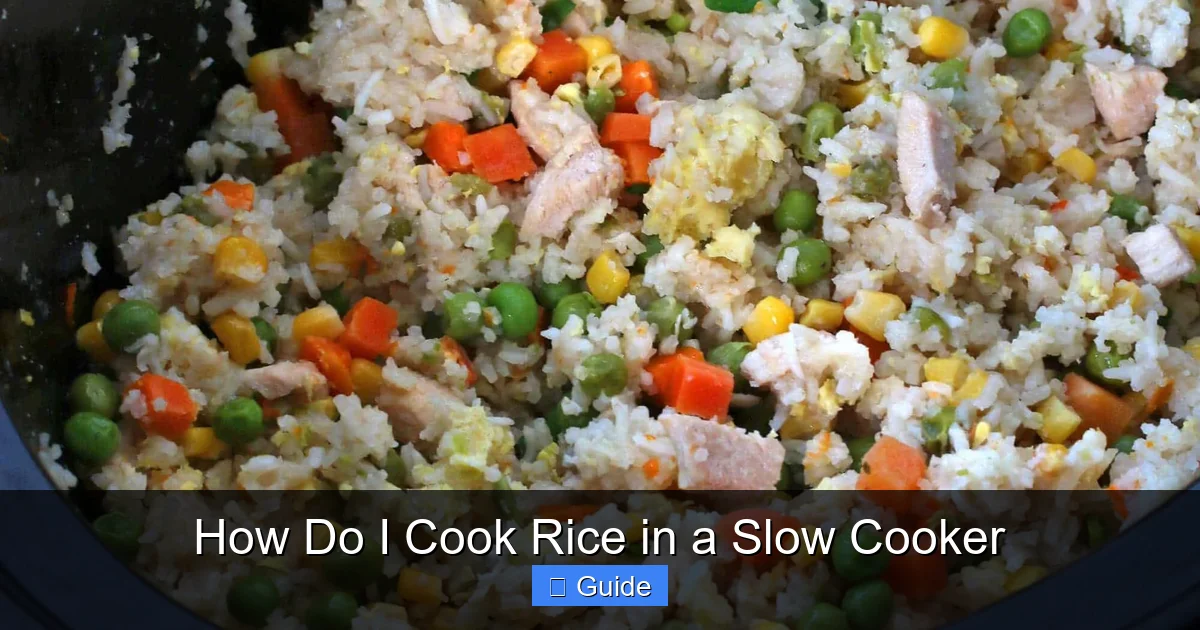
The Quick Answer: When Should You Add Rice to a Slow Cooker?
Add rice near the end of cooking rather than at the start in most slow-cooker meals.
Use these general timing ranges:
| Rice type | When to add on LOW | When to add on HIGH | Best use |
|---|---|---|---|
| White long-grain rice | Last 1–2 hours | Last 30–60 minutes | Casseroles, chicken and rice |
| Jasmine or basmati rice | Last 45–90 minutes | Last 30–45 minutes | Mild dishes and curries |
| Brown rice | Last 2–3 hours | Last 1–2 hours | Hearty meals |
| Wild rice or wild rice blend | Last 2–3 hours | Last 1–2 hours | Soups and grain-based dishes |
| Cooked rice | Last 10–20 minutes | Last 10–20 minutes | Soups, chili, and stews |
These times are estimates, not fixed rules. Slow cookers vary in heat, and rice brands differ in size and texture. Check the rice before the expected finish time and keep cooking if the grains remain firm.
For the most reliable result, follow a recipe made for your exact rice type and slow-cooker method. A recipe written for a pressure cooker or stovetop may not transfer well to a slow cooker.
Why Rice Timing Matters in a Slow Cooker
Rice absorbs liquid as it cooks. It also releases starch, which can thicken a dish. If rice stays in the slow cooker for many hours, it may absorb too much broth and become mushy.
Adding rice late helps preserve its shape. It also keeps the dish from becoming much thicker than planned.
Three factors control the result:
- Rice type: Brown rice has a tougher outer layer and needs more time than white rice.
- Liquid level: Rice needs enough broth or water to soften, but excess liquid can make the finished dish soupy.
- Heat and time: A slow cooker on HIGH may cook rice sooner, but the exact time depends on the appliance and the food already in the pot.
Rice can also continue to soften after the slow cooker is turned off. If the grains are just tender, switch the cooker to WARM or serve the meal rather than letting it sit for another hour.

How to Add Rice to a Slow Cooker
Use this method when a recipe does not provide clear rice instructions.
1. Choose the right rice
Use the rice named in the recipe whenever possible. Long-grain white rice usually gives a looser texture. Short-grain rice releases more starch and may create a creamier, stickier dish.
Brown rice needs more cooking time. Wild rice and wild rice blends also need extra time, but blends can cook unevenly because they contain grains with different textures.
Avoid replacing one rice type with another without adjusting the liquid and cooking time.
2. Rinse the rice when appropriate
Rinse white, jasmine, or basmati rice under cool water until the water looks less cloudy. This removes some surface starch and can reduce clumping.
Do not assume rinsing will fix an incorrect liquid ratio. It only affects the surface starch. Brown rice usually needs less rinsing, and some packaged rice products may include specific preparation instructions.
3. Add enough liquid
Rice needs liquid to cook. In a slow cooker, the meat and vegetables may also release water, so do not simply add the same amount of liquid used for stovetop rice.
A common starting point for plain white rice is roughly 1½ to 2 cups of liquid for each cup of dry rice, but this is not a universal rule. The needed amount changes with:
- The rice variety
- The slow cooker’s lid and heat
- Other ingredients in the recipe
- Whether the liquid is broth, sauce, or water
- How much liquid the meat and vegetables release
A recipe designed for slow-cooker rice is safer than guessing. If the dish already contains a large amount of broth, start with less added liquid and adjust only if the rice remains firm.
4. Add the rice at the proper point
For white rice, stir it into the slow cooker during the final 1 to 2 hours on LOW. Keep the lid closed so heat and steam remain inside.
For brown rice, add it about 2 to 3 hours before the meal is finished on LOW. On HIGH, begin checking sooner.
If the recipe contains chicken, beef, pork, or another food that must reach a safe internal temperature, do not shorten the meat’s required cooking time just to cook the rice. Use a food thermometer to check the thickest part of the meat. The USDA lists 165°F for poultry as the safe minimum internal temperature.
5. Check for doneness
Rice is ready when the center is tender and no hard white core remains. The dish should still have enough moisture to prevent sticking, but it should not look watery.
If the rice is hard:
- Add a small amount of hot broth or water.
- Cover the slow cooker.
- Continue cooking for 15 to 30 minutes.
- Check again.
If the rice is mushy, you cannot fully reverse the texture. You can improve the dish by serving it at once, adding cooked vegetables or shredded meat, or turning it into a thicker soup.

When to Add Rice to Common Slow-Cooker Meals
The best timing changes with the type of dish.
Chicken and rice
Add white rice during the final 1 to 2 hours on LOW. Make sure the chicken has enough time to reach 165°F, as recommended by the USDA.
If the chicken will cook for six to eight hours, adding white rice at the beginning will often produce a soft, swollen texture. For a long cooking time, cook the rice separately and stir it in at the end.
Slow-cooker soup
For a clear soup, add dry rice during the last 1 to 2 hours. For a thick soup, add it later because rice will continue to absorb broth as the soup rests.
Cooked rice can be added during the last 10 to 20 minutes. This method gives better control and works well when the soup has already reached its desired thickness.
Chili
Rice is not usually needed in chili, but it can be added for bulk. If using dry rice, add it late and watch the liquid level closely. Rice can absorb enough liquid to turn chili into a dense, sticky mixture.
Cooked rice is usually easier. Stir it in just before serving, or serve the chili over rice.
Beef stew
Rice is not a typical substitute for potatoes in a long-cooked beef stew. If you add dry rice at the start, it may break down before the beef becomes tender.
For a rice-based beef dish, add brown rice during the final 2 to 3 hours on LOW. For a traditional stew, serve cooked rice separately.
Casseroles
Use a recipe written for a slow cooker when making a rice casserole. Casseroles depend on a careful balance of rice, liquid, meat, vegetables, and cooking time.
If the recipe says to use converted or parboiled rice, do not substitute regular white rice without changing the method. Converted rice may hold its shape better during longer cooking.
Curry or saucy dishes
Jasmine or basmati rice is often better cooked separately. These varieties can absorb sauce and lose their distinct texture when left in a slow cooker for several hours.
If adding rice directly, use a tested recipe and add the rice during the final hour or so. Keep the lid closed and check the grains early.

Dry Rice or Cooked Rice: Which Is Better?
Use dry rice when the dish has enough liquid and a tested cooking time. Use cooked rice when you want more control over texture.
| Choose dry rice when… | Choose cooked rice when… |
|---|---|
| The recipe was designed for rice cooked in the slow cooker | The dish will cook for more than four hours |
| You want rice to absorb broth and flavor | You are making soup, chili, or stew |
| You can monitor the dish near the end | The recipe has an uncertain liquid level |
| You are using the rice type listed in the recipe | You need to prevent overcooking |
Cooked rice is also useful for leftovers. It prevents the rice from absorbing all the liquid while the meal sits in the refrigerator.
For best quality, cook rice separately, cool it promptly, and store it in the refrigerator. The USDA advises refrigerating perishable food within 2 hours, or within 1 hour when the temperature is above 90°F. Cooked rice can support the growth of Bacillus cereus when it remains at unsafe temperatures for too long, so do not leave it in a switched-off slow cooker for extended periods.

Common Mistakes When Cooking Rice in a Slow Cooker
Adding rice at the beginning
This is the most common cause of mushy rice. Long cooking gives the grains too much time to absorb liquid and break apart.
Opening the lid too often
Each lid opening releases heat and steam. The slow cooker then needs time to return to its cooking temperature. Check the rice only when the expected cooking window is nearly over.
Using too little liquid
Hard rice often means the grains did not have enough moisture. Some liquid may also evaporate, especially if the lid does not seal well.
Add hot liquid rather than cold liquid when possible. Hot liquid helps the slow cooker recover its temperature faster.
Using too much liquid
Excess liquid can leave the rice watery and may dilute the flavor. Remember that vegetables, meat, canned tomatoes, and sauces can all add moisture.
Filling the cooker incorrectly
A slow cooker generally works best when it is neither nearly empty nor packed to the rim. Follow the appliance manual for minimum and maximum fill levels. An overfilled cooker may heat unevenly and cook more slowly.
Substituting rice without changing the method
White rice, brown rice, wild rice, and parboiled rice do not cook at the same speed. A substitution can change both the liquid need and the cooking time.
Leaving rice on WARM for too long
The WARM setting is meant to hold food, not to finish cooking hard rice indefinitely. Rice can become dry, sticky, or unsafe if the meal stays warm for an extended period. Serve it soon after it reaches the proper texture and follow the slow cooker manual.

How to Fix Rice That Is Hard, Mushy, or Watery
If the rice is hard
Hard rice needs more moisture and time. Add a few tablespoons of hot broth or water, cover the cooker, and cook for another 15 to 30 minutes.
If the meat is already done, remove it before extending the rice’s cooking time. This prevents the meat from becoming dry.
If the rice is mushy
Mushy rice usually results from too much time, too much liquid, or too much stirring. Stop cooking as soon as possible.
Remove the lid briefly to release excess steam, then serve the dish. Do not keep stirring, because stirring can release more starch and make the texture heavier.
If the rice is watery
First, check whether the grains are cooked. If they are still hard, continue cooking with the lid on. If the grains are tender, remove the lid and let some moisture escape for a short time, or serve the rice with a slotted spoon.
Do not keep cooking for a long period just to evaporate liquid. The rice may become soft before the sauce reaches the texture you want.
If the rice burned on the bottom
Turn off the slow cooker and move the unburned food to a clean dish. Do not scrape the burned layer into the meal. Check whether the cooker was too full, whether the liquid was too low, or whether the rice sat against a hot surface for too long.

Food-Safety Rules for Slow-Cooker Rice Meals
Rice timing affects quality, but safe handling comes first.
- Thaw meat before placing it in the slow cooker unless the manufacturer or recipe specifically allows another method.
- Use a food thermometer for meat and poultry.
- Keep the slow cooker covered during cooking.
- Refrigerate leftovers within the USDA’s recommended time limits.
- Divide large amounts of food into shallow containers so they cool more quickly.
- Reheat leftovers until steaming hot throughout.
- Do not rely on smell or appearance to judge whether stored rice is safe.
The USDA’s Slow Cookers and Food Safety guidance provides current U.S. recommendations for slow-cooker meals. Its leftovers and food safety guidance covers cooling, storage, and reheating.
If rice or a rice-based meal has remained at room temperature for more than the recommended time, discard it. Reheating may kill some bacteria, but it may not remove toxins that formed during improper storage.

A Simple Timing Plan
Use this plan if you need a practical starting point:
- Start the meat, vegetables, sauce, and other long-cooking ingredients.
- Cook on the setting required by the recipe.
- Add rinsed white rice during the final 1 to 2 hours on LOW.
- Add brown or wild rice about 2 to 3 hours before the meal is finished on LOW.
- Stir once, cover the cooker, and avoid opening the lid.
- Check the rice before the planned finish time.
- Serve when the grains are tender and the meat has reached its safe temperature.
For a meal that cooks all day, cooked rice is often the most dependable choice. Prepare the rice separately and stir it into the finished dish just before serving.

Frequently Asked Questions
Can I put uncooked rice in a slow cooker?
Yes, but the recipe must contain enough liquid and provide a suitable cooking time. Add most white rice near the end rather than at the beginning. Brown rice and wild rice need more time.
Can I add rice at the beginning of a slow-cooker recipe?
You can when the recipe was developed for that method. In many long-cooking meals, however, rice added at the start becomes mushy or absorbs too much liquid.
How long does rice take in a slow cooker?
White rice often takes about 1 to 2 hours on LOW. Brown rice and wild rice often take about 2 to 3 hours on LOW. Slow-cooker performance varies, so begin checking early.
Should I cook rice before adding it to a slow cooker?
Cook rice first when the meal will cook for many hours, when the recipe has little free liquid, or when you want firm, separate grains. Stir cooked rice in during the final 10 to 20 minutes.
Why is my slow-cooker rice still crunchy?
The rice may need more liquid, more time, or both. Add a small amount of hot broth or water, cover the slow cooker, and cook for another 15 to 30 minutes. Also check that the correct rice type was used.
Conclusion
For most slow-cooker meals, add white rice during the last 1 to 2 hours, brown or wild rice during the last 2 to 3 hours, and cooked rice during the final 10 to 20 minutes. Use the recipe’s rice type, liquid amount, and timing as the main guide.
When the meal cooks all day or the liquid level is uncertain, cook the rice separately. That simple choice gives you the best control over texture, prevents a thin dish from becoming too thick, and makes leftovers easier to manage.