
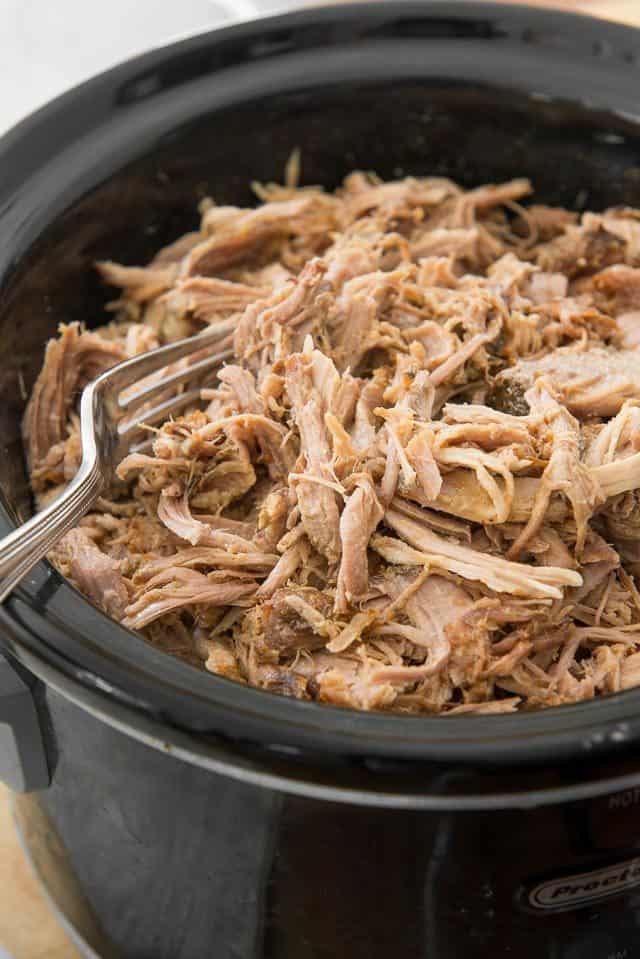
The easiest way to cook pulled pork in a slow cooker is to season a pork shoulder, add a small amount of liquid, and cook it on LOW for 8 to 10 hours. The pork is ready when it is very tender and pulls apart with a fork. For food safety, whole pork should reach at least 145°F, followed by a three-minute rest. For the best texture, pork shoulder usually needs a much higher temperature so its tough connective tissue can soften.
This method works well for an American-style barbecue dinner, sandwiches, tacos, nachos, or meal prep. It uses simple ingredients and does not require constant watching.
Best Cut of Pork for Pulled Pork
Use pork shoulder, also called Boston butt or pork butt. Despite its name, pork butt comes from the upper shoulder of the pig. It contains enough fat and connective tissue to stay moist during long cooking.
A picnic shoulder also works, but it often has more skin and bone. A boneless pork butt is easier to cut and shred. A bone-in roast can add flavor and may stay moist, but it takes more room in the slow cooker.
Choose a roast that fits with space around the sides. A 4- to 5-pound roast usually fits a 6-quart slow cooker and makes about 8 to 10 servings, depending on portion size.
Avoid very lean cuts such as pork loin or pork tenderloin. They cook faster and can become dry before they develop the soft texture needed for pulled pork.
Slow Cooker Pulled Pork Recipe
Ingredients
For about 8 servings, use:
- 4 to 5 pounds boneless pork shoulder
- 1 medium yellow onion, sliced
- 4 garlic cloves, minced
- 2 teaspoons kosher salt
- 1 tablespoon brown sugar
- 2 teaspoons smoked paprika
- 2 teaspoons chili powder
- 1 teaspoon ground black pepper
- 1 teaspoon ground cumin
- 1 cup barbecue sauce, plus more for serving
- ½ cup apple cider vinegar, apple juice, chicken broth, or water
- 1 tablespoon yellow mustard, optional
- 1 tablespoon Worcestershire sauce, optional
The liquid should not cover the pork. A slow cooker traps steam, so a small amount is enough to create a moist cooking environment.
Equipment
You will need:
- A slow cooker, ideally 6 quarts
- A meat thermometer
- A cutting board or large dish
- Two forks or clean shredding claws
- A spoon or fat separator
How to Cook Pulled Pork in a Slow Cooker
1. Thaw the pork safely
Thaw frozen pork in the refrigerator before putting it in the slow cooker. Do not place a solidly frozen roast into the cooker. It may spend too long in the temperature range where bacteria grow.
A large pork shoulder can take one to two days to thaw in the refrigerator. Place it in a tray or pan to catch any liquid.
2. Trim only excess fat
Remove thick, hard pieces of fat from the outside. Leave some soft fat in place. It melts during cooking and helps keep the meat moist.
You do not need to remove every visible piece of fat. Much of it can be separated after cooking.
3. Mix and apply the dry rub
combine the salt, brown sugar, smoked paprika, chili powder, black pepper, and cumin. Pat the pork dry with paper towels, then rub the seasoning over every side.
For deeper flavor, cover the seasoned pork and refrigerate it for several hours or overnight. If you are short on time, cook it right away. The slow cooking time will still develop good flavor.
4. Build the slow cooker
Place the sliced onion and garlic in the bottom of the slow cooker. Set the seasoned pork on top.
Mix the barbecue sauce, vinegar or other liquid, mustard, and Worcestershire sauce. Pour the mixture around the pork rather than directly over all the seasoning.
Keep the roast in a single layer if possible. If it does not fit, cut it into two large pieces. Smaller pieces cook faster, but do not cut the pork into small cubes.
5. Cook on LOW
Cover the slow cooker and cook on:
- LOW: 8 to 10 hours
- HIGH: 4 to 6 hours
The exact time depends on the roast's size, shape, starting temperature, and the slow cooker itself. LOW is usually the better choice for pork shoulder because it gives the connective tissue more time to soften.
Keep the lid closed. Each time you lift it, heat escapes and cooking takes longer.
6. Check for doneness
Use a thermometer in the thickest part of the meat. Pork is safe when it reaches at least 145°F, according to the USDA Food Safety and Inspection Service.
However, safe does not always mean tender. Pulled pork should feel very soft when tested with a fork. It often reaches an internal temperature near 195°F to 205°F, but temperature alone does not decide when it is ready.
The best signs are:
- A fork slides into the roast with little resistance.
- The meat separates when pressed.
- The roast pulls apart into strands.
- The bone, if present, loosens easily.
- The meat does not feel rubbery or firm.
If the pork is safe but still tough, cover it and keep cooking. Toughness usually means the connective tissue needs more time.
7. Rest the pork
Move the cooked pork to a large dish or cutting board. Let it rest for about 15 to 30 minutes.
Resting lets the juices settle and makes the pork easier to handle. Keep the cooking liquid in the slow cooker for the next step.
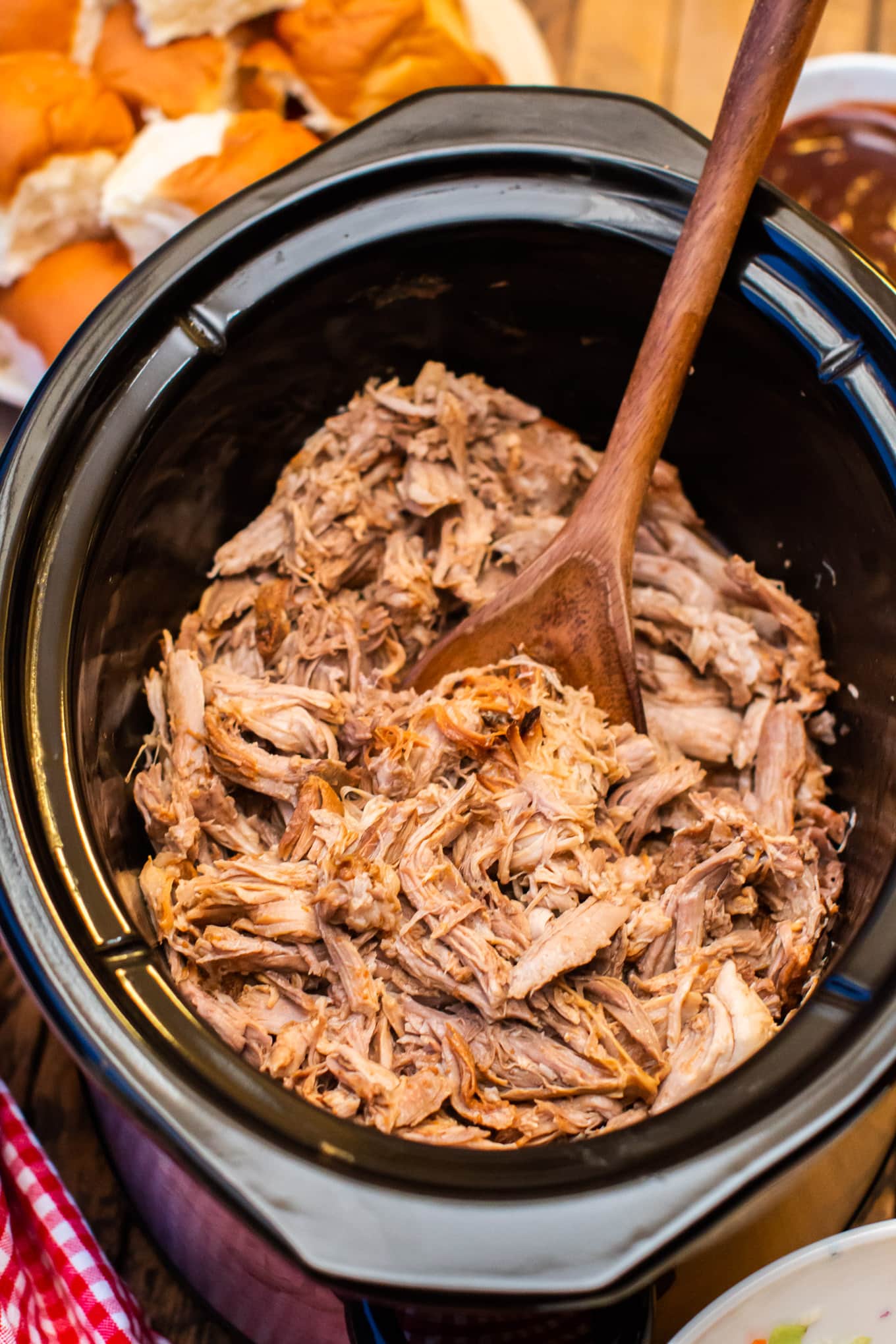
8. Shred the pork
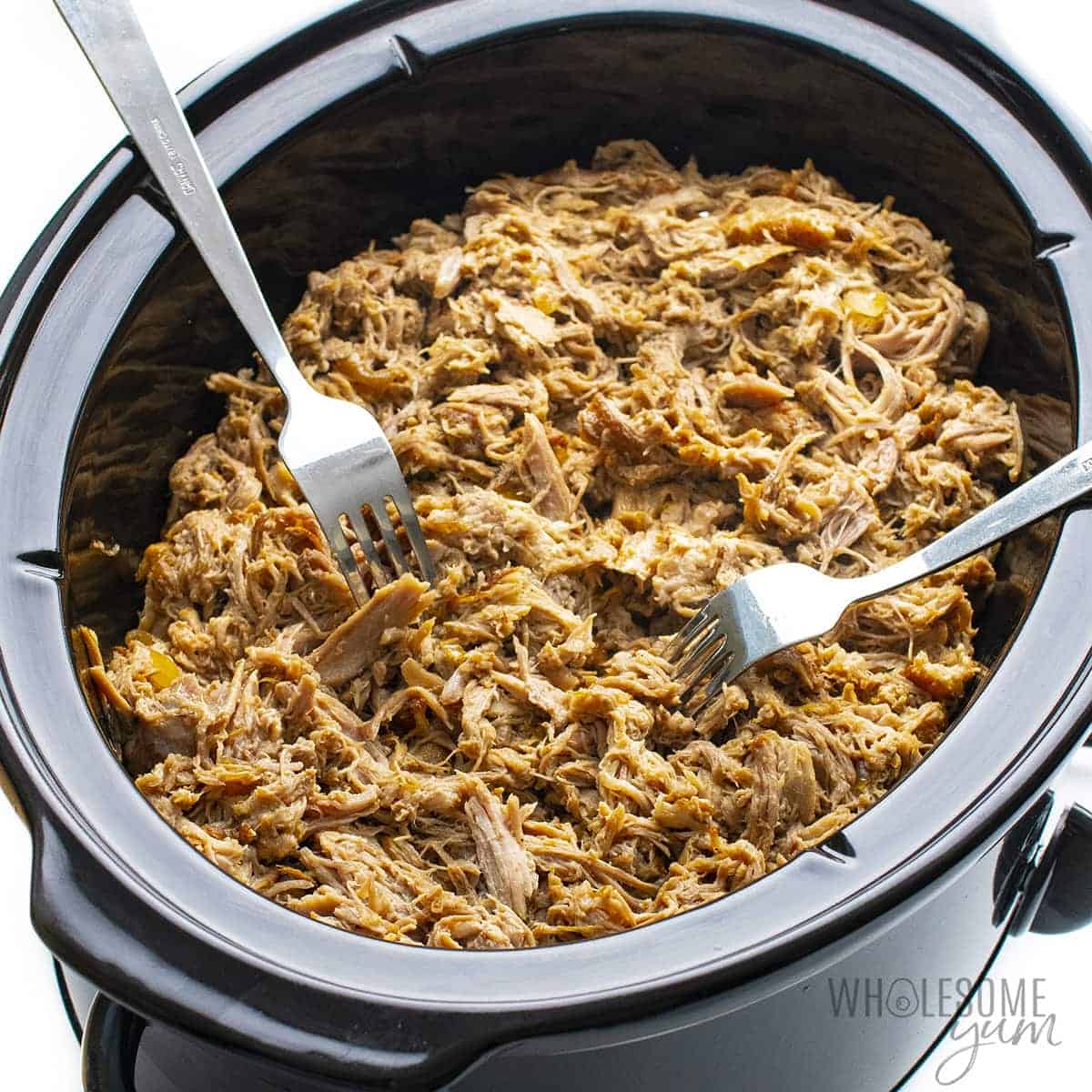
Remove large pieces of fat, gristle, and bone. Pull the pork apart with two forks or clean gloved hands.
You can shred it finely for sandwiches or leave larger pieces for tacos and bowls. Add some of the cooking liquid back to the meat, a few spoonfuls at a time, until it is moist but not soupy.
Taste before adding more salt or barbecue sauce. The rub and cooking liquid may already provide enough seasoning.
How Long Does Pulled Pork Take in a Slow Cooker?
A 4- to 5-pound pork shoulder usually takes 8 to 10 hours on LOW or 4 to 6 hours on HIGH. These times are estimates, not guarantees.
| Pork shoulder size | LOW setting | HIGH setting | Best check |
|---|---|---|---|
| 2 to 3 pounds | 6 to 8 hours | 3 to 4 hours | Fork tenderness |
| 4 to 5 pounds | 8 to 10 hours | 4 to 6 hours | Fork tenderness |
| 6 to 8 pounds | 10 to 12 hours | 6 to 8 hours | Fork tenderness |
The shape matters as much as the weight. A thick roast may take longer than a flatter roast of the same weight.
Do not rely only on the timer. Start checking near the early end of the time range, but continue cooking if the pork does not pull apart easily.
A slow cooker works best when it is filled roughly halfway to two-thirds full. Too little food may cook quickly. Too much food may cook slowly and unevenly.

Should You Brown Pork Before Slow Cooking?
Browning the pork before slow cooking is optional. It can create a deeper roasted flavor through surface browning, but it does not seal in juices.
To brown it, heat a small amount of oil in a large skillet. Sear the seasoned pork on several sides until the surface is deeply browned. Transfer it to the slow cooker and continue with the recipe.
Skip this step when you want the simplest method or when the roast is too large for your skillet. The slow cooker will still produce tender pulled pork.
Do not brown the pork and then leave it sitting at room temperature. Move it into the slow cooker promptly.
How to Make Pulled Pork Without Barbecue Sauce
You can cook pulled pork without bottled barbecue sauce. Use broth, apple juice, vinegar, or water as the cooking liquid, then season the meat after shredding.
For a simple vinegar-style version, combine:
- ½ cup apple cider vinegar
- ½ cup chicken broth or water
- 1 tablespoon brown sugar
- 1 teaspoon smoked paprika
- 1 teaspoon black pepper
- ½ teaspoon salt
For a dry, savory version, use broth with garlic, onion, paprika, cumin, salt, and pepper. Add barbecue sauce only when serving.
This approach gives you more control over sweetness. It also works well for tacos, rice bowls, enchiladas, and soups.

How to Keep Pulled Pork Moist
Pulled pork stays moist when you avoid overcooking it, keep some cooking liquid, and store it properly.
After shredding, mix the meat with a small amount of strained cooking liquid. Add barbecue sauce at the table or just before serving. Too much liquid can make the pork watery.
If you need to hold the pork before serving, keep it in the slow cooker on the WARM setting only if the appliance maintains a safe temperature. The USDA recommends keeping hot food at 140°F or above.
For storage, place leftovers in shallow containers and refrigerate them within two hours. Use refrigerated leftovers within three to four days, or freeze them for longer storage. Reheat leftovers until they reach 165°F.

What to Serve With Slow Cooker Pulled Pork
Classic American sides include:
- Coleslaw
- Cornbread
- Baked beans
- Potato salad
- Macaroni and cheese
- Pickles
- Collard greens
- Corn on the cob
- French fries or sweet potato fries
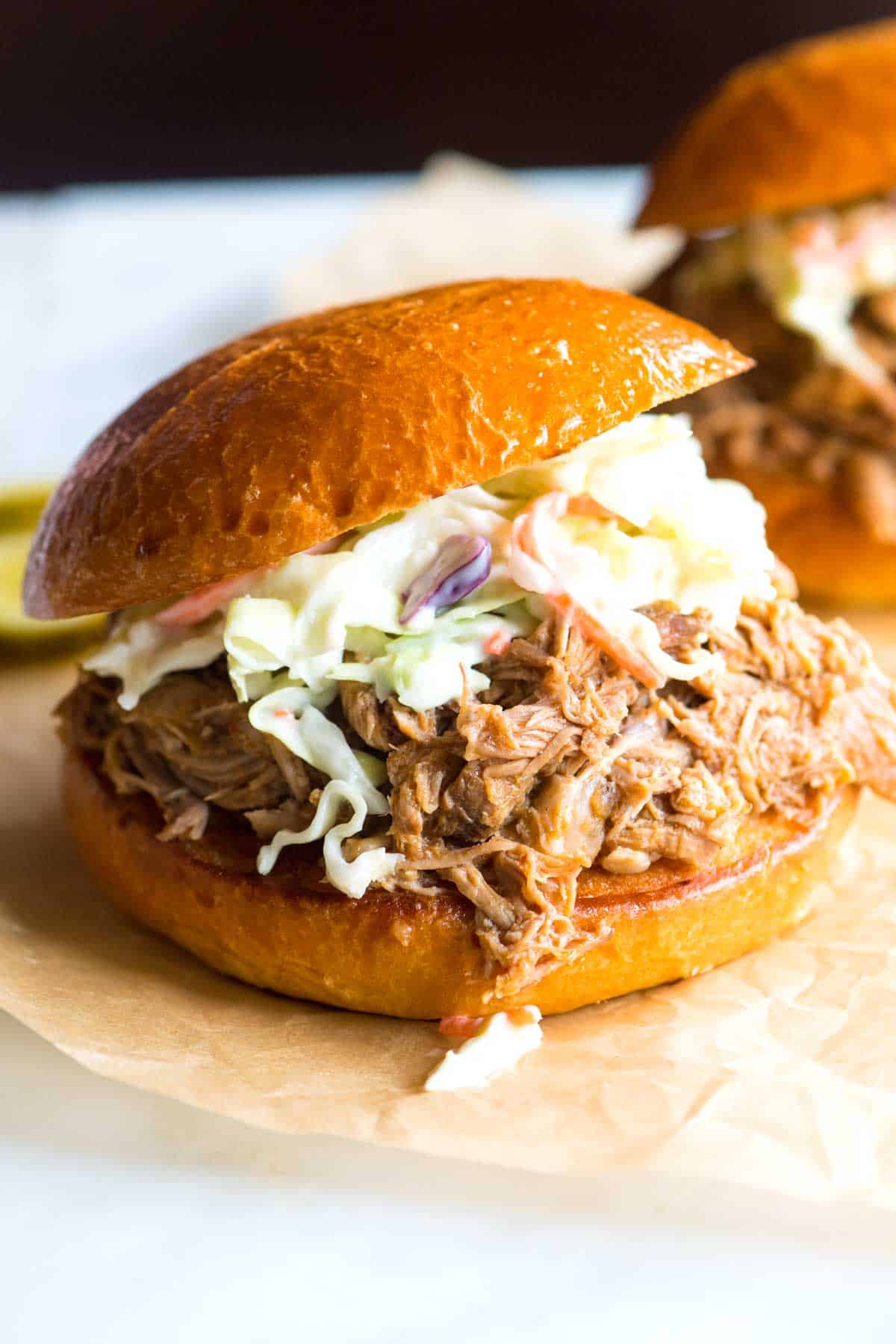
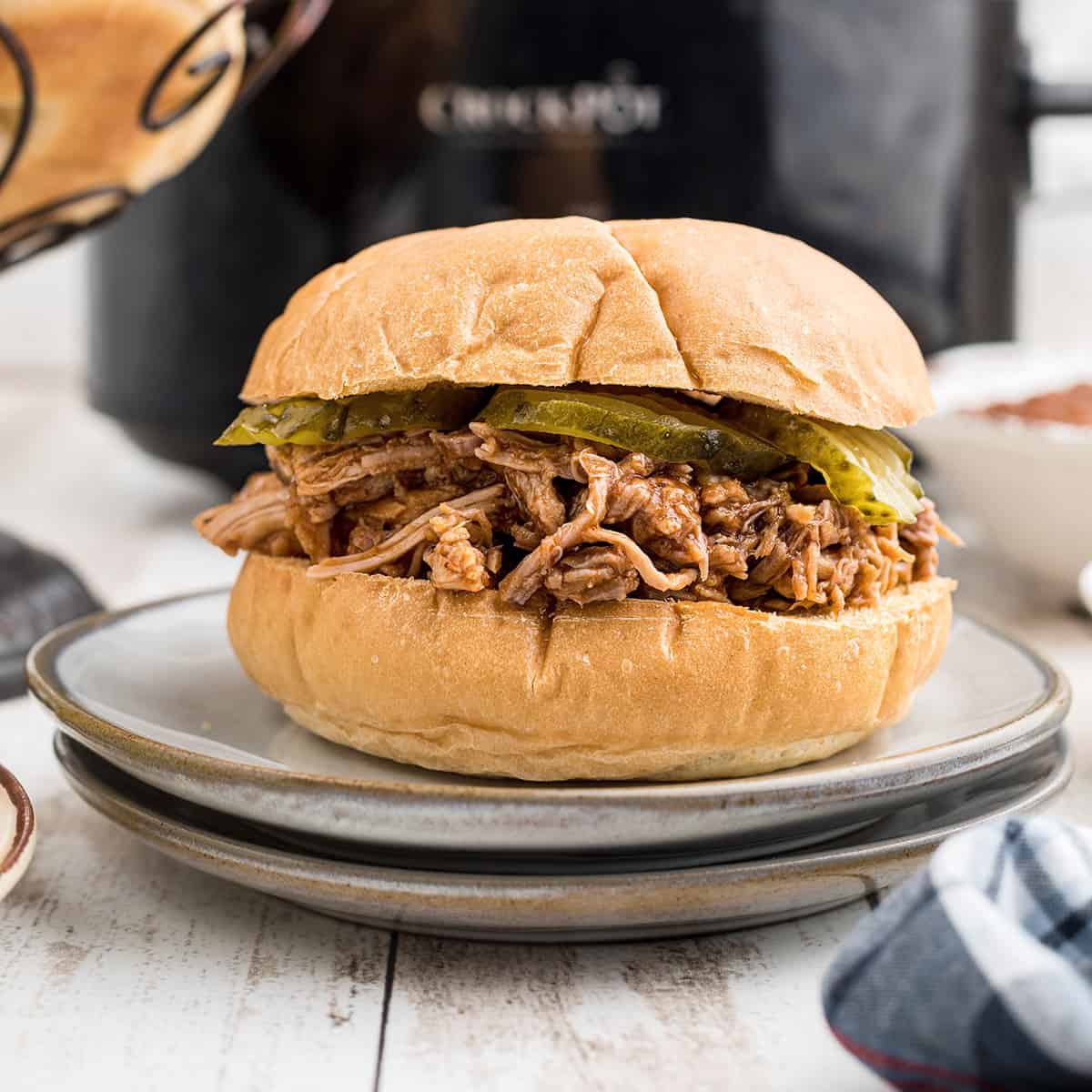
Serve the pork on toasted hamburger buns with coleslaw and extra sauce. For a lighter meal, use lettuce cups or serve it over roasted vegetables.
Pulled pork also works in quesadillas, baked potatoes, grilled cheese sandwiches, and chili. The meat is mildly seasoned enough to fit several meals.

Common Pulled Pork Mistakes
Using the wrong cut
Pork loin is lean and can dry out. Choose pork shoulder for a soft, shreddable result.
Adding too much liquid
The slow cooker creates steam and releases moisture from the pork and onions. Too much liquid can dilute the flavor and produce watery meat.
Cooking a frozen roast
A frozen roast may heat too slowly. Thaw it in the refrigerator first.
Opening the lid often
Heat escapes each time the lid comes off. Check the pork only when you are close to the expected cooking time.
Stopping when the pork reaches a safe temperature
Pork can be safe to eat before it is tender enough to pull. Continue cooking until a fork slides in easily and the meat separates.
Cutting the roast too small
Small chunks can lose moisture and may not develop the same texture. Keep the pork whole or divide it into two large pieces.
Leaving leftovers in the cooker
A slow cooker is not a substitute for rapid cooling. Refrigerate leftovers in shallow containers within two hours.
Adding sauce too early
Sugary barbecue sauce can become overly dark around the edges during a long cook. Add some sauce to the cooking liquid, but save extra sauce for the shredded meat.

How to Fix Tough Pulled Pork
If the pork is tough, the most likely cause is that it needs more time. Put it back in the slow cooker with some of the cooking liquid and cook on LOW for another 30 to 60 minutes.
Check it again with a fork. Repeat as needed until the meat pulls apart easily.
If the pork is dry but tender, shred it and mix in warm broth, strained cooking liquid, or barbecue sauce. Add liquid slowly so the meat does not become soggy.
If the pork is tough and the slow cooker was very full, the cooker may not have reached the needed heat quickly. Continue cooking, and verify that the appliance is heating normally according to its manual.

Key Takeaways
- Use pork shoulder, Boston butt, or pork butt.
- Thaw frozen pork in the refrigerator before cooking.
- Cook a 4- to 5-pound roast on LOW for about 8 to 10 hours.
- Use a thermometer for safety, but judge tenderness with a fork.
- Pork should pull apart easily before you shred it.
- Add only enough liquid to keep the meat moist.
- Refrigerate leftovers within two hours and reheat them to 165°F.
Frequently Asked Questions
Can you put raw pork directly into a slow cooker?
Yes. Fresh or fully thawed raw pork can go directly into a slow cooker. Season it first, use a properly sized cooker, and cook until the pork reaches a safe temperature and becomes tender.
Do you need to add water to pulled pork?
No. You need some liquid, but it does not have to be water. Apple juice, cider vinegar, broth, or barbecue sauce can add flavor. Use about ½ to 1 cup of liquid for a 4- to 5-pound roast.
Is it better to cook pulled pork on LOW or HIGH?
LOW is usually better for pork shoulder because the longer cook helps soften connective tissue. HIGH works when you need the pork sooner, but begin checking it early because slow cookers vary.
Can you overcook pulled pork in a slow cooker?
Yes. Pork can become dry and stringy if it cooks far past the point of tenderness, especially if the slow cooker loses liquid or runs hot. Once the pork pulls apart easily, remove it, rest it, and shred it.
Can you cook pulled pork the day before?
Yes. Cook and shred the pork, then refrigerate it in its juices. Reheat it gently in a covered slow cooker, saucepan, or oven until it reaches 165°F. Add a little broth or barbecue sauce if it seems dry.
Conclusion
To cook pulled pork in a slow cooker, season a thawed pork shoulder, add a small amount of liquid, and cook it on LOW for 8 to 10 hours. The meat is ready when it is fork-tender and separates into strands. Rest it, remove excess fat, shred it, and mix in enough cooking liquid or sauce to keep it moist.
For the best result, trust both the thermometer and the texture. Temperature confirms safety, while easy shredding confirms that the pork is ready to serve.